A 3-part set of posts on Birthright Citizenship and the case before the U.S. Supreme Court - PART III - Connections to the Classroom (and a few takeaways from me)
I wasn't sure I wanted to do a series on this topic because it is so politicized, but reading articles the past couple of days leading up to today's Supreme Court hearing made me realize how little objective information (as opposed to one-sided presentations) are out there. Plus, I find it interesting to compare most media takes ("there is only one possible answer") versus scholarly and legal analysts (who still have opinions, but cite legal arguments for both sides). That, to me, makes it a topic to provide arguments and evidence for both sides and let the students decide (which is what we always "say" we are doing in civics) . . .
Again, here is my plan for this series of 3 posts:
Part I - civic and historical reasons why we have birthright citizenship and should keep it;
Part II, civic and cultural reasons why we should not have birthright citizenship in its present form; and
Part III, classroom resources and lessons related to the topic.
Again, my intention is not to get into the politics of birthright citizenship arguments (and most of the links shared below are pretty non-partisan, though there will be exceptions). As I noted in the introduction, we say that part of our job as social studies teachers is to help students understand the facts and the arguments of both sides, and then make their own decision. In this final portion, part of MY job is also to make sure you have some ideas of how to do that . . .
Part III - Connections to the Classroom:
I'm going to feature a few lessons and informative articles on the birthright citizenship debate, then provide my usual set of links at the bottom. If you were hoping I would have a "this side is right, this side is wrong" segment - nope! But I will mention near the end some of my takes on the information I researched. I want to start, though, with two additional videos I found after I had done Part I and Part II - one looks at the Supreme Court hearing on April 1st, while the other focuses on exceptions to the birthright citizenship clause of the 14th Amendment. Then finally, I also include a technical summary of the Supreme Court transcript done by SCOTUSBlog (and written by Adam Feldman, who focuses on that type of technical analysis of the data that can be drawn from an oral transcript):
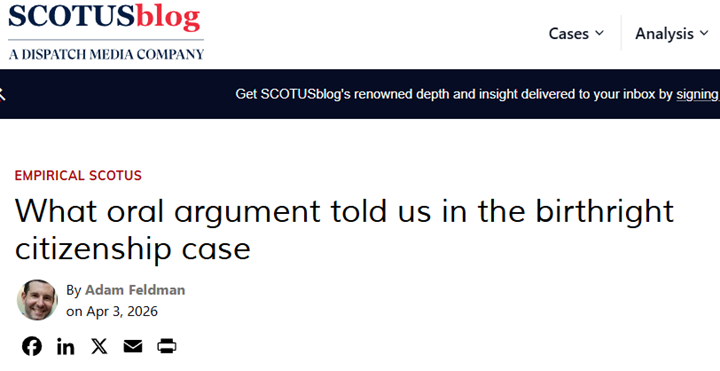
Article - SCOTUSBlog, "What oral argument told us in the birthright citizenship case"
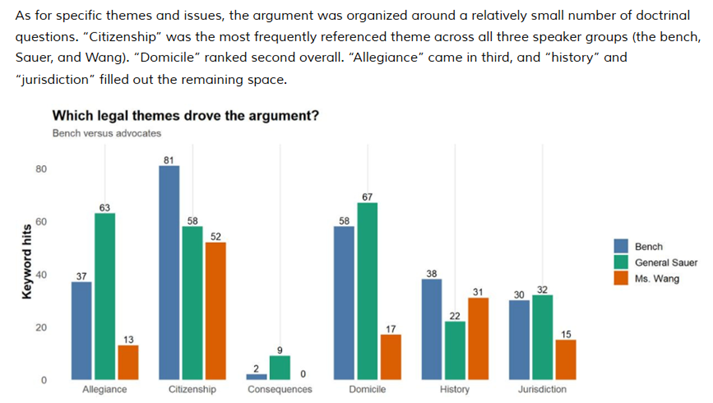
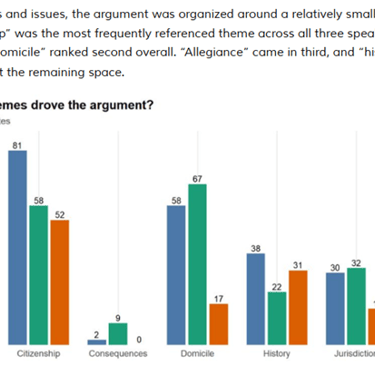
This one really is for either a high-level analysis of the oral arguments in Trump vs. Barbara, OR for someone really into technical analysis. I will simply give you a couple of screenshots, and encourage you (if you are interested) to "get into the weeds" of the analysis with the link further below if you are interested:
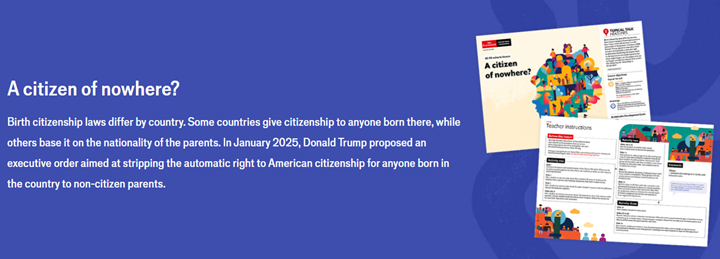
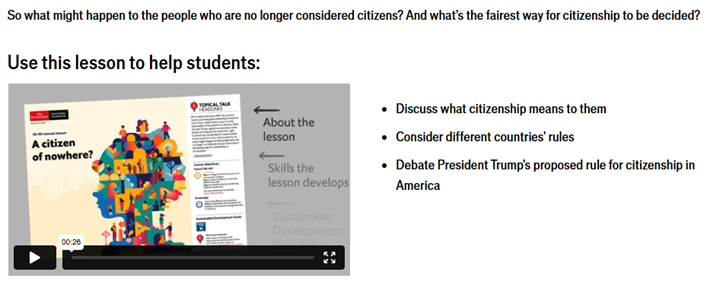
Lesson Plan - Economist Educational Foundation, "Topical Talk - A citizen of nowhere?"
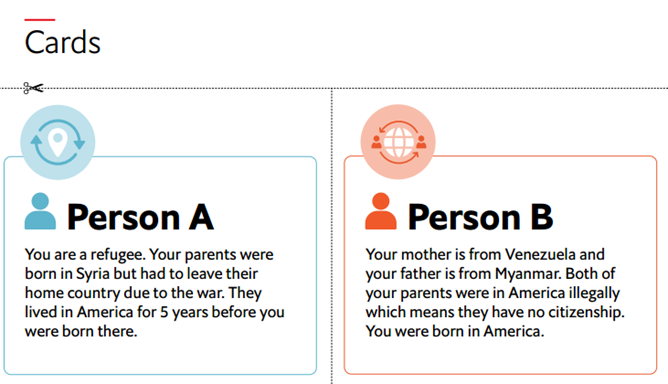
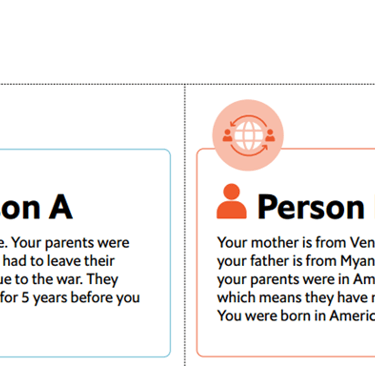
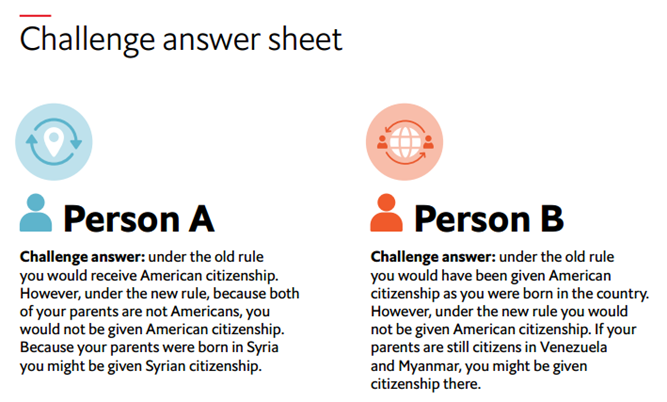
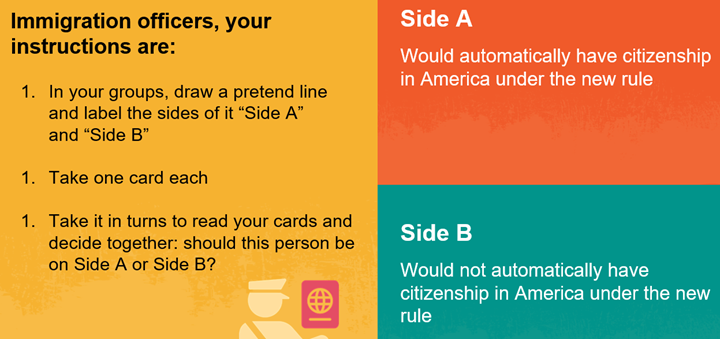
Since part of what I brought up (in both Part I and Part II) is how most of the world handles citizenship differently than the United States and other countries in the Western Hemisphere, thought it would be interesting to look at a European "take" on the debate going on in the U.S. This is from the educational foundation of The Economist magazine (based in Europe, but covering economic and political issues all over the world) looking more generally at the issues around citizenship (though most of their examples are framed around U.S. situations). I have given you a few screenshots as a sampling of the material, but there are pages of resources in the lesson (as well as Power Point slides).
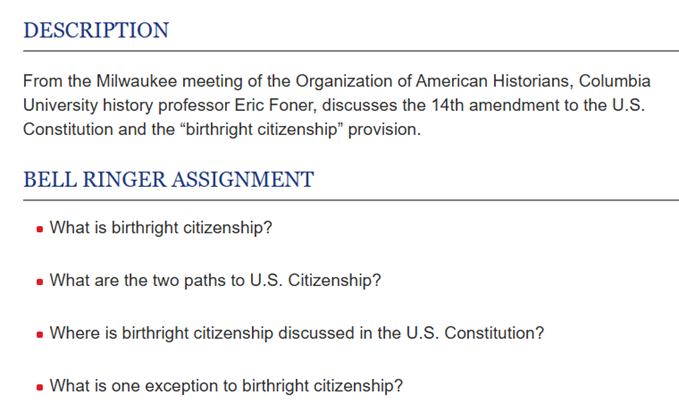
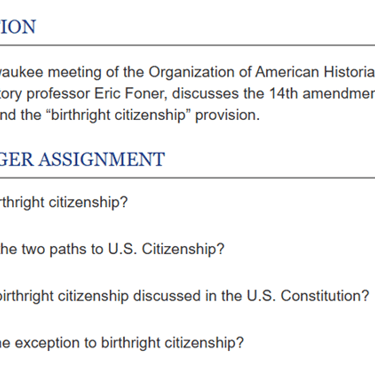
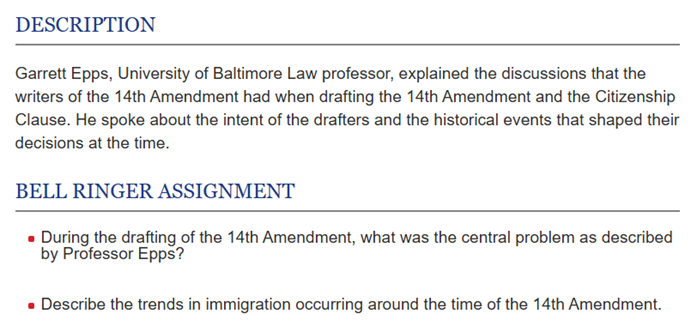
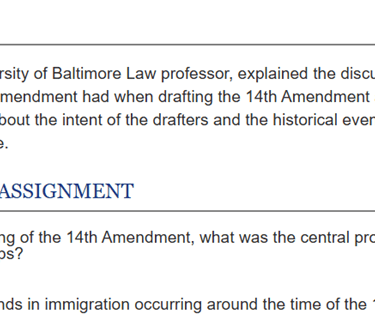
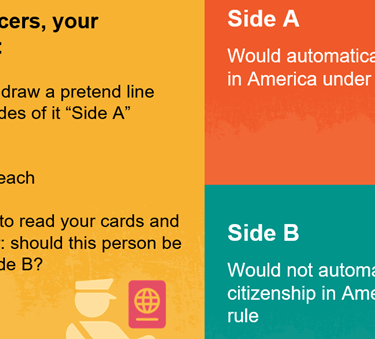
Video/Lesson Plan - C-SPAN, Two Bell Ringers: "Birthright Citizenship and the Drafting of the 14th Amendment" and "14th Amendment and Birthright Citizenship"
This one is definitely at a higher difficulty level, but two things about that. One, the video does a good job of explaining the supply and demand graph movements, and WHY minimum wage increases have unintended consequences - not necessarily bad, but choices that society should be aware of. MRU does have some limited support resources for the video, but primarily would point teachers toward their curriculum on price floors and their interactive activity (which I am also including a screenshot of here).
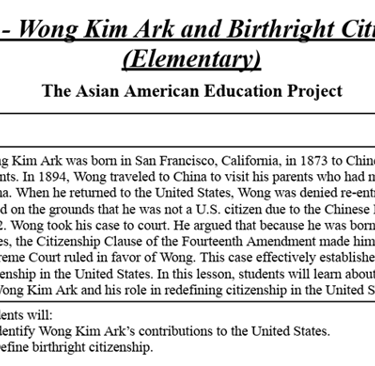
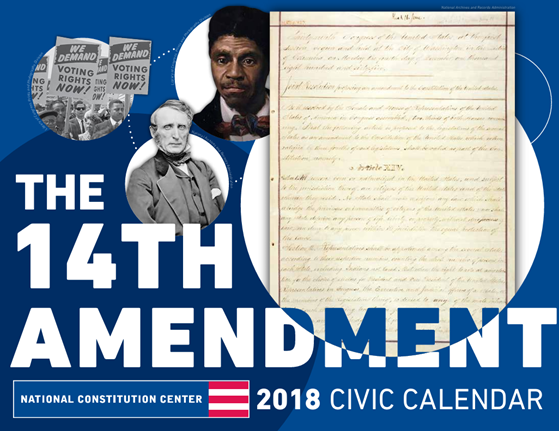
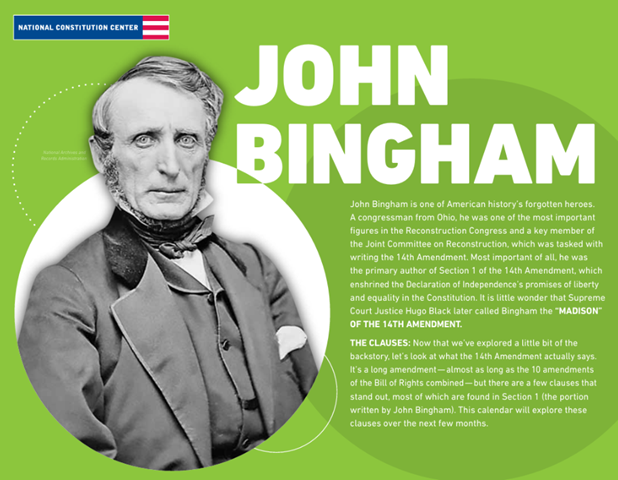
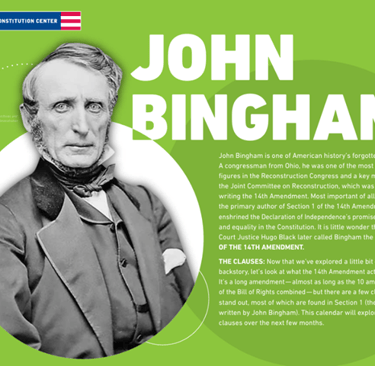
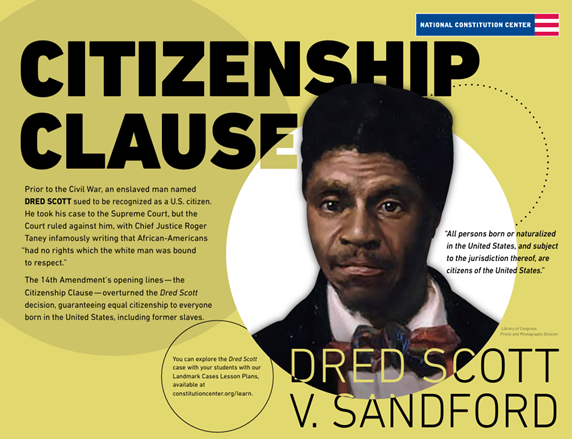
Resources including lesson plans - National Constitution Center, "2018 Civic Holiday Calendar: 14th Amendment" to celebrate the 150th Anniversary of the ratification of the 14th Amendment
This is a calendar (with included readings, events, and lessons/activities) that was created 8 years ago for the 150th anniversary of the ratification of the 14th Amendment in 1868. While not a traditional lesson plan, it does link to a lot of resources from the National Constitution Center on various aspects of the 14th Amendment and its' evolving interpretation in the 20th and 21st centuries. Below I have included screenshots of a couple of pages from the calendar, as well as a video linked from the NCC website:

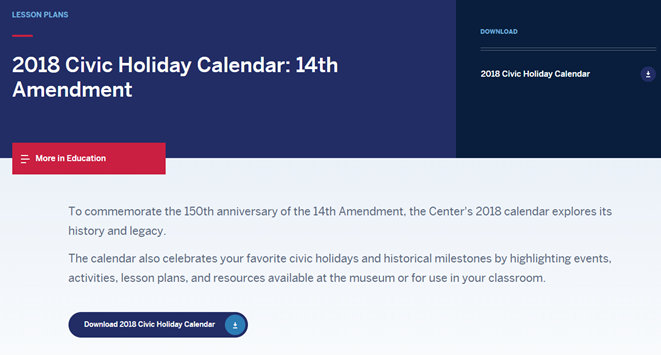
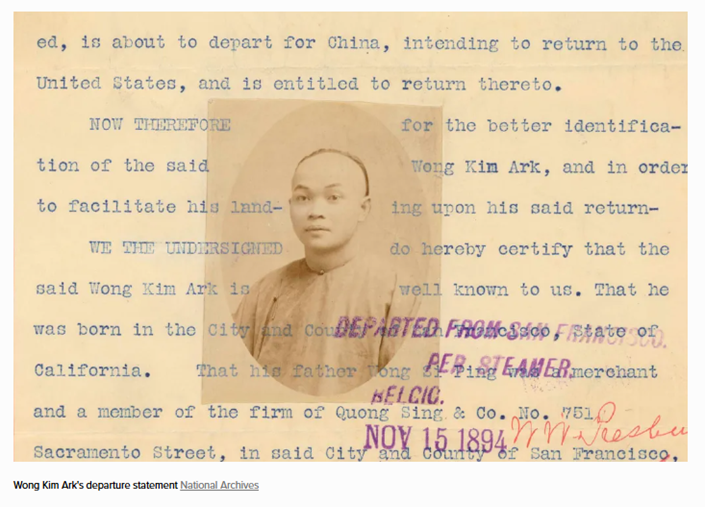
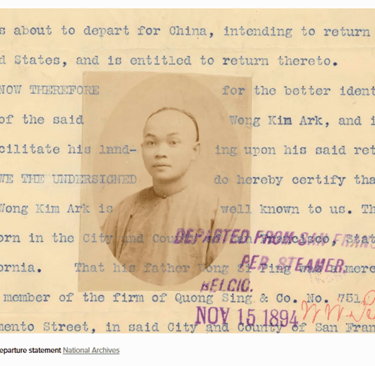
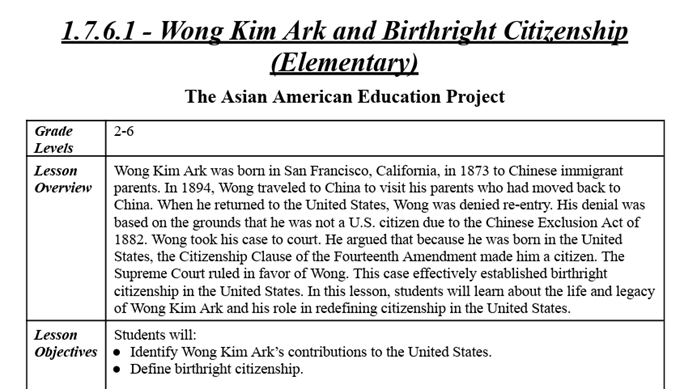
Lesson Plan - The Asian-American Education Project, "Wong Kim Ark and Birthright Citizenship (Elementary)"
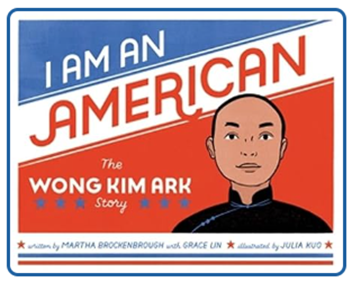
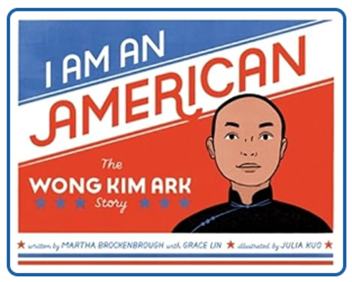
Let's start with a solid introduction to the main legal precedent for birthright citizenship, with resources focused on an elementary audience (but a secondary version with more primary sources is also available and listed below). The elementary lesson incorporates a children's book, video clips, and a single primary source activity. Good connections to Asian-Americans and late 19th century for older audiences (like the Chinese Exclusion Act).


Links for Part III - Birthright Citizenship debate
I want to share a few insights that percolated through my brain while doing all this research:
Separate from anything I learned about the birthright citizenship issue, the thing that stood out the most to me was the issue not of misinformation, but more the issue of "our information is the ONLY information". Sort of like scientific freedom during the COVID-19 pandemic, 90% or so of what I reviewed either said "this is a stupid debate - obviously they are wrong and we are right" OR "our opponents are idiots and evil people - you should not listen to them". That's one of the reasons it took longer to complete the posts for Parts II and III than I thought it would - the research took much longer (and it didn't matter whether I used Google or an AP-aided search engine - searching for arguments supporting Trump would typically bring me the exact opposite content).
Personally, I still think the status quo of birthright citizenship is the best fit for the United States (as a nation of immigrants) but I was impressed with the legal arguments put forth by the other side. I don't think an executive order is the best way to handle the situation (too much room for targeting specific nations or refugee groups) BUT I would not be surprised if the Supreme Court in an eventual ruling leaves room for future laws (passed by Congress and signed by a President) to "tweak" birthright citizenship (like potentially saying that parents have to be in the country legally for birthright citizenship to apply).
I also found it interesting to read more about the story of the key Supreme Court precedent for birthright citizenship - United States v. Wong Kim Ark (1898). On the one hand, I think the precedent was spot on for the facts of the case - Wong met all the qualifications for U.S. citizenship and there was no reason to question if he or his parents were "under the jurisdiction" of the U.S. government. On the other hand, differentiating what was actually ruled on by the Supreme Court 128 years ago versus how far the ruling has been expanded by subsequent Presidential administrations and State Department practice leaves a lot of room for potential reinterpretation by the current Supreme Court.
Finally a related note - the one fact that struck me the most of everything I read was the Los Angeles Times article I mentioned in Part II which said that the Supreme Court has reversed previous precedents over 100 times in history (including some major precedents, like Miranda vs. Arizona or Dobbs vs. Jackson Women’s Health Organization). It is actually a little more often than that - the U.S. Congress lists 240 examples of the Supreme Court overturning itself (https://constitution.congress.gov/resources/decisions-overruled/). This means that such an event occurs on average about 1 per year, a relative rarity but hardly a once-in-a-lifetime event. For someone who heard throughout my BA and MA degrees that Supreme Court rulings were (or at least the professors believed should be) set in stone, it was eye-opening to see actual numbers and examples of overturned precedents.
Classroom Resources Listed Above (in the order presented):
"Analyzing the arguments as Supreme Court hears birthright citizenship case" (video), PBS Newshour, Apr 2026, https://www.youtube.com/watch?v=7svW-c6l8oI
"Birthright Citizenship Explained in 20 Minutes" (video), The Infographics Show, Nov 2025, https://www.youtube.com/watch?v=czCZhJC7T6g
"What oral argument told us in the birthright citizenship case" (article), SCOTUSBlog, Apr 2026, https://www.scotusblog.com/2026/04/what-oral-argument-told-us-in-the-birthright-citizenship-case/
"Wong Kim Ark and Birthright Citizenship (Elementary)" (lesson plan), The Asian American Education Project, 2023, https://asianamericanedu.org/wong-kim-ark-elem.html
"How the Fight for Birthright Citizenship Shaped the History of Asian American Families" (article), Untold Stories of American History (from Smithsonian Magazine), Mar 2023, https://www.smithsonianmag.com/history/how-the-fight-for-birthright-citizenship-reshaped-asian-american-families-180981866/
"I Am an American: The Wong Kim Ark Story" (children's book), Julia Kuo (illustrator of the book), Nov 2021, https://www.juliakuo.com/portfolio/i-am-an-american
"Wong Kim Ark and Birthright Citizenship (Secondary)" (lesson plan), The Asian American Education Project, 2023, https://asianamericanedu.org/wong-kim-ark-sec.html
"2018 Civic Holiday Calendar: 14th Amendment" (resources/lesson plan), National Constitution Center, 2018, https://constitutioncenter.org/education/classroom-resource-library/classroom/2018-civic-holiday-calendar-14th-amendment
"The 14th Amendment | Constitution 101" (video), National Constitution Center, Aug 2022, https://www.youtube.com/watch?v=pQWWS3EOv24
"Module 14: The 14th Amendment: Battles for Freedom and Equality" (curriculum unit), National Constitution Center, https://constitutioncenter.org/education/constitution-101-curriculum/14-the-fourteenth-amendment-battles-for-freedom-and-equality
"Topical Talk - A citizen of nowhere?" (lesson plan with PDF and PPT), Economist Educational Foundation, Feb 2025, https://talk.economistfoundation.org/resources/a-citizen-of-nowhere/
"Bell Ringer: Birthright Citizenship and the Drafting of the 14th Amendment" (video w/bellringer), C-SPAN, Mar 2019, https://www.c-span.org/classroom/document/?9283 (lesson page)
"Bell Ringer: 14th Amendment and Birthright Citizenship" (video w/bellringer), C-SPAN, Jul 2018, https://www.c-span.org/classroom/document/?8418 (lesson page) OR https://www.youtube.com/watch?v=E2BQE1l-jaY (a different Eric Foner video from C-SPAN)
ECON and More
Curating articles for K-12 education.
CONTACT
© 2025. All rights reserved.