
A 3-part set of posts on the Minimum Wage - PART I - Economic Reasons to Increase It
I've been wanting to get to this topic since the start of the year (with several cities increasing their local minimum wages) but already had a lot of stuff scheduled and wanted to do three days in a row on the topic to be fair to it (rather than start and then not finish the "rest of the story"). NOTE my emphasis on "economic" - I don't want this to become either a politicized opinion piece or an empathy battle on "why don't you care?".
Jay LeBlanc
2/4/20267 min read
So here is my plan for the next 3 days of posts:
Part I - economic reasons why it is good to increase the minimum wage;
Part II, economic reasons why it is a bad idea to increase the minimum wage; and
Part III, classroom resources and lessons related to the topic.
Again, my intention is not to get into the politics of minimum wage arguments (though I'm sure I will repeat or link some of their points today and tomorrow). We have LOTS of things that government provides . . . and we have LOTS of debt trying to figure out how to pay for those things. So part of our job as social studies teachers is to help students understand the facts and the arguments of both sides, and then make their own decision. And part of MY job is also to make sure you have some ideas of how to do that . . .
First, Are We All Talking About the Same Thing?
Let's start by being clear what the current situation is:
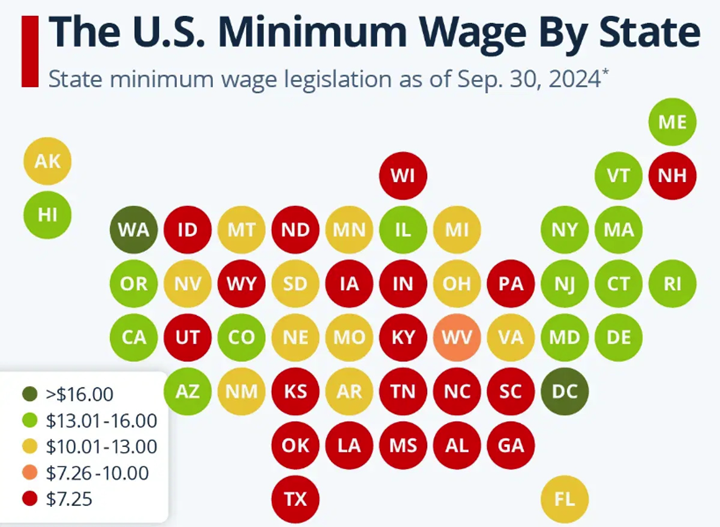
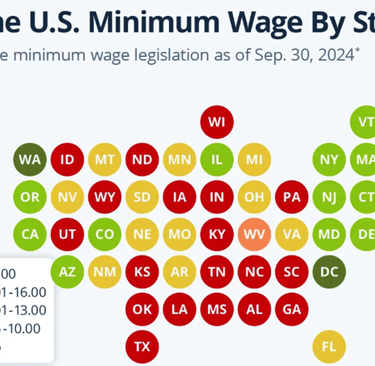
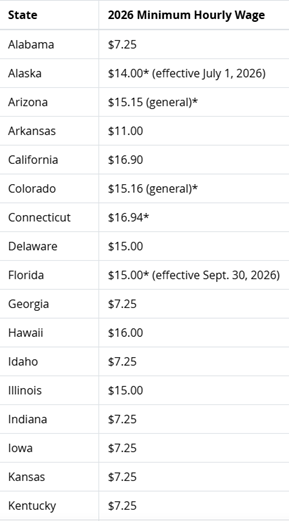
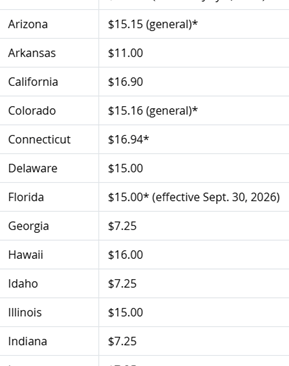
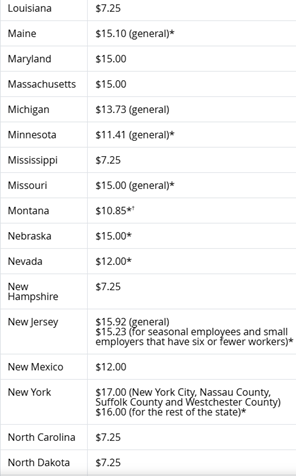
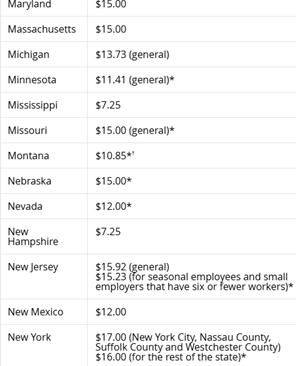
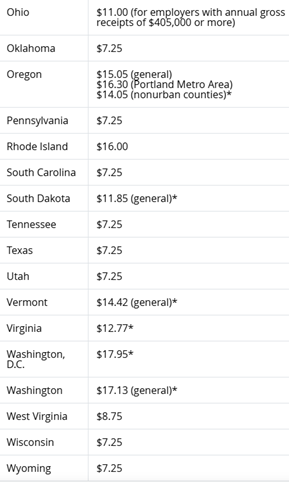
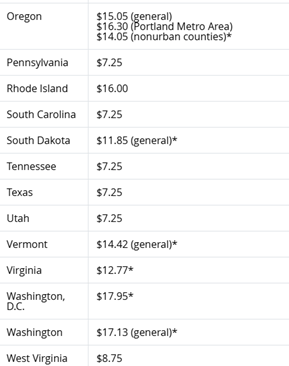
The infographic map above just gives you an approximate visual - it was the most recent one I could find showing the "big picture". The charts immediately below the map then show you the minimum wage in each state as of 2026 - in some cases reflecting pending increases later in the year. Keep in mind that seven states do not set a minimum wage (so it is automatically set at the federal level) and another 13 states have their minimum wage pegged to match the federal rate (for a total of 20 out of 50 - shown in RED on the map above). The other 30 (shown in shades of yellow and green) have chosen to increase their minimum wage above the federal rate at the levels shown - those with asterisks next to them automatically adjust it each year based on the CPI (Consumer Price Index). Also note that some states with higher minimum wage rates may have cities or counties within them with even higher minimum wage requirements.
So a lot of what we are looking at in today and tomorrow's post is - why have 60% of states increased the minimum wage beyond the federal minimum, while 40% of states have chosen to keep the rate the same as the federal minimum?
Part I - Economic Arguments Why We Should Increase the Minimum Wage:
I'm going to focus on the 5 most common economic arguments in favor of increasing the minimum wage - either justifications why states/localities have chosen already to take that step, or arguments why the federal rate should be increased. I know each of these are topics that could easily be expanded - my goal is to give you an overview and/or data backing it up, then links to explore more for yourself:
Argument #1 - Stimulates Economic Growth: Increased earnings for low-wage workers, who are more likely to spend extra income immediately, boosts consumer spending—a major driver of the U.S. economy.
Advocates argue that the increase in low-wage workers’ incomes generates increased spending in the local economy. A study by the Federal Reserve Bank of Chicago estimates that a $1 raise for a minimum wage worker translates to an additional $2,080 in consumer spending by their household over the course of a year.
One of the first types of spending to increase when workers get raises is dining. The increase of spending by low-income workers on household necessities and other consumer goods will help juice the economy and boost the revenue of small businesses.
Argument #2 - Reduced Employee Turnover and Improved Productivity: Higher wages increase employee retention, reducing company costs for hiring and training. Higher pay also improves employee morale and performance.
Higher wages could result in workers putting more effort into their job duties and producing higher quality results. The Harvard Business Review analyzed wage hikes at Amazon and found employees were more invested in retaining their job. Their efforts were less likely to wane and more likely to increase due to higher pay. However, note that almost all of the studies cited were with large companies, not small or medium-sized businesses.
Higher wages increase employee retention, saving companies substantial costs related to training and recruiting, which can equal 16% of a low-wage worker's annual salary.
Argument #3 - Reduced Public Spending: Higher wages decrease reliance on public assistance programs, improving the overall fiscal health of states and the federal government.
A Center for American Progress report found that a $10.10 federal minimum wage would reduce SNAP enrollment by 3.1 to 3.6 million people, saving taxpayers nearly $4.6 billion annually (assuming the income levels to qualify for benefits do not change).
Increased wages also reduce the need for Earned Income Tax Credit (EITC) and Child Tax Credit (CTC) expenditures, with estimates suggesting a decline of $6.5 billion to $20.7 billion annually.
Argument #4 - Shifts to Higher Productivity Firms: Higher minimum wages encourage a shift in employment to more productive firms, which can result in better, more sustainable jobs.
Minimum wage increases benefit higher-productivity firms. While low-productivity firms might see costs increase so much as to be unsustainable, more efficient firms might boost their employment, as higher wages allow them to find and keep workers. In short, minimum wages shift employment to higher-productivity firms.
Workers moving into higher-productivity firms can increase the number of good jobs. Shifts in employment from low- to high-productivity firms means that low-wage workers gain higher-quality jobs. Evidence from Germany’s 15 percent minimum wage increase in 2015 showed that workers moved to higher-paying, long-term jobs at larger companies as lower-productivity companies shut down (but could also advantage "big-box" stores over small businesses).
Argument #5 - Reduces Poverty and Inequality: Raising the wage helps reduce income inequality and lifts millions of families out of poverty, providing greater economic security.
Raising the federal minimum wage to $15/hour could lift 1.8 to 3.7 million people out of poverty. A $1 increase in the minimum wage reduces poverty among working-age adults by 0.3–0.7 percentage points. Another study says because minimum wages expand job opportunities for black workers more than for white workers, they find that minimum wage increases could reduce the overall black-white wage gap by 10% (and by 56% among workers most affected by the policies).
Higher wages correlate with improved health outcomes, including better infant health, reduced "deaths of despair," decreased child abuse, and better educational attainment (but as we know, correlation may or may not equal causation).
Links for Part I - Why Increase the Minimum Wage?
I'm not going to get into classroom resources until Part III - this is just links to back up where the information came from for the arguments listed above. Two related things I will mention based on the research I did to write this post: 1) A lot of the general statements put forth above were based on significantly older research - mostly between 2000 and 2010 (in fact, several went back to Joseph Stiglitz's arguments in the 1990s about inequality and the need for higher minimum wage levels). Which leads to 2) I was very surprised there are not more RECENT research studies on the topic - several writings from 2015-2018 stated with confidence that with cities and states starting to increase their own minimum wage levels locally, there should be a wealth of documentation soon . . . but data collected based on those "experiments" has only appeared in bits and pieces thus far (and usually sponsored by groups with political "skin in the game").
Sources for the Graphics Above:
"Mapping the Minimum Wage of Each U.S. State", Visual Capitalist, Sep 2025 (based on 2024 data), https://www.visualcapitalist.com/cp/mapping-the-minimum-wage-of-each-u-s-state/
"Minimum wage in the United States" (specifically their version of a map of rates across the U.S.), Wikipedia, Jan 2026, https://en.wikipedia.org/wiki/Minimum_wage_in_the_United_States
"Your 2026 Guide to Every State’s Minimum Wage", Paycom, Dec 2025, https://www.paycom.com/resources/blog/minimum-wage-rate-by-state/
Sources for the Arguments Above:
"A $15 minimum wage would have significant and direct effects on the federal budget", Economic Policy Institute, Feb 2021, https://www.epi.org/publication/a-15-minimum-wage-would-have-significant-and-direct-effects-on-the-federal-budget/
"A $20 Minimum Wage: Effects on Wages, Employment and Prices", The Center on Wage and Employment Dynamics at the Institute for Research on Labor and Employment (Cal-Berkeley), Sep 2025, https://irle.berkeley.edu/publications/working-papers/sectoral-wage-setting-in-california/
"Businesses can thrive with a higher minimum wage, and government can help", Economic Policy Institute, Apr 2021, https://www.epi.org/blog/businesses-can-thrive-with-a-higher-minimum-wage-and-government-can-help/
"Coupling a Federal Minimum Wage Hike with Public Investments to Make Work Pay and Reduce Poverty", paper from the National Institutes of Health (NIH), Jul 2021, https://pmc.ncbi.nlm.nih.gov/articles/PMC8286698/
"Factsheet: Minimum wage increases are good for U.S. workers and the U.S. economy", Washington Center for Equitable Growth: Evidence for a Stronger Economy, Jul 2019, https://equitablegrowth.org/factsheet-minimum-wage-increases-are-good-for-u-s-workers-and-the-u-s-economy/
"Higher Wages for Low-Income Workers Lead to Higher Productivity", Peterson Institute for International Economics, Jan 2015, https://www.piie.com/blogs/realtime-economic-issues-watch/higher-wages-low-income-workers-lead-higher-productivity
"How Does a Federal Minimum Wage Hike Affect Aggregate Household Spending?", Chicago Fed Letter from the Federal Reserve Bank of Chicago, Aug 2013, https://www.chicagofed.org/publications/chicago-fed-letter/2013/august-313
"Minimum Wages Create Opportunities for Good Jobs and Better Business Productivity", WorkRise Network: An Urban Institute Initiative, Feb 2024, https://workrisenetwork.org/working-knowledge/minimum-wages-create-opportunities-good-jobs-and-better-business-productivity
"Racial inequality in frictional labor markets: Evidence from minimum wages", paper from Labour Economics (U.K.), Jun 2023, https://www.sciencedirect.com/science/article/abs/pii/S0927537123000192
"Raising the Minimum Wage Would Boost an Economic Recovery—and Reduce Taxpayer Subsidization of Low-Wage Work", Center for American Progress, Jan 2021, https://www.americanprogress.org/article/raising-minimum-wage-boost-economic-recovery-reduce-taxpayer-subsidization-low-wage-work/
"Raising the Minimum Wage: Good for Workers, Businesses, and the Economy", U.S. House Committee on Education & the Workforce Democrats, Feb 2021, https://democrats-edworkforce.house.gov/download/fact-sheet-raising-the-minimum-wage-is-good-for-workers-business-and-the-economy
"With Prices Rising, States and Cities Must Raise Their Minimum Wages", Route-Fifty (written by the Center for American Progress, Aug 2022, https://www.route-fifty.com/workforce/2022/08/amid-rising-prices-nationwide-states-and-cities-must-raise-their-minimum-wages/375334/