A Sort-Of-Quick Introduction to my Newest Upcoming Series - "Famous American Court Cases"
This post is just going to introduce my new series of posts - like my geography series, I'm planning for this one to take a couple of years to complete. Right now the intention is weekly posts when we get into the school year, but for the summer I plan to "experiment" with different formats balancing the content, primary sources, and classroom resources (as I usually try to do in most of my posts) . . .
What I want to do in this introductory post to my new "Famous American Court Cases" series is talk about three things:
• What It is NOT (things I am not trying to accomplish with these posts)
• What it IS (or at least what I hope it will be - the goals I have for the series)
• What it will look like (an outline of the elements I plan to include in each post)
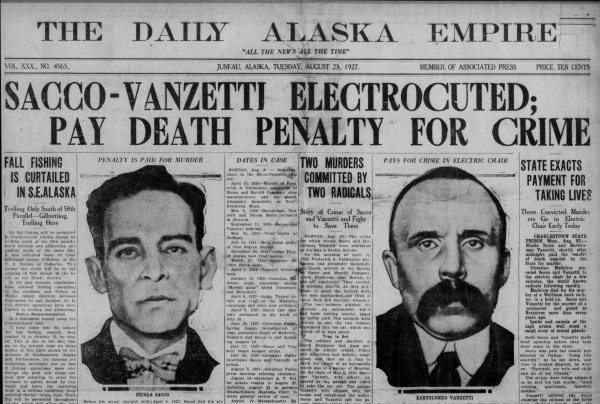
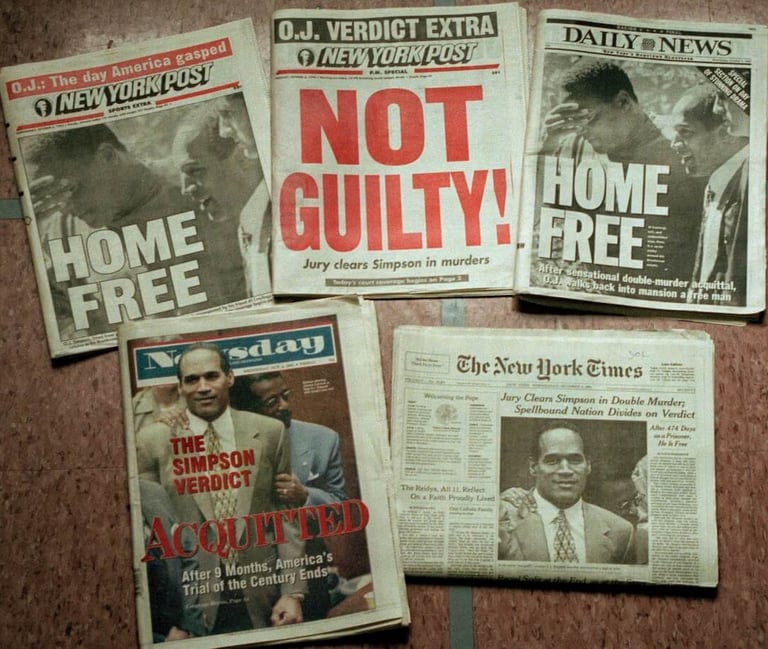
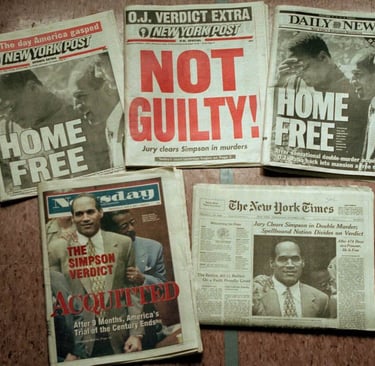
At the bottom of the post I will also include a short list of the primary sources I used to put together my list of "Famous American Court Cases" - right now the list is approximately 100 cases, but I'm leaving the final number a little flexible because I keep coming across new ideas. In particular, I've been debating a lot about court cases that did NOT establish big legal precedents, but impacted United States history in a particular way. So for example, should we study Sacco and Vanzetti from the 1920s, but not the O.J. Simpson trial? I will work some of those quandries out as I go . . .
What This New Series is NOT:
I know it is a little odd to start with describing what something is not BEFORE I talk about what I want it to be, but I thought I should start by making sure you understand what I am NOT trying to accomplish (or what audiences I am NOT trying to target:)
1) Some Kind of Pre-Law Curriculum
This is mostly addressing the resource list below, because some of the best books and websites on the topic of "most important legal cases in American history" are addressed in law school. BUT . . . they are addressed typically as precedents or case studies only, not because of their impact on the United States or future generations.
In my list I tried to find a balance - there are some cases most Americans have never heard of (McCullough v. Maryland from 1819, for example) that establish precedents we take for granted today, while other more famous cases (like the Scopes Monkey Trial) had little legal impact but a BIG social impact.
2) A Repeat of AP's List of the 15 Essential Cases for AP United States Government/Politics
That is nothing against Advanced Placement - they do a great job, and all 15 of their cases are included in my longer list. There are other similar "Top 10" or "Top 20" lists out there. But . . . who decided that these were the really important ones? Are they primarily important in a general sense - or just in the workings of government? And can that change over time? For example, if Plessy v. Ferguson is replaced by rulings of the 1950s and 1960s, does that mean Plessy isn't important anymore? Or which has impacted more people over the past 50 years - Tinker v. Des Moines or Roe v. Wade? One of those is in the Top 15 - one is not.
PLUS . . . almost every case AP selected is focused on individual rights - where are the business issues? How about technology? Limits on the power of government? Historical significance in a particular time of American history? All in all, I felt much more comfortable with an expansive list rather than subjectively picking the "stars". That's not to say I didn't also do some of that - but choosing between #100 and #101 doesn't seem like such a big deal . . .
3) Lots of Legal Jargon
That's not to say there won't be ANY legal jargon - but it might be interesting to see how much "legal jargon" is now part of the American English patois. Most citizens today have probably heard of "judicial review", even if they aren't familar with Marbury v. Madison. No one before the mid-1960s could tell you what your "Miranda rights" were - now any viewer of "Law and Order" can probably recite them as smoothly as a policeman.
In other cases we understand the idea even if we don't recognize the Latin phrase used by lawyers - consumers, for example, understand "let the buyer beware" better than caveat emptor. Plenty of murder mysteries understand the need for a corpus delecti (proof a crime has actually occurred) before getting into the investigation. BUT . . . in relatively few of these cases do we need to focus on the legal jargon unless they establish an important precedent (like in the case of Miranda v. Arizona). I will try to keep it as understandable for you AND your students as possible!
Resources I used to develop this case list:
"Cases That Shaped the Federal Courts" (website), Federal Judicial Center (FJC), 2026, https://www.fjc.gov/history/cases/cases-that-shaped-the-federal-courts
"Educational Resources - Supreme Court Landmarks" (website), United States Courts, 2026, https://www.uscourts.gov/about-federal-courts/educational-resources/supreme-court-landmarks
"Essential Supreme Court Decisions: Summaries of Leading Cases in U.S. Constitutional Law, 18th Edition" (book), John R. Vile, 2022
"Famous Trials: Accounts and Materials for 100 of History's Most Important Trials" (website), Professor Douglas Ol Linder/University of Missouri-Kansas City Law School, 2026, https://www.famous-trials.com/
"An Introduction to Constitutional Law: 100 Supreme Court Cases Everyone Should Know" (book), Randy E. Barnett and Josh Blackman, 2020
"Landmark Cases of the U.S. Supreme Court" (website), Street Law and the Supreme Court Historical Society, 2026, https://landmarkcases.org/
"The Oxford Guide to United States Supreme Court Decisions, 2nd Edition" (book), edited by Kermit L. Hall and James W. Ely, Jr., 2009
"Supreme Court Cases Library" (website), National Constitutional Center, 2026, https://constitutioncenter.org/the-constitution/supreme-court-case-library
What I "Hope" This New Series WILL BE:
Again, it might take a little experimenting to find the balance between informational and TL/DR, but here's what I'm shooting for (both in terms of interesting content and useful resources:
1) A Nice Balance of Historical Time Periods
Partly this is to reflect information/resources that could be integrated into American History courses, but partly this is to address "recency bias" - the tendency most of us (particularly those in the media) have to believe that the past was never like life is today, and only the unique changes happening in life today are relevant. Call it the bias of a former history teacher . . . yes, artificial intelligence and gene splicing may make huge impacts on life in the future. Just like personal computers started doing 50 years ago. Just like airplanes and automobiles started doing 120 years ago. Just like electricity and mass transit started doing 150 years ago. Just like the printing press started doing 500 years ago . . .
Point is, court cases and precedents impact our lives today, both because of what did happen AND what could have happened? I mentioned earlier that I am still finalizing my list as I start this series, but here are the general time periods and number of important court cases I have thus far:
19th Century Before the Civil War - 12%
19th Century After the Civil War - 7%
First half of the 20th Century - 15%
1950s and 1960s - 22%
1970s and 1980s - 17%
1990s and 2000s - 15%
Last 15 years - 10%
I should also note that, like my geography series, I plan to "mix it up" in a couple of different ways, so you are seeing some cases from different time periods and different subject areas (rather than, for example, a strictly alphabetical or chronological list). That will probably be one of the things I "experiment" with this summer . . .
2) A Nice Variety of Subject Areas
One of the things I have always disliked about list of "top" Supreme Court cases is the focus on legal precedent or case law. Useful if you are in law school or working on an advanced degree in the humanities, but a hard way to keep students or everyday readers engaged. I mentioned earlier that I wanted to include court cases that are/were socially significant, but I also want to look at a few cases in other areas of law.
So for example, what cases have driven and shaped our economic system? What cases have expanded (and narrowed) our personal rights and freedoms? What cases can we look back on honestly and wonder if we would have ruled differently in the same historical time period and social situation? (Easy today to play Monday Morning Quarterback and say "you" would have supported Korematsu and fought against Japanese internment camps in the middle of World War II, even if it meant potentially going to prison as a traitor - so why did the Supreme Court at that time vote 6-3 to uphold his conviction?)
My assumption is that most teachers will not use this entire list, but hopefully you find something to use in a single class or on a single topic. Or maybe you will just learn a little something (which leads me to #3 . . .)
3) An Opportunity for All of Us (especially me) to Learn a Little Something
Admittedly I find this of value because a) I like and value professional development; and b) I consider myself a lifelong learner and continue to look for more things to learn even in semi-retirement. But having said that, the preparation of the list for this series has already taught me a LOT, and the few cases I have gotten into in depth (or started to look for educational resources for) has done even more. That's one of the reasons I like doing series like this alongside standalone posts about individual topics or current events issues - it gives me (and us) a chance to dig into big topic a shovelful at a time.
I would not have sat down and read through the World Almanac about 220 nations (and now non-nations) of the world, but now that I am about 20% of the way through the geography series I am learning so many interesting things on each country I research and present. And in the same way I hope you will read each post in this series not as dry legal precedent, but as a story of someone's issue and the time period it was being debated in.
4) Useful
My main goal with most (if not all) of my posts has been to give you something you can use - curated content, a summary of the most important information, resources you can use in your classroom, and the ability to "look it up" for yourself (either to check up on my legitimacy OR to expand beyond what I have the time/space to cover). This is not intended to be presented at too low a level - I could see using a few of these in a middle school US History class, but mostly in the context of the time period (like going more in-depth into the Dred Scott case or John Brown's trial as events leading to the Civil War). I'm primarily thinking high school students and higher as end-users of this content.
On the other end, I've already noted that this is not intended to be in lieu of going to law school - I'm not even thinking this would be a good substitute for a college professor who has this as an area of specialty. BUT . . . that's part of the issue - most professors (or even AP teachers) don't go into this kind of depth on legal cases anymore. Or if they do, it is in terms of a targeted focus on a subset of court cases (like legal cases of the Civil Rights Movement, or titillating cases featured on the CourtTV cable network).
So the last factor I tried to keep in mind putting this list together was long-term importance - how many murder cases or tabloid tell-alls will be remembered even a decade into the future? Some will - we still study Nat Turner's trial not because of the number of deaths, but because of the context of the events within the South of the 1830s. But most will not. And as always, you can second-guess me as we go!
What The Format of Posts Will Look Like (at least initially) for This Series:
Like the format I came up with for the geography series (with the idea of having a consistent shell to work with no matter how big or small the country), I want to have some consistent elements in every post about a famous court case. At the same time, just like in the geography series some of these cases will have more information available, more connections to modern-day life, more classroom resources, and certainly more interest for teachers and students. So I am not saying each post will be the same length . . . AND I may "tweak" the format as I go (like I did adding the Internet Access Rate to countries after the first month). So here is the format goal currently . . .
1) Basic Data on the Case (including who is hearing/deciding it)
This will be fairly basic - mostly establishing the timeframe, the location within the country where the case originated, the level at which the case is being decided (mostly Supreme Court, but not always) and on what basis they will decide (majority vote, jury vote, judge ruling, etc..). Setting will then be established in #2 below.
The other part I may include between #1 and #2 is physical evidence (when available) - pictures of the involved parties, primary source material about the case, etc.. Obviously the newer the case (OR the more famous the case), the more material will be available.
2) Facts and Historical Background/Context
Generally a narrative, describing two things. One, what are the facts of the case, normally taken from case descriptions in legal briefs (but edited to summarize the essentials). Two, I want as much as possible to give some historic background to the time period and political/cultural/social setting the case is happening within. Anticipating each of those to normally be a single paragraph, but might be longer IF I am connecting to the physical evidence mentioned above.
3) Key Questions to be Deliberated (remember, the Supreme Court is an appeals court reviewing the case, while other local cases may end with the un-appealed verdict)
These will normally be bullet points, though I may also include "bigger question" types of questions for cases where there are a lot of factors to consider. Most will be exactly what issues the court was asked to address, but in some cases (like criminal cases, for example) there may be both a guilt/innocence component as well as a punishment vs civil disobedience element to discuss (John Brown's trial after Harpers Ferry comes to mind - does the goal of freeing slaves justify the actions taken, and would the case be tried differently if it was in the North rather than the South?). And as I noted in the title, remember that appeals courts often are reviewing the facts of the initial trial, not re-examining the evidence itself.
4) What Was The Decision? What Were the Ramifications AT THAT TIME?
This should be relatively short, though addressing the immediate ramifications will depend on the time frame. In early America it could take months or even years to communicate decisions, while today a decision of the Supreme Court can be communicated worldwide in a matter of minutes. Mostly, though, I will be looking at whether the court decision resulted in immediate changes or simply led to a later court decision.
5) Why Do We Care? Why Is This Remembered? What Could Have Happened Differently?
This will probably be the main section to make connections, both to other subject areas (how did it impact history, or civics, or business, or our personal lives, etc..) as well as significance (is it a result we now take for granted, or an area of law that is still up for debate regularly?). In some cases I will also draw from legal and historical experts on "what could have happened" speculation - using the earlier example, does the Civil War begin when it does if the Supreme Court rules in favor of Dred Scott? Or how about if John Brown receives a prison sentence instead of execution? And, of course, some of these cases have themselves been replaced by new precedents in later years or future Courts.
6) What Resources Are Available to Use This In a Classroom?
I don't plan to demonstrate lesson materials here - the last part will typically just provide links to resource material specific to the case. This is an area, though, I may change as I go further into the series - if teachers tell me they need more ideas how to use these cases I may devote more time/space to it (since my goal is always to give you practical ideas you can use in your teaching). For more well-known cases there may be a lot to choose from - for lesser-known cases it may simply be offering websites for more information or additional primary source material.
My goal is to have the first couple of cases ready to post during the first half of June, then settle into some kind of regular weekly schedule. But we will see if that is doable with my other commitments, or a bit too "optimistic" as June proceeds . . .
ECON and More
Curating articles for K-12 education.
CONTACT
© 2025. All rights reserved.