Countries of the World (Africa) - Senegal
Third country from Africa in my new geography series. So far I have been pretty happy with the format on these first few, but one small change you might notice I made (and went back to fix on earlier ones) was including "Internet Access Rate" rather than "Literacy Rate" for countries. I forgot I made that change the last 2-3 years in the classroom - felt like students could relate to it easier (and it helped them judge the development status of countries).
Section I - Basic Info on Senegal


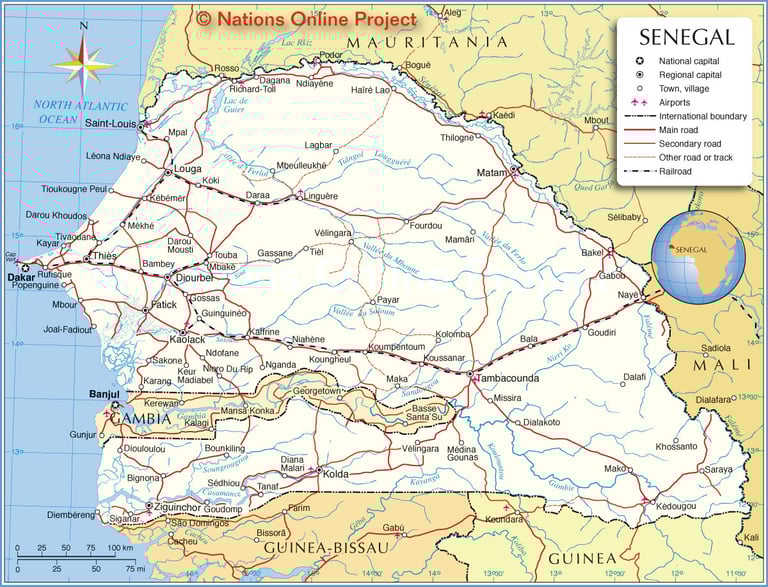
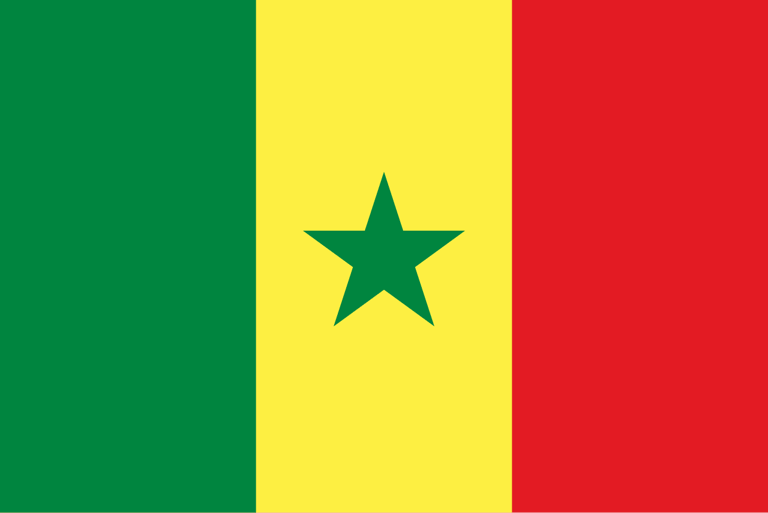
Official Name: Republic of Senegal
Population: 19,311,233 (67th largest in the world, 25th largest in Africa)
Area/Size: 75,955 square miles (a little smaller than South Dakota)
Capital: Dakar (3.7 million - sister city of Ann Arbor, MI)
Spoken Languages: French (official), indigenous (Wolof, Pular, Serer, etc..)
Religions: Muslim (92%), Catholic (5%), local ethnic (3%)
Life Expectancy: 70.9 years Internet Access Rate: 60.6%
Per Capita Income: $5,110 Unemployment: 3.0%
What do they Export?: Gold, refined petroleum, fish, cement
Export Partners: Mali (21%), India (12%), Switzerland (11%), China (5%)
Import Partners: China (19%), France (9%), Nigeria (7%), India (7%)
Government Type: Presidential republic (some history of electoral issues, but last election in 2024 freely held and won by the opposition)


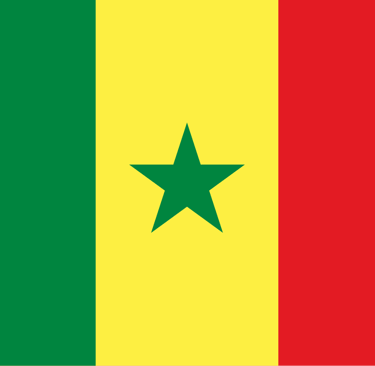
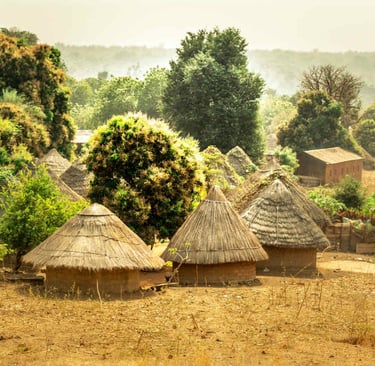
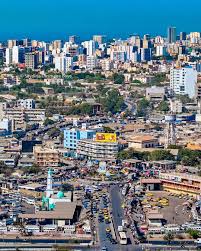
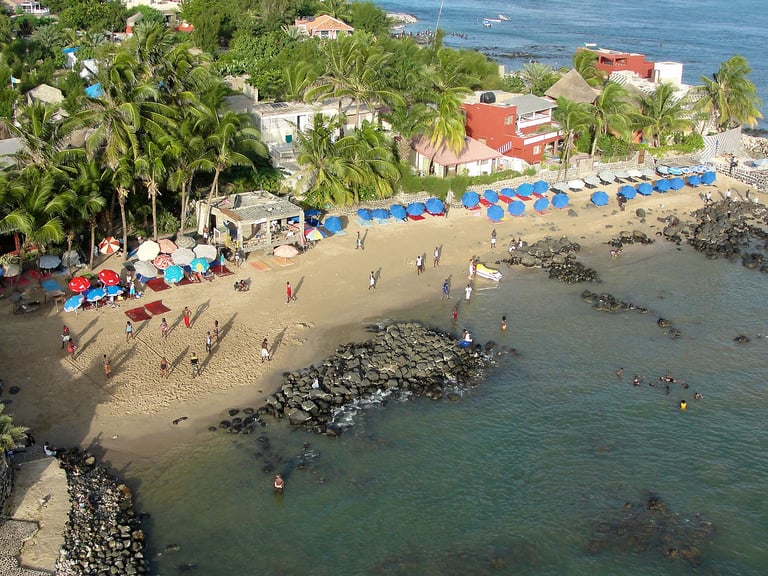
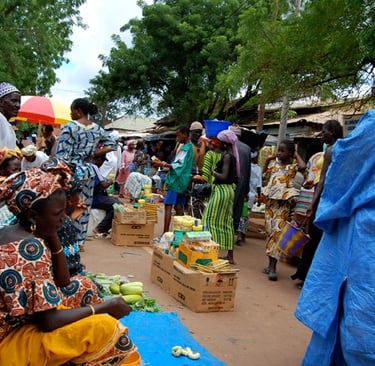
Section II - Images of Senegal
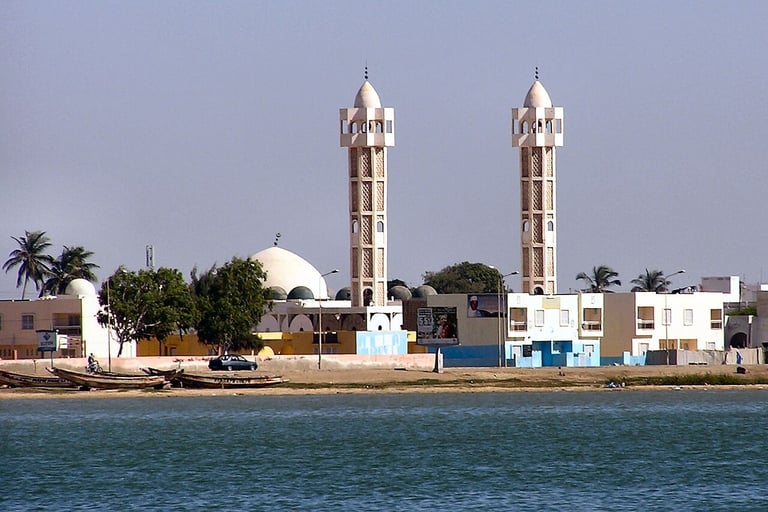
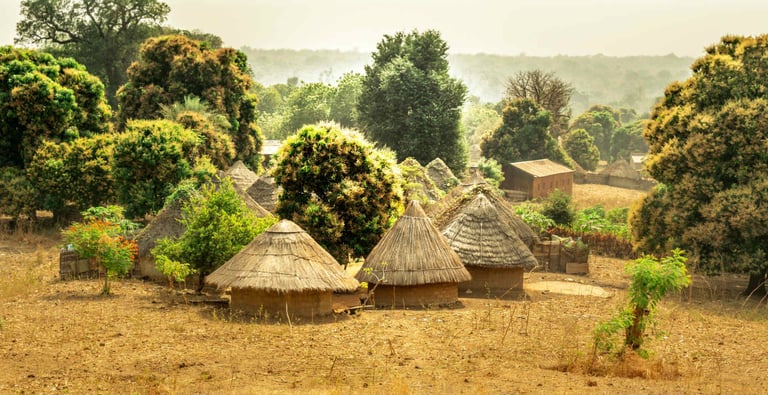
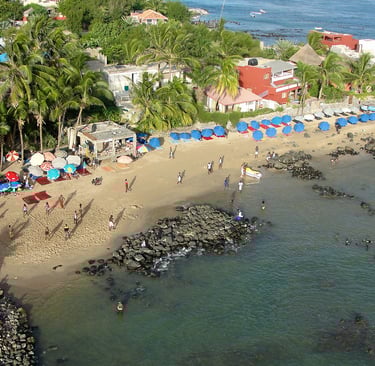
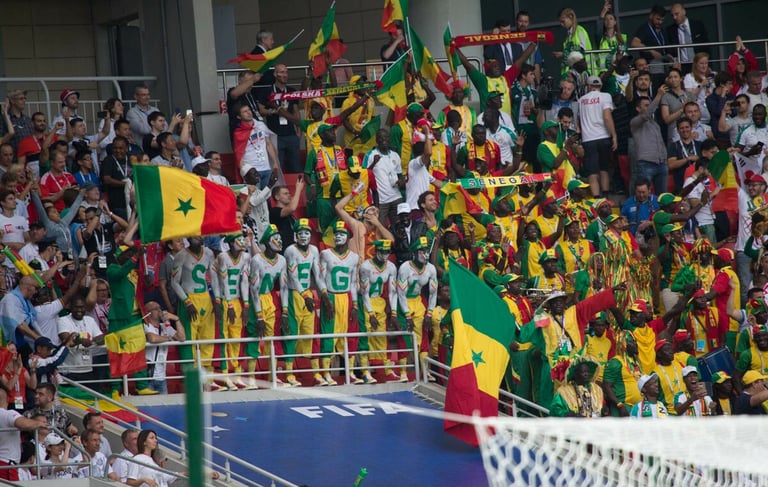
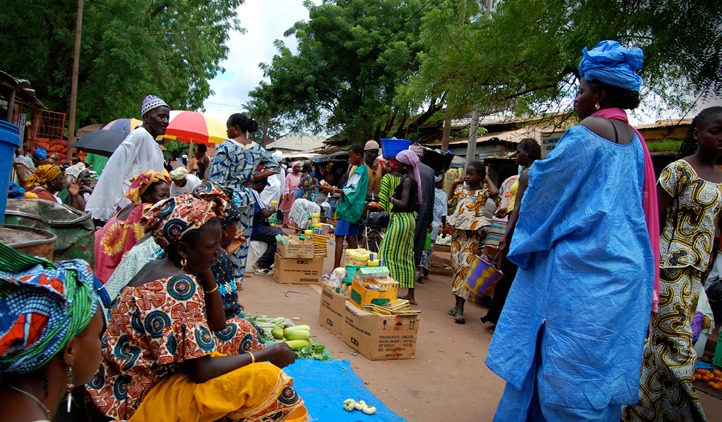
6 Key Dates/Periods in Senegal's History
Like a lot of the African countries, this will try to balance events from before the colonial period, with events during and after independence. But a lot of the colonial period has (for better and worse) shaped the country of today.
c. 1350 - 1549 - While the area of Senegal sat on the periphery of several large Sahel empires (like Ghana, Mali, and Songhai), the early empire that impacted it most was the Jolof Empire. Despite the name, it was founded by a voluntary confederacy of States; it was not an empire built on military conquest in spite of what the word "empire" implies. Unfortunately most of the histories of this empire were oral and largely lost to history over the centuries. Beginning in the 1440s, Portuguese ships began to visit the coast, initially looking to capture slaves but soon shifting to trade. The Jolof expansion may have been assisted by the purchase of horses from these traders. Over time, though, the wealth brought by the Atlantic trade began to work against the Jolof (since the main state was not on the coast itself). Breakaway states were victorious in the Battle of Danki in 1549, leading eventually to the empire's downfall.
1444 - 1677 - In the mid-15th century, several European nations reached the coast of West Africa. The Portuguese were the first to conclusively arrive in Senegal, when Dinis Dias explored the Senegal River and used the island of Goree for landing and engaging in commerce (though not a permanent settlement). The Dutch West India Company followed with the purchase of Goree in 1627, leading to the building of forts and warehouses to store goods destined for their mainland trading posts. Dutch settlers occupied the island for nearly half a century, dealing in wax, amber, gold, ivory and also participated in the slave trade, but kept away from foreign trading posts on the coast. Ultimately the French took over the settlement in 1677 and - despite capture by the British at several points over the next 250+ years - stayed in the French empire.
1677 - 1940 - The rivalry between Britain and France has the most impact of the area of Senegal during this time, as well as the rise of the slave trade. The Europeans had been disappointed hoping to find more gold in West Africa (as the Spanish had in the Western Hemisphere) but when the development of plantations in the Americas raised a great need for cheap labor, the area received more attention. Traffic of "ebony" was an issue for warriors who traditionally reduced the vanquished to slavery. Some people specialized in the slave trade, for example the Dyula in West Africa, compounding politico-military instability in the region. Eventually in the 1850s (as the slave trade came to an end) the French finally began to expand their foothold onto the Senegalese mainland, at the expense of the native kingdoms.
April 4, 1960 - In Jan 1959, Senegal and the French Sudan merged to form the Mali Federation, which became fully independent on April 4, 1960 (now celebrated as Senegal's Independence Day). However, due to internal political difficulties, the Federation broke up on 20 August 1960 and Senegal and Mali became separate nations. Léopold Senghor, internationally known poet, politician, and statesman, was elected Senegal's first president in August 1960, and would remain in power for the subsequent two decades until his retirement in 1980.
Dec 1981 - Sep 1989 - A loose confederation was proposed in 1981 between Senegal and its neighbor The Gambia, which is almost completely surrounded by Senegal. The odd arrangement of the two countries goes back to the colonial rivalry between Britain and France - The Gambia was a British colony on the Senegal River, while Senegal was a French colony in the land north, east, and south of The Gambia. It was intended to promote cooperation between the two countries, but ran into economic issues - particularly competition over a common currency and low trade tariffs. Ultimately the confederation was dissolved by Senegal at the end of September 1989 after The Gambia refused to move closer toward union. The main impact on Senegal has been unhappiness in the Casamance region (the portion of Senegal south of The Gambia) where people had economically benefited from the union.
1982 - present - An ongoing low-level conflict has been waged between the Government of Senegal and the Movement of Democratic Forces of Casamance (MFDC) since 1982. The MFDC has called for the independence of the Casamance region, whose population is religiously and ethnically distinct from the rest of Senegal. The principal inhabitants of the region are members of the Jola, while the Wolof are the overall largest ethnic group in Senegal, dominating the north. The sentiment has existed amongst Jola that they do not benefit sufficiently from the region's richness and that Dakar, the capital, reaps most of the profit from the region's products. The bloodiest years of the conflict were during the 1992–2001 period and resulted in over a thousand battle related deaths. In 2022 and 2025 factions have signed negotiated peace deals, but intermittent protest and violence still occurs.
Other Non-Political Issues
Section III - Issues of Senegal
General Information on Senegal:
"All About Senegal", Africa.com, Jan 2025, https://africa.com/heres-what-you-need-to-know-about-senegal/
"Discover Senegal" (national tourism site), Republic of Senegal, 2024, https://www.discoversenegal.com/
“Senegal", One World Nations Online, Jan 2025, https://www.nationsonline.org/oneworld/senegal.htm
“Senegal", Wikipedia, Jan 2026, https://en.wikipedia.org/wiki/Senegal or https://simple.wikipedia.org/wiki/Senegal
"Senegal Travel Guide", National Geographic, https://www.nationalgeographic.com/travel/destination/senegal
“The World Factbook - Senegal", Central Intelligence Agency, Jan 2026, https://www.cia.gov/the-world-factbook/countries/senegal/
History Links on Senegal:
"The exception: behind Senegal’s history of stability", The Conversation, Mar 2019, https://theconversation.com/the-exception-behind-senegals-history-of-stability-113198
"History of Senegal - Module Twenty Three, Activity Two", Exploring Africa (from the African Studies Center @ Michigan State University), https://exploringafrica.matrix.msu.edu/module-twenty-three-activity-two/
"Island of Gorée", UNESCO World Heritage Centre, https://whc.unesco.org/en/list/26
"Senegal Explained in 10 Minutes (History, Geography, & Culture)" (video), Opentiera, 2024, https://www.youtube.com/watch?v=PR2u7gSj59g
Current Events Stories on Senegal:
“‘The ocean is what we know.’ Can Senegal woo climate refugees inland?", Christian Science Monitor, Dec 2022, https://www.csmonitor.com/World/Africa/2022/1201/The-ocean-is-what-we-know.-Can-Senegal-woo-climate-refugees-inland
"Senegal’s ‘schools for husbands’ aim to keep mothers from dying", CNN, Aug 2025, https://edition.cnn.com/2025/08/19/africa/senegal-school-husband-childbirth-hiv-latam-intl
“Senegal’s troubled Casamance region hopes for peace with rise of local boy to PM", The Guardian (UK), Aug 2024, https://www.theguardian.com/world/article/2024/aug/28/senegal-casamance-region-peace-ousmane-sonko-prime-minister
"Senegal baskets are all the rage so why aren't craftswomen seeing the profits?", Africa News, Jan 2026, https://www.africanews.com/2026/01/05/senegal-baskets-are-all-the-rage-so-why-arent-craftswomen-seeing-the-profits/
"Why is Senegal squaring up to the International Monetary Fund?", Al-Jazeera, Nov 2025, https://www.aljazeera.com/economy/2025/11/28/why-is-senegal-squaring-up-to-the-international-monetary-fund
Other Interesting Links Related To Senegal:
"Cultural Insights: Understanding Senegalese Traditions", The Glory Foundation, Nov 2024, https://thegloryfoundation.com/blog/f/cultural-insights-understanding-senegalese-traditions
"Rare 'Ghost Elephant' Sighting Comes with Grave Warning About the Species", People Magazine, Jun 2025, https://people.com/rare-ghost-elephant-sighting-comes-with-grave-warning-11754569
“Senegalese authorities to phase out Dakar's iconic buses" (video), CGTN Africa, May 2025, https://www.youtube.com/watch?v=_1G5A0Pn1zk
“Teraanga: The word that defines Senegal", BBC News, Nov 2020, https://www.bbc.com/travel/article/20201115-teraanga-the-word-that-defines-senegal
“'We are losing our treasure': the West African coastal areas tackle plastic waste", World Bank Group, Jul 2023, https://www.worldbank.org/en/news/feature/2023/07/12/we-are-losing-our-treasure-the-west-african-coastal-areas-tackle-plastic-waste
Section IV - Resources About Senegal
ECON and More
Curating articles for K-12 education.
CONTACT
© 2025. All rights reserved.