Countries of the World (Africa) - Somalia
Sixth country from Africa in my new geography series. So far I have been pretty happy with the format on these first few, but one small change you might notice I made (and went back to fix on earlier ones) was including "Internet Access Rate" rather than "Literacy Rate" for countries. I forgot I made that change the last 2-3 years in the classroom - felt like students could relate to it easier (and it helped them judge the development status of countries).
Section I - Basic Info on Somalia
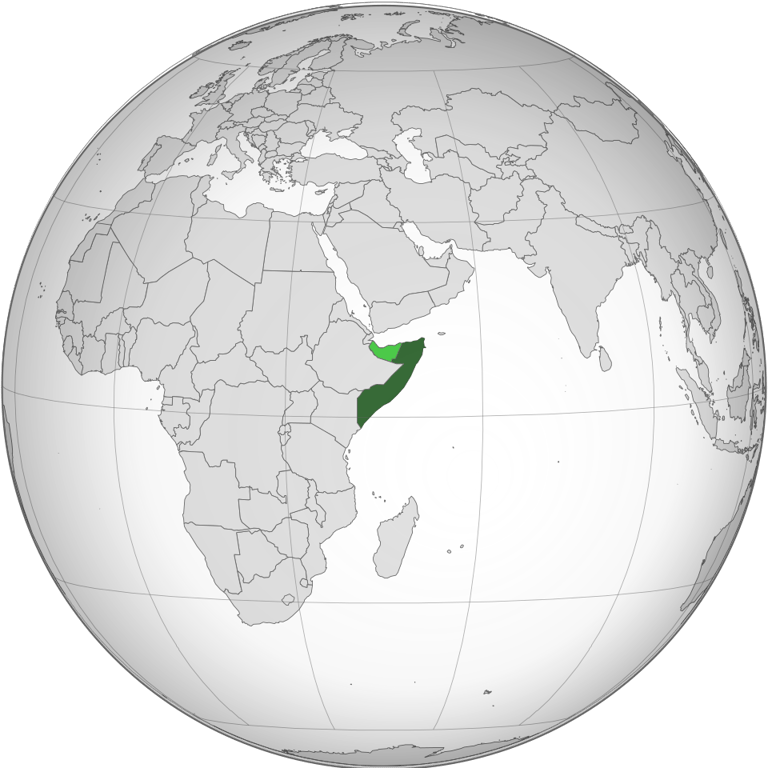
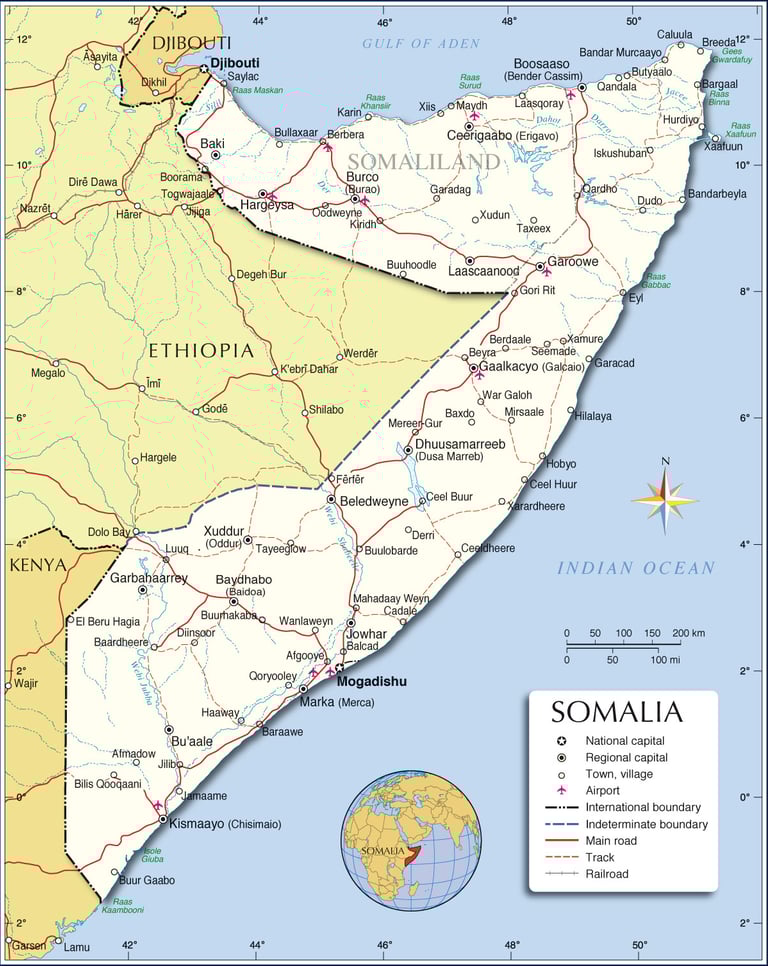
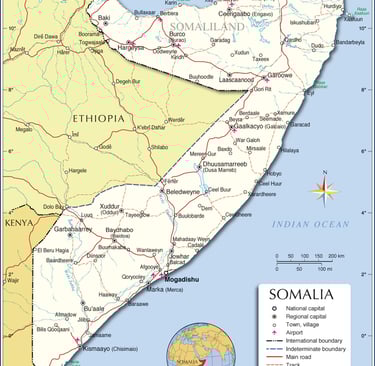
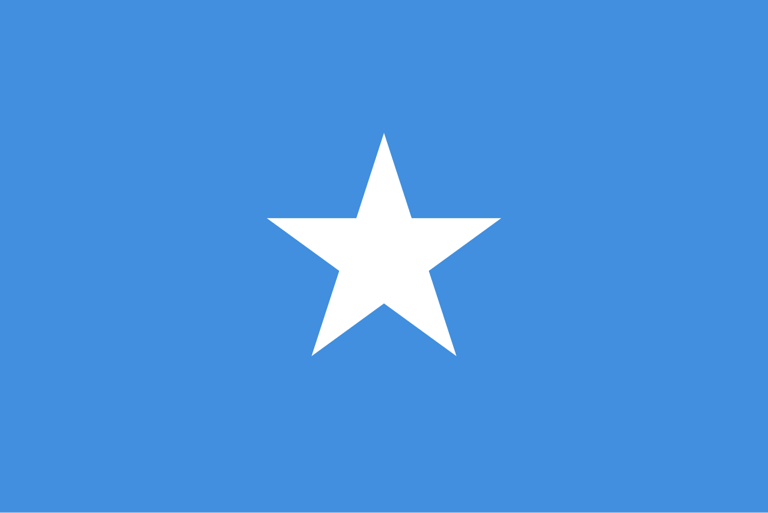
Official Name: Federal Republic of Somalia
Population: 20,324,160 (65th largest in the world, 24th largest in Africa)
Area/Size: 246,201 square miles (about the size of Montana/Wyoming combined)
Capital: Mogadishu (2.85 million - sister city of St. Paul, MN)
Other Major Cities: Hargeysa (1.2 million)
Spoken Languages: Somali and Arabic (both official), Italian, English
Religions: Sunni Islam (98%)
Life Expectancy: 56.1 years Internet Access Rate: 27.6%
Per Capita Income: $1,601 Unemployment: 18.9%
What do they Export?: Sheep and goats, other animals, oily seeds, scrap iron
Export Partners: UAE (35%), Saudi Arabia (27%), Oman (18%), Djibouti (8%)
Import Partners: UAE (29%), China (19%), India (15%), Turkey (8%), Oman (5%)
Government Type: Federal parliamentary republic (last parliament elections in 2022 - elections have been reasonably fair but government struggles to maintain power)
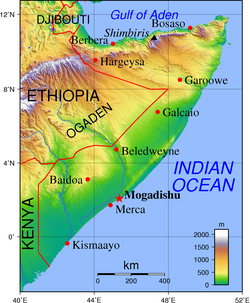
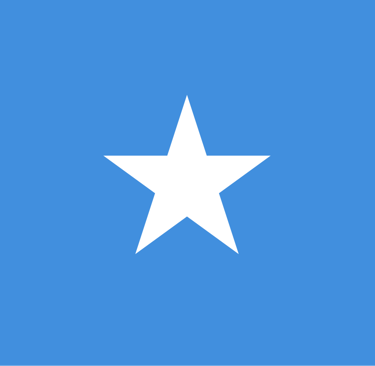
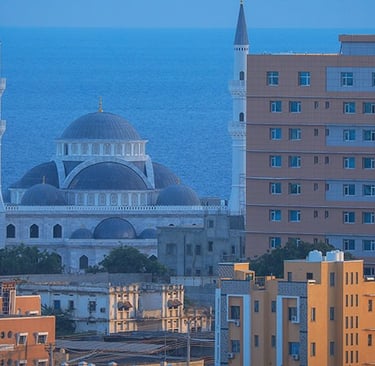
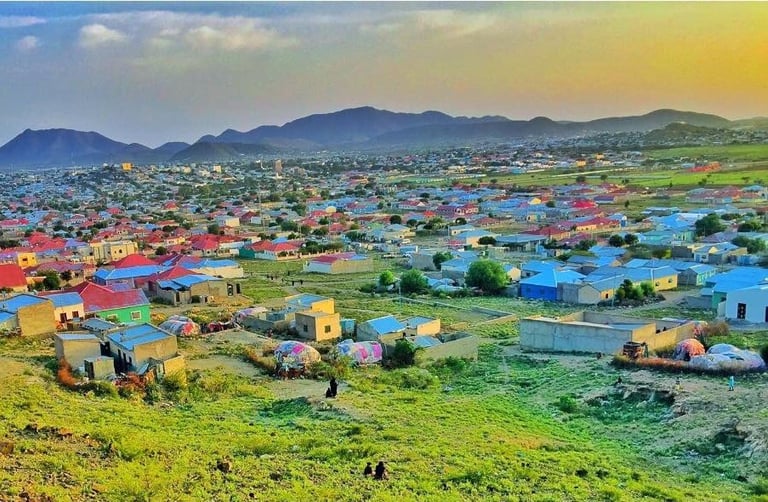
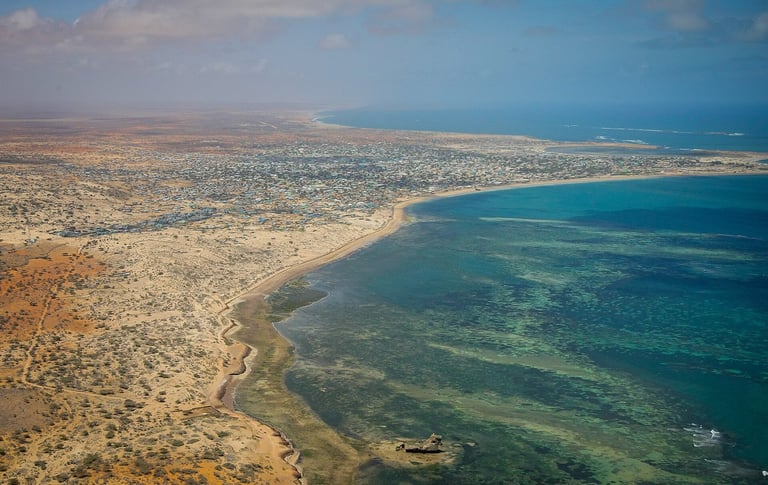
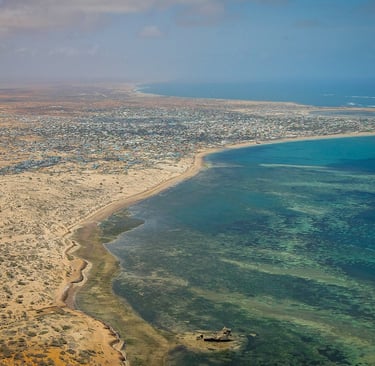
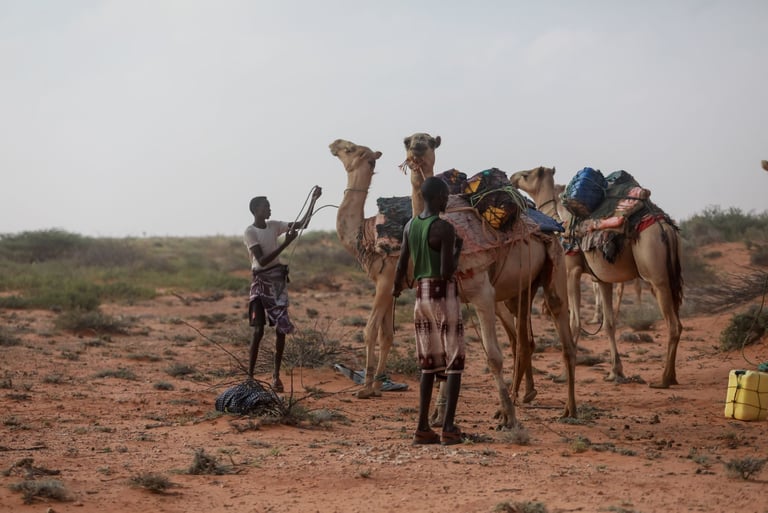
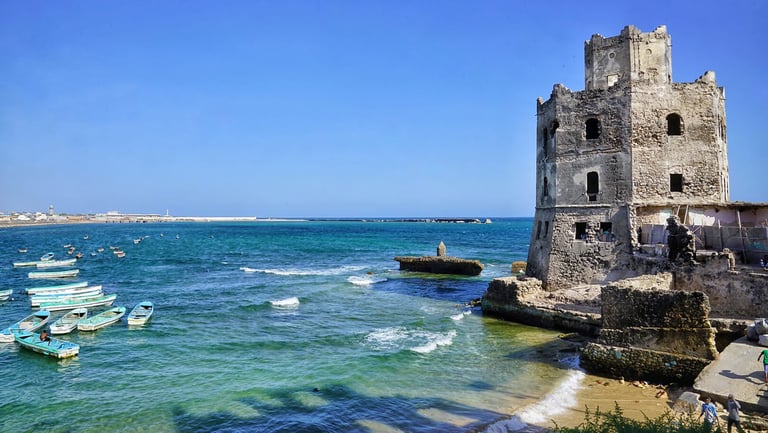
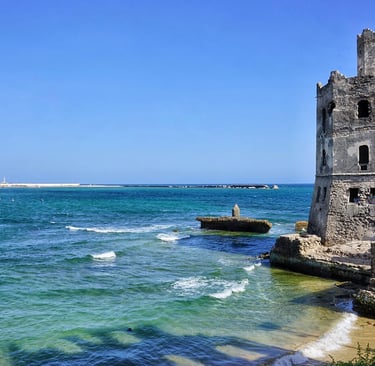
Section II - Images of Somalia
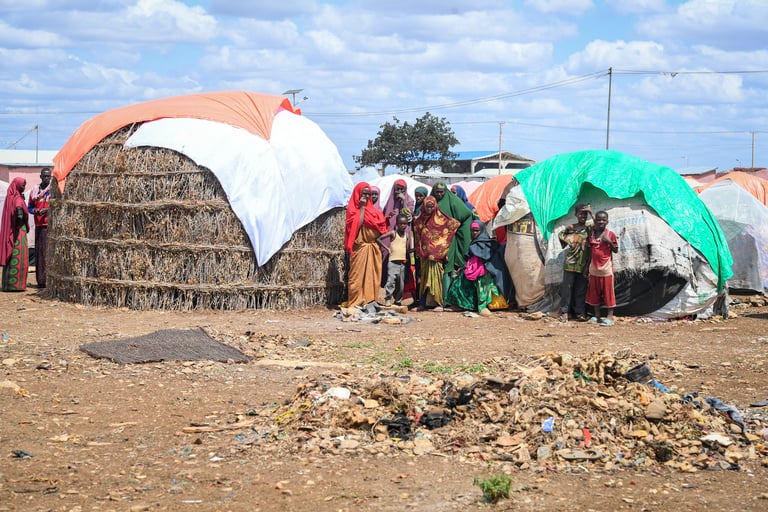
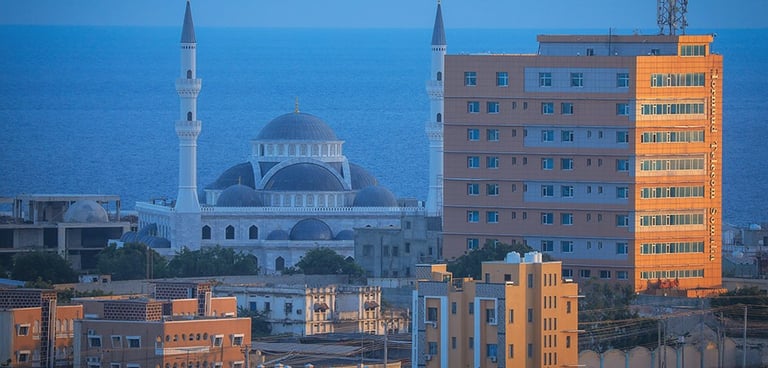
7 Key Dates/Periods in Somalia's History
Like a lot of the African countries, this will try to balance events from before the colonial period, with events during and after independence. But a lot of the colonial period has (for better and worse) shaped the country of today.
c. 2000 BC - 630 AD - Ancient pyramid structures, mausoleums, ruined cities and stone walls, such as the Wargaade Wall, are evidence of an old civilization that once thrived in the Somali peninsula. They enjoyed a trading relationship with ancient Egypt and Mycenaean Greece since the second millennium BC, supporting the hypothesis that Somalia or adjacent regions were the location of the ancient Land of Punt. The Puntites native to the region traded myrrh, spices, gold, ebony, short-horned cattle, ivory and frankincense with the Egyptians, Phoenicians, Babylonians, Indians, Chinese and Romans through their commercial ports. In the classical era, the Macrobians, who may have been ancestral to Somalis, established a powerful kingdom that ruled large parts of modern Somalia. The Macrobians were warrior herders and seafarers, and were a regional power reputed for their advanced architecture and gold wealth. For centuries, Indian merchants brought large quantities of cinnamon to Somalia and Arabia from Ceylon and the Spice Islands; the cinnamon trade was a very profitable revenue generator, especially for the Somali merchants.
630 - 1884 - Throughout the Middle Ages, Arab immigrants arrived in Somaliland, a historical experience which would later lead to the legendary stories about Muslim sheikhs such as Daarood and Ishaaq bin Ahmed (the purported ancestors of the Darod and Isaaq clans, respectively) travelling from Arabia to Somalia and marrying into the local Dir clan. During the Ajuran Sultanate period, the city-states and republics of Merca, Mogadishu, Barawa, Hobyo and their respective ports flourished and had a lucrative foreign commerce with ships sailing to and from Arabia, India, Venetia, Persia, Egypt, Portugal, and as far away as China. Vasco da Gama, who passed by Mogadishu in the 15th century, noted that it was a large city with houses several stories high and large palaces in its center, in addition to many mosques with cylindrical minarets. Successor states continued the tradition of castle-building and seaborne trade established by previous Somali empires.
1884 - 1940 - After the Berlin Conference of 1884, a British protectorate was declared over part of Somalia, on the African coast opposite South Yemen. In 1889, the protectorate and later colony of Italian Somalia was officially established by Italy through various treaties signed with a number of chiefs and sultans. The dawn of fascism in the early 1920s heralded a change of strategy for Italy, as the north-eastern sultanates were soon forced within the boundaries of La Grande Somalia ("Greater Somalia"). The Italians began local infrastructure projects, including the construction of hospitals, farms and schools. Mussolini then attacked Abyssinia (Ethiopia) in 1935 - the invasion was condemned by the League of Nations, but little was done to stop it or to liberate occupied Ethiopia. In Aug 1940, Italian troops, including Somali colonial units, crossed from Ethiopia to invade British Somaliland.
1940 - 1960 - A British force, including troops from several African countries, launched the campaign in Jan 1941 from Kenya to liberate British Somaliland and Italian-occupied Ethiopia and conquer Italian Somaliland. By February most of Italian Somaliland was captured and, in March, British Somaliland was retaken from the sea. Following World War II, Britain retained control of British Somaliland as a protectorate. In 1945, during the Potsdam Conference, the United Nations granted Italy trusteeship of Italian Somaliland, on the condition that Somalia achieve independence within ten years. The trusteeship provisions gave the Somalis the opportunity to gain experience in Western political education and self-government that British Somaliland did not. The disparity between the two territories in economic development and political experience would later cause serious difficulties integrating the two parts. The two territories finally gained independence and united as the Somali Republic on July 1, 1960.
1960 - 1990 - For the first 10 years the Somali Republic seemed to be on a peaceful, democratic path despite the integration issues mentioned above. Then in Oct 1969, first the country's president was assassinated by his personal bodyguard, followed 6 days later by a military coup overthrowing the parliamentary government. The coup leaders subsequently renamed the country the Somali Democratic Republic, dissolved the parliament and the Supreme Court, and suspended the constitution. The new regime placed an emphasis on Somalia's traditional and religious links with the Arab world, as well as a one-party government based on scientific socialism and Islamic tenets. In Jul 1977, the Ogaden War broke out after the Somali government used a plea for national unity to justify an aggressive incorporation of the predominantly Somali-inhabited Ogaden region of Ethiopia into a Pan-Somali Greater Somalia, along with the rich agricultural lands of south-eastern Ethiopia, infrastructure, and strategically important areas as far north as Djibouti. For most of the war, the Somali army scored continuous victories over the Ethiopian army; however, a massive, unprecedented Soviet intervention consisting of 20,000 Cuban forces and several thousand Soviet experts came to the aid of Ethiopia's communist regime. By 1978, the Somali troops were ultimately pushed out of the Ogaden. This loss and an increasingly authoritarian government in the 1980s led to the rise of resistance movements, encouraged by Ethiopia, eventually leading to the Somali Civil War.
1990 - 2012 - From 1988 to 1990, the Somali Armed Forces began engaging in combat against various armed rebel groups. The clan-based armed opposition groups overthrew the government in 1991. Various armed factions began competing for influence in the power vacuum and turmoil that followed, particularly in the south. In the absence of a central government, Somalia became referred to as a "failed state". This precipitated the arrival of UN military observers from 1992 to 1995. After the withdrawal of UN forces, there was some return to customary and religious law in most regions. In the south Islamic Sharia courts began proliferating in response to lawlessness, leading to a relative decrease in the intensity of the fighting. In 2006, Ethiopian troops invaded Somalia - in response, a large scale insurgency began against the occupation as other Islamist groups formed and established themselves as independent actors. The Federal Government of Somalia was established in Aug 2012, constituting the country's first permanent central government since the start of the civil war.
2012 - present - The ongoing phase of the Somali Civil War is concentrated in southern and central Somalia, primarily between the forces of the Federal Government of Somalia (FGS), assisted by African Union peacekeeping forces, and the Islamist militant group al-Shabaab, which pledged allegiance to al-Qaeda in 2012. In Aug 2011, al-Shabaab withdrew from Mogadishu and lost the significant control it had established in the city since the insurgency began. Despite the growing challenges, al-Shabaab still controls large swathes of territory in southern Somalia. It remains influential in many rural areas, and it now prioritizes guerrilla and terror attacks over territorial acquisitions. The Government of Somalia has requested U.S. involvement multiple times, particularly in the form of advisors, air strikes, and drone campaigns. President Trump ordered the withdrawal of the majority of the 700 US military troops in Somalia from the country in Dec 2020, but President Joe Biden reversed that decision in May 2022 sending up to 450 ground troops back into Somalia.
Other Non-Political Issues
Section III - Issues of Somalia
General Information on Somalia:
"All About Somalia", Africa.com, Jan 2026, https://africa.com/heres-what-you-need-to-know-about-somalia/
“Somalia", One World Nations Online, Jan 2025, https://www.nationsonline.org/oneworld/senegal.htm
“Somalia", Wikipedia, Apr 2026, https://en.wikipedia.org/wiki/Somalia or https://simple.wikipedia.org/wiki/Somalia
"Somalia EXPLAINED - History, Culture,& Geography" (video), Opentiera, May 2024, https://www.youtube.com/watch?v=cIlG4xmWH4Q
“Somalia Country Profile", World Bank Group, Jan 2026, https://data360.worldbank.org/en/economy/SOM
"Visit Somalia" (national tourism site), Somalia Ministry of Information, Culture, and Tourism, 2026, https://tourism.gov.so/
History Links on Somalia:
"Somalia vs Ethiopia: The Cold War’s Forgotten African Front | Ogaden War (1977)" (video), Independent Television news (ITN) Archive, Dec 2025, https://www.youtube.com/watch?v=lAOBKinZZQo&t=30s
"Somalia: The Ancient Lost Kingdom of Punt is Finally Found?", Ancient Origins, Apr 2019, https://www.ancient-origins.net/ancient-places-africa/somalia-ancient-lost-kingdom-punt-finally-found-006893
"Somalia: The Forgotten Story" (video), Al-Jazeera World, Nov 2016, https://www.aljazeera.com/video/al-jazeera-world/2016/11/2/somalia-the-forgotten-story OR https://www.youtube.com/watch?v=-io_RfLBpgc
"Somalia/Somaliland: the differences and issues explained", ActionAid.org, Aug 2024, https://www.actionaid.org.uk/about-us/where-we-work/somaliland/somalia-somaliland-differences-explained
"Understanding Somalia’s Destruction: How democracy and the postindependence ‘romance of the state’ gave way to disillusionment and a ruinous civil war", New Lines Magazine, May 2025, https://newlinesmag.com/essays/understanding-somalias-destruction/
Current Events Stories on Somalia:
“A land without water: Snapshots from a severe drought crisis in Somalia", Norwegian Refugee Council, Mar 2026, https://www.nrc.no/feature/2026/a-land-without-water
"Sharp rise in malnutrition cases, preventable diseases in Somalia: MSF", Al-Jazeera, Jan 2026, https://www.aljazeera.com/news/2026/1/20/sharp-rise-in-malnutrition-cases-preventable-diseases-in-somalia-msf
“Somalia's new constitution will see directly elected lawmakers", Africa News, Mar 2026, https://www.africanews.com/2026/03/05/somalias-new-constitution-will-see-directly-elected-lawmakers/
"Somaliland: The Horn of Africa’s Breakaway State", Council on Foreign Relations, Jan 2025, https://www.cfr.org/backgrounders/somaliland-horn-africas-breakaway-state
"UN emergency food aid in Somalia may halt by April amid severe hunger, Al-Jazeera, Feb 2026, https://www.aljazeera.com/news/2026/2/20/un-emergency-food-aid-in-somalia-may-halt-by-april-amid-severe-hunger
"'We will go wherever they hide': Rooting out IS in Somalia", BBC World News, Mar 2026, https://www.bbc.com/news/articles/cj32d8e2m5eo
Other Interesting Links Related To Somalia:
"Exploring the Rich Cultural Heritage of Somalia: A Look into Somali Traditions and Customs", Somali Magazine, Sep 2023, https://somalimagazine.so/exploring-rich-cultural-heritage-of-somalia-look-into-somali-traditions-and-customs/
"Food in Somalia", World Food and Wine: What People Eat and Drink Worldwide, 2026, https://www.worldfoodwine.com/food-in-somalia
"'If the camel is fine, our life is fine.' But Somali camel herding is in jeopardy.", National Geographic, May 2021, https://www.nationalgeographic.com/culture/article/somali-camel-herding-in-jeopardy-if-camel-is-fine-our-life-is-fine
“Mogadishu bowling alley represents cautious return to everyday life", Africa News, Feb 2026, https://www.africanews.com/2026/02/10/mogadishu-bowling-alley-represents-cautious-return-to-everyday-life/
“Somalia submits its first Tentative List for natural sites", UNESCO World Heritage Center, Aug 2024, https://whc.unesco.org/en/news/2707/
Section IV - Resources About Somalia
ECON and More
Curating articles for K-12 education.
CONTACT
© 2025. All rights reserved.