Countries of the World (Africa) - South Africa
Seventh country from Africa in my geography series. So far I have been pretty happy with the format on these first few, but one small change you might notice I made (and went back to fix on earlier ones) was including "Internet Access Rate" rather than "Literacy Rate" for countries. I forgot I made that change the last 2-3 years in the classroom - felt like students could relate to it easier (and it helped them judge the development status of countries).
Section I - Basic Info on South Africa
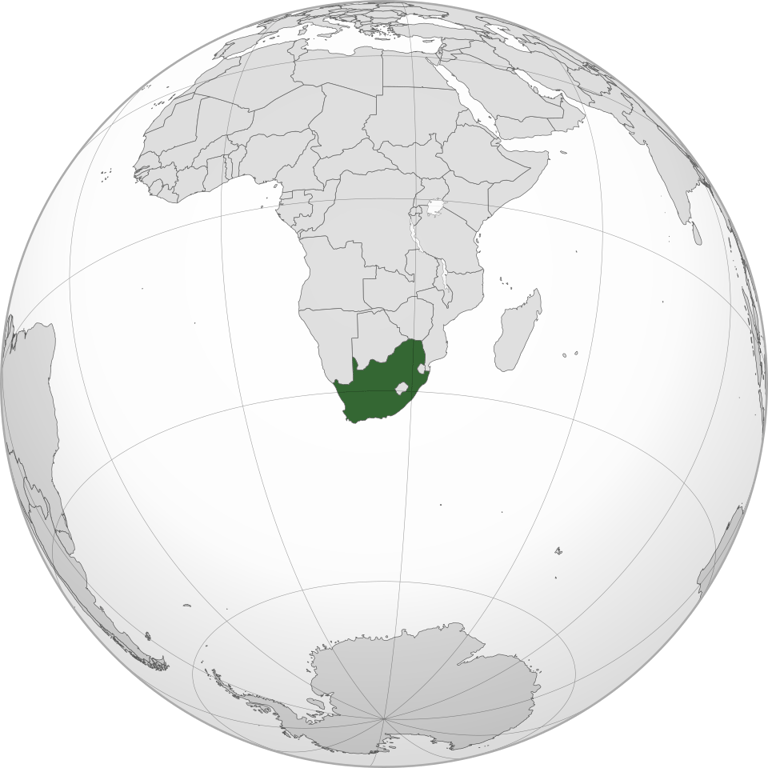
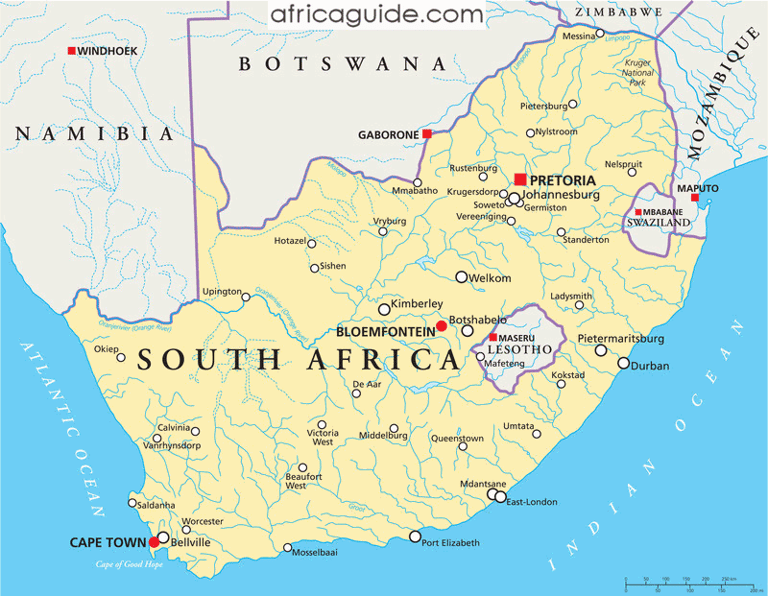
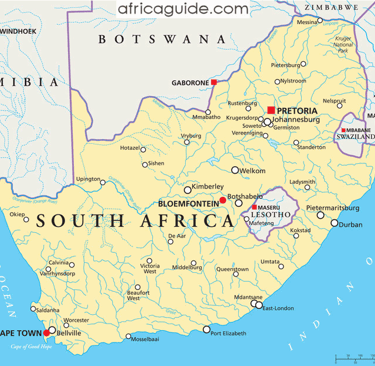
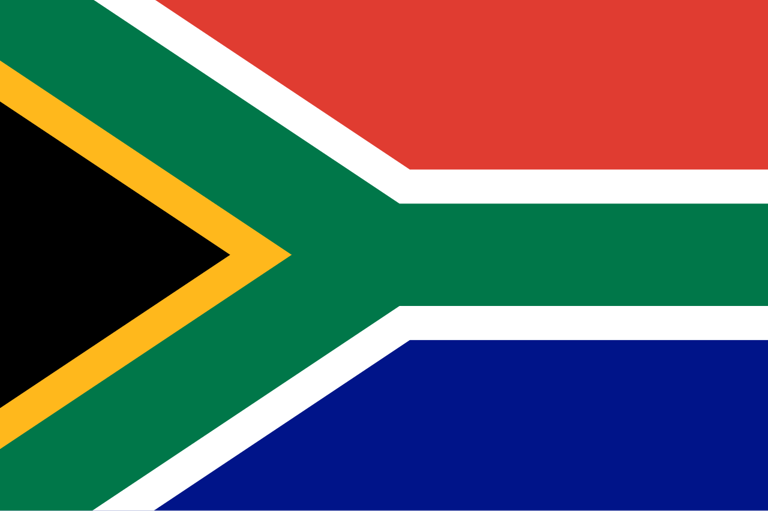
Official Name: Republic of South Africa
Population: 61,089,926 (24th largest in the world, 6th largest in Africa)
Area/Size: 470,693 square miles (about the size of Montana/Wyoming combined)
Capital: Cape Town (5.1 million - sister city of Miami and Houston) and Pretoria (3.0 million - sister city of Washington, D.C. and Tehran, Iran
Other Major Cities: Johannesburg (6.5 mil), Ekurhuleni (4.3 mil), Durban (3.3 mil)
Spoken Languages: Afrikaans, English, isiZulu, isiXhosa, 7 others (all official)
Religions: Independent Christian (49%), Protestant (25%), ethnic (7%), agnostic (6%)
Life Expectancy: 72.7 years Internet Access Rate: 75.7%
Per Capita Income: $15,457 Unemployment: 33.2%
What do they Export?: Sheep and goats, other animals, oily seeds, scrap iron
Export Partners: China (19%), U.S. (8%), Germany (7%), India (7%), U.K. (6%)
Import Partners: China (21%), India (7%), U.S. (7%), Germany (6%), UAE (4%)
Government Type: Parliamentary republic (last parliament elections in 2024 - elections have been fair)
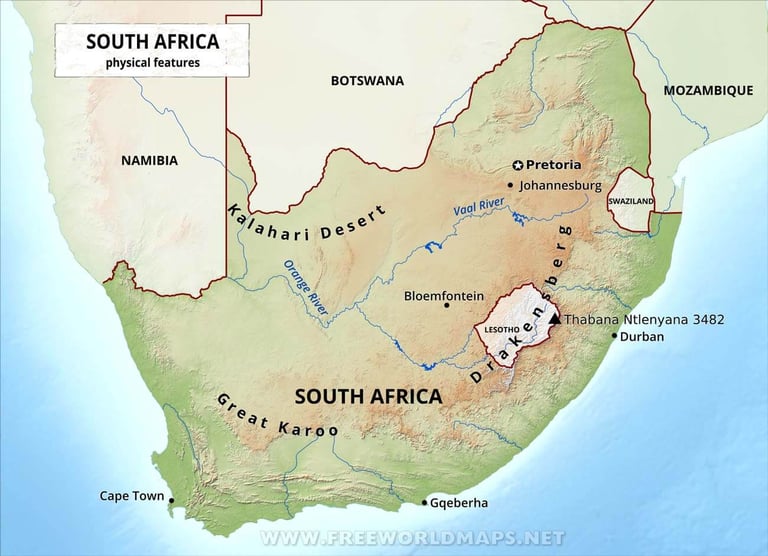
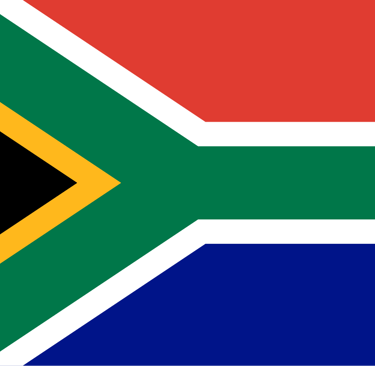
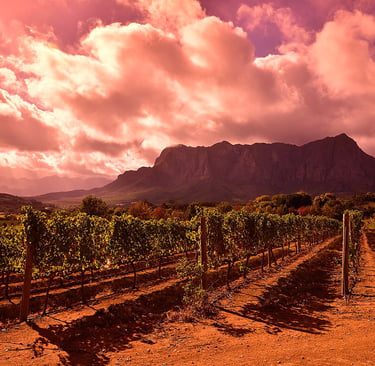
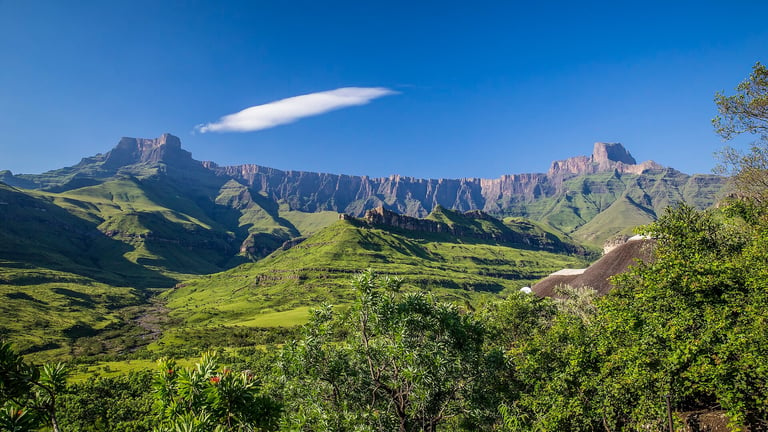
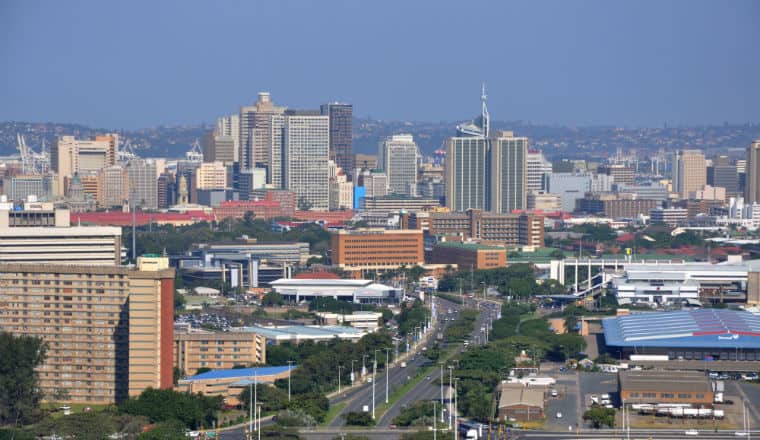
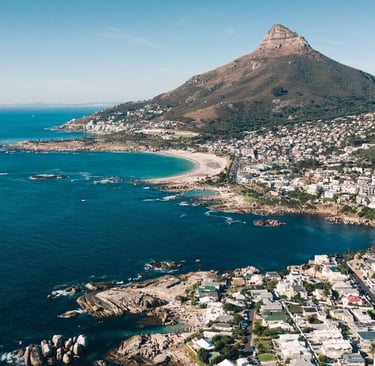
Section II - Images of South Africa
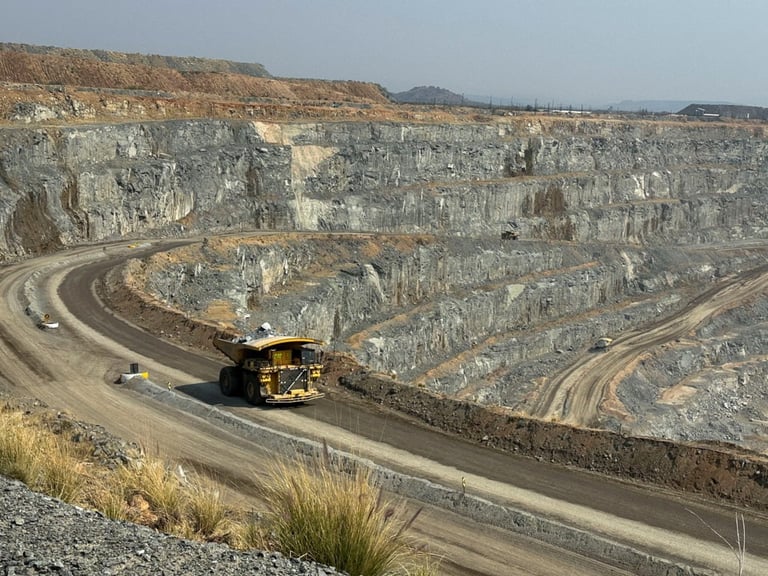
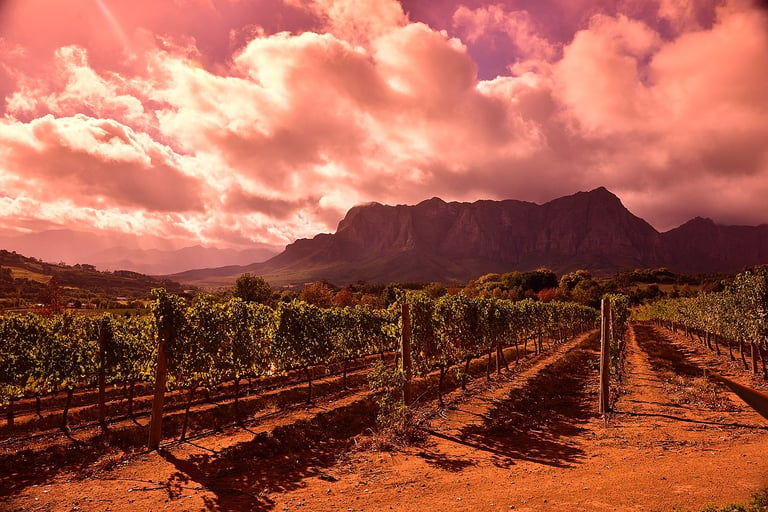
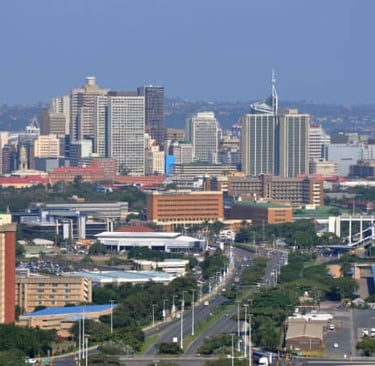
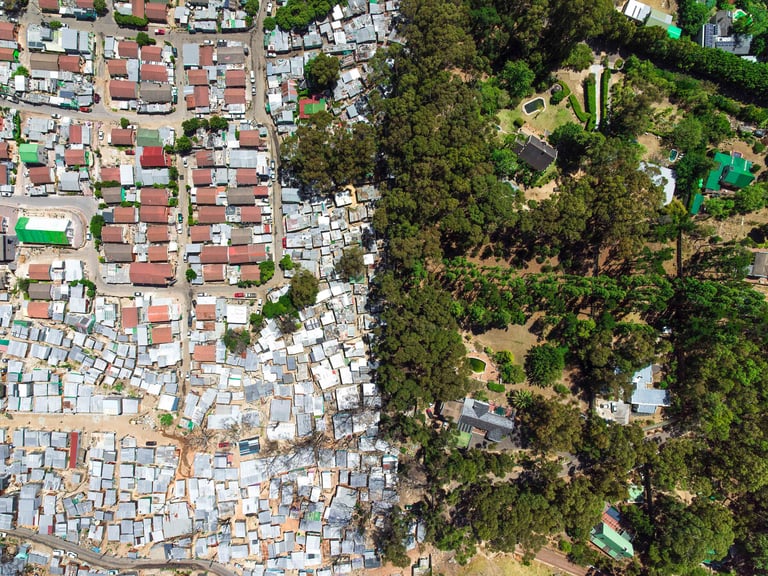
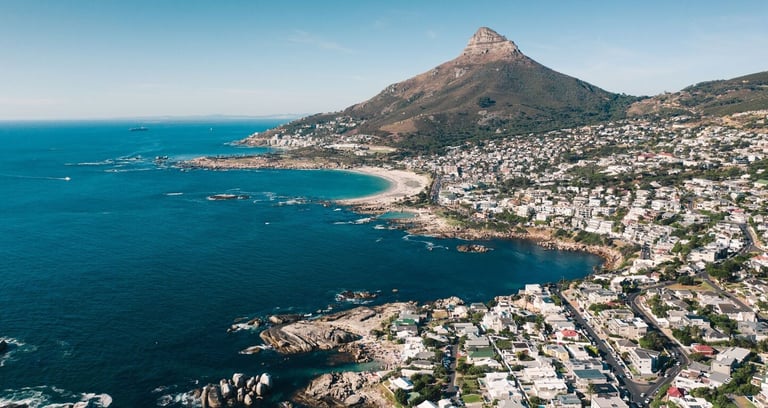
7 Key Dates/Periods in South Africa's History
Like a lot of the African countries, this will try to balance events from before the colonial period, with events during and after independence. But clearly in the case of South Africa the colonial period and the period of apartheid has (for better and worse) shaped the country of today.
c. 3000 BC - 1300 AD - Bantu settlers expanded from West Africa from approximately 3,000 BCE. Settlements of Bantu-speaking peoples, who were iron-using agriculturists and herdsmen, were present south of the Limpopo River (now the northern border with Botswana and Zimbabwe) by the 4th or 5th century. The southernmost group was the Xhosa people, whose language incorporates certain linguistic traits from the Khoisan languages, and who eventually reached the Great Fish River in the present-day Eastern Cape. As they migrated, these larger Iron Age populations displaced or assimilated earlier peoples. Around 1220, in the Limpopo-Shashe Basin, the elite of K2 moved to settle the flat-topped summit of Mapungubwe Hill, with the population settling below. By 1250, the capital of the Mapungubwe Kingdom had a population of 5,000 and the state grew wealthy through the Indian Ocean trade. The events around Mapungubwe's collapse circa 1300 are unknown; however, trade routes shifted north from the Limpopo to the Zambezi, precipitating the rise of Great Zimbabwe.
1487 - 1652 - In 1487, the Portuguese explorer Bartolomeu Dias led the first European voyage to land in southern Africa, landing at Walvis Bay in present-day Namibia. Later in his trip he saw the southernmost point of Africa and named it the 'Cape of Storms'. King John II renamed the point 'Cape of Good Hope', as it led to the riches of the East Indies. Vasco Da Gama became the first European to reach India in 1498 via the Cape of Good Hope, opening up oceanic trade between Europe and Asia. He reportedly bypassed what became South Africa and landed instead in what is now Mozambique. With Portuguese maritime power declining in the early 17th century, English and Dutch merchants competed to dislodge Portugal's lucrative monopoly on the spice trade. Dutch interest was aroused in South Africa after 1647, when two employees of the Dutch East India Company were shipwrecked at the Cape for several months, and managed to survive by obtaining fresh water and meat from the indigenous peoples and sowing crops in the fertile soil. Upon their return to Holland, they reported favorably on the Cape's potential as a "warehouse and garden" for provisions to stock passing ships for long voyages. In 1652, Jan van Riebeeck established what would become Cape Town, on behalf of the Dutch East India Company.
1652 - 1838 - Dutch colonists' eastward expansion caused wars with the southwesterly migrating Xhosa nation, as both sides competed for the pastureland near the Great Fish River, which the colonists desired for grazing cattle. Free Burghers who became independent farmers on the frontier were known as Boers, with some (the trekboers) adopting semi-nomadic lifestyles. The Boers formed loose militias, which they termed commandos, and forged alliances with Khoisan peoples to repel Xhosa raids. Both sides launched bloody but inconclusive offensives, and sporadic violence, often accompanied by livestock theft, remained common for several decades. Great Britain occupied Cape Town between 1795 and 1803 to prevent it from falling under the control of the French, which had invaded the Low Countries. Following the end of the Napoleonic Wars, it formally became part of the British Empire. During this same time, many Dutch settlers departed from the Cape Colony, where they had been subjected to British control, in a series of migrant groups who came to be known as Voortrekkers. They migrated to the future Natal, Free State, and Transvaal regions, and following their victory over the Zulu Kingdom at the Battle of Blood River in Dec 1838, founded the Boer republics: the Natalia Republic, the South African Republic and the Orange Free State.
1860s - 1910 - The discovery of diamonds in 1867 and gold in 1884 in the interior initiated the Mineral Revolution, which increased economic growth and immigration and intensified British subjugation of the indigenous peoples. The struggle to control these important economic resources shaped relations between Europeans and the indigenous population, as well as between the Boers and the British. The Anglo-Zulu War was fought in 1879 between the British and the Zulu Kingdom. The Zulu nation defeated the British at the Battle of Isandlwana but ultimately lost the war, resulting in the termination of its independence. The Boer republics successfully resisted during the First Boer War (1880–1881) using guerrilla warfare tactics, which were well-suited to local conditions. The British returned with greater numbers, more experience, and new strategy in the Second Boer War (1899–1902) and, although suffering heavy casualties due to Boer attrition warfare, were ultimately successful due in part to scorched earth tactics and concentration camps, in which 27,000 Boer civilians died due to a combination of disease and neglect. Eight years after the end of the Second Boer War, and after four years of negotiation, the South Africa Act of 1909 created the Union of South Africa on 31 May 1910, granting the country nominal independence. The union was a dominion that included the former Cape, Transvaal and Natal colonies, as well as the Orange Free State republic.
1910 - 1980s - In 1931, South Africa became fully sovereign from the United Kingdom with the passage of the Statute of Westminster, which abolished the last powers of the Parliament of the United Kingdom to legislate in the country. In 1948, the National Party was elected to power. It strengthened the racial segregation begun under Dutch and British colonial rule, instituting a policy of legally institutionalized segregation which came to be known as apartheid. Broadly speaking, apartheid was delineated into petty apartheid, which entailed the segregation of public facilities and social events, and grand apartheid, which strictly segregated housing and employment opportunities by race. While whites enjoyed a higher standard of living comparable to First World Western nations, the black majority remained disadvantaged by almost every standard, including income, education, housing, and life expectancy. Despite opposition to apartheid both within and outside the country from all racial backgrounds, the government legislated for a continuation of apartheid. The security forces cracked down on internal dissent, and violence became widespread, with anti-apartheid organizations such as the African National Congress (ANC) and others carrying out guerrilla warfare, urban sabotage and occasional acts of terrorism. Apartheid became increasingly controversial, and several countries began to boycott business with the South African government because of its racial policies. The boycotts and restrictions were later extended to international sanctions and the divestment of holdings by foreign investors during the 1980s.
1985 - 1994 - P.W. Botha, the South African prime minister during the 1980s, told white South Africans to "adapt or die" but failed to pass any substantial reforms. By 1987, South Africa's economy was growing at one of the lowest rates in the world, and the ban on South African participation in international sporting events was frustrating many whites in South Africa. After a stroke by Botha in early 1989, he was succeeded by F. W. de Klerk, who moved decisively to end the political stalemate in the country. De Klerk announced that he would repeal discriminatory laws and lift the 30-year ban on leading anti-apartheid groups such as the African National Congress. Within a year Nelson Mandela was released from prison after more than 27 years behind bars, and Namibia (former Southwest Africa) was given its independence. A transitional period (marred by violence at times) from 1991 to 1994 resulted in the country's 1994 general election, the first in South Africa held with universal suffrage. The ANC won 62.65% of the vote, less than the 66.7 percent that would have allowed it to rewrite the constitution. Mandela was sworn in as the new President of South Africa in May 1994, with de Klerk as one of his two deputy presidents. The anniversary of the elections, April 27th, is celebrated as a public holiday known as Freedom Day.
1995 - present - In 1995, the interim constitution agreed to during the negotiations to end apartheid was replaced by a new constitution. The government also established the Truth and Reconciliation Commission (TRC) to expose the crimes of the apartheid era. The TRC operated by allowing victims to tell their stories and by allowing perpetrators to confess their guilt, with amnesty on offer to those who made a full confession. Also in 1995, South Africa hosted and won the 1995 Rugby World Cup. Nelson Mandela wore a Springbok rugby jersey to present the trophy to South African captain Francois Pienaar, a symbolic image of reconciliation between the races. In 1999, South Africa held its second non-racial election and elected Thabo Mbeki as the nation's second black president. While the ANC grassroots held Mbeki in far less affection than the beloved "Madiba" (Nelson Mandela), Mbeki proved himself to be a shrewd politician for a decade in power, though his effective denial of the HIV crisis invited global criticism. In 2010, South Africa hosted the 2010 FIFA World Cup, the first time it was hosted in Africa. Post-apartheid South Africa has struggled to correct the social inequalities created by decades of apartheid. While a small subset of the Black population have been able to create a Black middle class that did not exist during apartheid, the large majority of Black people in South Africa have yet to experience an economic difference since apartheid was abolished. As a result, the traditional electoral dominance of the ANC has continued to decline, as voters increasingly turn to parties further to the left (and right) leading to coalition government.
Other Non-Political Issues
Section III - Issues of South Africa
General Information on South Africa:
"All About South Africa", Africa.com, Jan 2026, https://africa.com/heres-what-you-need-to-know-about-south-africa/
“South Africa", One World Nations Online, Jan 2025, https://www.nationsonline.org/oneworld/south_africa.htm
“South Africa", Wikipedia, Apr 2026, https://en.wikipedia.org/wiki/South_Africa or https://simple.wikipedia.org/wiki/South_Africa
"South Africa", National Geographic Kids, Jan 2024, https://kids.nationalgeographic.com/geography/countries/article/south-africa
“South Africa", World Bank Group, Jan 2026, https://data360.worldbank.org/en/economy/ZAF
"South Africa - Inspiring New Ways" (national tourism site), South African Tourism, 2026, https://www.southafrica.net/us/en/
History Links on South Africa:
"Anglo‑Boer War: how a bloody conflict 125 years ago still shapes South Africa", The Conversation, Oct 2024, https://theconversation.com/anglo-boer-war-how-a-bloody-conflict-125-years-ago-still-shapes-south-africa-240162
"The Apartheid Museum - Permanent Exhibition", The Apartheid Museum (Johannesburg), 2026, https://www.apartheidmuseum.org/permanent-exhibition
"How South Africa Became an Apartheid State" (video), The Cold War, Mar 2023, https://www.youtube.com/watch?v=-udJ3NNhhKs
“South Africa Cultural and Historic Sites (particularly Robben Island)", UNESCO World Heritage Center, 2026, https://whc.unesco.org/en/statesparties/za
"South Africa Explained in 10 Minutes (History, People, and Culture)" (video), Opentiera, Oct 2024, https://www.youtube.com/watch?v=vp4Yra6B3iE
Current Events Stories on South Africa:
"Are white Afrikaners at risk in South Africa? Not really, most say", Al-Jazeera, Feb 2025, https://www.aljazeera.com/features/2025/2/21/are-white-afrikaners-at-risk-in-south-africa-not-really-most-say
“In South Africa, a community struggling for clean water reflects wider discontent ahead of election", Associated Press (AP) News, May 2024, https://apnews.com/article/south-africa-election-poverty-anc-vote-c9ce37716f1e31cf305361c4469a58e9
"Ramaphosa vows to overhaul failing local government system", Mail & Telegraph (SA), Feb 2026, https://mg.co.za/politics/2026-02-12-ramaphosa-vows-to-overhaul-failing-local-government-system/
"South Africa’s coalition government has improved the vibes", The Economist (U.K.), Oct 2024, https://www.economist.com/middle-east-and-africa/2024/10/07/south-africas-coalition-government-has-improved-the-vibes
"U.S. invests in project to remove rare earth minerals despite differences with South Africa", PBS NewsHour, Apr 2026, https://www.pbs.org/newshour/nation/u-s-invests-in-project-to-remove-rare-earth-minerals-despite-differences-with-south-africa
Other Interesting Links Related To South Africa:
"13 Delicious South African foods You Must Try - A Local's Guide", In Africa and Beyond, Jul 2020, https://inafricaandbeyond.com/south-african-foods-you-must-try/
"Babanango: South Africa’s big new game park is the result of a dramatic transformation", CNN, Mar 2023, https://www.cnn.com/travel/article/babanango-south-africa-new-game-park-cmd
"The Battle In South Africa Over Religion and Animal Sacrifice", Religion Unplugged, Nov 2024, https://religionunplugged.com/news/2024/10/31/the-battle-between-religion-culture-and-animals
"The Man Reweaving South Africa’s Story: Laduma Ngxokolo, the designer behind MaXhosa Africa, is on a mission to embrace his country’s history and traditions, rather than hide from them", New York Times, Dec 2025, https://www.nytimes.com/2025/12/07/style/the-man-reweaving-south-africas-story.html
“Why South Africa is still so segregated" (video), VOX.com, Apr 2021, https://www.youtube.com/watch?v=NVH7JewfgJg
Section IV - Resources About South Africa
ECON and More
Curating articles for K-12 education.
CONTACT
© 2025. All rights reserved.