
Countries of the World (Africa) - South Sudan
Eighth country from Africa in my new geography series. Obviously the next two from Africa (South Sudan and Sudan) will have a lot of similarities in their history - I will plan to focus more on recent history here, and more on the ancient history on the next one.
Section I - Basic Info on South Sudan
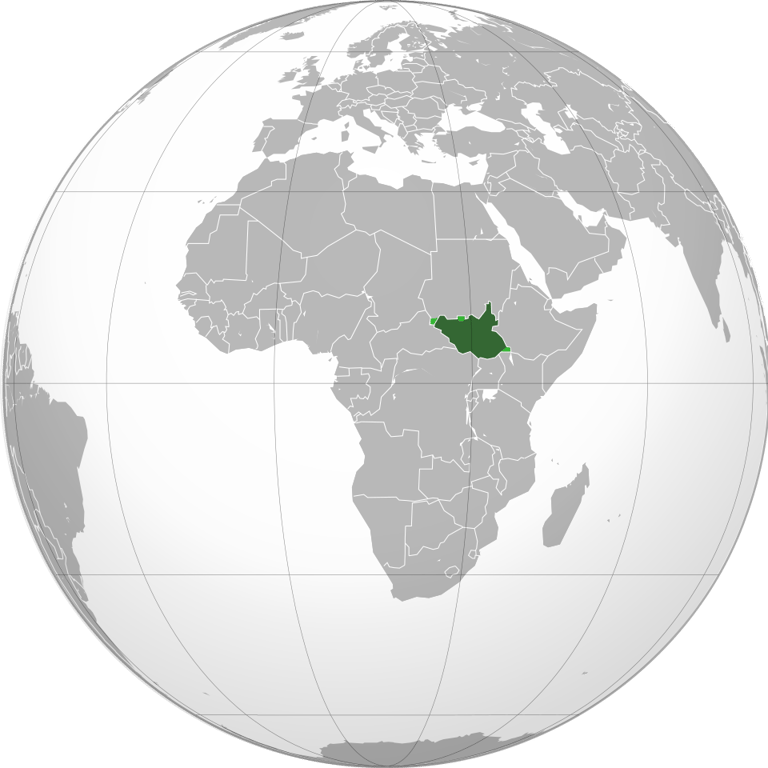
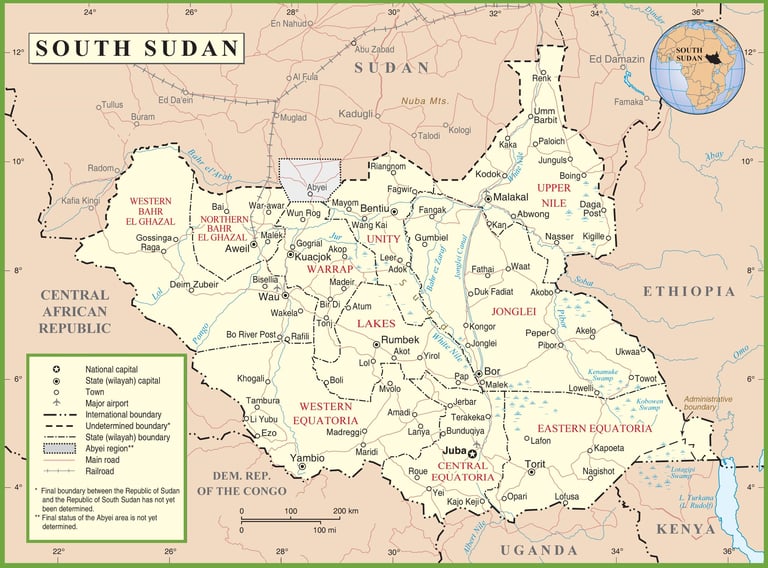
Official Name: Republic of South Sudan
Population: 13,300,066 (79th largest in the world, 31st largest in Africa)
Area/Size: 248,777 square miles (about the size of Montana/Wyoming combined)
Capital: Juba (500,000 - no sister cities so far)
Spoken Languages: English (official), Arabic, ethnic languages
Religions: Catholic (41%), ethnic religions (32%), Protestant (19%), Muslim (7%)
Life Expectancy: 60.8 years Internet Access Rate: 9.3%
Per Capita Income: $953 (est.) Unemployment: 12.5%
What do they Export?: Petroleum, scrap iron, dried fish, scrap copper, insect resins
Export Partners: China (51%), Singapore (29%), UAE (10%), Germany (4%)
Import Partners: Uganda (33%), UAE (26%), Kenya (14%) China (10%)
Government Type: Presidential republic (has yet to have a successful election since independence in 2011 - U.N. peacekeepers still in place)
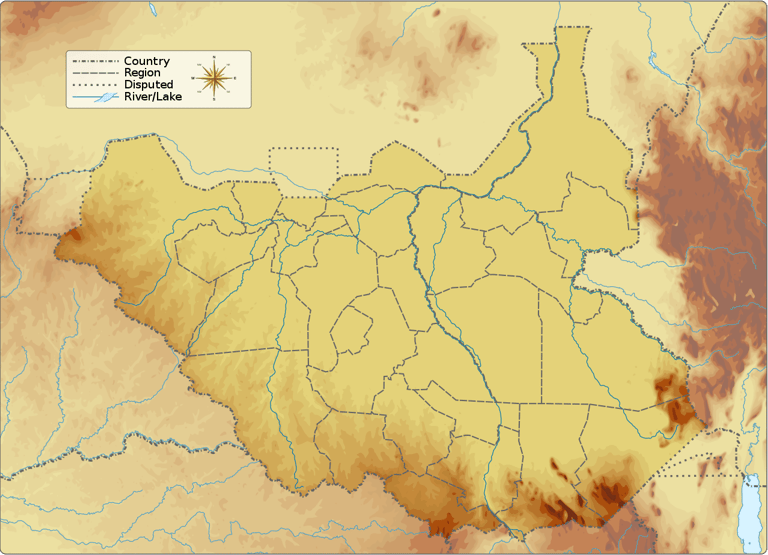
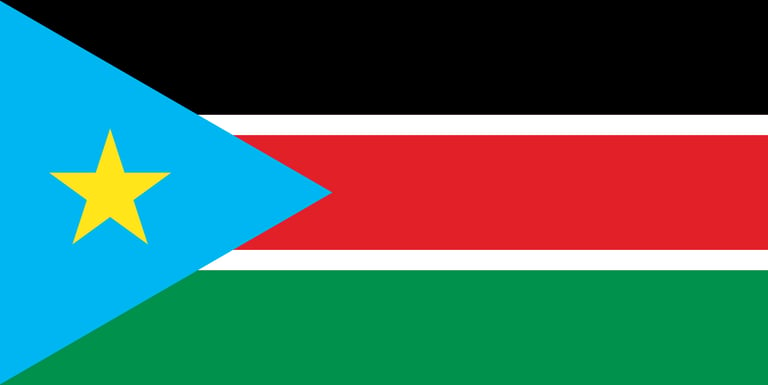
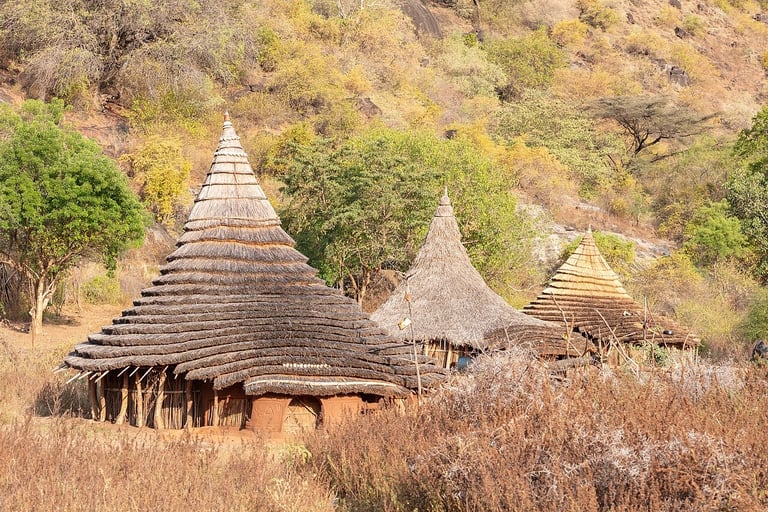
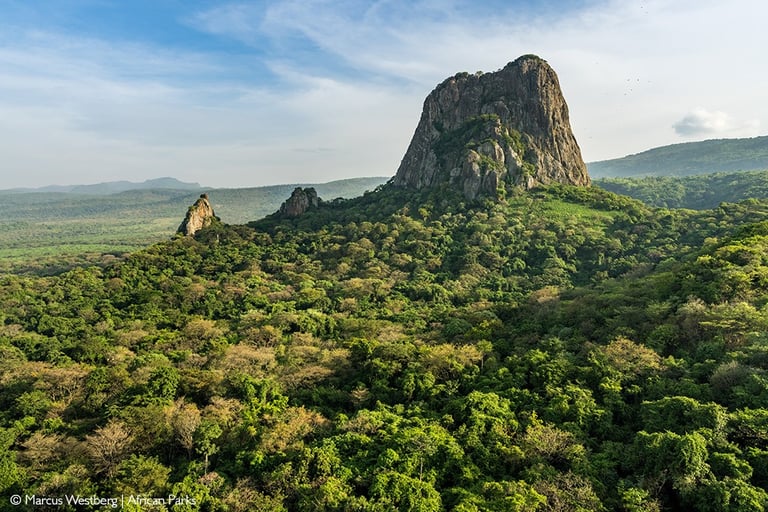
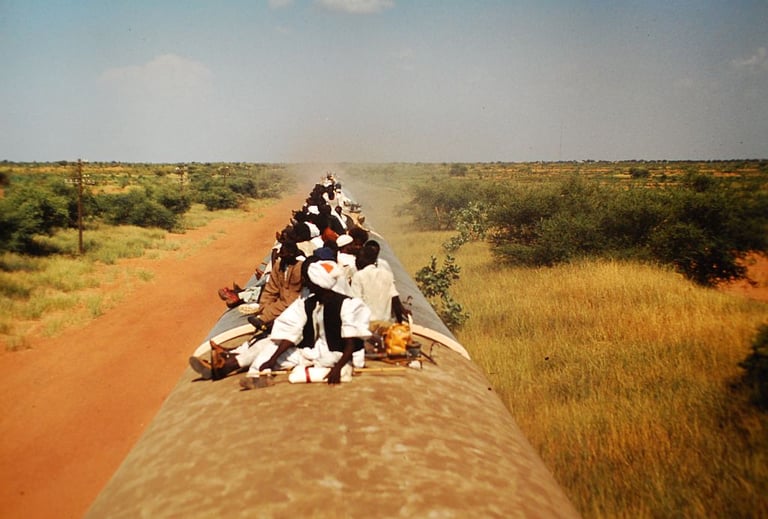
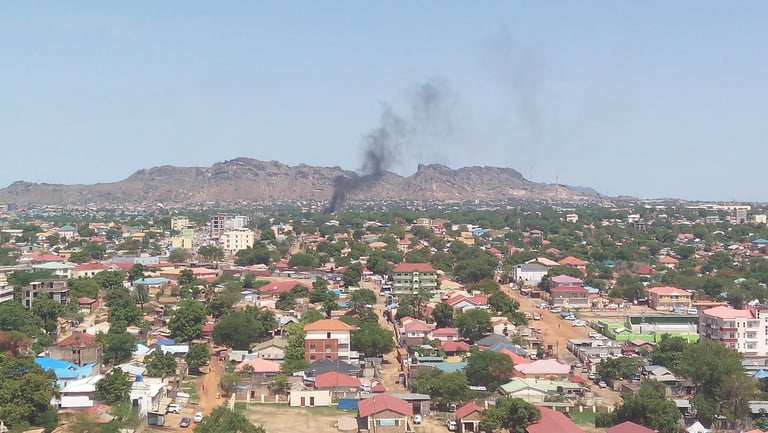
Section II - Images of South Sudan
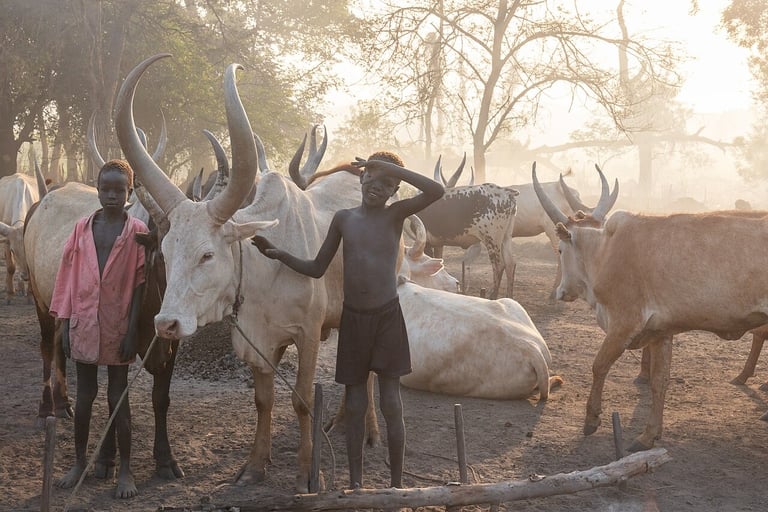
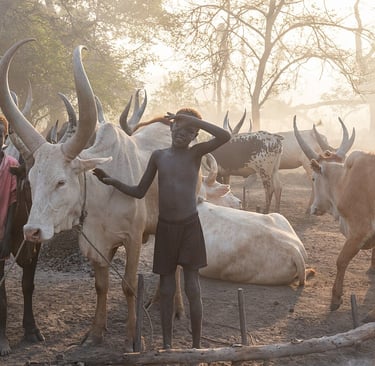
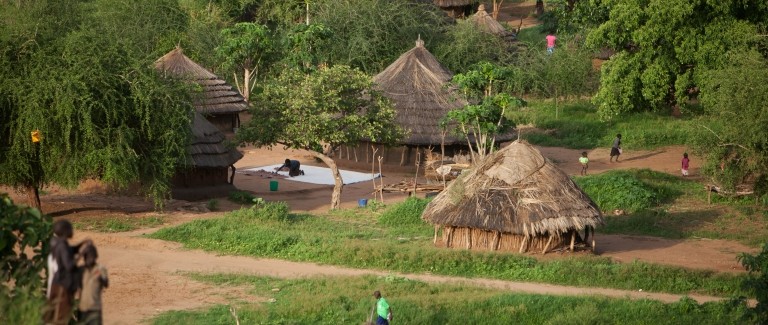
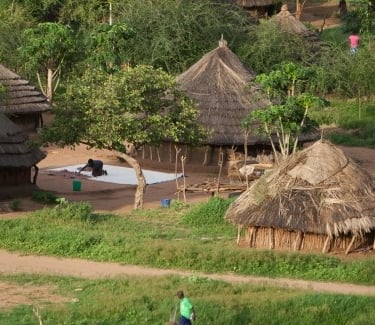
6 Key Dates/Periods in South Sudan's History
As I mentioned above, I will do a quick overview of their shared history with Sudan, then focus on more recent history leading up to the split and after independence. More details on the ancient elements of their history will be covered with Sudan in the next African country to be covered in this series. a lot of the colonial period has (for better and worse) shaped the country of today.
c. 1 - 1500 AD - For many years the Sudd Marsh, and especially its thicket of vegetation, proved an impenetrable barrier to navigation along the Nile. In 61 AD, a party of Roman soldiers sent by Emperor Nero proceeded up the White Nile but were not able to get beyond the Sudd, which marked the limit of Roman penetration into equatorial Africa. For the same reasons in later times the search for the source of the Nile was particularly difficult; it eventually involved overland expeditions from the central African coast, so as to avoid having to travel through the Sudd. The Nilotic expansion from the Sudd Marshes into the rest of South Sudan seems to have begun in the 14th century. These groups spread from the Sudd marshlands, where archaeological evidence shows that a culture based on cattle raising had been present since 3000 BC. This coincides with the collapse of the Christian Nubian kingdoms and the penetration of Arab traders into central Sudan. Archaeologist Roland Oliver notes that the period also shows an Iron Age beginning among the Nilotics, which may explain how the Nilotic speakers expanded to dominate the region.
1500 - 1851 - By the sixteenth century, the most powerful group among the Nilotic speakers were the Shilluk, who spread east to the banks of the White Nile. The Shilluk developed an intensive system of agriculture, and the Shilluk lands in the 17th century had a population density similar to that of the land around the Nile in Egypt. Geographical barriers prevented the spread of Islam into the region. The Dinka people were especially secure in the Sudd marshlands, which protected them from outside interference, and allowed them to remain secure without a large armed forces. The Shilluk, Azande, and Bari people had more regular conflicts with neighboring states. In 1821 the Funj Sultanate to the north collapsed in the face of an invasion by Egypt under the Ottoman Governor Muhammad Ali. The Turko-Egyptian forces then began to move southward, and in 1830 led an expedition to the junction of the White Nile and the Sobat, and later as far south as the site of modern Juba. The Turko-Egyptian forces attempted to set up forts and garrisons in the region, but disease and defection quickly forced them to abandon them. While claimed by the Ottomans of Egypt, they could not exert any real authority over the region. In 1851, under pressure from foreign powers, the government of Egypt opened the region to European merchants and missionaries.
1851 - 1900 - The lack of formal authority was filled in the 1850s by a set of powerful merchant princes. The most powerful was Al-Zubayr Rahma Mansur who came to control parts of South Sudan. Al-Zubayr and other merchants set up a network of trading forts known as zaribas throughout the region, and from these forts controlled local trade. The most valuable commodity was ivory. In previous centuries Sudanese merchants had not placed a high price on ivory, but the period of Egyptian rule coincided with a great increase in global demand as middle class Americans and Europeans began to purchase pianos and billiard balls. To manage the Ivory trade al-Zubayr needed labor, and Al-Zubayr captured a significant number of slaves. Long-distance slave trading from South Sudan grew from the 1850s to the 1870s despite abolitionist pressures - one estimate is that 30,000 slaves per year were kidnapped and sent abroad by the mid-1870s. Following the Anglo-Egyptian conferences of 1899, the British and Egyptians extended their claims of sovereignty over modern day South Sudan and began establishing an administration. Governmental outposts were established to focus on establishing relations with tribes, settling inter-tribal violence, paving the way for Christian missionaries, clearing the Sudd for navigation, creating a monopoly on the ivory trade, building roads, and raising taxes to fund its administration.
1900 - 1945 - In order to administer the territory, the British colonial government appointed chiefs of tribes, who served in the court system and acted as interlocutors between their people and the Anglo-Egyptian government. As chiefs were expected to collect taxes and enforce colonial laws, they often did not hold high status in their communities compared to other local leaders. When chiefs led revolts against the Anglo-Egyptian administration, the government would respond by burning villages and seizing cattle. The government was pressured by European missionary organizations to let missionaries into Anglo-Egyptian Sudan. However, missionaries enflamed tensions in the overwhelmingly Muslim north, so the government deflected this pressure by sending Christian missionaries to the south, where traditional beliefs were dominant, and carved out spheres of influence in the south for different missionary organizations. Following Egypt's independence in 1922, British and Egyptian tensions soared. Britain took steps to minimize or eliminate the influence of Arabic speakers and Muslims in Southern Sudan. They also set a new "Southern Policy" for southern Sudan, include the promotion of English rather than Arabic as the main language, limiting Arab immigrant traders from the north, and creating an English-speaking class of administrative, clerical, and technical staff in the south drawn from local tribes. Southern Sudan did not see any fighting during World War II, except a few clashes with Italian soldiers on the border between South Sudan and Ethiopia. However, the colonial authorities exported food during this period, causing acute food shortages and famine conditions in different parts of southern Sudan between 1940 and 1945.
1945 - 2011 - In 1955 local southern Sudanese soldiers mutinied over the prospects of being replaced with northern Sudanese soldiers. This marked the start of the First Sudanese Civil War, four months before Sudanese independence. Some of the mutineers fled into the wilderness where they began a guerrilla insurgency, eventually forming the Anyanya which would come to be southern Sudan's largest insurgent group. Meetings between rebel groups and the Government of Sudan began in Addis Ababa in late 1971 with mediation from the World Council of Churches. These meetings eventually led to the signing of the Addis Ababa Agreement in 1972 which ended the war and established the Southern Sudan Autonomous Region. But in 1983, President of Sudan Gaafar Nimeiry declared all of Sudan an Islamic state under Sharia law, including the non-Islamic majority southern region. In direct response to this, the Sudan People's Liberation Army/Movement (SPLA/M) was formed under the leadership of John Garang, and the Second Sudanese Civil War erupted. Due to infighting, more southerners died fighting each other than fighting northerners during the war. In 2005, a Comprehensive Peace Agreement was signed in Machakos, Kenya between the Government of Sudan and the SPLA/M, marking the end of the Second Sudanese Civil War. This agreement reestablished the Southern Sudan Autonomous Region and established that a referendum on southern Sudanese independence would be held in 2011. In that referendum, 98.83% of voters voted in favour of independence with a 99% turnout. At midnight on 9 July 2011, southern Sudan became an independent country under the name "Republic of South Sudan" and joined the United Nations 5 days later.
2012 - present - Certain disputes still remain with Sudan, such as sharing of the oil revenues, as an estimated 80% of the oil in both Sudans is from South Sudan, which would represent amazing economic potential for one of the world's most deprived areas. The region of Abyei still remains disputed and despite attempts to hold a separate referendum to decide on ownership, a number of issues delayed and ultimately cancelled an official referendum. In July 2011, following a UN Security Council resolution, Ethiopian peacekeepers began entering the area to prevent the military forces of both Sudan and South Sudan from attempting to seize control of the area.
In Dec 2013, a political power struggle broke out between President Kiir and his former deputy Riek Machar, as the president accused Machar and ten others of attempting a coup d'état. Fighting broke out, igniting the South Sudanese Civil War. Numerous ceasefires were mediated and were subsequently broken. A peace agreement was finally signed in Ethiopia under threat of United Nations sanctions for both sides in August 2015. The first democratic elections in South Sudan since the start of the civil war were scheduled for 2023 by the peace agreement, but the transitional government and opposition agreed in 2022 to move them to late 2024 instead. In Sep 2024, President Kiir's office announced that the elections would be postponed an additional two years, to Dec 2026. In 2025, violence expanded across South Sudan as ceasefire violations and fighting between government forces and opposition groups intensified. UN Secretary-General Antonio Guterres stated that the "peace agreement is in shambles" and South Sudan is on "the edge of a collapse into civil war".
Other Non-Political Issues
Section III - Issues of South Sudan
General Information on South Sudan:
"All About South Sudan", Africa.com, Jan 2026, https://africa.com/heres-what-you-need-to-know-about-south-sudan/
“South Sudan Travel Guide", National Geographic, 2026, https://www.nationalgeographic.com/travel/destination/south-sudan
“South Sudan", Wikipedia, Apr 2026, https://en.wikipedia.org/wiki/South_Sudan or https://simple.wikipedia.org/wiki/South_Sudan
“South Sudan Country Profile", World Bank Group, Jan 2026, https://data360.worldbank.org/en/economy/SSD
"Visit South Sudan" (national tourism site), Ministry of Wildlife Conservation and Tourism, Government of South Sudan, 2025, https://visitsouthsudan.org/
History Links on South Sudan:
“Instability in South Sudan", Global Conflict Tracker from the Council on Foreign Relations, May 2026, https://www.cfr.org/global-conflict-tracker/conflict/civil-war-south-sudan
"South Sudan Explained in 14 Minutes | History, Geography, Culture" (video), Opentiera, Aug 2025, https://www.youtube.com/watch?v=fScR9WwSjaM
"South Sudan: Ethnic Conflict and Civil War", United States Holocaust Memorial Museum, Nov 2024, https://www.ushmm.org/genocide-prevention/countries/south-sudan/case-study
"South Sudan: How a rivalry sparked a political crisis" (video), BBC News Africa, Dec 2025, https://www.youtube.com/watch?v=5wMJeky8fPM
"Timeline: South Sudan's history at a glance", Concern Worldwide US, Jan 2022, https://concernusa.org/news/timeline-south-sudan-history/
Current Events Stories on South Sudan:
"7.8 Million South Sudanese Face Acute Hunger as Conflict Worsens Humanitarian Crisis", Africa Brief, May 2026, https://africabrief.substack.com/p/78-million-south-sudanese-face-acute
"From conflict to conservation: Protecting South Sudan's wildlife" (video), Fauna & Flora, Aug 2024, https://www.youtube.com/watch?v=mjC8uWQgVRk&t=2s
"How South Sudan Returned to the Brink of War", New York Times, Mar 2025, https://www.nytimes.com/2025/03/17/world/africa/south-sudan-war.html
"South Sudan: Forgotten between borders", Doctors Without Borders, updated Mar 2026, https://www.doctorswithoutborders.ca/south-sudan-forgotten-between-borders/
“South Sudan’s Kiir sacks parliament speaker and deputy", CNBC Africa, Apr 2026, https://www.cnbcafrica.com/2026/south-sudans-kiir-sacks-parliament-speaker-and-deputy
"South Sudan at risk of ‘return to full-scale war’, UN warns", Al-Jazeera, Feb 2026, https://www.aljazeera.com/news/2026/2/27/south-sudan-at-risk-of-return-to-full-scale-war-un-report-warns
Other Interesting Links Related To South Sudan:
"Badingilo & Boma National Parks", African Parks, 2026, https://www.africanparks.org/the-parks/badingilo-boma
"South Sudan 'dying of thirst' as climate-driven floods mix with oil" (video), BBC News, Nov 2024, https://www.youtube.com/watch?v=TNGpmXtw0OU
“South Sudanese Cuisine: Simple but Full of Flavor", The Street Food Guy, Mar 2025, https://www.thestreetfoodguy.com/south-sudanese-cuisine/
“Young South Sudanese models ‘take up space’ in quest to showcase talent", Al-Jazeera, Apr 2026, https://www.aljazeera.com/features/2026/4/17/young-south-sudanese-models-take-up-space-in-quest-to-showcase-talent
"Youth lead efforts to heal South Sudan’s war-torn communities", Al-Jazeera, Mar 2025, https://www.aljazeera.com/gallery/2025/3/21/the-flickering-hope-for-peace-in-south-sudan
Section IV - Resources About South Sudan
ECON and More
Curating articles for K-12 education.
CONTACT
© 2025. All rights reserved.