
Countries of the World (Asia) - Azerbaijan
Just a reminder - I pushed this post back in the queue to "make up" for moving the post on Armenia up to April 24th to be available for Armenian Holocaust Remembrance Day. So now this one is getting back into order as the eighth country I have done in Asia.
Section I - Basic Info on Azerbaijan
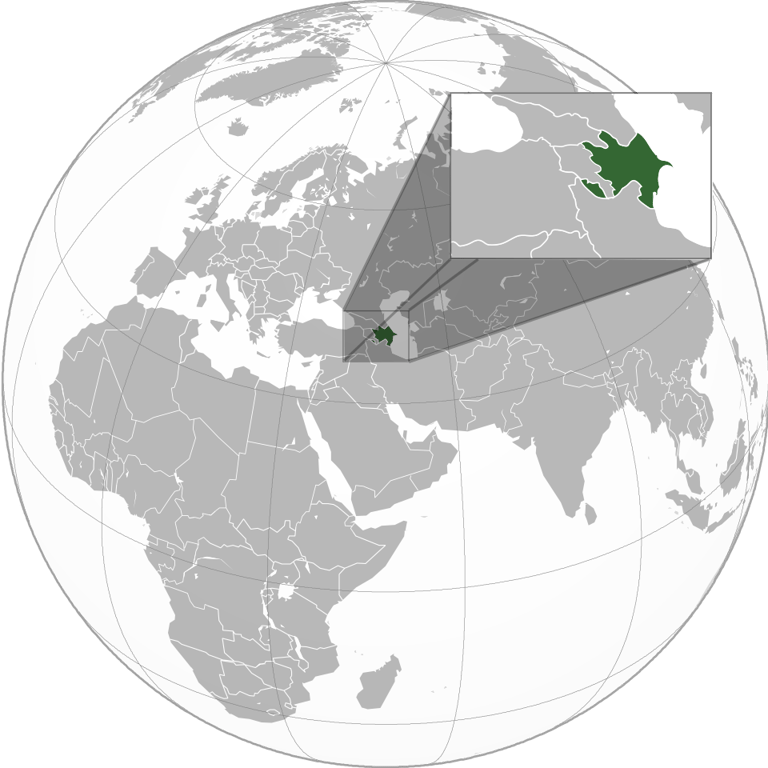
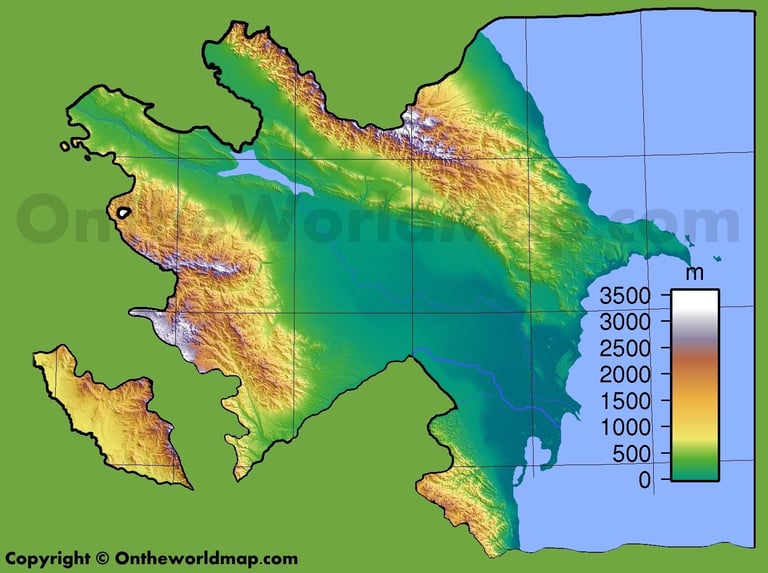
Official Name: Republic of Azerbaijan
Population: 10,694,370 (87th largest in the world, 31st largest in Asia)
Area/Size: 33,436 square miles (a little smaller than Maine)
Capital: Baku (2.5 million - sister city of Naples, Italy and Houston, TX)
Spoken Languages: Azeri (official), Russian, Armenian
Religions: Shiite Muslim (66%), Sunni Muslim (30%), Orthodox Christian (2%)
Life Expectancy: 76.3 years Internet Access Rate: 89.0%
Per Capita Income: $25,089 Unemployment: 5.6%
What do they Export?: Crude oil, natural gas, military weapons, gold, cotton
Export Partners: Italy (37%), Turkey (19%), Israel (5%), Greece (4%)
Import Partners: Russia (17%), China (16%), Turkey (14%), Georgia (4%)
Government Type: Presidential republic (Last election 2024 - president has won 5 consecutive terms in disputed votes)
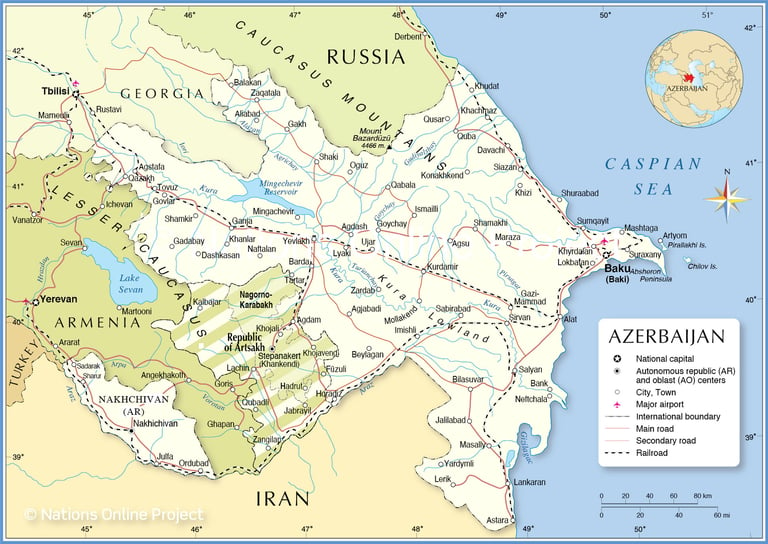
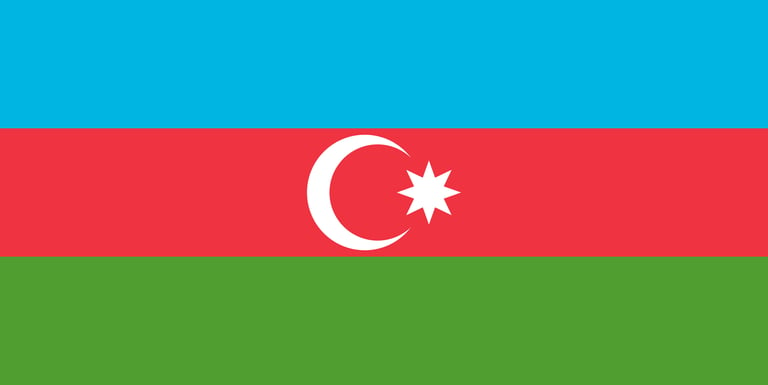
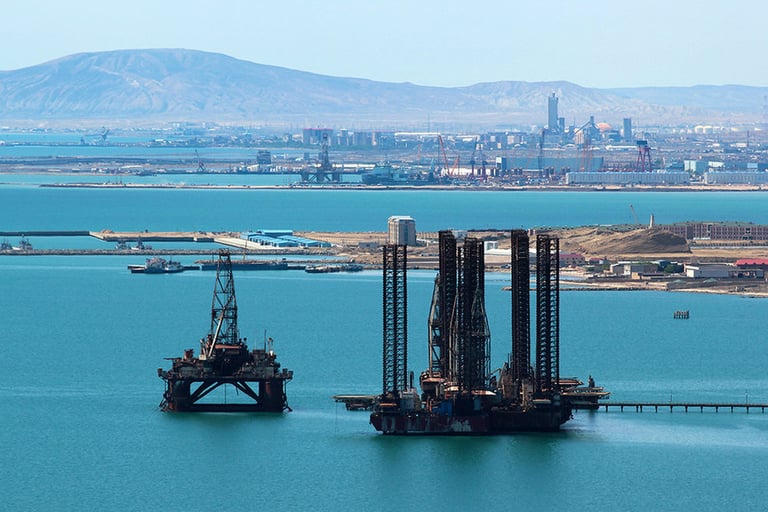
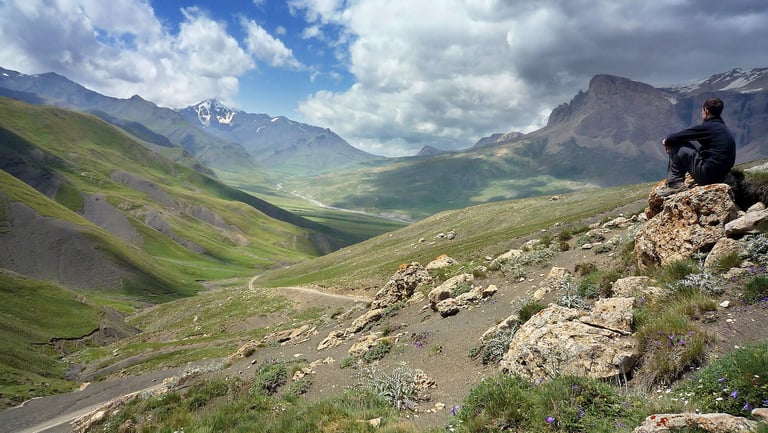
Section II - Images of Azerbaijan
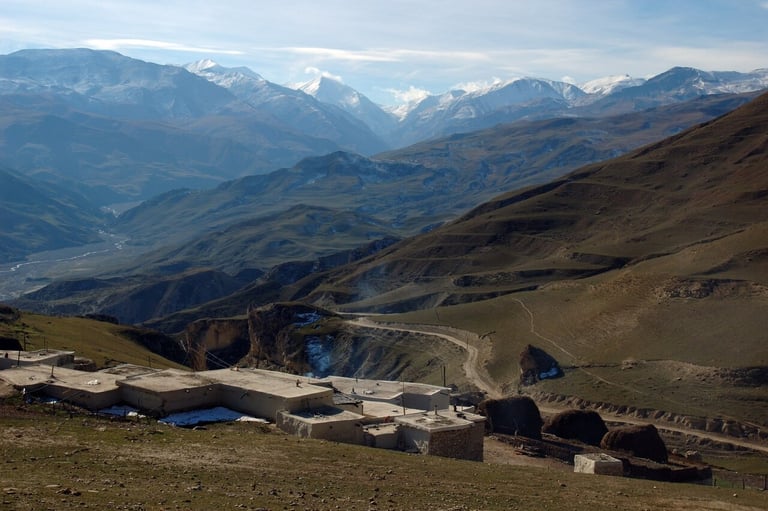
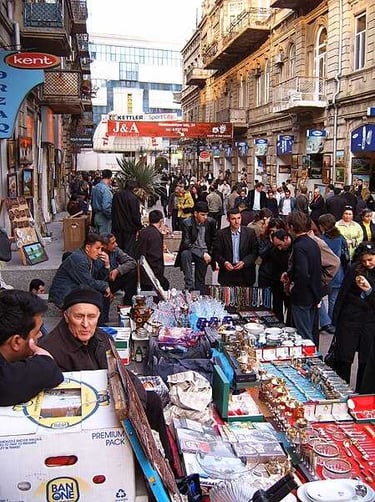
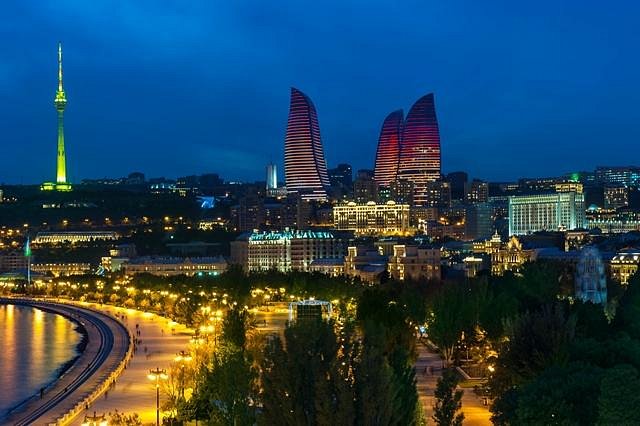
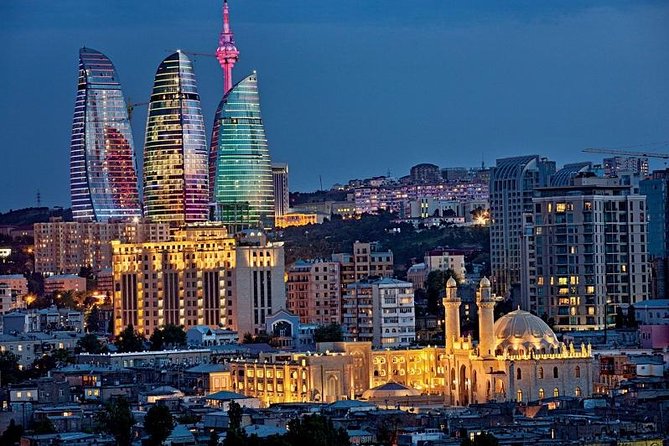
6 Key Dates/Periods in Azeri History
I'm going to do a fairly quick overview of ancient and early Azerbaijan's history, so I can focus on events of the past 120 years and the series of wars that have defined current events there.
c. 1000 BC - 642 AD - Early settlements included the Scythians during the 9th century BC. Following the Scythians, Iranian Medes came to dominate the area to the south of the Aras river. The Medes forged a vast empire between 900 and 700 BC, which was integrated into the Achaemenid Empire around 550 BC. The area was conquered by the Achaemenids leading to the spread of Zoroastrianism. The Achaemenids were defeated by Alexander the Great in 330 BCE. After the 247 BCE fall of the Seleucid Empires in Persia, the Kingdom of Armenia ruled portions of what is today Azerbaijan for about 600 years. The Caucasian Albanians established a kingdom in the 1st century BC, primarily remaining a semi-independent vassal state until the Parthians were deposed in 252 and the kingdom became a province of the Sasanian Empire. A vassal state, it retained its monarchy but the Albanian king had no real power. During the 4th century Gregory the Illuminator helped convert the Albanians to Christianity. Sasanid control ended with its 642 defeat in the Muslim conquest of Persia, and the Albanians came under nominal Muslim rule.
642 - 1800 AD - The Albanian territory emerged as an autonomous principality first under the Umayyad Caliphate, then the Abbasid Caliphate. Like much of the region, a series of empires - Seljuk, Mongol, and Timurid - invaded and brought destruction into the 14th century. The Shirvanshahs, a local dynasty of Arabic origin that was later Persianized, became a vassal state of Timurid Empire of Timur and assisted him in his war with the ruler of the Golden Horde, gaining a high degree of autonomy for the next 200 years. In 1501, the Safavid dynasty of Iran subdued the Shirvanshahs and gained its possessions. Over the course of the next century, the Safavids converted the formerly Sunni population to Shia Islam as they did in Iran. The Sunni Ottomans briefly managed to occupy present-day Azerbaijan as a result of the Ottoman–Safavid War of 1578–1590, but they were ousted by the Safavids by the early 17th century. During the 18th century the Russians and Ottomans both attempted to fill a power vacuum, but for the most part the land remained under Iranian rule up to the start of the 19th century.
1450 - 1900 - After the Safavid Empire ended, no strong empire emerged within Iran to fill the gap. Imperial Russia, seeing an opportunity, switched to a more aggressive geo-political stance towards Iran and the Ottoman Empire actively trying to gain possession of the Caucasus region. In 1804, the Russians invaded and sacked the Iranian town of Ganja, sparking the Russo-Persian Wars of 1804–1813 and 1826-1828. The militarily superior Russians ended the wars with a victory and after the incorporation of all Caucasian territories from Iran into Russia, the border between the two was set at the Aras River. Despite the Russian conquest, throughout the entire 19th century, preoccupation with Iranian culture, literature, and language remained widespread among Shia and Sunni intellectuals in the Russian-held cities of the region. As a result of the Russian conquest, the Azerbaijanis are nowadays parted between two nations: Iran and Azerbaijan.
1900 - 1988 - With the start of the Bolshevik Revolution in 1917, Russian forces retreated back into Russia leaving a power vacuum. At the time, Russian-controlled Eastern Armenia, Georgia, and Azerbaijan attempted to bond together in the Transcaucasian Democratic Federative Republic. This federation, however, lasted from only February to May 1918. When the republic dissolved in May 1918, the leading Musavat party declared independence as the Azerbaijan Democratic Republic (ADR), adopting the name of "Azerbaijan", a name that prior to the proclamation of the ADR was solely used to refer to the adjacent northwestern region of contemporary Iran. The ADR was the first modern parliamentary republic in the Muslim world. Independent Azerbaijan lasted only 23 months until the Bolshevik 11th Soviet Red Army invaded it, establishing the Azerbaijan Soviet Socialist Republic on 28 April 1920. Although the bulk of the newly formed Azerbaijani army was engaged in putting down an Armenian revolt that had broken out in Karabakh, Azerbaijanis did not surrender their brief independence of 1918–20 quickly or easily. As many as 20,000 Azerbaijani soldiers died resisting what was effectively a Russian reconquest. During World War II, Azerbaijan played a crucial role in the strategic energy policy of the Soviet Union, with 80 percent of the Soviet Union's oil on the Eastern Front being supplied by Baku. Although the June 1941 German invasion of the Soviet Union reached the Greater Caucasus in July 1942, the Germans did not physically invade Azerbaijan but did carry out bombing campaigns (Operation Edelweiss). The 1950s were a period of rapid urbanization and industrialization, but Azerbaijan's oil industry lost its relative importance to the Soviet economy during the 1960s because of a shift in oil production to other regions of the Soviet Union and the depletion of known terrestrial oil resources; at the time offshore production was not considered cost-effective. Although ethnic tensions (particularly between Armenians and Azerbaijanis) began to grow, violence was suppressed.
1988 - 1993 - Mikhail Gorbachev's era was marked by increasing unrest in the Caucasus, initially over Nagorno-Karabakh. Ethnic conflict, centering on Armenian demands for the unification of Nagorno-Karabakh with Armenia began in Feb 1988 amid pogroms against the Armenian population of Baku. By Fall 1989, an outbreak of anti-Armenian violence in Baku led to intervention by Soviet troops, culminating in a violent confrontation when Soviet troops killed 132 nationalist demonstrators in Baku in Jan 1990. Azerbaijan SSR president Ayaz Mutallibov was 1 of only 2 Soviet leaders to support the Aug 1991 Soviet coup d'état attempt, but afterward Azerbaijan declared independence from the USSR with Mutallibov as the first president. Almost immediately the Armenian majority in Nagorno-Karabakh voted to secede from Azerbaijan and in the process proclaimed independence (which no one recognized). Full-scale fighting erupted in early 1992, and Armenian forces quickly gained the upper hand, leading to the overthrow of Mutallibov's government and his flight to Moscow. Azerbaijan (with Turkey's help) attempted to blockade all land transit to Armenia, but in the process cut themselves off from Turkish support as well. The new government had no greater success in the war in 1993, leading to the overthrow of a second Azeri government and the return of a former leader under the Soviets, Heydar Aliyev, to lead a new government and agree to a ceasefire in the conflict.
1993 - present - In May 1994, a Russian-brokered ceasefire left the Armenians in full military control of the Nagorno-Karabakh enclave, in addition to 20% of the territory of southern Azerbaijan. Rather than continue to fight, Heydar Aliyev chose to consolidate power within the country, winning election and then arresting some of his opposition and disbanding the military police (after they were accused of plotting a coup). Aliyev's position as absolute ruler was unquestioned by the end of 1996, and he was reelected in 1998. The early portions of the 21st century saw limited reforms, increasing oil production and the dominance of BP as Azerbaijan's main foreign oil company. Facing failing health, Aliyev made his son Ilham his chosen successor for election in October 2003, and then died months later. Ilham Aliyev has subsequently been elected 5 times since then despite protests and claims of voter fraud, and after a 2009 constitutional referendum, presidential term limits were abolished and freedom of the press was restricted. In Sep 2020, a full-scale war erupted for 6 weeks due to the unresolved Nagorno-Karabakh conflict - this time the Azeri army took the initiative before a ceasefire agreement stopped the fighting. Finally on Aug 8, 2025, the leaders of Armenia and Azerbaijan signed a joint declaration at the White House, committing to a peace deal facilitated by the Trump administration that would end nearly four decades of conflict between the two countries.
Other Non-Political Issues
Section III - Issues of Azerbaijan
General Information on Azerbaijan:
“Azerbaijan", One World Nations Online, Jan 2025, https://www.nationsonline.org/oneworld/azerbaijan.htm
"Azerbaijan", Wikipedia, Apr 2026, https://en.wikipedia.org/wiki/Azerbaijan or https://simple.wikipedia.org/wiki/Azerbaijan
"Azerbaijan", National Geographic Kids, 2026, https://kids.nationalgeographic.com/geography/countries/article/azerbaijan
"Azerbaijan Travel" (official tourism site), Azerbaijan Tourism Board, 2026, https://azerbaijan.travel/
“Azerbaijan - Economy", World Bank Group, Jan 2026, https://data360.worldbank.org/en/economy/AZE
History Links on Azerbaijan:
"Azerbaijan: A People from the Mists of Time", GeoHistory: Practical Perspectives on a Complex Region, Nov 2015, https://geohistory.today/azerbaijan/
“Azerbaijan Explained in 16 Minutes | History, Geography, Culture” (video), Opentiera, Sep 2025, https://www.youtube.com/watch?v=-tiTCUq4yQk
“Historic and Cultural sites in Azerbaijan", UNESCO World Heritage Convention, https://whc.unesco.org/en/statesparties/az
"Islam’s gradual resurgence in post-Soviet Azerbaijan", Al-Jazeera, Jan 2018, https://www.aljazeera.com/news/2018/1/8/islams-gradual-resurgence-in-post-soviet-azerbaijan
"The surprising Armenia-Azerbaijan peace deal over Nagorno-Karabakh, explained" (story), VOX.com, Nov 2020, https://www.vox.com/2020/11/10/21558428/armenia-azerbaijan-war-nagorno-karabakh-russia-turkey OR "The Armenia and Azerbaijan war, explained" (video), Dec 2020, https://www.youtube.com/watch?v=YU2v38hRRbg
Current Events Stories on Azerbaijan:
"Iran’s Northern Neighbors Are Facing Fallout From the War, Too: The conflict is threatening stability in Armenia and Azerbaijan.", Carnegie Endowment for International Peace, Mar 2026, https://carnegieendowment.org/emissary/2026/03/armenia-azerbaijan-iran-war-fallout
"Azerbaijan-Armenia peace plan hinges on narrow strip of land along Iran border", PBS NewsHour, Dec 2025, https://www.pbs.org/newshour/show/azerbaijan-armenia-peace-plan-hinges-on-narrow-strip-of-land-along-iran-border (story w/video) OR https://www.youtube.com/watch?v=Um9GWdRcgpg (just video)
"Poll observers say Azerbaijan presidential vote marred by irregularities", Al-Jazeera, Feb 2024, https://www.aljazeera.com/news/2024/2/8/poll-observers-say-azerbaijan-presidential-vote-marred-by-irregularities
“Tensions Between Armenia and Azerbaijan", Council on Foreign Relations, Feb 2026, https://www.cfr.org/global-conflict-tracker/conflict/nagorno-karabakh-conflict
“There’s a mind-bending Soviet-era oil rig city ‘floating’ on the planet’s largest lake”, CNN News, Nov 2024, https://www.cnn.com/2024/11/06/climate/oil-rocks-neft-daslari-caspian-sea-city
Other Interesting Links Related To Azerbaijan:
"Azerbaijan: The beautiful country where carpet is the highest order of art", CNN Travel, Dec 2023, https://www.cnn.com/travel/azerbaijan-carpets
"From Pilaf to Meat Pie: The Blended Influences of Azerbaijan Food", Aramco World, May 2024, https://www.aramcoworld.com/articles/2024/tastes-of-azerbaijan
“In Nagorno-Karabakh, people grapple with war’s aftermath and COVID-19", National Geographic Magazine, Jan 2021, https://www.nationalgeographic.com/history/article/nagorno-karabakh-people-grapple-war-aftermath-covid
“‘King of fruit’: Azerbaijan’s love affair with the pomegranate”, CNN Travel, Dec 2023, https://www.cnn.com/travel/azerbaijan-pomegranate-national-fruit
“A guide to Azerbaijan’s culture", Wanderlust, Oct 2023, https://www.wanderlustmagazine.com/inspiration/azerbaijan-culture-guide/
Section IV - Resources About Azerbaijan
ECON and More
Curating articles for K-12 education.
CONTACT
© 2025. All rights reserved.