
Countries of the World (Asia) - Vietnam
Fourth Asian country in my new geography series. One small change you might notice I made (and went back to fix on earlier ones) was including "Internet Access Rate" rather than "Literacy Rate" for countries. I forgot I made that change the last 2-3 years in the classroom - felt like students could relate to it easier (and it helped them judge the development status of countries).
Section I - Basic Info on Vietnam
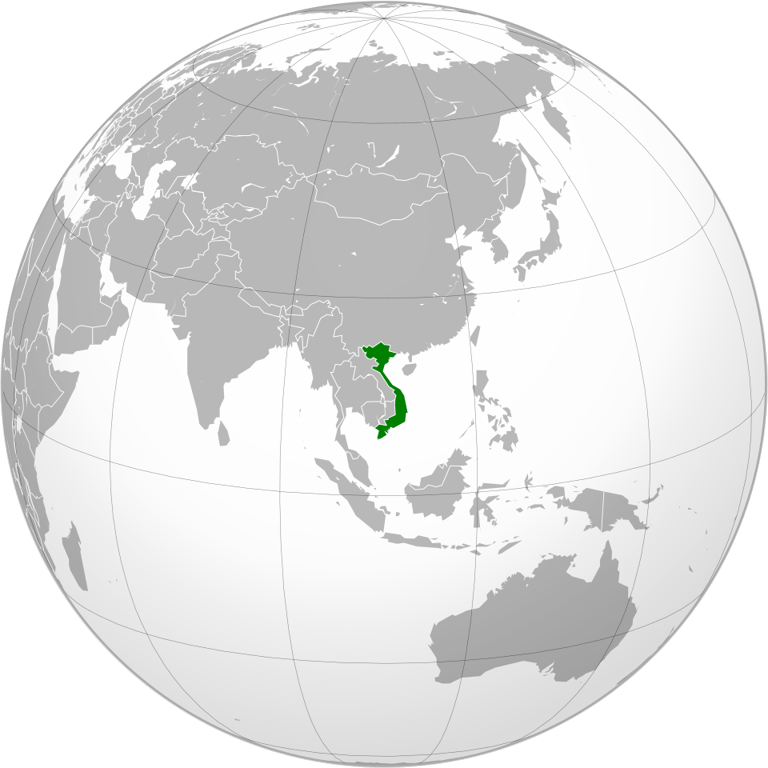
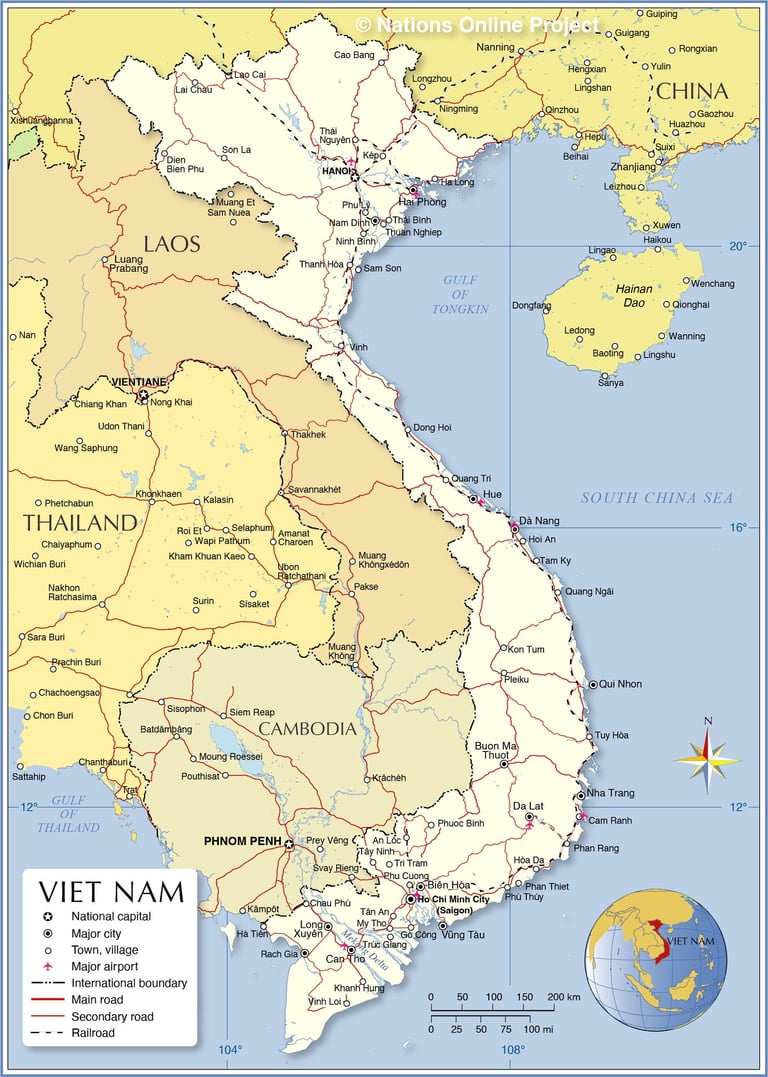
Official Name: Socialist Republic of Vietnam
Population: 106,688,169 (16th largest in the world, 9th largest in Asia)
Area/Size: 127,881 square miles (about the size of Tennessee/Kentucky/Virginia combined)
Capital: Hanoi (5.6 million - sister city of Beijing, China)
Other Major Cities: Ho Chi Minh City (9.8 million), Can Tho (2 mil), Hai Phong (1.5 mil)
Spoken Languages: Vietnamese (official), English, French, Chinese, Khmer
Religions: Buddhist (48%), agnostic (12%), ethnic religions (11%), Christian (10%)
Life Expectancy: 76.4 years Internet Access Rate: 84.2%
Per Capita Income: $16,386 Unemployment: 1.4%
What do they Export?: Petroleum, rice, coffee, clothing, fish
Export Partners: U.S. (28%), China (20%), Japan (6%), Hong Kong (4%)
Import Partners: China (49%), Singapore (6%), Japan (6%), Hong Kong (5%)
Government Type: Communist party-led state (no elections, but a lot of leadership turnover in the past 2 years)
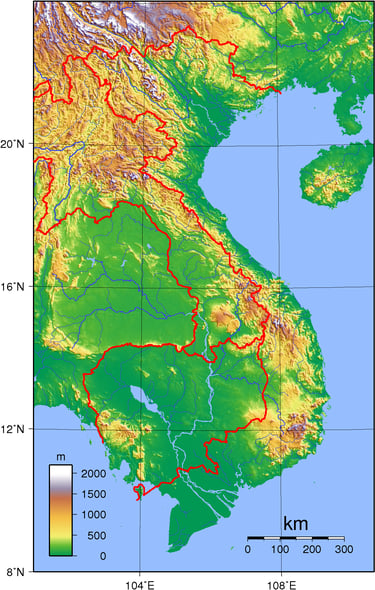
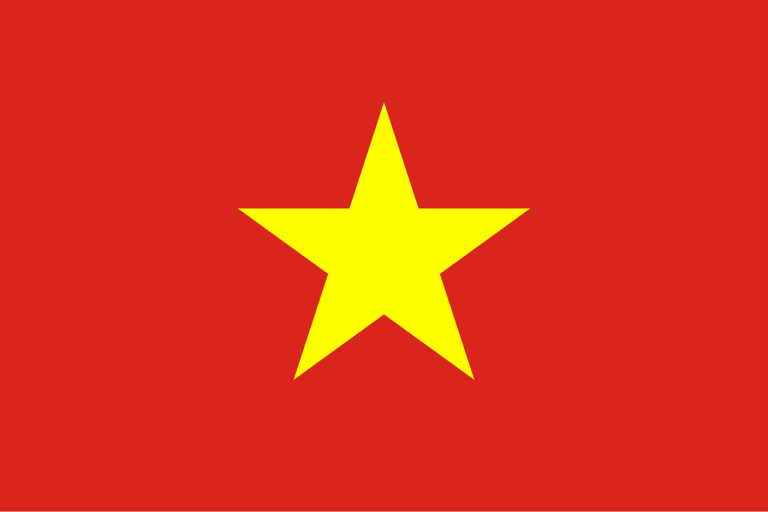
Section II - Images of Vietnam
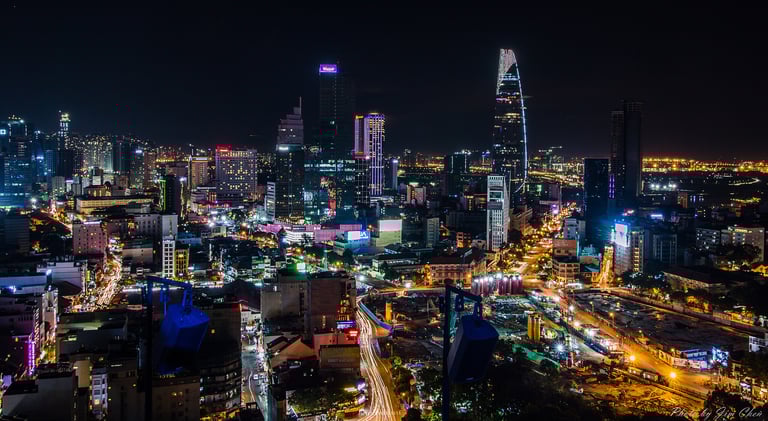
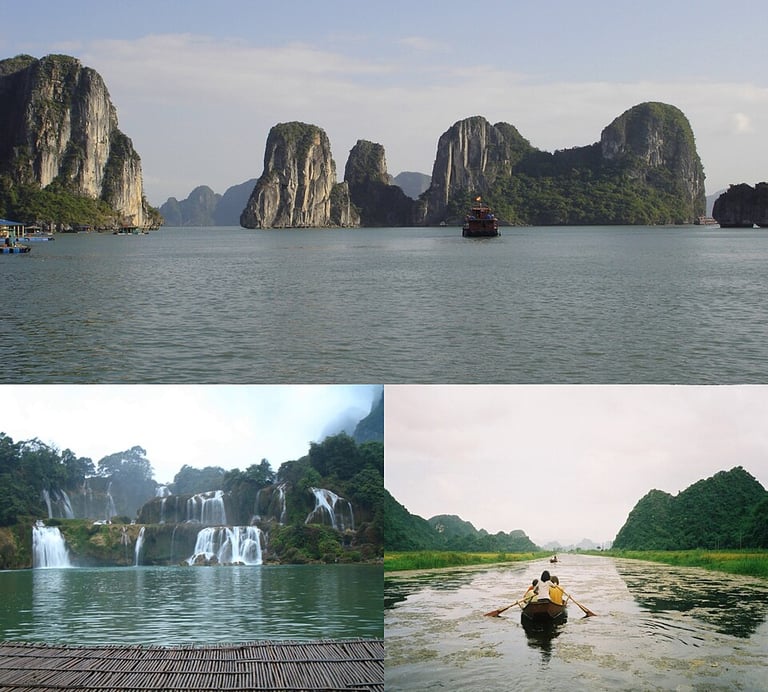
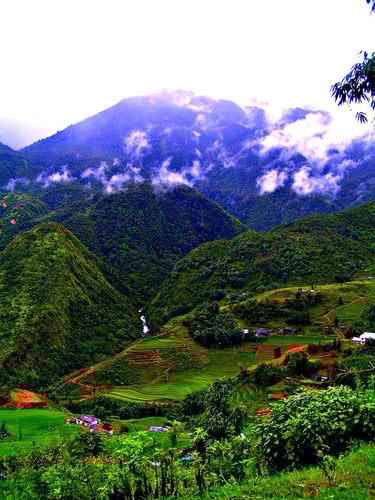
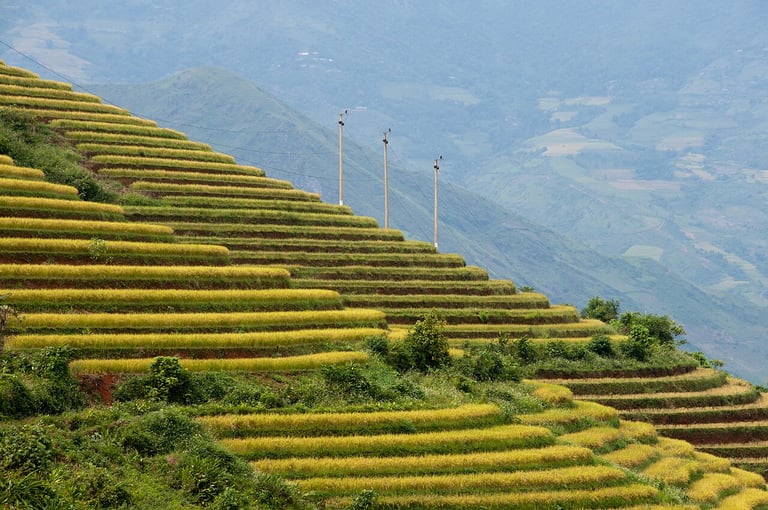
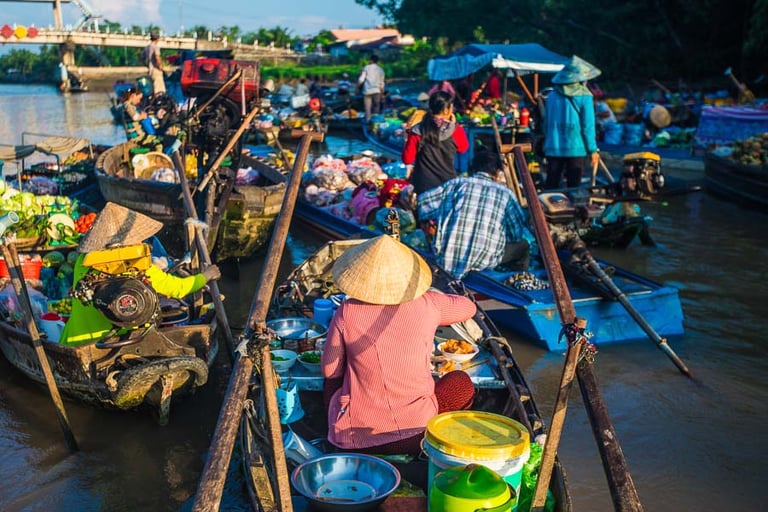
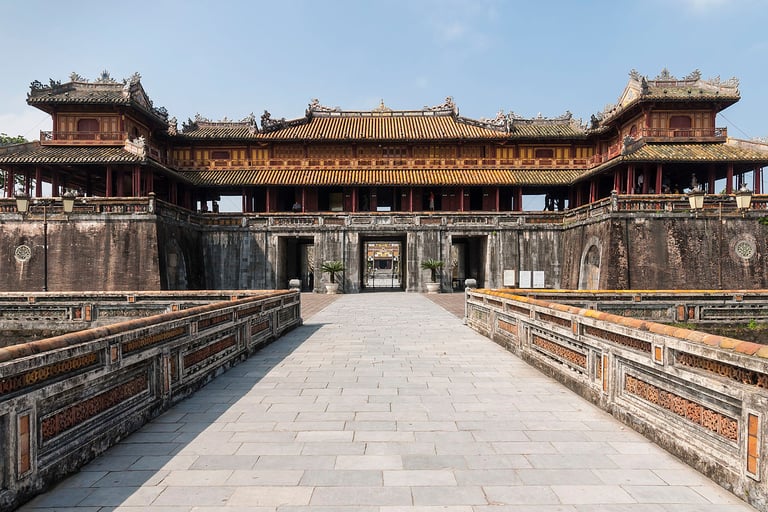
8 Key Periods in Vietnamese History
Normally a country the size of Vietnam "might" not justify more focus on its' history - but obviously given the role of the U.S. in its' 20th century history, this one isn't "normal". Having said that, this will still not be a comprehensive look at the events of the Vietnam War to the exclusion of all of Vietnam's other history - it will be one event (a BIG one, to be sure) among many. I may, however, also do a separate post on Vietnam War classroom resources around the same time I post this (probably late February or early March).
c. 3000 BC - 938 AD - According to Vietnamese legends, the Hồng Bàng dynasty of the Hùng kings, first established in 2879 BC, is considered the first state established in Vietnam. In 111 BC, the Chinese Han dynasty conquered Nanyue and divided Vietnam into three provinces. During this period, Buddhism was introduced into Vietnam from India via the Maritime Silk Road, while Taoism and Confucianism spread to Vietnam through the Chinese rulers. In A.D. 40, the Trưng Sisters led a rebellion to get rid of the Chinese governor occupying Vietnam. They successfully formed their own kingdom in Mê Linh, but were later defeated in A.D. 43 by Ma Yuan, a Chinese general, and are regarded as female military heroes and national heroines. After Ma Yuan’s defeat of the Trưng sisters, the Chinese maintained domination over Vietnam for more than a thousand years. They established a bureaucracy that emphasized Confucianism, and they focused on educating Vietnam’s ruling class with Chinese literature and ideas.
c. 938 - 1862 - In 938, a Vietnamese fleet defeated a Chinese fleet in battle, effectively beginning the age of independence for Vietnam. From the 10th to the 13th centuries, the Lý dynasty consolidated authority while maintaining a tributary yet autonomous relationship with the Song dynasty in China. The succeeding Trần dynasty strengthened dynastic cohesion and repelled invasions from the Mongol. In the fifteenth century, after a brief occupation by the Ming dynasty, independence was restored under the Lê dynasty, which promoted Confucian governance and territorial expansion. Political fragmentation followed in the seventeenth and eighteenth centuries as rival regimes ruled the north and south portions of Vietnam, until the Nguyen dynasty unified the country in the early 19th century before colonial incorporation into French Indochina and the eventual end of the monarchy.
1862 - 1940 - France desired trading freedom in Vietnam during the 1840s and 1850s, as well as wanting to bring more missionaries into the country. The Nguyen dynasty disliked French involvement in Vietnam, and executed missionaries and Vietnamese coverts. This spurred the French Emperor, Napoleon III, to attack Vietnam starting in 1858 and attempt to force the court to accept the title of "French protectorate." A peace treaty was signed in 1862, essentially giving day-to-day control of southern Vietnam to France. Over the next 20 years, French troops landed in northern Vietnam several times, while also defending their southern provinces against resistance movements. Eventually France assumed control over the whole of Vietnam after 1883, with Cambodia and Laos added in 1893 to form French Indochina. Resistance movements continued periodically entering the 20th century, but most native leaders either went underground or were exiled to other French colonies around the world.
1940 - 1945 - During World War II, the conquest of France by Nazi Germany provided an opportunity for the Japanese to take over former French colonies like French Indochina. Japanese troops first entered parts of Indochina in Sept 1940, and by July 1941 Japan had extended its control over the whole of French Indochina. During this time, most of the Vietnamese resistance to Japan, France, or both, including both communist and non-communist groups, remained based over the border, in China. The Chinese Communist Party sent Ho Chi Minh to Vietnam in 1941 to lead an underground centered on the communist Viet Minh. This mission was assisted by European intelligence agencies, and later the US Office of Strategic Services (OSS), but little actual fighting took place in this region. At the war's end, Vietnamese nationalists under the Viet Minh banner took control in the August Revolution, and issued a Proclamation of Independence of the Democratic Republic of Vietnam.
1946 - 1959 - Despite Ho Chi Minh's effort to declare independence, Franco-British military forces moved to occupy Vietnam south of the 16th parallel. The northern half of Vietnam was occupied by the army of the Republic of China led by General Lu Han, but later France received China's consent to advance to the North. As a result, a preliminary agreement was reached in Mar 1946, where the Viet Minh accepted that the DRV became a free state within the French Union while southern Vietnam remained under French rule, and stipulated that French troops would only stay in Vietnam for five years. In 1947, France wanted to find an anti-communist alternative to the Viet Minh in southern Vietnam, and brought back the former Vietnamese emperor Bảo Đại. France recognized nominal independence of Vietnam within the French Union and led to the establishment of the State of Vietnam in the south. France was finally persuaded to relinquish its colonies in Indochina in 1954 when Viet Minh forces defeated the French at Dien Bien Phu (a base in extreme northern Vietnam). On 21 July 1954, an agreement negotiated at Geneva, signed by the communist DRV and France, provisionally divided Vietnam along the 17th Parallel. A nation-wide election for a united administration was to be held in July 1956, but the promised elections were never held (mostly because the West recognized that Ho Chi Minh would have easily won such an election). After failing to convince the Republic of Vietnam to hold general elections, North Vietnam decided to order its their guerrilla cadres in the South to fight beginning in 1959.
1959 - 1975 - After the division of Vietnam in 1954, the Viet Minh, led by Ho Chi Minh, took control of North Vietnam, while the US assumed financial and military support for South Vietnam. The North Vietnamese supplied and eventually directed the Viet Cong (VC), a common front of dissidents in the south which intensified a guerrilla war from 1957. President John F. Kennedy increased US involvement from 900 military advisors in 1960 to 16,000 in 1963 and sent more aid to the Army of the Republic of Vietnam (ARVN), which failed to produce results. Following the Gulf of Tonkin incident in 1964, the US Congress passed a resolution that gave President Lyndon B. Johnson authority to increase military presence without declaring war. Johnson launched a bombing campaign of the north and sent combat troops, dramatically increasing deployment to 536,000 by 1969. US forces relied on air supremacy and overwhelming firepower to conduct search and destroy operations in rural areas. Communist forces relied on guerrilla tactics, using the countryside and jungle as concealed base areas. In 1968, the Communists launched the Tet Offensive, which was a tactical defeat but convinced many Americans the war could not be won. Johnson's successor, Richard Nixon, began "Vietnamization" from 1969, which saw the conflict fought by an expanded South Vietnamese Army while US forces withdrew. With its ranks degraded by widespread drug abuse and plummeting morale, US troops had mostly withdrawn from Vietnam by 1972. By the 1973 Paris Peace Accords, the last American forces had left, but bloody fighting continued until the 1975 Spring Offensive. Ultimately, Saigon (capital of South Vietnam) fell to the communists in April 1975, essentially marking the war's end.
1975 - 2000 - On 2 July 1976, the North and South Vietnam were officially re-united into a single communist state, known as the Socialist Republic of Vietnam. The government also renamed Saigon as Ho Chi Minh City in honor of Ho, who died in 1969. The new country became a key piece of the new rivalry within the communist world between the Soviet Union and China, as both vied for military and economic influence. Having unified North and South politically, the CPV still had to integrate them socially and economically. The main strategy was having more than 1 million northerners migrate to the south and central regions of the country, displacing around 1 million Southerners from their homes and forcibly relocating them to mountainous forested areas. As a result, many South Vietnamese left the country on their own in decrepit, leaky, overcrowded boats. They encountered storms, shortages of water and food, and, most seriously, pirates in the South China Sea and the Gulf of Thailand. Over 4 years from 1979-1982, it is estimated 650,000 Indochinese "boat people" were resettled in Western countries. In the late 1970s, Cambodia under the Khmer Rouge regime started harassing and raiding Vietnamese villages at the common border. To neutralize the threat, the PAVN invaded Cambodia in 1978 and overran its capital of Phnom Penh, driving out the incumbent Khmer Rouge regime. In response, as an action to support the pro-Beijing Khmer Rouge regime, China increased its pressure on Vietnam, and sent troops into Northern Vietnam in 1979 to "punish" Vietnam. As a result of these conflicts (and the earlier Vietnam War) Vietnam found itself largely isolated through the 1980s and dependent on economic and military aid from the Soviet Union. Vietnam withdrew its troops from Cambodia in 1989 and began to normalize relations in the 1990s, first with China in 1990-1991 and then with the United States in 1994-1995.
2000 - present - After American President Bill Clinton visited Vietnam in November 2000, a new era in relations between the two countries began. No other U.S. leader had ever officially visited Hanoi and Clinton was the first to visit Vietnam since the 1975 fall of Saigon. Vietnam has become an increasingly attractive destination for economic development, and in 2007 joined the WTO (World Trade Organization). Its economic reforms significantly changed Vietnamese society and increased Vietnamese relevance in both Asian and broader international affairs. Also, due to Vietnam's strategic geopolitical position near the intersection of the Pacific and Indian oceans, many world powers began to take on a much more favorable stance towards Vietnam. Vietnam is still a country facing international disputes, mostly with Cambodia over their shared border and with China over the South China Sea. A visit by U.S. President Joe Biden in Sept 2023 led to a "Comprehensive Strategic Partnership", emphasizing the increasing importance of bilateral links between the two countries. Vietnam's long-time leader died in July 2024 and has been succeeded by Tô Lâm as general secretary of Vietnam's Communist Party for the next five years by the party congress.
Other Non-Political Issues
Section III - Issues of Vietnam
General Information on Vietnam:
“Vietnam", One World Nations Online, Jan 2025, https://www.nationsonline.org/oneworld/vietnam.htm
“Vietnam", Wikipedia, Mar 2026, https://en.wikipedia.org/wiki/Vietnam or https://simple.wikipedia.org/wiki/Vietnam
“Vietnam Explained in 19 minutes (History, Geography, & Culture)” (video), Opentiera, Jun 2025, https://www.youtube.com/watch?v=wW-3PwDQ_vE
"Vietnam", National Geographic for Kids, https://kids.nationalgeographic.com/geography/countries/article/vietnam
"Vietnam: Timeless Charm!" (official travel website), 2026, https://vietnam.travel/
“Vietnam Country Profile", World Bank Group, Jan 2026, https://data.worldbank.org/country/viet-nam
History Links on Vietnam:
“Dien Bien Phu: the battle that split Vietnam", History Extra, Jul 2022, https://www.historyextra.com/period/20th-century/dien-bien-phu-how-battle-split-vietnam/
“Primary Sources with DBQs—Vietnam" and "Central Themes for a Unit on Vietnam", Asia for Educators (Columbia University), https://afe.easia.columbia.edu/main_pop/ps/ps_vietnam.htm and https://afe.easia.columbia.edu/main_pop/kpct/ct_vietnam.htm
“Vietnam After the War" (lesson plan/resources), Asia Pacific Foundation of Canada, 2016, https://asiapacificcurriculum.ca/learning-module/vietnam-after-war
"Vietnam War" (articles and videos), History Channel, 2025, https://www.history.com/topics/vietnam-war OR https://www.youtube.com/playlist?list=PL2U10t-yybgEaKRFoBduYE-NbvjiZg50j (playlist of "Vietnam: A Television History")
“Vietnam World Heritage sites", UNESCO World Heritage Convention, https://whc.unesco.org/en/statesparties/vn
Current Events Stories on Vietnam:
"From Quiet Rise to Roar: Can Vietnam Become the Next Asian Tiger?", McGill International Review, Jan 2026, https://www.mironline.ca/from-quiet-rise-to-roar-can-vietnam-become-the-next-asian-tiger/
“Southeast Asia shuts offices, limits travel as oil crisis deepens", Al-Jazeera, Mar 2026, https://www.aljazeera.com/news/2026/3/12/southeast-asia-shuts-offices-limits-travel-as-oil-crisis-deepens
“Vietnam celebrates communist victory over U.S. as new threat of tariffs looms”, NBC News, Apr 2025, https://www.nbcnews.com/world/asia/vietnam-celebrates-communist-victory-us-new-threat-tariffs-looms-rcna203326
"Vietnam's leader returns to power with bold promises. Can he deliver?", British Broadcasting Corporation (BBC), Jan 2026, https://www.bbc.com/news/articles/c20zzq8we8wo
“Vietnam’s Year of Floods, Mud and Death", New York Times, Nov 2025, https://www.nytimes.com/2025/11/24/world/asia/vietnam-flooding-typhoon-emergency.html
Other Interesting Links Related To Vietnam:
“15 of the best things to do in Vietnam", Lonely Planet, Sep 2025, https://www.lonelyplanet.com/articles/top-things-to-do-in-vietnam
"Culture and Society", Embassy of the Socialist Republic of Vietnam in the United States of America, Mar 2026, https://vietnamembassy-usa.org/vietnam/culture
"Return With Honor", American Experience (from PBS), 2000, https://www.pbs.org/wgbh/americanexperience/films/honor/
“These Are My Favorite Things I Ate And Drank While In Vietnam, And I'll Honestly Never Look At American Coffee The Same Way Again", Buzz Feed, May 2025, https://www.buzzfeed.com/emilykling1/vietnam-food-recommendations
“Things You Should Know About Vietnamese Culture”, Culture Trip, Aug 2025, https://theculturetrip.com/asia/vietnam/articles/11-things-you-should-know-about-vietnamese-culture
"Vietnam’s Everyday Spirituality Explained Through 4 Fortune-Telling Traditions", Vietcetera.com, Oct 2025, https://vietcetera.com/en/vietnams-everyday-spirituality-explained-through-4-fortune-telling-traditions
Section IV - Resources About Vietnam
ECON and More
Curating articles for K-12 education.
CONTACT
© 2025. All rights reserved.