
Countries of the World (Asia) - Yemen
Fifth Asian country in my new geography series. One small change you might notice I made (and went back to fix on earlier ones) was including "Internet Access Rate" rather than "Literacy Rate" for countries. I forgot I made that change the last 2-3 years in the classroom - felt like students could relate to it easier (and it helped them judge the development status of countries).
Section I - Basic Info on Yemen
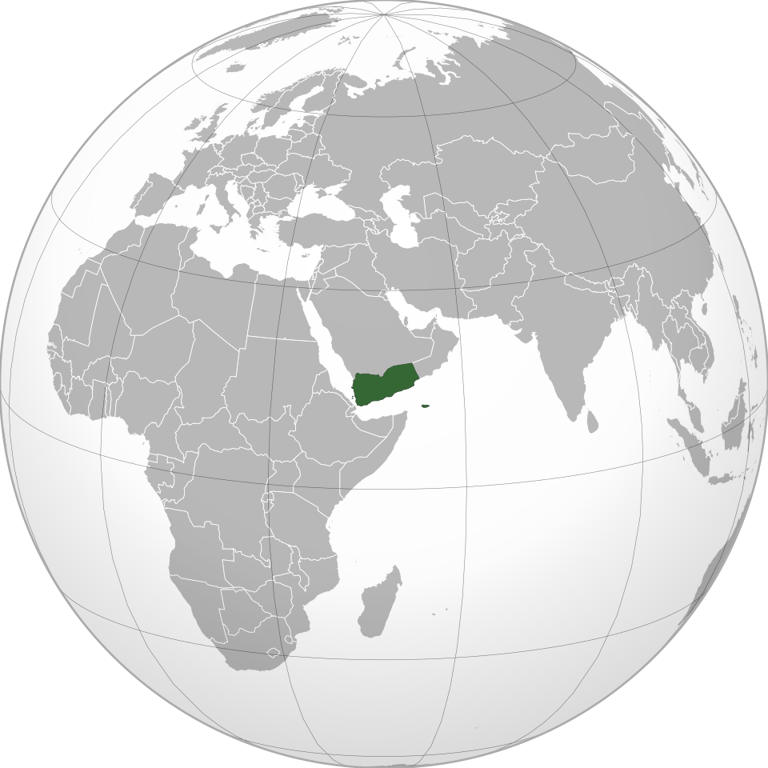
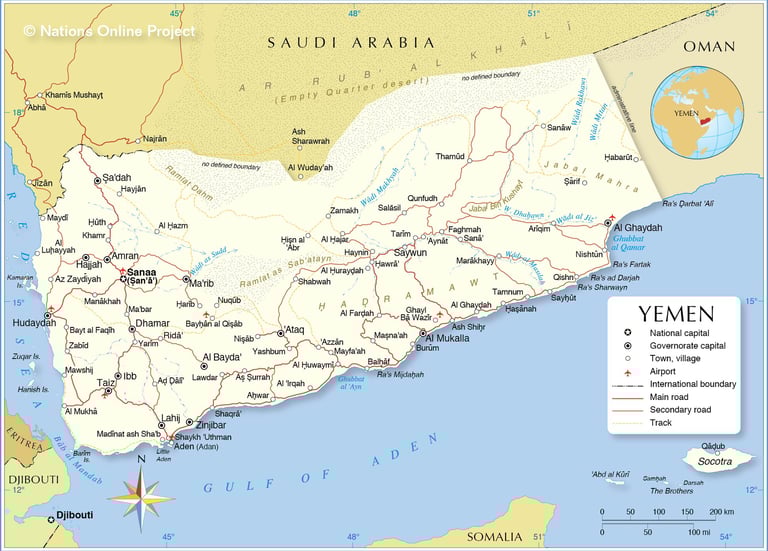
Official Name: Republic of Yemen
Population: 34,505,496 (46th largest in the world, 17th largest in Asia)
Area/Size: 203,850 square miles (about the size of Colorado/Wyoming combined)
Capital: Sana'a (3.55 million - sister city of Ankara, Turkey)
Other Major Cities: Aden (1.2 million)
Spoken Languages: Arabic (official)
Religions: Shiite Islam (55%), Sunni Islam (44%)
Life Expectancy: 66.3 years Internet Access Rate: 13.8%
Per Capita Income: $2,500 (est) Unemployment: 17.1%
What do they Export?: Scrap iron, mollusks, electrical parts, fish, scrap copper
Export Partners: UAE (28%), India (21%), Saudi Arabia (17%), Oman (7%)
Import Partners: China (23%), UAE (15%), Saudi Arabia (11%), Turkey (8%)
Government Type: Uncertain (in the middle of a civil war)
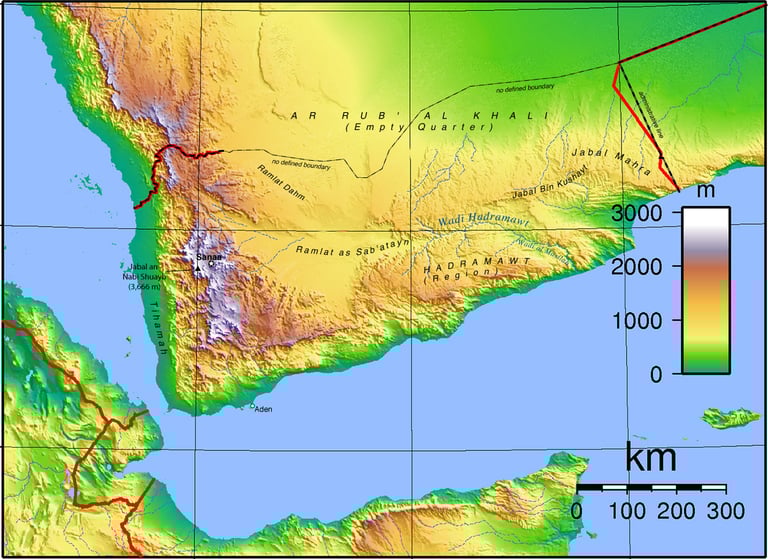
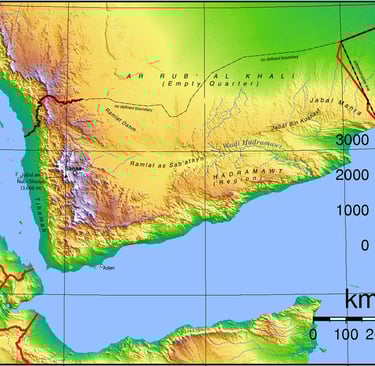


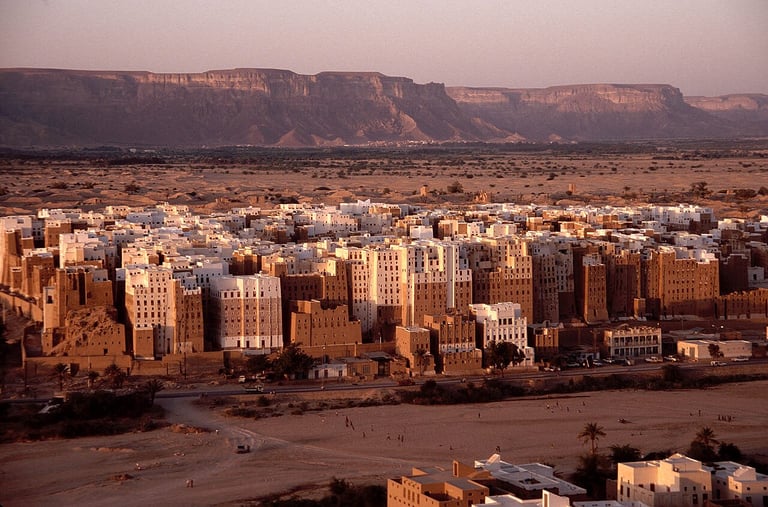
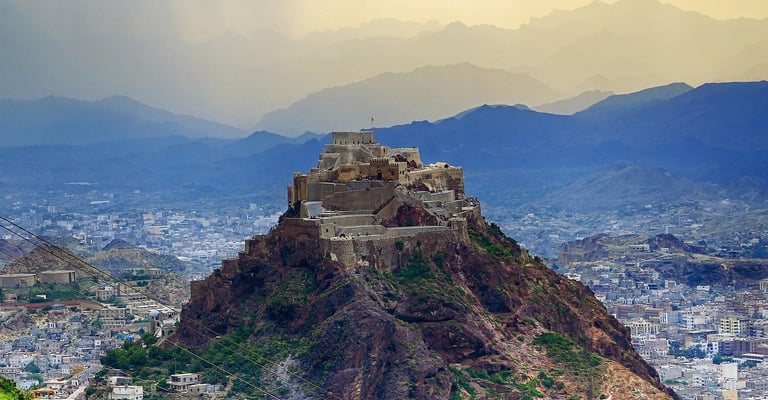
Section II - Images of Yemen
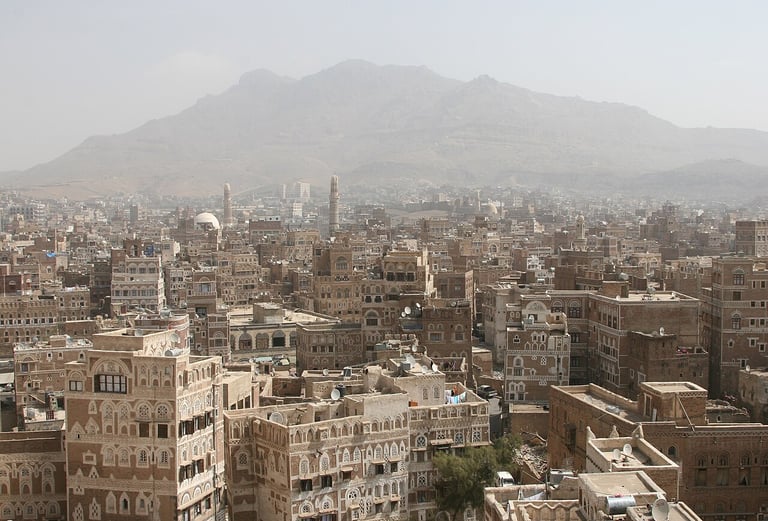
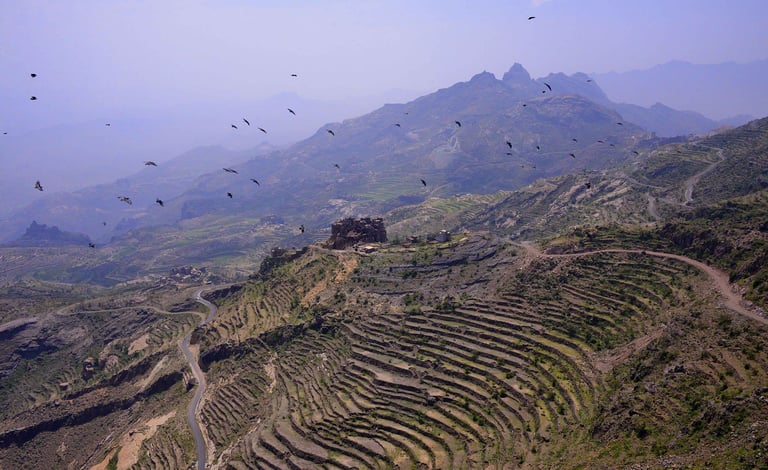
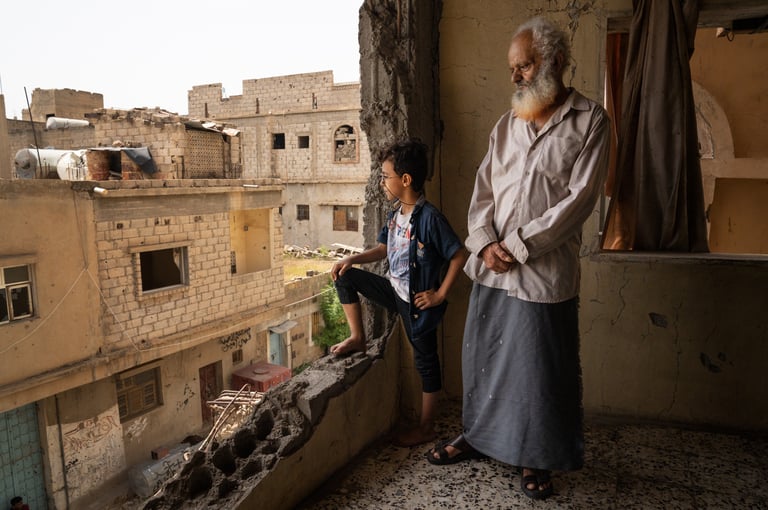
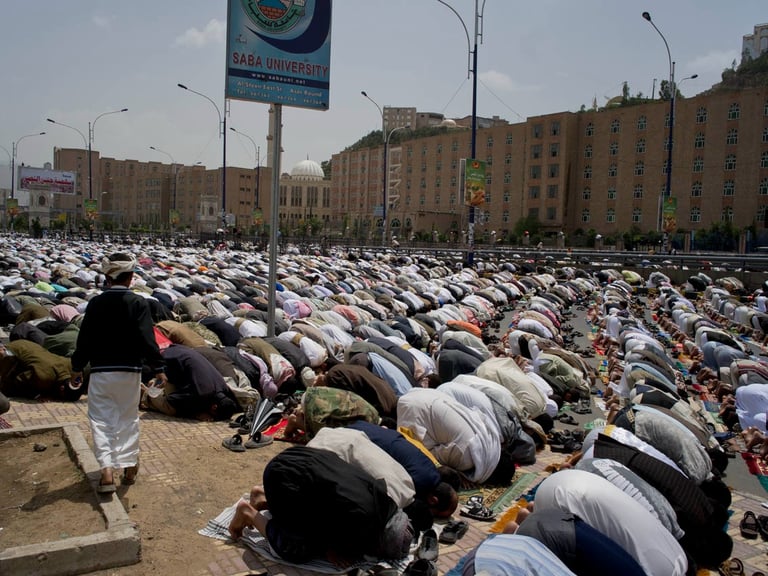
6 Key Dates/Periods in Yemen's History
I'm going to do a fairly quick overview of ancient and early Yemeni history, so I can focus on events of the past 50-75 years and the series of civil wars that have defined current events there.
c. 1000 BC - 630 AD - With its long sea border between eastern and western civilizations, Yemen has long existed at a crossroads of cultures with a strategic location in terms of trade on the west of the Arabian Peninsula. The Sabaean Kingdom existed in Yemen from 1000 BC to 275 AD. Saba is thought to be biblical Sheba and was the most prominent federation within the time period. The Sabaeans built the Great Dam of Marib around 940 BC. The dam was built to withstand the seasonal flash floods surging down the valley. They were succeeded by the Himyarite Empire from about 275 to 575 AD, and then the Sasanid empire (expanding from Iran to control of the trading ports of Aden and Sanaa) from 575 until the arrival of Islam in 630.
630 - 1500 - Islam came to Yemen when the Prophet Muhammad sent his cousin Ali to Sanaa and its surroundings around 630. At the time, Yemen was the most advanced region in Arabia, with prominent ports at Aden and Sanaa. Thereafter, Yemen was ruled as part of Arab-Islamic caliphates, and became a province in the Islamic empire. Regimes affiliated to the Egyptian Fatimid caliphs occupied much of northern and southern Yemen throughout the 11th century, including the Sulayhids and Zurayids, but the country was rarely unified for any long period of time. Local control in the Middle Ages was exerted by a succession of families which included the Ziyadids (818–1018), the Najahids (1022–1158), the Egyptian Ayyubids (1174–1229) and the Turkoman Rasulids (1229–1454). After the introduction of coffee in the 16th century the town of al-Mukha (Mocha), on the Red Sea coast, became the most important coffee port in the world.
1500 - 1918 - In the early 16th century as the Portuguese began to expand their Indian Ocean trade, the Mamluks of Egypt tried to attach Yemen to Egypt. They were successful for a 20-year period, only to have the Ottomans conquer Egypt behind them and eventually arrive in Yemen in 1538. The Ottomans had two fundamental interests to safeguard in Yemen: The Islamic holy cities of Mecca and Medina and the trade route with India in spices and textiles. For the next 200 years, Yemen was the sole Coffee producer in the world, but in the first half of the 18th century, the Europeans broke Yemen's monopoly on coffee by smuggling out coffee trees and cultivating them in their own colonies in the East Indies, East Africa, the West Indies and Latin America. With a rise in infighting among Islamic leaders in the mid-19th century, the British took advantage of the opportunity to establish a coal depot in Aden to service their steamers enroute to India. The British government concluded "protection and friendship" treaties with nine tribes surrounding Aden, and the port was declared a free zone in 1850. Meanwhile, the opening of the Suez Canal in 1869 strengthened the Ottomans' decision to remain in Yemen - they conquered Sanaa and much of the western half of Yemen by the early 1870s.
1918 - 1960 - During World War I the British made agreements with native tribes guaranteeing their security and independence if they would fight against the Ottomans. This treaty effectively divided Yemen into "north" and "south". With the end of the Ottoman Empire in 1918, a local leader named Imam Yahya moved southward to liberate the nine British protectorates. 15 years of fighting resulted, eventually resulting in another treaty with the British government in 1934 recognizing British sovereignty over Aden and the immediate surrounding area. In the wake of World War II, Yemen's economy and society opened to the outside world and in the 1950s it became the first Arab state to accept Soviet financial and military aid.
1960 - 2000 - The North Yemen Civil War began in 1962, with royalists supported by Saudi Arabia, Britain, and Jordan (mostly with weapons and financial aid, but also with small military forces), while the republicans were backed by Egypt (who also sent a large military force to participate in the fighting). After six years of civil war, the republicans were victorious in Feb 1968 and formed the Yemen Arab Republic. Around the same time, the Aden Emergency hastened the end of British rule in the south. At the end of Nov 1967 the state of South Yemen was formed, later officially known as the People's Democratic Republic of Yemen. Relations between the two Yemeni states fluctuated between peaceful and hostile, with short wars breaking out periodically over the next 20 years. In 1990 the two governments reached an agreement on the joint governing of Yemen, and the countries were merged on 22 May 1990 with a coalition government. Despite continued fighting at times in the 1990s, Yemen finally elected their first president in 1999.
2000 - present - In October 2000, seventeen U.S. personnel died after a suicide attack on the U.S. naval vessel USS Cole in Aden which was subsequently blamed on al-Qaeda. Ansar Allah, known popularly as the Houthis, began a low-level insurgency against the Yemeni government in 2004 after their leader, Hussein Badreddin al-Houthi, was killed in a government military crackdown following his protests against government policies. The intensity of the conflict varied over the course of the 2000s, with multiple peace agreements being negotiated and later disregarded. Conflict between the Houthis and Sunni tribes in northern Yemen spread to other parts of the country by mid-2014. After several weeks of street protests, the Houthis fought the Yemen Army forces and ultimately seized control of Sanaa, the Yemeni capital, in Sep 2014. An agreement to end the violence led to the Houthis gaining an unprecedented level of influence over state institutions and politics. During this time the Sanaa mosque suicide bombings took place, with the blasts killing 137 people and wounded more than 357, making it the deadliest terrorist attack in Yemen's history. The conflict escalated dramatically in March 2015, when Saudi Arabia and eight other mostly Sunni Arab states - backed by the US, UK, and France - began air strikes against the Houthis. Saudi Arabia says Iran is backing the Houthis with weapons and logistical support - a charge Iran denies. The stalemate has produced an unrelenting humanitarian crisis, with at least 8 million people at risk of starvation and 75% of the population in need of humanitarian assistance according to the UN.
Other Non-Political Issues
Section III - Issues of Yemen
General Information on Yemen:
“Yemen", One World Nations Online, Jan 2025, https://www.nationsonline.org/oneworld/yemen.htm
“Yemen", Wikipedia, Mar 2026, https://en.wikipedia.org/wiki/Yemen or https://simple.wikipedia.org/wiki/Yemen
“YEMEN Explained In 13 Minutes (History, Geography, & Culture)” (video), Opentiera, May 2024, https://www.youtube.com/watch?v=oDexwZj_pck
"Yemen", National Geographic for Kids, May 2021, https://kids.nationalgeographic.com/geography/countries/article/yemen
"Explore Yemen" (official travel website), Yemen Tourism Promotion Board, https://www.yementourism.com/
“Yemen Country Profile", World Bank Group, Jan 2026, https://data360.worldbank.org/en/economy/YEM
History Links on Yemen:
“A Timeline of the Yemen Crisis, from the 1990s to the Present", Arab Center Washington DC, Mar 2024, https://arabcenterdc.org/resource/a-timeline-of-the-yemen-crisis-from-the-1990s-to-the-present/
“Why is Yemen at war? | Start Here" (video), Al-Jazeera, Nov 2019, https://www.nytimes.com/2020/05/11/t-magazine/uzbekistan-history-silk-road.html
“Yemeni World Heritage sites", UNESCO World Heritage Convention, https://whc.unesco.org/en/statesparties/ye
“Conflict in Yemen and the Red Sea", Global Conflict Tracker from the Council of Foreign Relations, Feb 2026, https://www.cfr.org/global-conflict-tracker/conflict/war-yemen
Current Events Stories on Yemen:
"As Latest Yemen Crisis Eases, A Dangerous Moment Arises", Middle East Council on Global Affairs, Jan 2026, https://mecouncil.org/blog_posts/as-latest-yemen-crisis-eases-a-dangerous-moment-arises/
“The Iran war has a new front in Yemen. Here’s how it could escalate”, CNN, Mar 2026, https://www.cnn.com/2026/03/29/world/yemen-houthis-iran-war-intl
"The paradox of intervention: How US strikes in Yemen empowered the Houthis", European Council on Foreign Affairs, May 2025, https://ecfr.eu/article/the-paradox-of-intervention-how-us-strikes-in-yemen-empowered-the-houthis/
"Struggling Over Every Drop: Yemen’s Crisis of Aridity and Political Collapse", Carnegie Endowment for International Peace, Apr 2025, https://carnegieendowment.org/sada/2025/04/struggling-over-every-drop-yemens-crisis-of-aridity-and-political-collapse
"A Vaccine Against Suffering: Yemen’s Malnourishment Epidemic", Harvard International Review, Sep 2022, https://hir.harvard.edu/yemens-malnourishment-epidemic/
“Yemen’s Houthis coordinate with Iran, but retain independence, despite war", Al-Jazeera, Apr 2026, https://www.aljazeera.com/news/2026/4/2/yemen-houthis-analysis-iran
Other Interesting Links Related To Yemen:
“The Ancient Beauty of Yemenite Wedding Ceremonies, Up Close", Vogue, May 2020, https://www.vogue.com/article/yemenite-wedding-ceremony-henna-jewelry-clothing-history-talia-collis
"It’s 11:30 p.m., and the Yemeni Coffee Shop Is Jumping - These coffeehouses are meeting demand for late-night spaces that decenter alcohol. During Ramadan, some are packed until 3 a.m.", New York Times, Mar 2025, https://www.nytimes.com/2025/03/10/dining/yemeni-coffee-shop-ramadan.html
“In Yemen’s war, a photographer finds points of light in the darkness", National Geographic, May 2019, https://www.nationalgeographic.com/culture/article/yemen-war-photographer-finds-points-light-darkness
“This Ancient Mud Skyscraper City is the 'Manhattan of the Desert'”, National Geographic, Apr 2017, https://www.nationalgeographic.com/travel/article/shibam-mud-skyscraper-yemen?loggedin=true&rnd=1775277263586
"Yemeni Honey Production: An Ancient Craft Drawing Modern Attention", Washington Institute, Jan 2024, https://www.washingtoninstitute.org/policy-analysis/yemeni-honey-production-ancient-craft-drawing-modern-attention
Section IV - Resources About Yemen
ECON and More
Curating articles for K-12 education.
CONTACT
© 2025. All rights reserved.