
Countries of the World (Europe) - France
Fifth European country in my new geography series. One small change you might notice I made (and went back to fix on earlier ones) was including "Internet Access Rate" rather than "Literacy Rate" for countries. I forgot I made that change the last 2-3 years in the classroom - felt like students could relate to it easier (and it helped them judge the development status of countries).
Jay LeBlanc
3/29/202611 min read
Section I - Basic Info on France
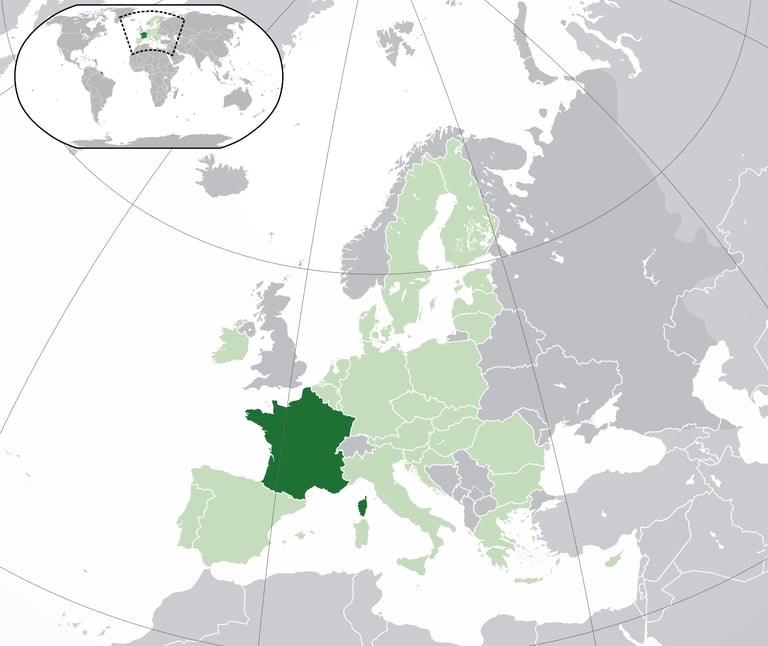
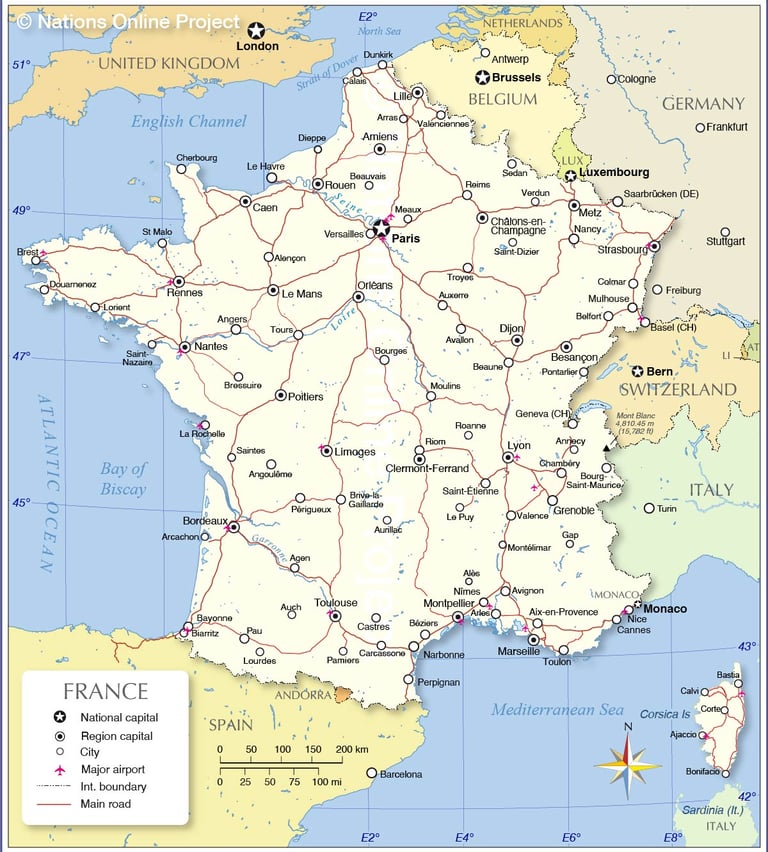
Official Name: French Republic
Population: 68,512,806 (23rd largest in the world, 3rd largest in Europe)
Area/Size: 248,573 square miles (a little smaller than Texas)
Capital: Paris (11.3 million - sister city of Rome, Italy and San Francisco)
Spoken Languages: French (official), declining regional dialects
Religions: Christian (62%), agnostic (20%), Muslim (12%)
Life Expectancy: 82.9 years Internet Access Rate: 88.7%
Per Capita Income: $61,322 Unemployment: 7.4%
What do they Export?: Airplanes, automobiles, pharmaceuticals, jewelry, wine
Export Partners: Germany (11%), Italy (9%), U.S. (8%), Belgium (8%), Spain (7%)
Import Partners: Germany (15%), Belgium (11%), Netherlands (8%), Spain (8%)
Government Type: Semi-presidential republic (regular elections - last one in 2022 - open and free)
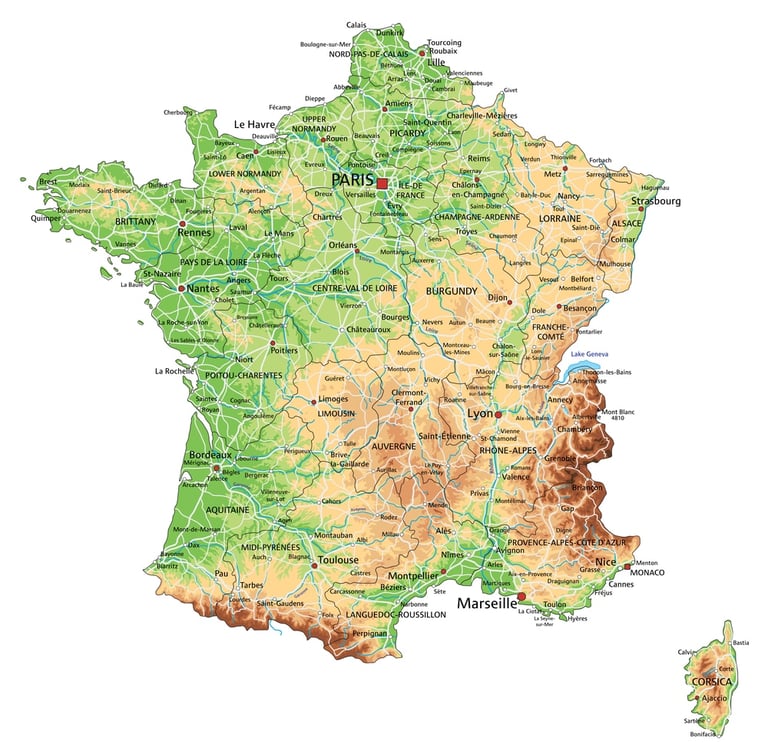

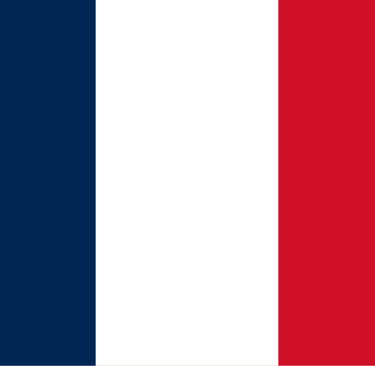
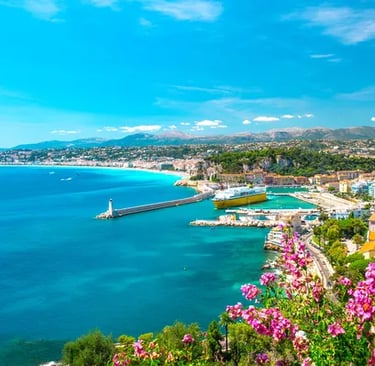
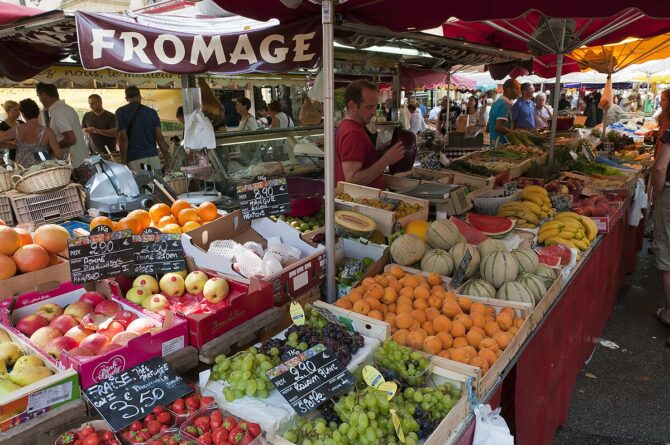
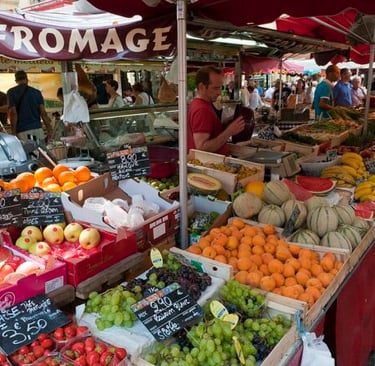
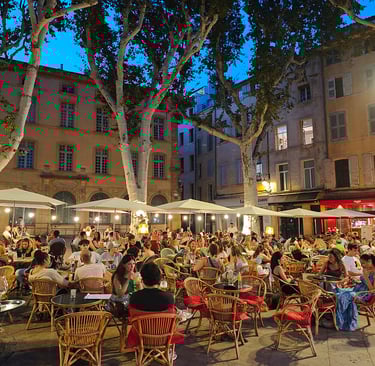
Section II - Images of France


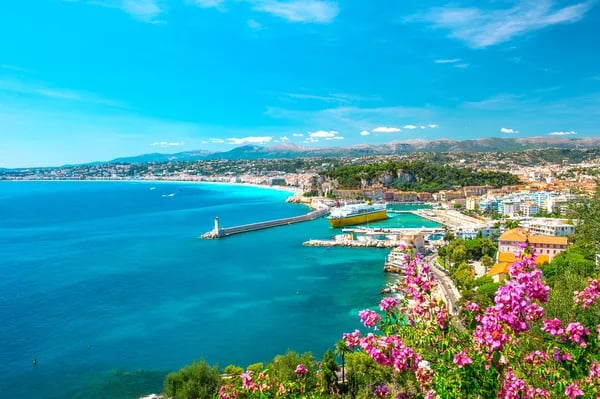

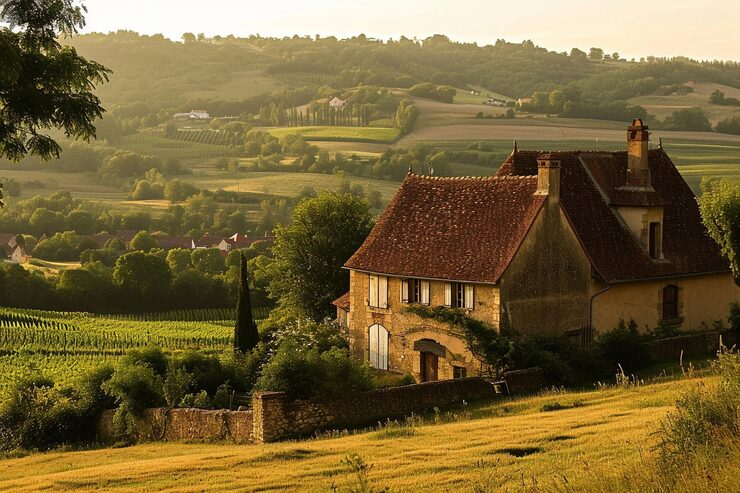
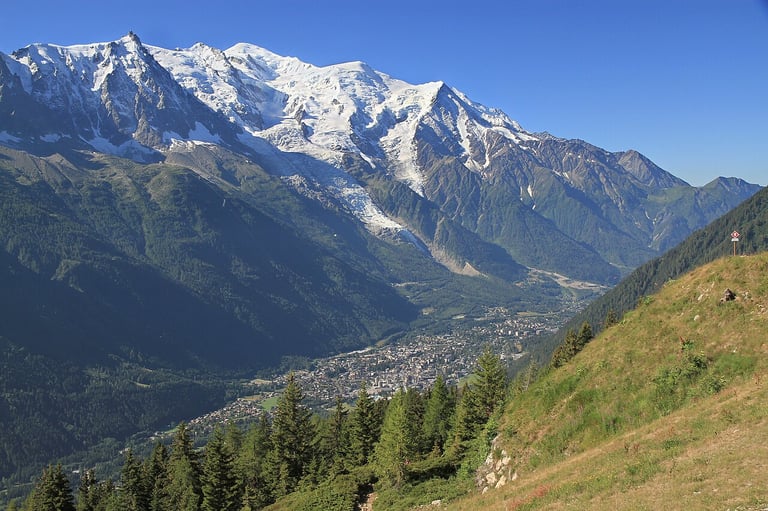
9 Key Dates/Periods in French History
Like Mexico a few weeks ago, this is going to be a country with a LONG history that is difficult to fit into a few highlights. In this case I will emphasize more of the older history, figuring that more of the recent events of Europe are familiar to teachers (if not to students). I'll do a couple of overviews of the 20th century, but expect most of the rest to be earlier periods of time (and even then will probably skim way too much history to do it justice!)
600 BC - 486 AD - In 600 BC, Ionian Greeks founded the colony of Massalia (present-day Marseille) on the shores of the Mediterranean Sea, making it one of the oldest cities in France. At the same time, some Celtic tribes arrived in the eastern parts (Germania Superior) of the region and spread to the rest of France between the 5th and 3rd century BC. Modern-day France was part of a region called Gaul by the Romans, along with Belgium, northwest Germany and northern Italy. Gaulish tribal confederacies were defeated by the Romans in battles during the 3rd century BC. When Hannibal fought the Romans in the Punic Wars, he recruited several Gaulish mercenaries who fought on his side. It was this Gaulish participation that caused Provence to be annexed in 122 BC by the Roman Republic, and eventually all of Gaul was conquered by Julius Caesar. Gaul was then divided into several different provinces to prevent local identities from becoming a threat to Roman control. Gaul remained under Roman control for centuries, and Celtic culture was gradually replaced by Gallo-Roman culture. When the Roman Empire began to disintegrate in the 5th century AD, barbarian groups took over specific regions of Gaul, including the Franks, Huns, and Visigoths.
486 - 887 - In 486 Clovis I united most of northern and central Gaul under his rule. Clovis then recorded a succession of victories against other Germanic tribes, culminating in a victory over the Goths in 507. After this victory Clovis adopted Catholicism, which gave him greater legitimacy and power over his Christian subjects and granted him clerical support against the Visigoths. However, his kingdom was divided up after his death, and eventually the "mayors of the palace" (originally the chief advisors to the kings) became the real power in the Frankish lands. By the early 8th century Muslims had conquered Hispania, and threatened the Frankish kingdoms. The mayor of the palace, Charles Martel, defeated a Muslim raiding party at the Battle of Tours in 732 and earned respect and power within the Frankish Kingdom. The assumption of the crown in 751 by Pepin the Short (son of Charles Martel) established the Carolingian dynasty as the kings of the Franks. Carolingian power reached its fullest extent under Pepin's son Charlemagne. In 771 Charlemagne reunited the Frankish domains after a further period of division, stretching his kingdom from Italy and Bavaria to southern Spain by the start of the 9th century. In recognition of his successes and his political support for the papacy, Charlemagne was crowned Emperor of the Romans by Pope Leo III in 800. Charlemagne's son Louis the Pious kept the empire united; however, this Carolingian Empire would not survive Louis' death.
1000 - 1300 - France was a very decentralized state during the Middle Ages, and the authority of the king was more religious than administrative. Some of the king's vassals would grow sufficiently powerful that they successfully carved lands outside France for themselves. The most important of these conquests for French history was the Norman Conquest by William the Conqueror. An important part of the French aristocracy also involved itself in the Crusades, and French knights founded and ruled the Crusader states. Gradually through the later 12th and early 13th centuries, kings like Louis VII and Philip II were able to use marriages of alliance and joint ventures like the Crusades to consolidate their authority and unify larger portions of France. During this time the French court also found itself interacting much more with the newly-unified English court.
1300 - 1610 - The tensions between England and France finally climaxed during the so-called Hundred Years' War (actually several distinct wars over the period 1337 to 1453). Notable events include the Battle of Agincourt (1415) and the subsequent attempt to establish a dual monarchy of England and France, as well as the rise of Joan of Arc (1412–1431). For France, the main result of the war was the rise of an organized army rather than armored knights the king could call upon when needed. Economic historians call the era from about 1475 to 1630 the "beautiful 16th century" because of the return of peace, prosperity and optimism across the nation, and the steady growth of population. That's a deceptive term, though, as the focus of conflict simply changed to religious during the Protestant Reformation. In France, that led to the first of the French Wars of Religion, during which English, German, and Spanish forces intervened on the side of rival Protestant ("Huguenot") and Catholic forces. Eventually the ascension of the Huguenot Henry IV (and his conversion to Catholicism to bring peace to the country) ended the civil war with the Edict of Nantes in 1598, which guaranteed religious liberties to the Protestants.
1610 - 1763 - The religious conflicts that plagued France also ravaged the Habsburg-led Holy Roman Empire. Although Cardinal Richelieu (the powerful chief minister of France) had stayed out of the conflict earlier, he joined the Thirty Years War on the Protestant side in 1636 because it was in the national interest. Imperial Habsburg forces invaded France, ravaged Champagne, and nearly threatened Paris, but eventually turned things around and decimated the Spanish army before the Peace of Westphalia (1648) brought an end to the war. The early 17th century also saw the first successful French settlements in the New World with the settlement of first New France and later Louisiana. The French also began settling colonies in Africa during the mid-17th century. Louis XIV, known as the "Sun King", reigned over France from 1643 until 1715, and consolidated a system of absolute monarchical rule in France that endured until the French Revolution. However, Louis XIV's long reign saw France involved in many wars that drained its treasury. By the middle of the 18th century, France was allied to Austria and Russia, while Britain was allied to Prussia. This period culminated with the Seven Years' War from 1756 to 1763, ending with France losing its' North American colonial empire.
1750 - 1799 - By the mid-18th century the French Enlightenment was well underway, dominated by writers such as Voltaire, Montesquieu, and Rousseau. It sparked a revolution in learning throughout the enlightened world. Britain's success in the Seven Years' War had allowed them to eclipse France as the leading colonial power. France sought revenge for this defeat, and saw a good opportunity by signing an alliance with the Americans in 1778, and sending an army and navy that turned the American Revolution into a world war. The French ended up on the winning side, but also finished the war with huge debts. That led to a financial crisis and widespread social distress in May 1789 and eventually to the storming of the Bastille on July 14th (still celebrated as Bastille Day today). The next three years were dominated by the struggle for political control, exacerbated by economic depression. The monarchy was abolished and replaced by the French First Republic in September, while Louis XVI was executed in January 1793. About 16,000 people were executed in a Reign of Terror, which ended in July 1794. Weakened by external threats and internal opposition, the Republic was replaced in 1795 by the Directory. Four years later in 1799, the Consulate seized power in a military coup led by Napoleon Bonaparte. This is generally seen as marking the end of the Revolutionary period.
1799 - 1815 - In the midst of fighting several small wars (including Napoleon's own invasion of Egypt) after the French Revolution, Napoleon seized power through a coup in 1799 and established the Consulate. A brief interlude of peace ensued in 1802–03, during which Napoleon sold French Louisiana to the United States, because it was indefensible. In 1804, Napoleon was titled Emperor by the senate, thus founding the First French Empire. A Franco-Spanish fleet was defeated at Trafalgar, making plans to invade Britain impossible. Despite this defeat, Napoleon inflicted on the Austrian and Russian Empires one of their greatest defeats at Austerlitz on December 2, 1805, destroying the Third Coalition. Prussia then allied with Britain and Russia against Napoleon. In order to ruin the British economy, Napoleon set up the Continental System in 1807, and tried to prevent merchants across Europe from trading with Britain. The large amount of smuggling frustrated Napoleon, and did more harm to his economy than to his enemies. Napoleon invaded Spain and Portugal in the same year, then made his disastrous decision to invade Russia in 1812. Despite capturing Moscow, the Russians' scorched earth tactics left the Napoleonic army in poor condition and exhausted. With Napoleon's forces heavily outnumbered by the Allied coalition armies, he abdicated in Apr 1814 and was exiled to Elba. However, while the Congress of Vienna discussed the postwar world, Napoleon suddenly returned, seized control of France, raised an army, and marched on his enemies in the Hundred Days. It ended with his final defeat at the Battle of Waterloo in 1815, and his exile to St. Helena, a remote island in the South Atlantic Ocean.
1815 - 1919 - France underwent significant transformations over the next 100 years (to the start of World War I) that reshaped its geography, demographics, language, and economic landscape. The previous two eras had fundamentally altered French society, promoting centralization, administrative uniformity across departments, and a standardized legal code. The 19th century saw France expanding to nearly its modern territorial limits through annexations and overseas imperialism, notably in Algeria, Indochina, and Africa. Closer to home, the catastrophic Franco-Prussian War (1870-1871) led to the loss of Alsace and Lorraine to unified Germany, and the creation of the Third Republic government. Preoccupied with internal problems, France paid little attention to the events leading to World War I in 1914 that triggered a complex set of military alliances between European states. As part of the Triple Entente, France was committed to support England and Russia, but also desired to regain Alsace and Lorraine from Germany. On Aug 3, 1914 Germany declared war on France, and sent its armies through neutral Belgium in an effort to quickly neutralize the French. However the Allies stopped the German advance at the Battle of the Marne a month later. The next 4 years saw the famous "Western Front" stalemate with vast systems of trenches and hundreds of thousands of casualties. Eventually the Allies (with the loss of Russia and the addition of the U.S.) wore out the German army and forced them to surrender on Nov 11, 1918. In the aftermath, the Treaty of Versailles imposed huge reparations on Germany, leading to the sequel (World War II) two decades later.
1939 - 2000 - Although World War II in Europe began with Germany's invasion of Poland in 1939, direct French involvement began in May 1940 with an invasion by Germany and conquest of Paris in the span of six weeks. Germany occupied 60% of France's territory, while Vichy France was established to govern the unoccupied southeast part of France and its colonies. General Charles de Gaulle in London declared himself on BBC radio to be the head of a rival government in exile, and gathered the Free French Forces around him. The Allies (primarily England and the U.S.) landed in Normandy in June 1944 to begin freeing France from Nazi occupation - a second landing in southern France included the Free French. Paris was liberated in late Aug 1944, and Nazi Germany finally surrendered in May 1945. The postwar world found France attempting to re-control their former colonial empire, with little success. Wars in Indochina and Algeria were unpopular and led to embarrassing losses, while many of France's other former colonies were granted independence with limited preparation. In Europe De Gaulle pursued a policy of "national independence", including an independent nuclear development program and an effort to create a European bloc between the two sides of the Cold War. Economic instability was a hallmark of the 1970s and 1980s, while France (after the loss of their colonies) increasingly looked inward or worked to develop the European Common Market into a larger European Union (among other things, replacing the franc with the euro in 1999).
Other Non-Political Issues
Section III - Issues of France
General Information on France:
“France", One World Nations Online, Jan 2025, https://www.nationsonline.org/oneworld/france.htm
“France", Wikipedia, Jan 2026, https://en.wikipedia.org/wiki/France or https://simple.wikipedia.org/wiki/France
"France", National Geographic Kids, Dec 2025, https://kids.nationalgeographic.com/geography/countries/article/france
"Explore France" (national tourism site), Official Tourism Board of France, 2026, https://www.france.fr/en/
“Economy - France", The World Bank, Jan 2026, https://data360.worldbank.org/en/economy/FRA
History Links on France:
"The Complete History of France: From Gaul to the Modern World" (video), Nations Explained, Mar 2026, https://www.youtube.com/watch?v=mU5qxhh9Fpk
"France Explained in 15 Minutes | History, Geography, Culture" (video), Opentiera, Dec 2025, https://www.youtube.com/watch?v=72fVDwlwLcU
“The legacy of Charlemagne: how the king of the Franks continues to cast a shadow over Europe", History Extra (U.K.), Apr 2020, https://www.historyextra.com/period/medieval/charlemagne-unifier-father-europe-correct-european-symbol-who-was-he/
"Liberty, Equality, Fraternity: Exploring the French Revolution", The Roy Rosenzweig Center for History and New Media @ George Mason University AND The American Social History Project @ City University of New York, 2019, https://revolution.chnm.org/
"Stories from French History by Lena Dalkeith" (digitized version of classic stories about French history), Heritage History, 2025, https://www.heritage-history.com/index.php?c=read&author=dalkeith&book=french&story=_front
Current Events Stories on France:
"France is entering crisis mode again. It didn’t have to be this way", CNN.com, Sep 2025, https://www.cnn.com/2025/09/07/europe/emmanuel-macron-france-president-government-crisis-intl
"The French economy has a boomer problem and is spending way too much on pensions", The Conversation, Sep 2025, https://theconversation.com/the-french-economy-has-a-boomer-problem-and-is-spending-way-too-much-on-pensions-264912
"France drifts into political turmoil as another prime minister is ousted", PBS Newshour, Sep 2025, https://www.pbs.org/newshour/world/france-drifts-into-political-turmoil-as-another-prime-minister-is-ousted
"French lawmakers approve ban on social media for kids under 15", PBS Newshour, Jan 2026, https://www.pbs.org/newshour/world/french-lawmakers-approve-ban-on-social-media-for-kids-under-15
"Macron’s Reward for Cutting French Taxes: Sluggish Growth and a Political Crisis", Wall Street Journal, Sep 2025, https://www.wsj.com/world/europe/macrons-reward-for-cutting-french-taxes-sluggish-growth-and-a-political-crisis-9252b78a?
Other Interesting Links Related To France:
"20 classic French dishes everyone needs to try", CNN.com, May 2023, https://www.cnn.com/travel/article/classic-french-dishes-wellness
"The baguette faces an uncertain future. How France is rethinking its iconic loaves", CNN.com, Nov 2025, https://www.cnn.com/2025/11/08/travel/france-baguette-uncertain-future
"The most beautiful places to visit in France: 14 holiday destinations to add to your list", Good Housekeeping, Jan 2025, https://www.goodhousekeeping.com/uk/lifestyle/travel/g39123460/places-visit-france/
"An Overview of Traditions and Culture in France", International Living, Sep 2022, https://internationalliving.com/countries/france/traditions-and-culture-in-france/
"Stars hit Paris runways, but fall’s real trend was dressing for hard times — and real life", AP News, Mar 2026, https://apnews.com/article/paris-fashion-week-celebrity-trends-1c25f2ecb0036d6923b92244d15d8224
Section IV - Resources About France
ECON and More
Curating articles for K-12 education.
CONTACT
© 2025. All rights reserved.