Countries of the World (Europe) - Germany
Sixth European country in my new geography series. One small change you might notice I made (and went back to fix on earlier ones) was including "Internet Access Rate" rather than "Literacy Rate" for countries. I forgot I made that change the last 2-3 years in the classroom - felt like students could relate to it easier (and it helped them judge the development status of countries).
Section I - Basic Info on Germany
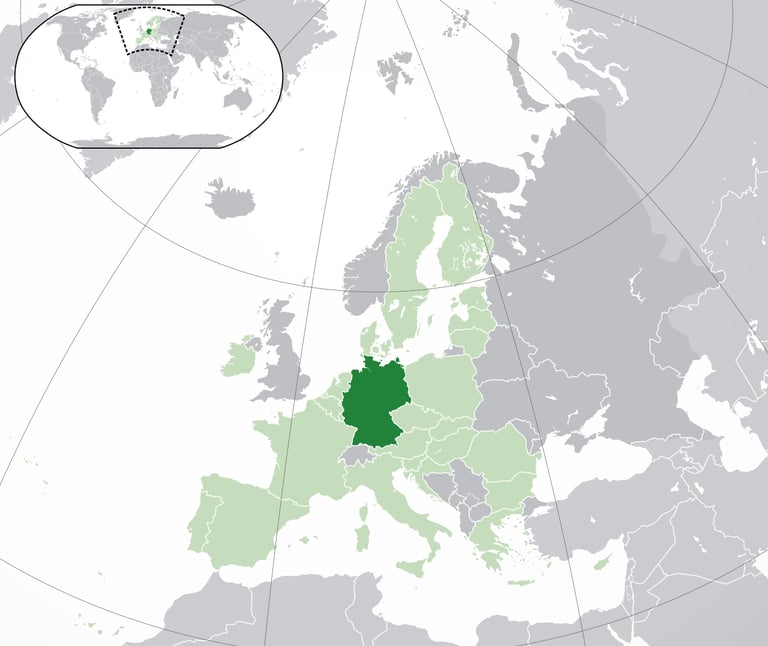
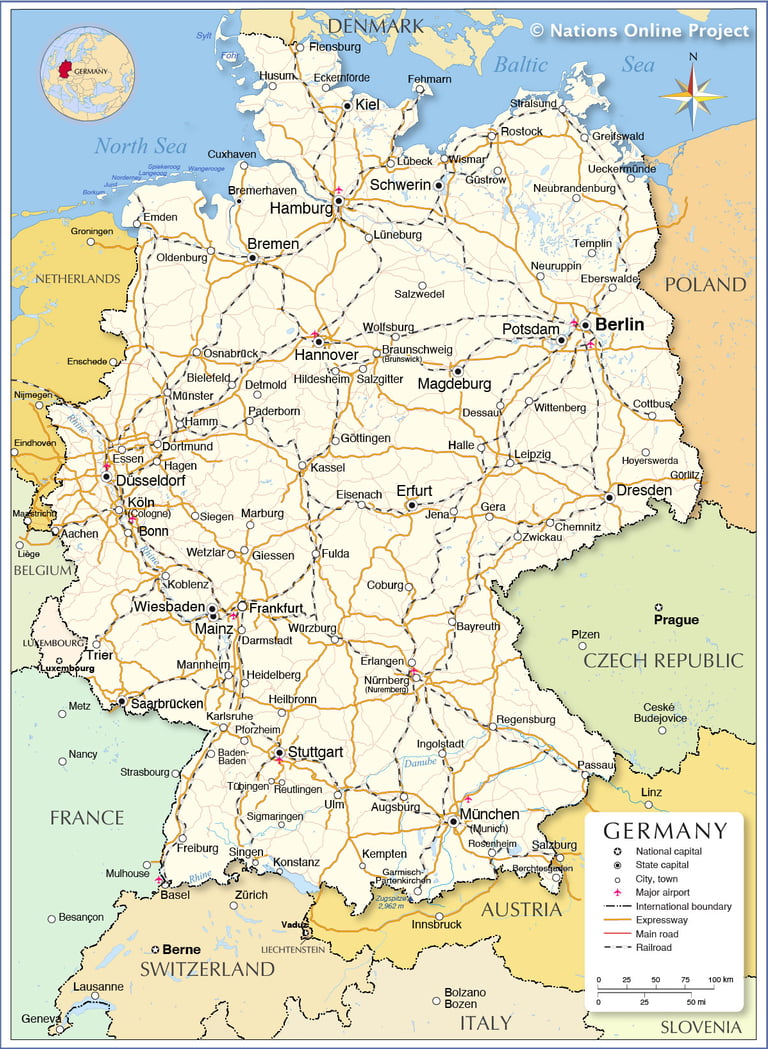
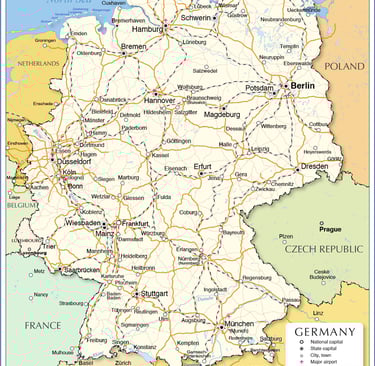
Official Name: Federal Republic of Germany
Population: 84,012,284 (19th largest in the world, Largest in Europe)
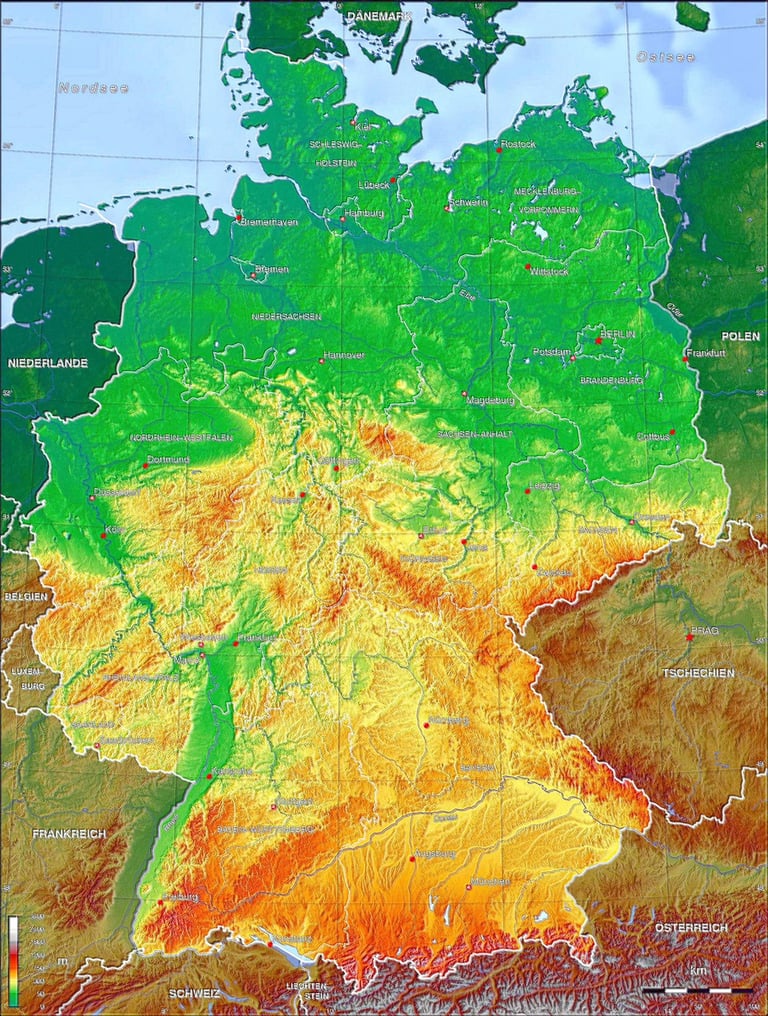
Area/Size: 137,847 square miles (a little larger than Florida/Georgia combined)
Capital: Berlin (3.6 million - sister city of Los Angeles and Istanbul, Turkey)
Other Major Cities: Hamburg (1.8 mil), Munich (1.6 mil), Cologne (1.15 mil)
Spoken Languages: German (official), Danish, Frisian, Sorbian, Romani
Religions: Catholic (31%), agnostic (30%), Protestant (22%), Muslim (8%)
Life Expectancy: 82.2 years Internet Access Rate: 93.5%
Per Capita Income: $72,300 Unemployment: 3.4%
What do they Export?: Automobiles, pharmaceuticals, auto parts, vaccines
Export Partners: U.S. (10%), France (8%), Netherlands (7%), China (7%), Italy (6%)
Import Partners: China (12%), U.S. (7%), Netherlands (7%), Poland (6%), France (5%)
Government Type: Federal parliamentary republic (regular elections - last one in 2025 - open and free)
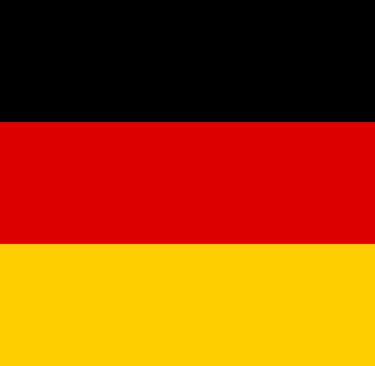
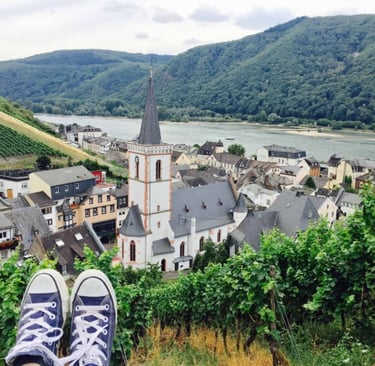
Section II - Images of Germany
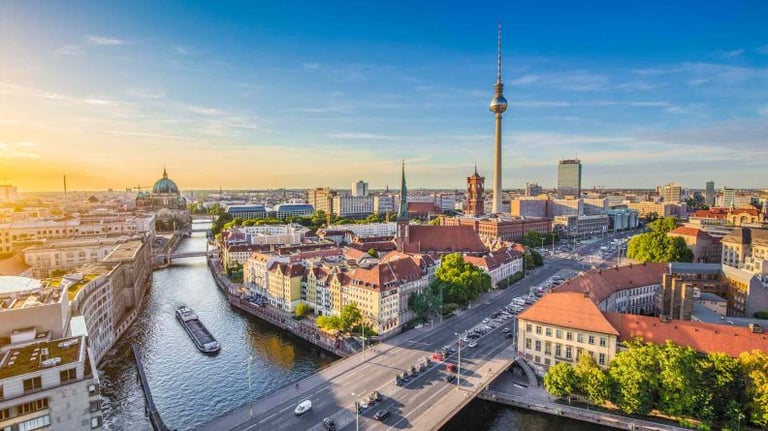
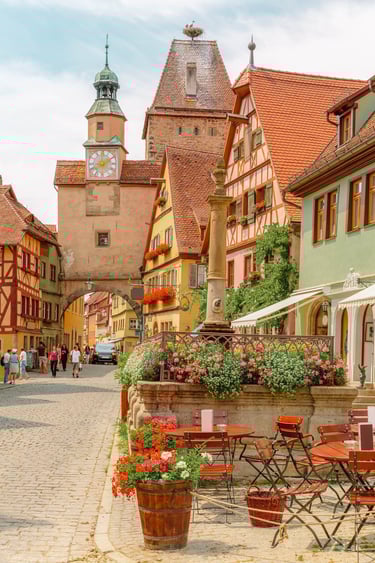
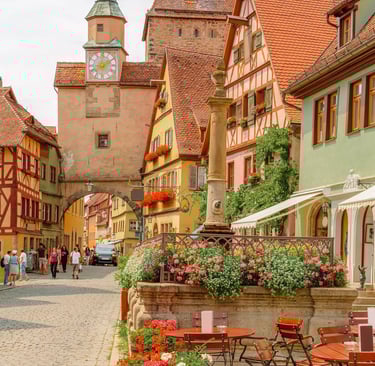
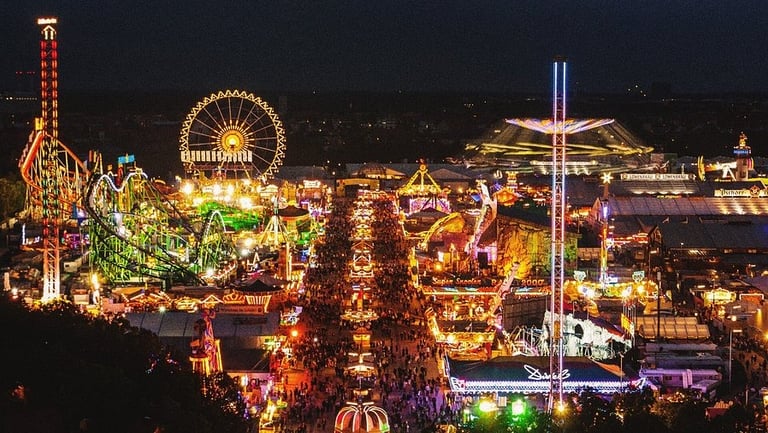
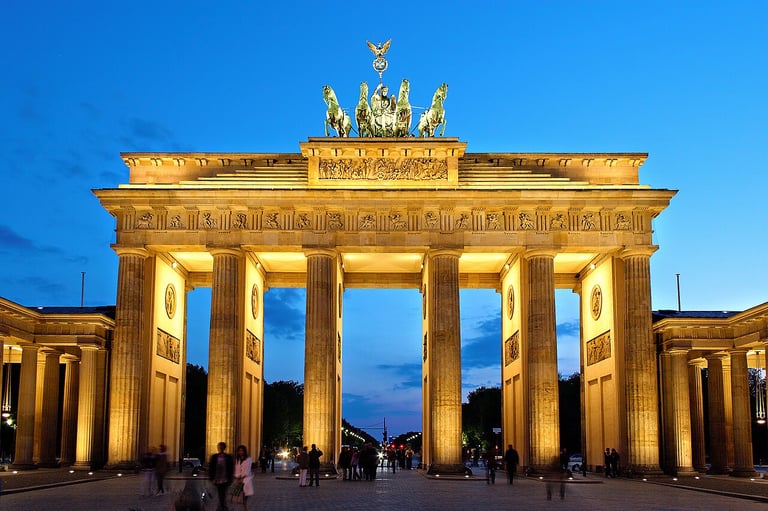
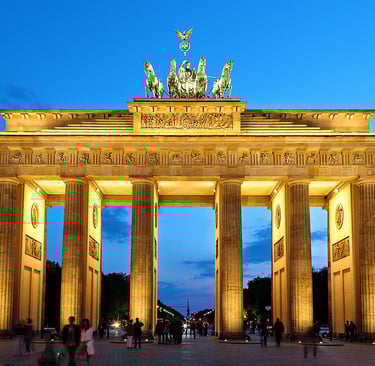
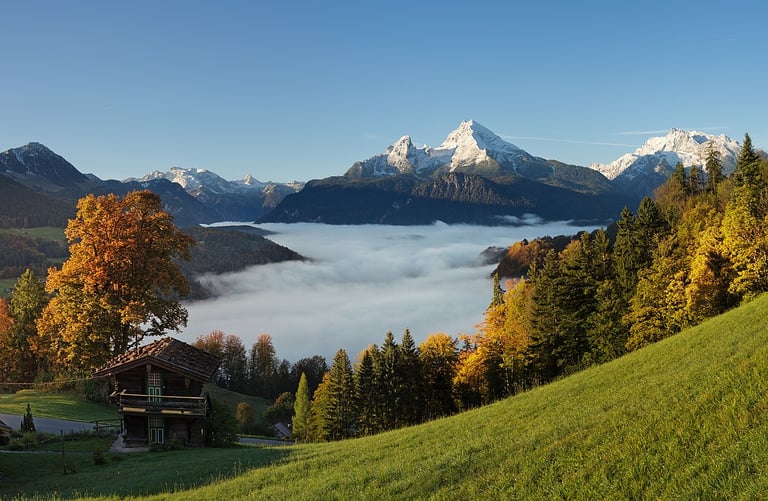
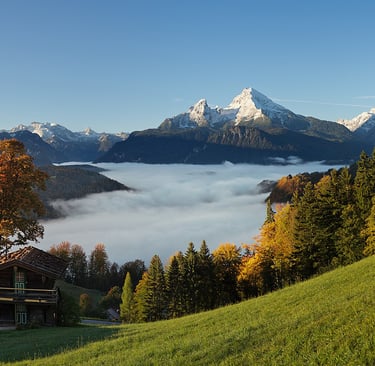
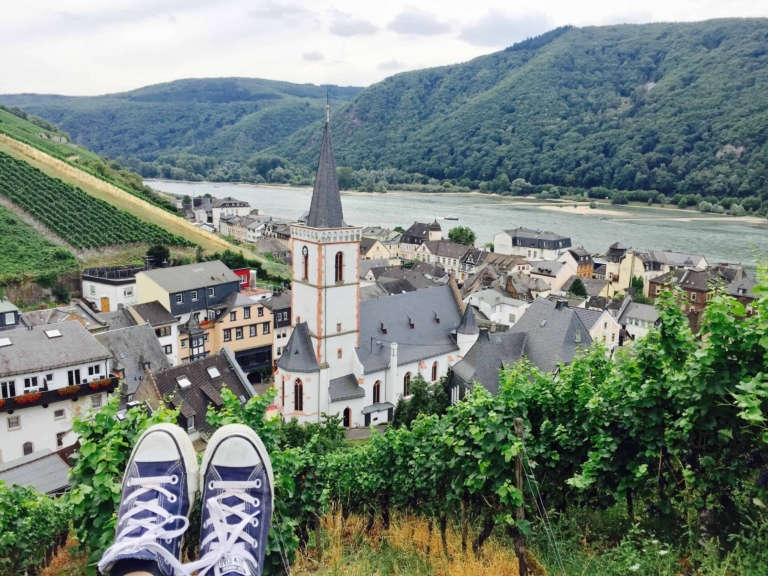
9 Key Dates/Periods in German History
Like France a few weeks ago, this is going to be a country with a LONG history that is difficult to fit into a few highlights. In this case I will emphasize more of the older history, figuring that more of the recent events of Europe are familiar to teachers (if not to students). I'll do a couple of overviews of the 20th century, but expect most of the rest to be earlier periods of time (and even then will probably skim way too much history to do it justice!)
100 BC - 400 AD - Factual and detailed knowledge about the early history of the Germanic tribes is rare. We know the tribes began expanding south, east, and west from their homes in southern Scandinavia and northern Germany during the 1st century BC, and came into contact with the Celtic tribes of Gaul. In the mid-1st century BC, Julius Caesar erected the first known bridges across the Rhine during his campaign in Gaul and led a military contingent across and into the territories of the local Germanic tribes. After several days and having made no contact with Germanic troops (who had retreated inland) Caesar returned to the west of the river. Consequent plans to populate the region with Germanic settlers from the east were vehemently opposed by Caesar. Augustus, the first Roman emperor, considered conquest beyond the Rhine and the Danube necessary to counter Germanic incursions into a still rebellious Gaul. During the 1st century CE Roman legions conducted extended campaigns into Germany attempting to subdue the various tribes. Roman ideas of administration, the imposition of taxes and a legal framework were frustrated by the total absence of an infrastructure. After a major defeat of a Roman force in the Battle of the Teutoburg Forest, Rome resolved to permanently establish the Rhine/Danube border and refrain from further territorial advance into Germania. By the 3rd century the Germanic speaking peoples began to migrate beyond the frontier. As a result, several large tribes – the Visigoths, Ostrogoths, Vandals, Burgundians, Lombards, Saxons and Franks – migrated and played their part in the decline of the Roman Empire.
400 - 1100 - By the end of the 4th century the Huns invaded eastern and central Europe, establishing the Hunnic Empire. Another pivotal moment was the Crossing of the Rhine in Dec of 406 by a large group of tribes including Vandals, Alans and Suebi who settled permanently within the crumbling Western Roman Empire. Clovis (having unified the Gauls) recorded a succession of victories against the Germanic tribes, culminating in a victory over the Goths in 507 that kept them from migrating further west. By the 8th century expansion was going eastward as the kings of the Franks pushed further across the Rhine, culminating in Charlemagne's push into Bavaria. When the Carolingian Empire was partitioned in 843, Louis the German received the Eastern portion of the kingdom with all lands east of the Rhine river and to the north of Italy. In 936 Otto the Great was crowned German king at Aachen, and the tradition of the German King as protector of the Kingdom of Italy and the Latin Church resulted in the term Holy Roman Empire in the 12th century. Otto's family tree would control the empire in central Europe for the next 250 years
1100 - 1500 - Between 1095 and 1291 the various crusades to the Holy Land took place, and knightly religious orders were established, including the Knights Templar, the Knights Hospitaller, and the Teutonic Order. Some of their efforts in the 13th and 14th centuries involved campaigns to Christianize lands to the east, expanding German influence while bringing them into conflict with the Kingdom of Poland, the Grand Duchy of Lithuania, and the Novgorod Republic. During this same time, the newly wealthy cities of Northern Italy, supported by the Pope, increasingly opposed the empire's claim of feudal rule over Italy. The impact of the Black Death in the mid-14th century was the rise of new towns like Cologne along trading routes and ruled by local burghers and craft guilds, leading to the end of feudalism in Germany. Gutenberg's printing press in the mid-15th century only accelerated the pace of that change. The increasingly money based economy also provoked social discontent among knights and peasants and predatory "robber knights" became common. From 1438 the Habsburg dynasty, who had acquired control in the south-eastern empire over the Duchy of Austria, Bohemia and Hungary after the death of King Louis II in 1526, managed to permanently occupy the position of the Holy Roman Emperor until 1806.
1500 - 1648 - In 1517, the monk Martin Luther published a pamphlet with 95 Theses that he posted in the town square of Wittenberg, beginning the Protestant Reformation. The ideas of the reformation spread rapidly in Germany, as the new technology of the modern printing press ensured cheap mass copies and distribution of the theses and helped by the Emperor Charles V's wars. A series of initial conflicts were thought to be resolved with the 1555 Peace of Augsburg, recognizing the Lutheran Faith and the ruler's right to determine the official religion in his principality. However, the unsolved and recurring conflicts of the Catholic and Protestant factions simply festered until the Thirty Years War (1618-1648). While starting small, the conflict increasingly evolved into a struggle between the French House of Bourbon and the House of Habsburg for predominance in Europe, for which the central German territories of the empire served as the battleground. The war ranks among the most catastrophic in history as three decades of constant warfare and destruction left the land devastated. In the end the Peace of Westphalia resulted in increased autonomy for the constituent states of the Holy Roman Empire (particularly Prussia) while limiting the power of the emperor.
1648 - 1815 - During the Thirty Years War, Prussia was able to gain territory and reorganize their loose and scattered territories into a single German state. King Frederick William I, known as the Soldier King, who reigned from 1713 to 1740, established the structures for the highly centralized Prussian state and raised a professional army. Prussia was also able to attract immigrants (particularly Huguenots) to improve the economy with widespread practical application of the scientific method. At the same time, the military containment of the Ottoman Empire in southeastern Europe by the early 18th century left Austria in a position to expand northwest into German-speaking territory. Both countries advocated for the concepts of enlightened absolutism, with Frederick II "the Great" and Maria Theresa claiming they wielded absolute political power for the benefit of the population as a whole. At the beginning of the French Revolution, Prussia was undergoing a serious economic, political, and military decline under Frederick William II's weak rule, though they did take advantage of the opportunity to partition Poland (along with Austria and Russia). With the rise of Napoleon, German lands saw armies marching back and forth, bringing devastation and the imposition of French-style reforms (which proved largely permanent and modernized the western parts of Germany). When Frederick William III finally joined the Fourth Coalition in Oct 1806, Napoleon easily defeated the Prussian army at the Battle of Jena and occupied Berlin. Prussia lost its recently acquired territories in western Germany and had to pay high reparations and fund the French army of occupation for 6 years. Finally, after Napoleon's military fiasco in Russia in 1812, Prussia allied with Russia and Austria to decisively defeat Napoleon in the Battle of Leipzig in late 1813. Prussia as one of the winners at the Congress of Vienna (after Napoleon's final defeat) gained extensive territory.
1815 - 1914 - After the fall of Napoleon, Europe's statesmen convened in Vienna in 1815 for the reorganization of European affairs. The German Confederation was founded, a loose union of 39 states under Austrian leadership, but failed to satisfy most nationalists. As industrialization developed, the need for a unified German state with a uniform currency, legal system, and government became more and more obvious. Growing discontent with the political and social order imposed by the Congress of Vienna led to the outbreak of the March 1848 Revolution in the German states. But the 1848 revolution turned out to be unsuccessful when the Prussian king refused the imperial crown and the ruling princes repressed the risings by military force. In the 1860s, though, with the rise to power in Prussia of King Wilhelm I and his chancellor Otto von Bismarck, the time was ripe for unification. Prussia's military victories over first Denmark and then Austria led to a confrontation with France in 1870. The Franco-Prussian War, expected to be an easy French victory, instead turned into a humiliating French defeat and the establishment of the unified German Empire. For 20 years Bismarck focused on consolidation of Germany and friendly relations with most of Europe - that changed when Wilhelm II took the throne in 1890. He rejected the liberal ideas of his parents, embarked on a conservative autocratic rule, and forced chancellor Bismarck into retirement. He began an aggressive political course to increase the German empire's influence in the world, including the taking of colonies and building of a large army and navy. These actions pushed Russia, England, and France closer together, leaving Germany allied only with Austria-Hungary going into 1914.
1914 - 1945 - World War I started in August 1914, largely due to the perceived obligation of every major nation to fulfill alliance obligations. Germany was the leader of the Central Powers, which included Austria-Hungary, the Ottoman Empire, and later Bulgaria; arrayed against them were the Allies, consisting chiefly of Russia, France, Britain, and in 1915 Italy. The Western Front became an extremely bloody battleground of trench warfare, lasting from 1914 until early 1918. In the east, Germany managed to score decisive victories against the Russian army, including the trapping and destruction of large parts of the Russian 2nd army at the Battle of Tannenberg. The eventual breakdown of Russian forces, combined with the 1917 Russian Revolution, led Russia to withdraw from the war. However, by then the U.S. had joined the war, and when a final spring offensive in 1918 failed, it was only a matter of time before the Germans were forced to surrender in Nov 1918. The harsh Treaty of Versailles imposed territorial losses, reparations to the victors of World War I and stringent limitations on Germany's military. A period of relative political and economic stability lasted until the onset of the Great Depression in 1929, when desperation led to Adolf Hitler being named chancellor in 1933. In only a few months he had turned the Republic into a Nazi dictatorship. Hitler's diplomatic strategy in the 1930s was to make seemingly reasonable demands, threatening war if they were not met. That aggressive strategy worked as Germany pulled out of the League of Nations, rejected the Versailles Treaty and began to re-arm, formed an alliance with Mussolini's Italy, annexed Austria, took over Czechoslovakia after the British and French appeasement of the Munich Agreement, formed a peace pact with Joseph Stalin's Soviet Union, and finally invaded Poland. Britain and France declared war on Germany and World War II in Europe began. In less than three months (Apr – Jun 1940), Germany conquered Denmark, Norway, the Low Countries, and France. The unexpectedly swift defeat of France resulted in an upswing in Hitler's popularity and an upsurge in war fever. Hitler's bombing campaign against Britain failed, so the Nazis instead turned on the Soviet Union in Jun 1941. Meanwhile, the Holocaust of Jews was beginning in Eastern Europe. The tide began to turn in early 1942, when losses in North Africa and at Stalingrad forced the Germans onto the defensive. By late 1944, the United States, Canada, France, and Great Britain were closing in on Germany in the West, while the Soviets were victoriously advancing in the East. Hitler committed suicide in late Apr 1945 and the final German surrender was signed a week later, marking the end of Nazi Germany.
1945 - 1990 - By Sep 1945, Nazi Germany and its Axis partners (mainly Italy and Japan) had all been defeated, and much of Europe lay in ruins. Over 60 million people worldwide had been killed (most of them civilians), including approximately 6 million Jews and 11 million non-Jews in what became known as the Holocaust. As a consequence of the onset of the Cold War in 1947, the country's territory was shrunk and split between the two global blocs in the East and West, a period known as the division of Germany. Two countries emerged: West Germany was a parliamentary democracy and a NATO member, while East Germany was a totalitarian Communist dictatorship controlled by the Soviet Union. Berlin (within East Germany) was also split into East and West - when the Communists tried to cut off food and other supplies in 1948-49, the U.S. and other Western countries set up the Berlin Airlift to fly materials in until the Russians gave in. Konrad Adenauer was the dominant leader in West Germany in the 1950s and 1960s - during his chancellorship, the West Germany economy grew quickly, and West Germany established friendly relations with France, participated in the emerging European Union, and became a pillar of NATO as well as a firm ally of the United States. During the summer of 1989, rapid changes known as peaceful revolution or Die Wende took place in East Germany. Unable to stop the growing civil unrest, in Nov 1989 East German authorities unexpectedly allowed East German citizens to enter West Berlin and West Germany. Hundreds of thousands of people took advantage of the opportunity; new crossing points were opened in the Berlin Wall and along the border with West Germany. This led to the dissolution of East Germany and the German reunification that came into force in Oct 1990.
1990 - present - Helmut Kohl became first chancellor of a reunified Germany, and focused on the challenges of integrating the economies of two very different countries through most of the 1990s. Western Germany invested over two trillion marks in the rehabilitation of the former East Germany, helping it to transition to a market economy and cleaning up the environmental degradation. United Germany was considered the enlarged continuation of West Germany, so it retained its memberships in international organisations. Berlin again became the capital of Germany, and the relocation of the government was completed in 1999. Since reunification, Germany has taken a more active role in the European Union, sending peacekeeping forces to war-torn areas and co-founding the eurozone. In the 2005 elections, Angela Merkel became the first female chancellor. Among the major German political projects of the early 21st century are the advancement of European integration, the country's energy transition to a sustainable energy supply, the debt brake for balanced budgets, measures to increase the fertility rate, and high-tech strategies for the transition of the German economy.
Other Non-Political Issues
Section III - Issues of Germany
General Information on Germany:
“Germany", One World Nations Online, Jan 2025, https://www.nationsonline.org/oneworld/germany.htm
“Germany", Wikipedia, Apr 2026, https://en.wikipedia.org/wiki/Germany or https://simple.wikipedia.org/wiki/Germany
"Germany", National Geographic Kids, Dec 2025, https://kids.nationalgeographic.com/geography/countries/article/germany
"Germany Travel" (national tourism site), Germany National Tourism Board, 2026, https://www.germany.travel/en/home.html
“Economy - Germany", The World Bank, Jan 2026, https://data360.worldbank.org/en/economy/DEU
History Links on Germany:
"Germany Explained in 16 Minutes | History, Geography, Culture" (video), Opentiera, Dec 2025, https://www.youtube.com/watch?v=jJ8bKYA72B8
"History of Germania" (timeline), The Prussian Machine, https://prussianmachine.com/germany/history.htm
"How the Berlin Wall Became a 100-Mile Bike and Pedestrian Trail", Smithsonian Magazine, Nov 2024, https://www.smithsonianmag.com/travel/how-the-berlin-wall-became-a-100-mile-bike-and-pedestrian-trail-180985405/
“UNESCO World Heritage Sites", UNESCO, 2026, https://www.unesco.org/en/countries/de
"Why Was Germany so Fragmented in the Middle Ages - Medieval DOCUMENTARY" (video), Kings and Generals, Feb 2025, https://www.youtube.com/watch?v=EiB8sMHxGqM
Current Events Stories on Germany:
"China Wants Germany in Its Corner. It’s Not That Easy", New York Times, Feb 2026, https://www.nytimes.com/2026/02/26/world/asia/merz-china-analysis.html
"Europe’s open-border dreams meet German politics", Politico Europe, Feb 2026, https://www.politico.eu/article/europe-schengen-border-migration-germany-politics-friedrich-merz/
"Germany Is Reinventing Itself as a Weapons Factory", Wall Street Journal, Apr 2026, https://www.wsj.com/world/europe/germany-is-reinventing-itself-as-a-weapons-factory-990ad18d
"Germany’s Far Right Is on the Threshold of Power. This Man Is Leading the Charge.", Politico.com, Jan 2026, https://www.politico.com/news/magazine/2026/01/30/germany-has-built-a-firewall-against-the-far-right-in-the-fall-this-young-nationalist-may-test-it-00748999
"Once the envy of the world, Germany’s car brands now weigh heavily on its struggling economy", CNBC, Sep 2024, https://www.cnbc.com/2024/09/06/once-the-envy-of-the-world-germanys-car-brands-are-weighing-heavily-on-its-struggling-economy.html
Other Interesting Links Related To Gemany:
"21 Things That Are Normal in Germany but Nowhere Else" (video), Germany Rewind, Dec 2025, https://www.youtube.com/watch?v=sEzeQWmjMFI
"German Food Culture: What Are the Eating Habits?", Fintiba, Sep 2024, https://www.fintiba.com/germany/living/german-food-culture
"Rhine River Cruise", Samantha Brown's Places to Love, Nov 2025, https://www.youtube.com/watch?v=Vy6OshH8TXU
"These Five Photos of Germany’s Natural Wonders Will Inspire Your Wanderlust", Smithsonian Magazine, https://www.smithsonianmag.com/sponsored/these-five-photos-of-germanys-natural-wonders-will-inspire-your-wanderlust-180987850/
"Why Germany Is Suddenly Declaring War on Immigration", Across the Globe, May 2025, https://www.youtube.com/watch?v=jIDCKtyMwVI
Section IV - Resources About Germany
ECON and More
Curating articles for K-12 education.
CONTACT
© 2025. All rights reserved.