
Countries of the World (Europe) - Greece
Seventh European country in my new geography series. I was bemoaning the extensive history segments for my last two countries (France and Germany) - so now I get the history of Greece! Guess it is just the nature of European countries. Anyway, a challenging balance between ancient and modern - I'll probably err toward the modern as much as possible (since it is not as well known for most students) . . .
Section I - Basic Info on Greece
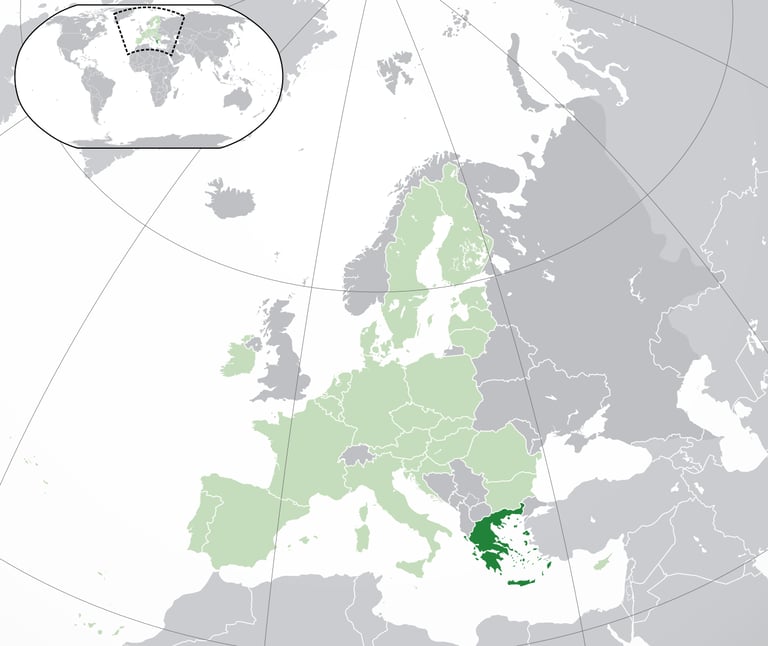
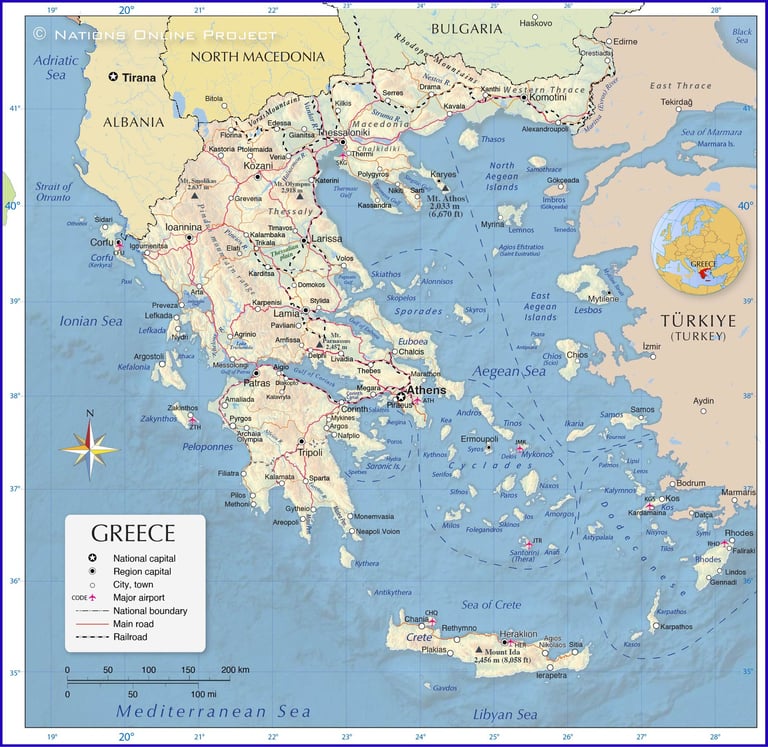
Official Name: Hellenic Republic
Population: 10,424,536 (90th largest in the world, 14th largest in Europe)
Area/Size: 50,949 square miles (a little smaller than Louisiana)
Capital: Athens (3.2 million - sister city of Chicago and Bethlehem, Palestine)
Spoken Languages: Greek (official), Turkish
Religions: Greek Orthodox (86%), Sunni Islam (6%), other Christian (3%)
Life Expectancy: 82.2 years Internet Access Rate: 86.3%
Per Capita Income: $44,074 Unemployment: 10.1%
What do they Export?: Petroleum, medications, aluminum, cheese, olive oil
Export Partners: Italy (12%), Germany (6%), Cyprus (6%), Bulgaria (4%), U.S. (4%)
Import Partners: Germany (10%), China (10%), Italy (8%), Iraq (7%), Netherlands (6%)
Government Type: Parliamentary republic (regular elections - last one in 2023 - open and free)
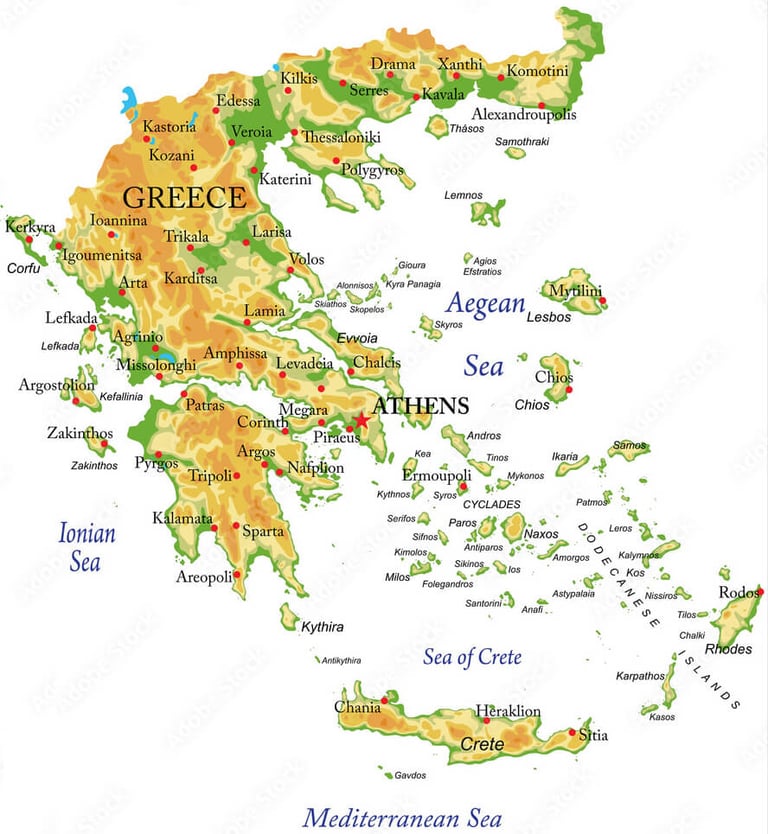
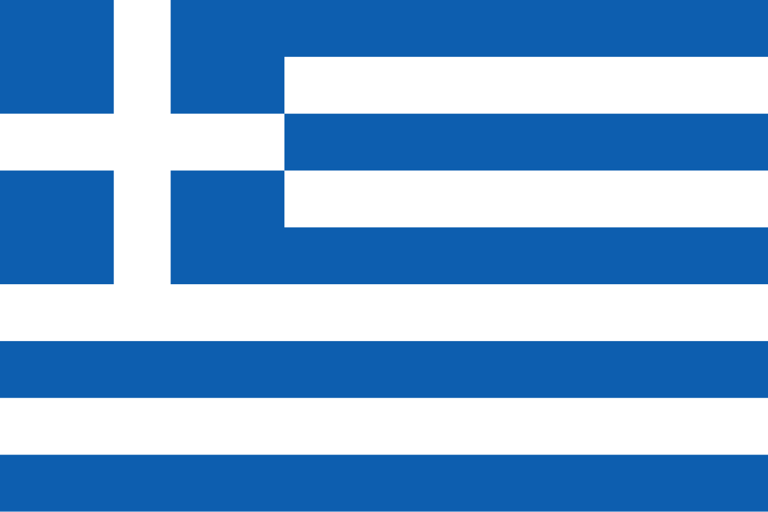
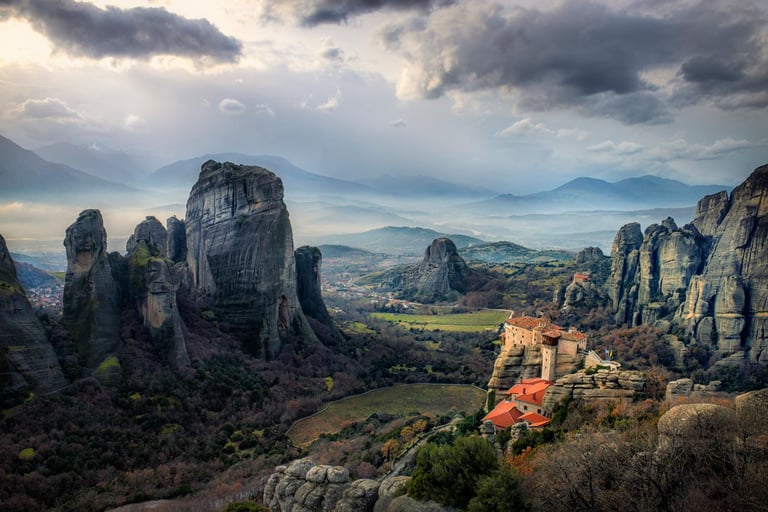
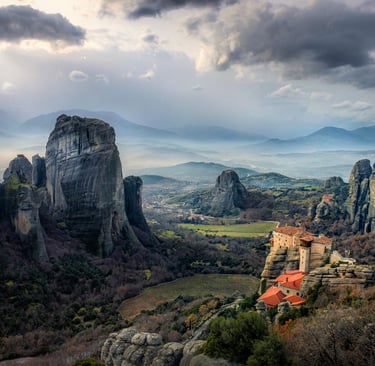
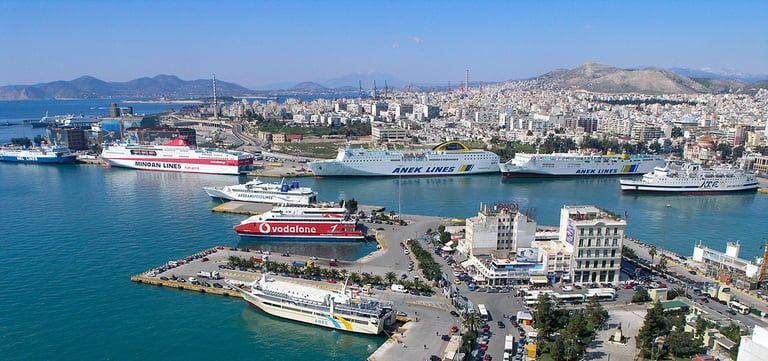
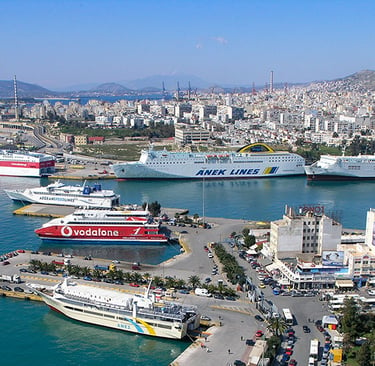
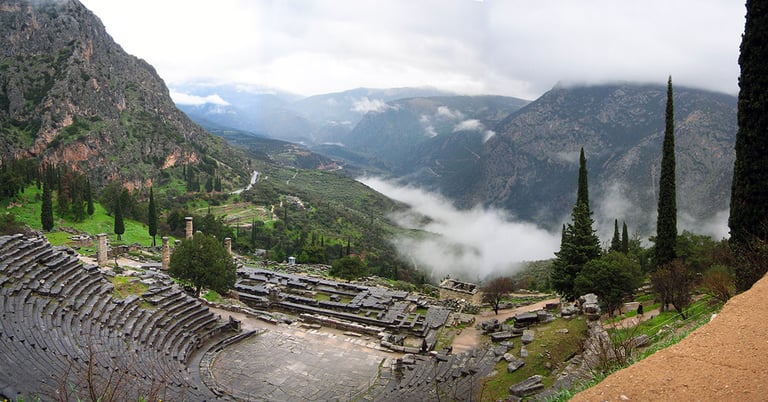
Section II - Images of Greece
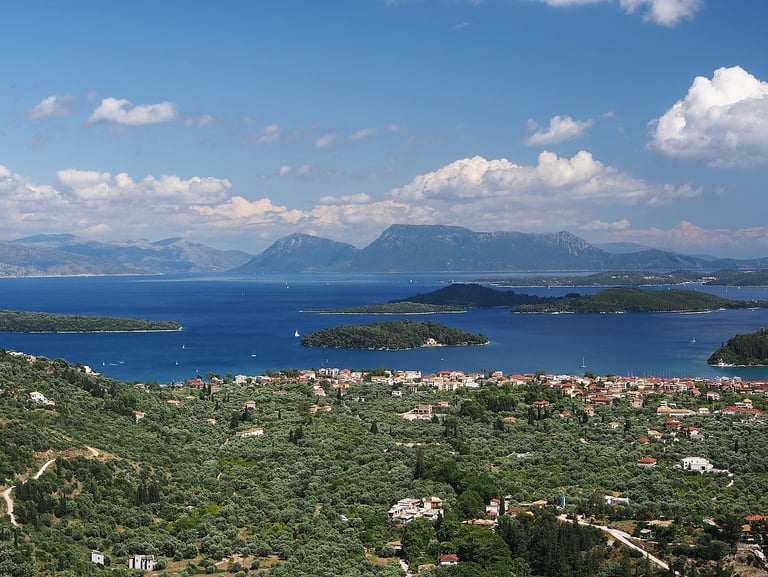
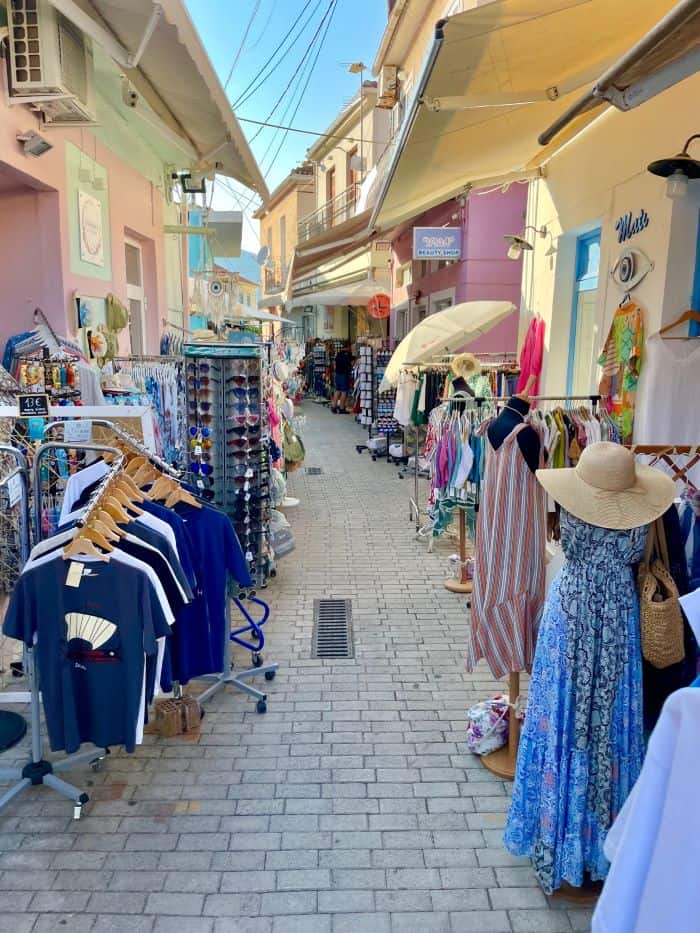
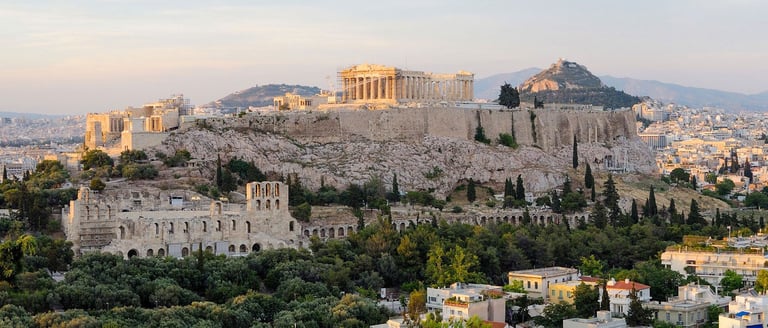
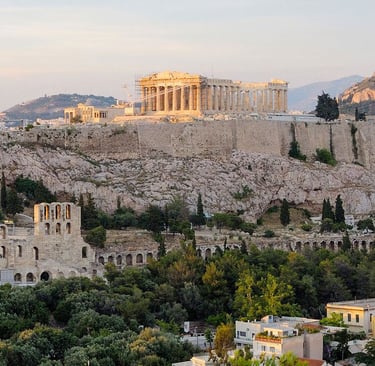
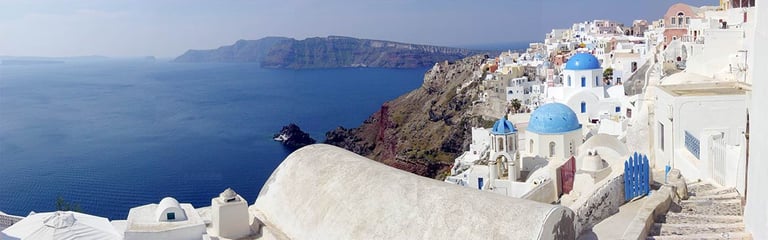
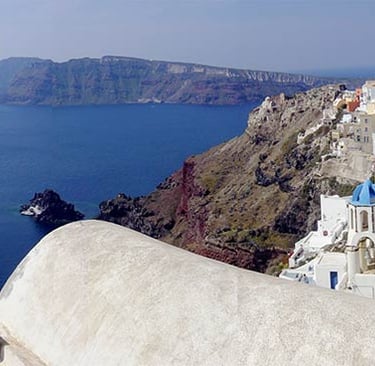
9 Key Dates/Periods in Greek History
Like France and Germany, this is going to be a country with a LONG history that is difficult to fit into a few highlights. In this case I will emphasize more of the newer history, assuming that students are more familiar with Greek myths, stories, and history from elementary school. I'll still do a couple of overviews of ancient history, but expect most of the rest to be covering the last two millenia (and even then will probably skim way too much history to do it justice!)
7000 - 480 BC - The history of Greece commences with the emergence of early civilizations during the Neolithic period around 7000 BCE. These pioneering settlements laid the foundation for Greek culture and society. The Minoan civilization on the island of Crete and the Mycenaean civilization on the Greek mainland left behind remarkable archaeological remnants, offering glimpses into their advanced societies. The collapse of the Mycenaean civilization ushered in the Greek Dark Ages, from which written records are absent. The end of the Dark Ages is traditionally dated to 776 BC, the year of the first Olympic Games. The Iliad and the Odyssey, the foundational texts of Western literature, are believed to have been composed by Homer in the 7th or 8th centuries BC. The Greek city-states reached great prosperity that resulted in an unprecedented cultural boom, that of classical Greece, expressed in architecture, drama, science, mathematics and philosophy. In 508 BC, Cleisthenes instituted the world's first democratic system of government in Athens. Persia invaded the states of mainland Greece in 492 BC, but was forced to withdraw after defeat by Athens at the Battle of Marathon in 490 BC. In response, a number of Greek city-states formed the Hellenic League in 481 BC, led by Sparta, which was the first recorded union of Greek states since the mythical union of the Trojan War. After the death of Leonidas at the battle of Thermopylae, during the second Persian invasion of Greece, the Persian navy was decisively defeated in 480 BC at Salamis by an allied Greek navy, marking the eventual withdrawal of the Persians from all their European territories. The Greek victories in the Greco-Persian Wars are a pivotal moment in history, as the 50 years of peace afterwards are known as the Golden Age of Athens, a seminal period that laid many foundations of Western civilization.
480 - 150 BC - Lack of political unity resulted in frequent conflict between Greek states. The most devastating intra-Greek war was the Peloponnesian War (431–404 BC), which marked the demise of the Athenian Empire and the emergence of Sparta power. Weakened by constant wars among them during the 4th century BC, the Greek city-states were forced by Philip II of Macedonia into an alliance known as the Hellenic League. After Philip's assassination in 336 BC, his son Alexander became king of Macedon and took command of the Persian war his father had been planning. Over a decade of campaigning he overthrew the Persian Empire - his conquered lands included Asia Minor, Assyria, the Levant, Egypt, Mesopotamia, Media, Persia, and parts of modern Afghanistan, Pakistan, and the central Asian steppes. The strain of continuous campaigning was severe, and Alexander died in 323 BC. After his death, the territories he had conquered experienced sustained Greek cultural influence (Hellenization) for the next two or three centuries, until the rise of the Roman Empire in the west and the Parthian Empire in the east. As a result, during the centuries that followed a vernacular form of Greek, known as koine, and Greek culture was spread, while the Greeks adopted Eastern deities and cults. Greek science, technology, and mathematics reached their peak during the Hellenistic period. After about two centuries, the remaining successor states were much reduced, culminating in the Roman conquest of Ptolemaic Egypt.
200 BC - 530 AD - From about 200 BC the Roman Republic became increasingly involved in Greek affairs and engaged in a series of wars with Macedon. In 146 BC, Macedonia was annexed as a province by Rome, and the rest of Greece became a Roman protectorate. The process was completed in 27 BC, when emperor Augustus annexed the rest of Greece and constituted it as the senatorial province of Achaea. Despite their military superiority, the Romans admired and became heavily influenced by Greek culture. Greek-speaking communities of the Hellenized East were instrumental in the spread of Christianity in the 2nd and 3rd centuries, and Christianity's early leaders and writers were mostly Greek-speaking, though not from Greece itself. The New Testament was written in Greek, and some sections attest to the importance of churches in Greece in early Christianity. Nevertheless, much of Greece clung to paganism, and ancient Greek religious practices were still in vogue in the late 4th century AD, when they were outlawed by the Roman emperor Theodosius I. The last recorded Olympic games were held in 393, and many temples were destroyed or damaged in the century that followed. The closure of the Neoplatonic Academy of Athens by Emperor Justinian in 529 is usually considered the end of antiquity.
500 - 1200 - The Roman Empire in the east, following the fall of the Western Roman Empire in the 5th century, is known as the Byzantine Empire, but called "Kingdom of the Romans" in its own time. With its capital in Constantinople, its language and culture were Greek and its religion was predominantly Eastern Orthodox Christian. The Empire's Balkan territories, including Greece, suffered from barbarian invasions; raids by Goths and Huns in the 4th and 5th centuries and the Slavic invasion in the 7th century resulted in a collapse in imperial authority in the Greek peninsula. The imperial government retained control of only the islands and coastal areas, particularly the populated walled cities such as Athens, Corinth and Thessalonica. The Byzantine recovery of lost provinces during the Arab–Byzantine wars began in the 8th century, and most of the Greek peninsula came under imperial control again. During the late 9th, 10th, and early 11th centuries, in the "Golden Age" of Byzantium, the empire recovered lost territories and experienced a cultural revival in spheres such as philosophy and the arts. During the 11th and 12th centuries, the return of stability resulted in the Greek peninsula benefiting from economic growth. The Greek Orthodox Church was also instrumental in the spread of Greek ideas to the wider Orthodox world.
1200 - 1810 - Constantinople was captured by the Fourth Crusade in 1204, becoming the capital of the Latin Empire, which briefly ruled much of the former Byzantine lands. The recapture of Constantinople as the imperial capital in 1261 by the Empire of Nicaea was accompanied by the empire's recovery of much of the Greek peninsula, while the islands remained under Genoese and Venetian control. In the 14th century much of the Greek peninsula was lost by the Byzantine Empire to the Serbs and then the Ottomans. Constantinople fell to the Ottomans in 1453 and by 1460, the Ottoman conquest of mainland Greece was complete (though Venice - and later France and Britain - controlled many of the islands). The 16th and 17th centuries are regarded as a "dark age" in Greek history. The nature of Ottoman administration of Greece varied, though it was invariably arbitrary and often harsh. Some cities had governors appointed by the Sultan, while others, like Athens, were self-governed municipalities. Mountainous regions in the interior and many islands remained effectively autonomous from the central Ottoman state for centuries. Although the Ottoman state did not force non-Muslims to convert to Islam, Christians faced discrimination.
1820 - 1900 - In the 18th century, Greek merchants came to dominate trade within the Ottoman Empire, established communities throughout the Mediterranean, the Balkans, and Europe, and used their wealth to fund educational activities that brought younger generations into contact with Western ideas. This led to the emergence among Westernized Greek-speaking elites of the notion of a Greek nation. The first revolt began on 6 March 1821 but was put down by the Ottomans. This spurred additional revolts in Crete, Macedonia and Central Greece, which were suppressed. In 1822 and 1824 the Turks and Egyptians ravaged the islands, committing massacres, which galvanized opinion in western Europe in favor of the Greeks. Three great powers, France, Russia, and the United Kingdom, each sent a navy - the allied fleet destroyed the an Ottoman–Egyptian fleet at the Battle of Navarino, and the Greeks captured Central Greece by 1828. The new Greek state was recognized in 1830, but the allied powers forced Greece to accept Bavarian Prince Otto von Wittelsbach as monarch. Otto largely reigned as a despot, though an 1843 uprising forced him to grant a constitution and representative assembly. He was finally deposed in 1862 and replaced with Prince Wilhelm of Denmark, who took the name George I. Despite a desire among Greeks to liberate the Hellenic lands under Ottoman rule, they were too poor and militarily weak to accomplish much through the remainder of the 19th century.
1900 - 1945 - In 1897 the Greek government, bowing to popular pressure, declared war on the Ottomans. In the ensuing Greco-Turkish War of 1897, the badly trained and equipped Greek army was defeated. Through the intervention of the Great Powers Greece lost little territory, but dissatisfaction with the unattainability of national aspirations led military officers to organize a coup in 1909 and divided the country into two opposing groups. During the First World War, the two sides united when Greece entered the war on the side of the Entente in 1917. After the war, Greece attempted expansion into Asia Minor, a region with a large native Greek population, but was defeated in the Greco-Turkish War (1919–1922). The resulting Greek exodus from Asia Minor was made permanent in an official population exchange between Greece and Turkey, as part of the Treaty of Lausanne which ended the war. The following era was marked by instability, as over 1.5 million Greek refugees from Turkey (some of whom could not speak Greek) had to be integrated into Greek society. The refugees made a dramatic population boost, as they were more than a quarter of Greece's prior population. In Oct 1940, Fascist Italy demanded the surrender of Greece, but it refused, and, in the Greco-Italian War, Greece repelled Italian forces into Albania. However, the country fell to urgently dispatched German forces during the Battle of Greece. The Nazis proceeded to administer Athens and Thessaloniki, while other regions were given to Fascist Italy and Bulgaria. The Greek resistance, one of the most effective resistance movements, was composed of two different groups - the ELAS (largely Communists and leftists fighting in the rural areas) and EDES (supporting the royal family and centered in the cities). Both groups fought against the Nazis leading to the German occupiers committing atrocities, mass executions, and wholesale destruction of towns and villages in reprisals.
1944 - 1974 - By the summer of 1944, it was obvious that the Germans would soon withdraw from Greece, as Soviet forces were advancing into Romania and towards Yugoslavia, threatening to cut off the retreating Germans. The government-in-exile, now led by prominent liberal Georgios Papandreou, moved to Italy in preparation for its return to Greece. The Western Allies arrived in Greece in October, by which time the Germans were in full retreat and most of Greece's territory had already been liberated by Greek partisans. On Oct 13, British troops entered Athens, the only area still occupied by the Germans, and Papandreou and his ministers followed six days later. With the German withdrawal, ELAS units took control of the countryside and most cities outside of Athens. British forces enforced a ceasefire between the two sides through the end of the war, but when fighting resumed in early 1946 prior to elections, the division escalated into a major civil war between the Greek state and the Communists. The rebels were supported by Albania and Yugoslavia. With the support of the United Kingdom and the United States, the Greek royal government forces ultimately prevailed. The struggle was the first proxy conflict of the Cold War and represents the first example of postwar involvement on the part of the Allies in the internal affairs of a foreign country. Although the post-war period was characterized by social strife, Greece experienced rapid economic growth and recovery, propelled in part by the U.S. Marshall Plan. In 1952, Greece joined NATO, reinforcing its membership in the Western Bloc of the Cold War. King Constantine II's quick acceptance of George Papandreou's informal resignation as prime minister in 1965 led to a series of military coups into the 1970s, with the suspension of civil rights and intense political repression.
1974 - present - In Jul 1974, Turkey invaded the island of Cyprus in response to a Greek-backed Cypriot coup, triggering a crisis in Greece that led to the military regime's collapse and restoration of democracy. A democratic constitution followed a referendum in 1975 which chose not to restore the monarchy. Greece became the tenth member of the European Communities in 1981, ushering in sustained growth. Investments in industrial enterprises and heavy infrastructure, as well as funds from the European Union and growing revenue from tourism, shipping, and a fast-growing service sector raised the standard of living. The country adopted the euro in 2001 and successfully hosted the 2004 Summer Olympic Games in Athens. In 2010, Greece suffered from the Great Recession and related Eurozone crisis. The Greek government-debt crisis, and subsequent austerity policies, resulted in social strife. The crisis ended around 2018, with the end of the bailout mechanisms and return of growth. Greece has also had problems since 2015 with migrants from the Middle East, Southwest Asia, and Africa trying to reach the European Union through their territory.
Other Non-Political Issues
Section III - Issues of Greece
General Information on Greece:
“Greece", One World Nations Online, Jan 2025, https://www.nationsonline.org/oneworld/greece.htm
“Greece", Wikipedia, Apr 2026, https://en.wikipedia.org/wiki/Greece or https://simple.wikipedia.org/wiki/Greece
"Greece", National Geographic Kids, Dec 2025, https://kids.nationalgeographic.com/geography/countries/article/greece
"Visit Greece" (national tourism site), Greek National Tourism Organisation, 2026, https://www.visitgreece.gr/
“Economy - Greece", The World Bank, Jan 2026, https://data360.worldbank.org/en/economy/GRC
History Links on Greece:
"Greece Explained in 16 Minutes | History, Geography, Culture" (video), Opentiera, Dec 2025, https://www.youtube.com/watch?v=jJ8bKYA72B8
"An introduction to the Parthenon and its sculptures", The British Museum, Jan 2018, https://www.britishmuseum.org/blog/introduction-parthenon-and-its-sculptures AND "The Parthenon Sculptures" (aka the Elgin Marbles), 2026, https://www.britishmuseum.org/about-us/british-museum-story/contested-objects-collection/parthenon-sculptures
"Greek Civil War: After Defeating the Nazis, the Next Enemy Was Each Other", HistoryNet, Jun 2006, https://historynet.com/greek-civil-war-world-war-2/
“UNESCO World Heritage Sites", UNESCO, 2026, https://whc.unesco.org/en/statesparties/gr AND the featured site for the Acropolis, https://whc.unesco.org/en/list/404
"Ancient Civilizations: Ancient Greece collection", National Geographic Education, 2026, https://education.nationalgeographic.org/resource/resource-library-ancient-greece/
Current Events Stories on Greece:
"Greece Plans to Block Social Media for Children Under 15", New York Times, Apr 2026, https://www.nytimes.com/2026/04/08/world/europe/greece-social-media-teens.html
"Greece’s expansive refugee deportation law tests limits of rights in EU", Al-Jazeera, Sep 2025, https://www.aljazeera.com/news/2025/9/25/greeces-expansive-refugee-deportation-law-tests-limits-of-rights-in-eu
"Greece Is Transformed After 10-Year Battle With Austerity", Bloomberg, Jul 2025, https://www.bloomberg.com/news/newsletters/2025-07-04/greece-is-transformed-after-10-year-battle-with-austerity
"Schools close and island life is under threat as Greece reckons with low birth rates", NPR News, Oct 2025, https://www.npr.org/2025/10/29/nx-s1-5536843/greece-low-birth-rate-islands-school-closures
"Once the envy of the world, Germany’s car brands now weigh heavily on its struggling economy", CNBC, Sep 2024, https://www.cnbc.com/2024/09/06/once-the-envy-of-the-world-germanys-car-brands-are-weighing-heavily-on-its-struggling-economy.html
Other Interesting Links Related To Greece:
"7 Essential Greek Dishes Everyone Needs to Try", Food & Wine, Dec 2023, https://www.foodandwine.com/essential-greek-dishes-to-try-6831507
"10 things I wish tourists knew before visiting Greece, from a local", Business Insider, Apr 2024, https://www.businessinsider.com/greece-local-things-all-tourists-should-know-travel-tips-2024-4
"Greek customs and traditions", Discover Greece, Nov 2025, https://www.discovergreece.com/travel-ideas/cover-story/traditions-greece
"Greek Islands (Full Episode) | Europe from Above" (video), National Geographic, Jun 2025, https://www.youtube.com/watch?v=bQPNtNdVH9U
"See the Historic Ruins Hidden Inside Everyday Buildings in Athens", Smithsonian Magazine, Aug 2024, https://www.smithsonianmag.com/history/see-the-historic-ruins-hidden-inside-everyday-buildings-in-athens-180984831/
"We Are What We Eat: Crete", National Geographic Live, Jun 2015, https://www.youtube.com/watch?v=au8eyrI9Ta8
Section IV - Resources About Greece
ECON and More
Curating articles for K-12 education.
CONTACT
© 2025. All rights reserved.