
Countries of the World (Europe) - Hungary
Eighth European country in my new geography series.
Section I - Basic Info on Hungary
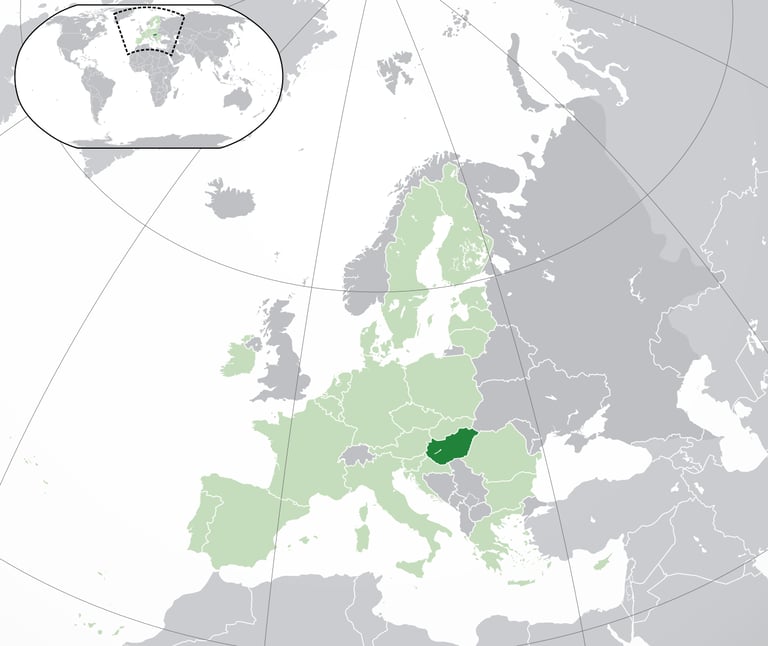
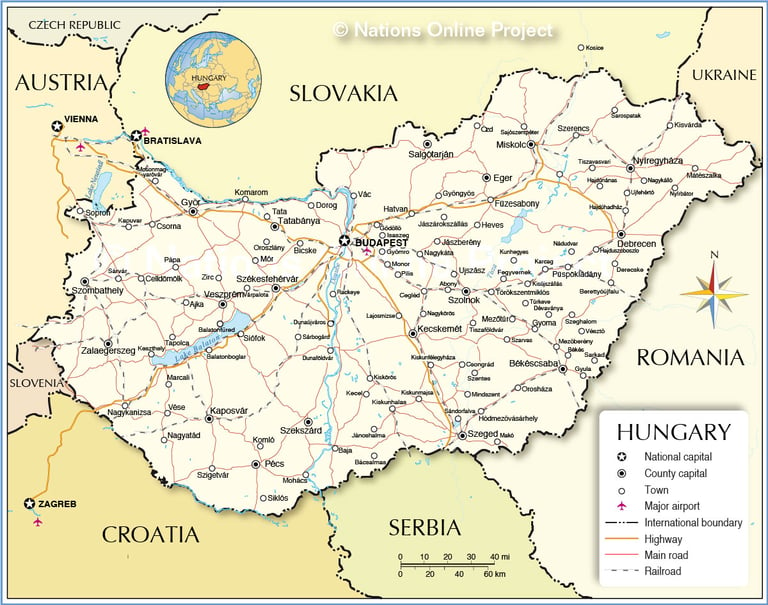
Official Name: Hungary
Population: 9,827,455 (95th largest in the world, 15th largest in Europe)
Area/Size: 10,714 square miles (a little larger than Massachusetts)
Capital: Budapest (1.8 million - sister city of Lisbon, Portugal and Fort Worth, TX)
Spoken Languages: Hungarian (official), English, German, Russian
Religions: Catholic (59%), Protestant (24%), agnostic (8%)
Life Expectancy: 76.3 years Internet Access Rate: 93.8%
Per Capita Income: $47,636 Unemployment: 4.4%
What do they Export?: Automobiles, pharmaceuticals, auto parts, vaccines
Export Partners: Germany (25%), Italy (6%), Romania (6%), U.S. (5%), Slovakia (4%)
Import Partners: Germany (23%), China (7%), Austria (6%), Poland (6%), S. Korea (6%)
Government Type: Parliamentary republic (regular elections - last one in Apr 2026 - open and free)
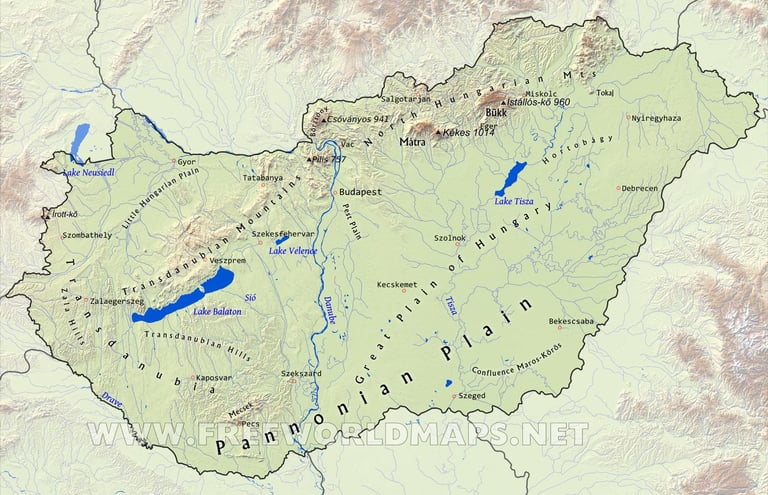
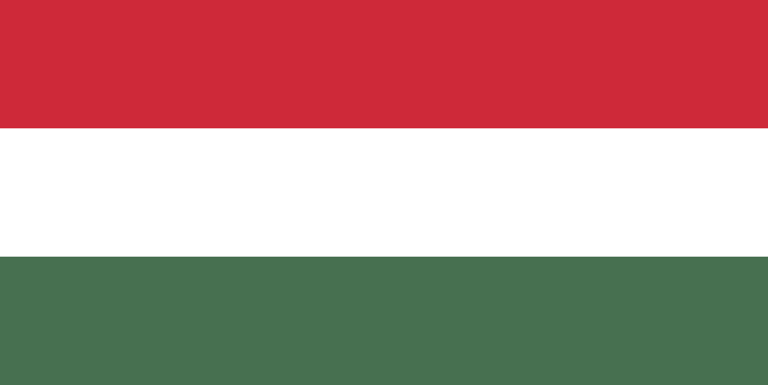
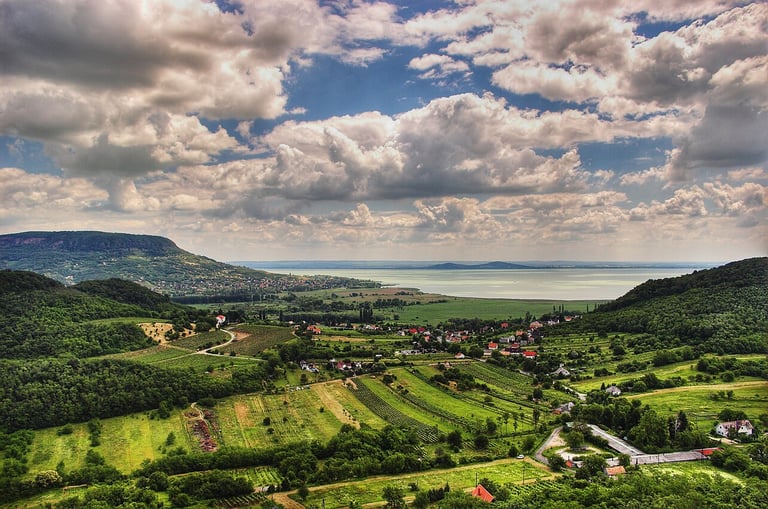
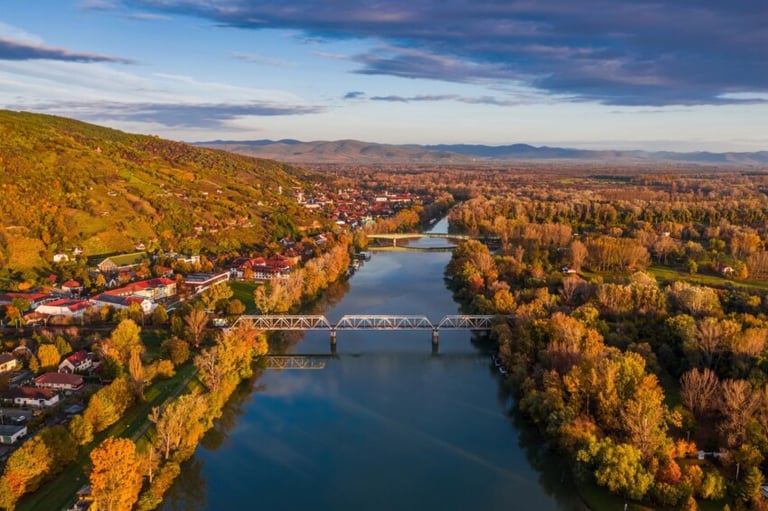
Section II - Images of Hungary
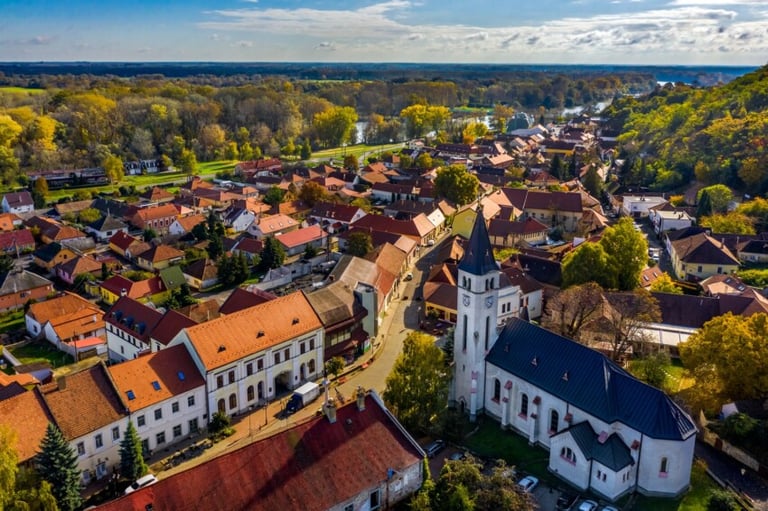
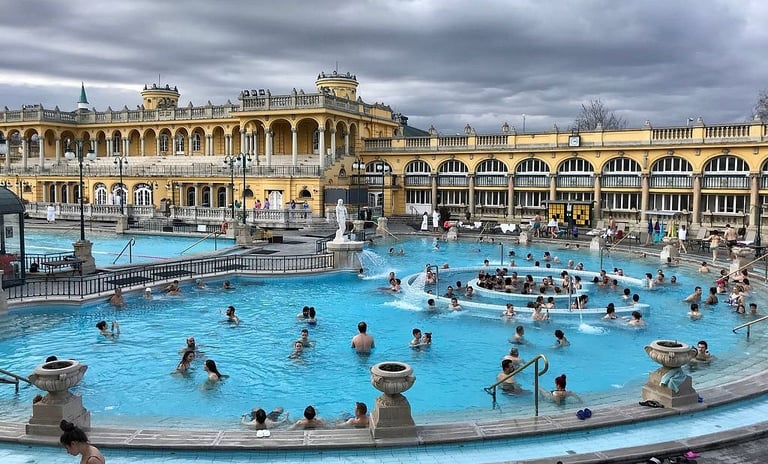
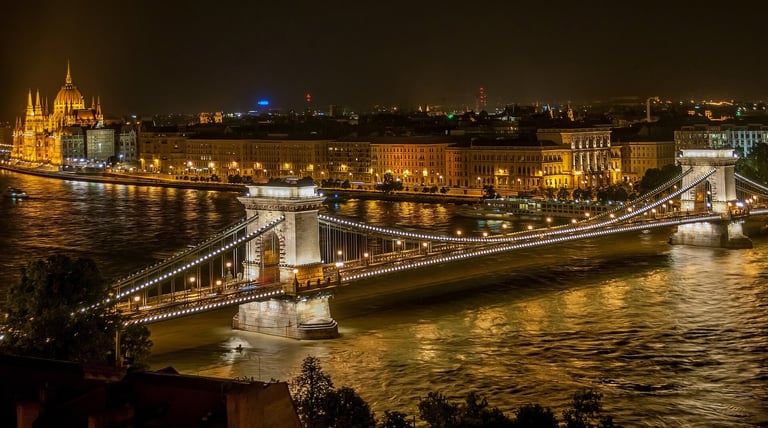
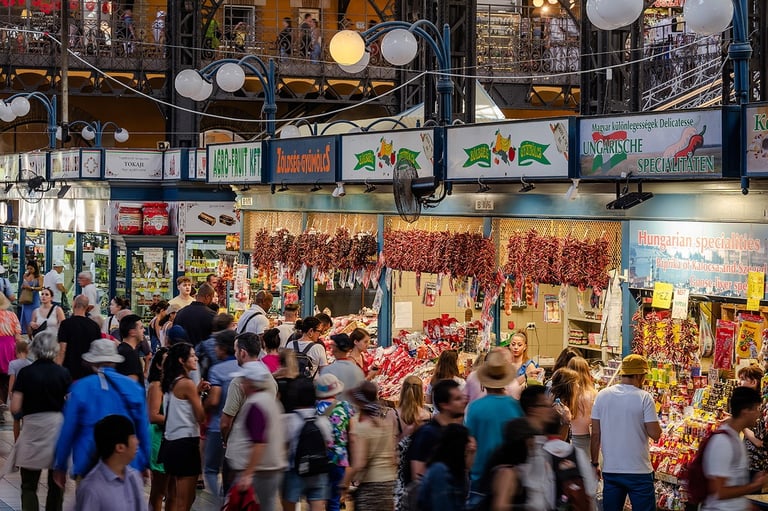
7 Key Dates/Periods in Hungarian History
I've already covered several other countries (like Chechia) in this region, so I will mostly try to focus on a quick overview of the early history and more time on the past 150 years.
800 BC - 800 AD - The development of the Hungarian language started around 800 BC with the parallel southward migration of nomadic Ugric groups. The history of the ancient Magyars during the next thousand years is uncertain; they lived in the steppes but their homeland is subject to scholarly debates. The Roman Empire conquered the territory between the Alps and the area west of the Danube River from 16 to 15 BC, the Danube being the frontier of the empire. Subsequently, the area which is today Hungary was divided into three separate Roman provinces - Pannonia (in the west); Moesia (in the southeast); and Dacia (in the east). These areas remained under Roman rule until 271, when Rome began consolidating back toward Italy in response to the stress of the migration of Germanic tribes. This period brought many invaders into Central Europe, beginning with the Hunnic Empire (c. 370–469). The most powerful ruler of the Hunnic Empire was Attila the Hun (434–453), who later became a central figure in Hungarian mythology. After the disintegration of the Hunnic Empire, the Gepids, an Eastern Germanic tribe, established their own kingdom in the Carpathian Basin. In the 560s, the Avars founded the Avar Khaganate, a state that maintained supremacy in the region for more than two centuries. The Franks under Charlemagne defeated the Avars in a series of campaigns during the 790s, after which the First Bulgarian Empire conquered the lands east of the Danube and took over the rule of the local Slavic tribes and remnants of the Avars.
800 - 1100 - An alliance between the Magyars and the Bulgarians in the 9th century was the first historical event that was recorded with certainty in connection with the Magyars. The Magyars were organized into seven tribes, each headed by their own "voivodes", or military leaders. They arrived in the Carpathian Basin as a frame of a strong steppe-empire under the leadership of Grand Prince Álmos and his son Árpád: founders of the Árpád dynasty, the Hungarian ruling dynasty and the Hungarian state. The Árpád dynasty claimed to be a direct descendant of Attila the Hun. The rising Hungary conducted successful fierce campaigns and raids, from Constantinople to as far as today's Spain, but a defeat at the Battle of Lechfeld in 955 signaled an end to effort to push west into the Frankish kingdoms. The Árpád dynasty then began working to integrate Hungary into Christian Western Europe, with Saint Stephen I becoming the first King of Hungary and starting sweeping reforms to convert Hungary into a Western-style feudal state. King Saint Ladislaus completed the work of King Saint Stephen, consolidating the Hungarian state's power and strengthening Christianity. His charismatic personality, strategic leadership, and military talents resulted in the termination of internal power struggles and foreign military threats.
1200 - 1520 - In 1241–1242, the kingdom received a major blow with the Mongol (Tatar) invasion. Up to half of Hungary's population of 2 million were victims of the invasion. After the Mongols retreated, King Béla ordered the construction of hundreds of stone castles and fortifications, to defend against a possible second Mongol invasion. The Mongols returned to Hungary in 1285, but the newly built stone-castle systems and new tactics (using a higher proportion of heavily armed knights) stopped them. After 1300, many Hungarian kings were jointly ruling other lands, such as Sigismund of Luxembourg (1387–1437) serving as both King of Hungary and Holy Roman Emperor. The last strong king of medieval Hungary was the Renaissance king Matthias Corvinus (1458–1490), the first time that a member of the nobility mounted the Hungarian royal throne without a dynastic background. He was a successful military leader (conquering Vienna as well as parts of Austria and Bohemia) as well as an enlightened patron of the arts and learning - his library, the Bibliotheca Corviniana, was Europe's greatest collection of historical chronicles, philosophic and scientific works in the 15th century, and second only in size to the Vatican Library. However, King Matthias died without lawful sons, and Hungary's international role declined, its political stability was shaken, and social progress was deadlocked. The early appearance of Protestantism further worsened internal relations in the country.
1520 - 1914 - After some 150 years of wars with the Hungarians and other states, the Ottomans gained a decisive victory over the Hungarian army at the Battle of Mohács in 1526, where King Louis II died while fleeing. With the conquest of Buda by the Turks in 1541, Hungary was divided into three parts and remained so until the end of the 17th century. In 1686, the Holy League's army, containing over 74,000 men from various nations, reconquered Buda from the Turks. After some more crushing defeats of the Ottomans in the next few years, the entire Kingdom of Hungary was removed from Ottoman rule by 1718 and became part of the larger Habsburg-led Austrian Empire. The ethnic composition of Hungary was fundamentally changed as a consequence of the prolonged warfare with the Turks. A large part of the country became devastated, population growth was stunted, and many smaller settlements perished. After rebellions in Hungary in 1848 led to mass executions, and major military defeats of the Austrian army (primarily by Prussia), the Habsburgs were forced to negotiate the Austro-Hungarian Compromise of 1867, by which the dual monarchy of Austria-Hungary was formed. This empire had the second largest area in Europe (after the Russian Empire), and it was the third most populous (after Russia and the German Empire). The two realms were governed separately by two parliaments from two capital cities, with a common monarch and common external and military policies. The era witnessed impressive economic development, as the formerly backward Hungarian economy became relatively modern and industrialized by the turn of the 20th century. Additionally in this time period, the old capital Buda and Óbuda were officially united with Pest, creating the new metropolis of Budapest.
1914 - 1945 - World War I started in August 1914 after the assassination of Archduke Franz Ferdinand in Sarajevo. Austria-Hungary drafted over 4 million soldiers from the Kingdom of Hungary to join Central Powers forces on the side of Germany, Bulgaria, and Turkey. The Central Powers conquered Serbia, southern Romania, and the Romanian capital Bucharest, and with great difficulty stopped and repelled the attacks of the Russian Empire until the beginning of the Russian Revolution led to the collapse of fighting on the Eastern Front. Allied victory on the Western Front in late 1918, however, determined the direction of the war, while the death of Emperor Franz Joseph left a power vacuum. In Oct 1918, Hungary's union with Austria was dissolved, and after a period of chaos former Austro-Hungarian admiral Miklós Horthy was proclaimed regent of the reestablished Kingdom of Hungary. With the 1920 Treaty of Trianon, Hungary lost 72% of its territory, many sources of raw materials, and 3.5 million ethnic Hungarians to the new countries of Yugoslavia and Czechoslovakia. During the 1920s and 1930s the government's actions continued to drift rightward with economic and then political gravitation towards Italy and Germany. The Great Depression further exacerbated the situation, and the popularity of fascist politicians promising economic and social recovery increased. Hungary formally joined the Axis powers on 20 November 1940 and in 1941 participated in the invasion of Yugoslavia, gaining some of its former territories in the south. Hungarian troops fought on the Eastern Front for two years, but when the Hungarian government began seeking a secret peace pact with the Allies in early 1944, German troops occupied Hungary. This lasted less than a year, as Soviet troops succeeded in encircling and besieging Budapest in Dec 1944, forcing Hungarian surrender two months later.
1945 - 1989 - Following the defeat of Nazi Germany and Soviet military occupation, Hungary became a satellite state of the Soviet Union. In the 1947 Paris Peace Treaties, Hungary was again reduced to its post-World War I borders, and the Soviet leadership selected Mátyás Rákosi to lead the Stalinization of the country from 1949 to 1956. His government's policies of militarization, industrialization, and collectivization led to a severe decline in living standards. Hungary joined the Warsaw Pact in May 1955, as societal dissatisfaction with the regime swelled. Following the firing on peaceful demonstrators by Soviet soldiers and secret police, protesters took to the streets in Budapest in late Oct 1956, initiating the 1956 Revolution. In an effort to quell the chaos, Imre Nagy returned as premier, promised free elections, and took Hungary out of the Warsaw Pact. The violence nonetheless continued as revolutionary militias sprung up against the Soviet Army; the roughly 3,000-strong resistance fought Soviet tanks using Molotov cocktails and machine-pistols. For a time, the Soviet leadership was unsure how to respond but eventually decided to intervene to prevent a destabilization of the Soviet bloc. On Nov 4th, reinforcements of more than 150,000 troops and 2,500 tanks entered the country from the Soviet Union. Nearly 20,000 Hungarians were killed resisting the intervention, while Nagy was secretly tried, found guilty, and executed by hanging in June 1958.
After a second, briefer period of Soviet military occupation, János Kádár was chosen to head the new government and quickly normalized the situation. Kádár proclaimed a new policy line, according to which the people were no longer compelled to profess loyalty to the party if they tacitly accepted the socialist regime as a fact of life. Kádár introduced new planning priorities in the economy, such as allowing farmers significant plots of private land within the collective farm system. The living standard rose as consumer goods and food production took precedence over military production, which was reduced to one-tenth of prerevolutionary levels. From the 1960s through the late 1980s, Hungary was often referred to as "the happiest barrack" within the Eastern bloc. As a result of a "relatively" high standard of living, a more liberalized economy, a less censored press, and less restricted travel rights, Hungary was generally considered one of the more liberal countries in which to live in Central Europe during communism. By the time Kádár died in 1989, though, the Soviet Union was in steep decline and Hungary's transition from communism to capitalism was peaceful.
1989 - present - Hungary's transition from communism to capitalism was largely prompted by economic stagnation and domestic political pressure. The reburial of Imre Nagy as a revolutionary martyr in June 1989 is widely considered the symbolic end of communism in Hungary. Free elections were held in May 1990, and the Hungarian Democratic Forum, a major conservative opposition group, was elected to the head of a coalition government. With the removal of state subsidies and rapid privatization in 1991, Hungary experienced a severe economic recession as well as social and security instability because of the Yugoslav Wars to their immediate south. Government austerity measures proved unpopular, and the Communist Party's legal and political heir, the Socialist Party, won the subsequent 1994 elections. This abrupt shift in the political landscape was repeated in 1998 and 2002; in each electoral cycle, the governing party was ousted and the opposition elected. Like most other East European states, however, Hungary broadly pursued integration into a larger Europe, joining NATO in 1999 and the European Union in 2004. In 2010, Viktor Orbán's national-conservative Fidesz party was elected to a parliamentary supermajority. Orbán publicly embraced illiberalism, causing conflict within the EU on issues such as LGBT rights, migration, Hungary's decision to authorize Russian and Chinese vaccines during the COVID-19 pandemic, and international sanctions against Russia due to the 2022 Russian invasion of Ukraine. Fidesz subsequently won supermajorities in the 2014, 2018, and 2022 elections, but in 2026 Péter Magyar led the Tisza Party to a decisive supermajority victory and change of government.
Other Non-Political Issues
Section III - Issues of Hungary
General Information on Hungary:
“Hungary", One World Nations Online, Jan 2025, https://www.nationsonline.org/oneworld/hungary.htm
“Hungary", Wikipedia, Apr 2026, https://en.wikipedia.org/wiki/Hungary or https://simple.wikipedia.org/wiki/Hungary
"Hungary", National Geographic Kids, Dec 2025, https://kids.nationalgeographic.com/geography/countries/article/Hungary
"Visit Hungary" (national tourism site), Hungarian Tourism Agency, 2026, https://visithungary.com/
“Economy - Hungary", The World Bank, Jan 2026, https://data360.worldbank.org/en/economy/HUN
History Links on Hungary:
"Hungary Explained in 16 Minutes | History, Geography, Culture" (video), Opentiera, Feb 2026, https://www.youtube.com/watch?v=I6L2eD1CRCM
"How the Berlin Wall Became a 100-Mile Bike and Pedestrian Trail", Smithsonian Magazine, Nov 2024, https://www.smithsonianmag.com/travel/how-the-berlin-wall-became-a-100-mile-bike-and-pedestrian-trail-180985405/
“UNESCO World Heritage Sites", UNESCO, 2026, https://www.unesco.org/en/countries/hu
"Why Was Germany so Fragmented in the Middle Ages - Medieval DOCUMENTARY" (video), Kings and Generals, Feb 2025, https://www.youtube.com/watch?v=EiB8sMHxGqM
Current Events Stories on Hungary:
"China Wants Germany in Its Corner. It’s Not That Easy", New York Times, Feb 2026, https://www.nytimes.com/2026/02/26/world/asia/merz-china-analysis.html
"Europe’s open-border dreams meet German politics", Politico Europe, Feb 2026, https://www.politico.eu/article/europe-schengen-border-migration-germany-politics-friedrich-merz/
"Hungary election 2026 results: Péter Magyar wins, Trump ally Viktor Orbán concedes landmark defeat", CNN News, Apr 2026, https://www.cnn.com/2026/04/12/world/live-news/hungary-election-orban-magyar
"Germany’s Far Right Is on the Threshold of Power. This Man Is Leading the Charge.", Politico.com, Jan 2026, https://www.politico.com/news/magazine/2026/01/30/germany-has-built-a-firewall-against-the-far-right-in-the-fall-this-young-nationalist-may-test-it-00748999
"Once the envy of the world, Germany’s car brands now weigh heavily on its struggling economy", CNBC, Sep 2024, https://www.cnbc.com/2024/09/06/once-the-envy-of-the-world-germanys-car-brands-are-weighing-heavily-on-its-struggling-economy.html
Other Interesting Links Related To Hungary:
"21 Things That Are Normal in Germany but Nowhere Else" (video), Germany Rewind, Dec 2025, https://www.youtube.com/watch?v=sEzeQWmjMFI
"German Food Culture: What Are the Eating Habits?", Fintiba, Sep 2024, https://www.fintiba.com/germany/living/german-food-culture
"Rhine River Cruise", Samantha Brown's Places to Love, Nov 2025, https://www.youtube.com/watch?v=Vy6OshH8TXU
"These Five Photos of Germany’s Natural Wonders Will Inspire Your Wanderlust", Smithsonian Magazine, https://www.smithsonianmag.com/sponsored/these-five-photos-of-germanys-natural-wonders-will-inspire-your-wanderlust-180987850/
"Why Germany Is Suddenly Declaring War on Immigration", Across the Globe, May 2025, https://www.youtube.com/watch?v=jIDCKtyMwVI
Section IV - Resources About Hungary
ECON and More
Curating articles for K-12 education.
CONTACT
© 2025. All rights reserved.