
Countries of the World (Oceania) - Tonga
My third country from Oceania in my new geography series. As I mentioned before, this series for Oceania countries will not appear as often (since there aren't as many) - my new plan is to alternate Oceanic countries with the group of non-countries (like my post on Bermuda a few weeks ago). So expect to see the countries of Oceania every six weeks or so, depending on how often I am posting at that time of year (might be a little less often here during the summer).
Jay LeBlanc
7/3/20267 min read
Section I - Basic Info on Tonga
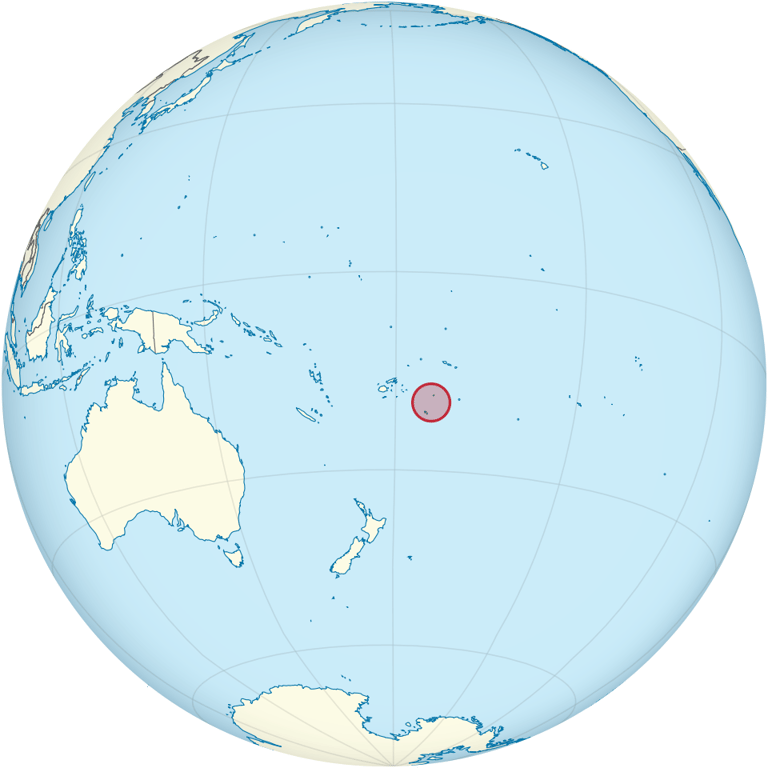
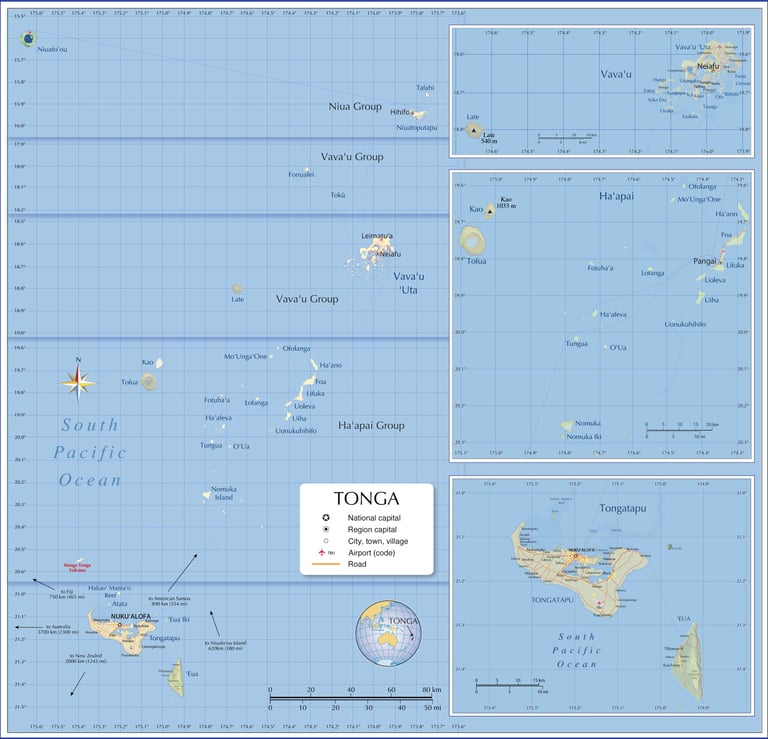
Official Name: Kingdom of Tonga
Population: 104,519 (181st largest in the world, 11th largest country in Oceania)
Area/Size: 288 square miles (about the size of New York City)
Capital: Nuku'alota (22,904 - sister city of East Palo Alto, CA)
Spoken Languages: Tongan
Religions: Independent Christian (65%), Protestant (24%), Baha'i (3%)
Life Expectancy: 78.2 years Internet Access Rate: 58.5%
Per Capita Income: $7,853 Unemployment: 2.2%
What do they Export?: Refined petroleum, cassava, non-fillet fish, perfume plants
Export Partners: Guyana (17%), U.S. (17%), New Zealand (15%), Australia (15%)
Import Partners: Fiji (27%), New Zealand (24%), China (21%), Australia (8%)
Government Type: Constitutional monarchy with democratic parliament (competitive, free elections)


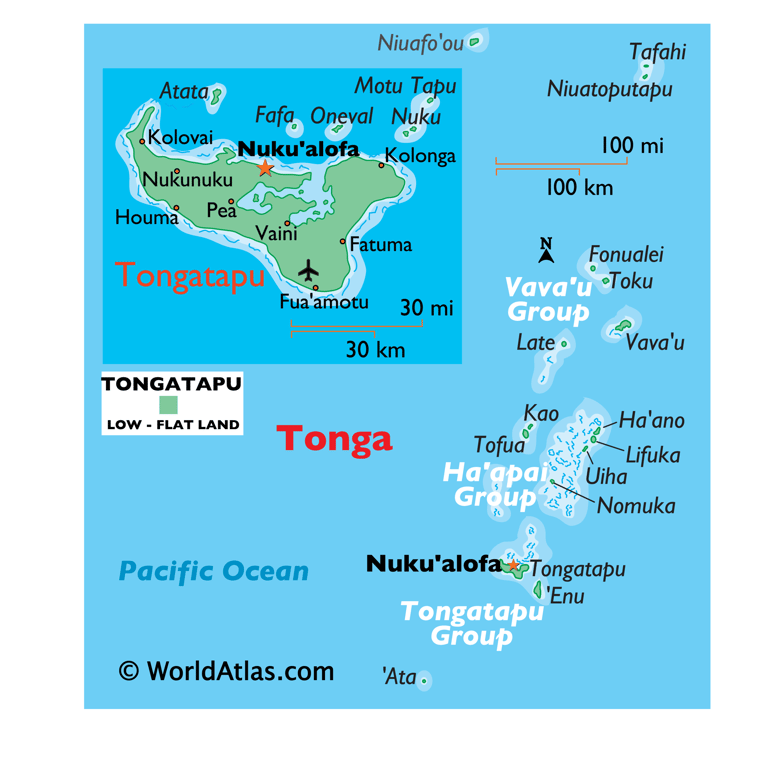
Section II - Images of Tonga
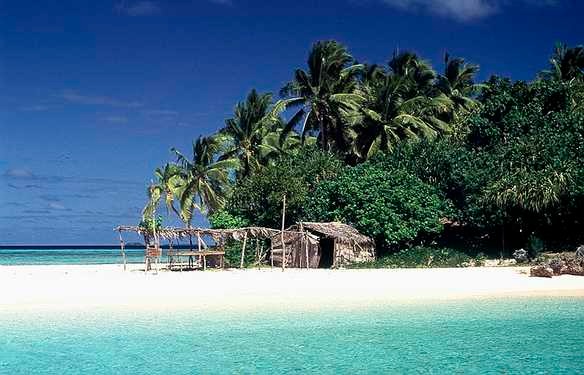
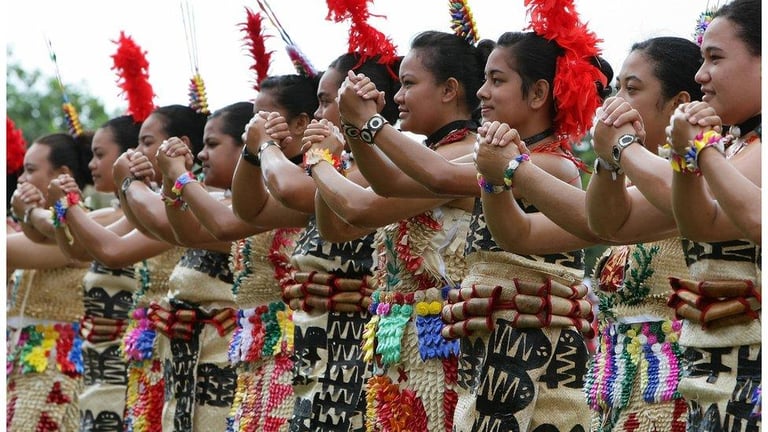
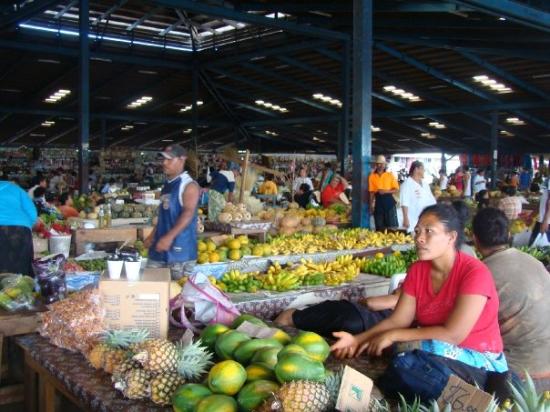
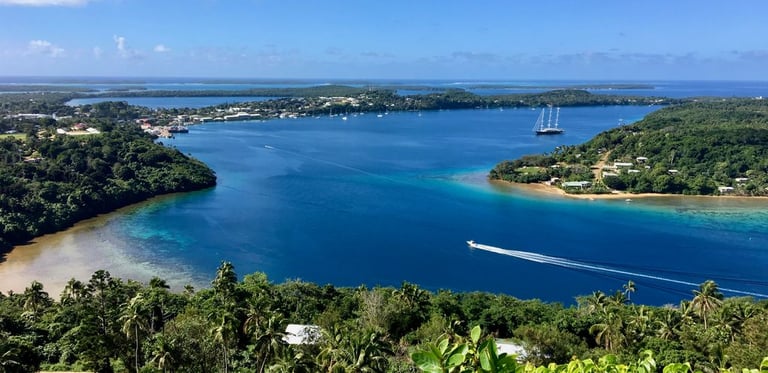
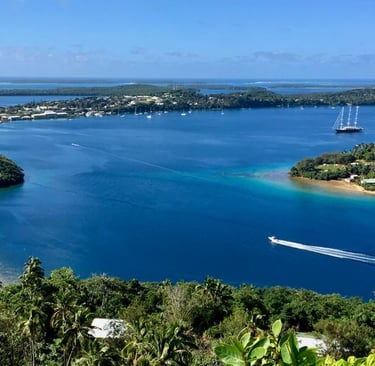
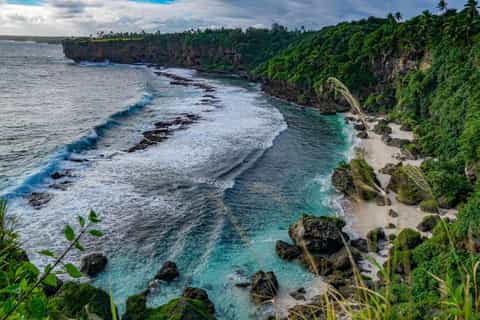
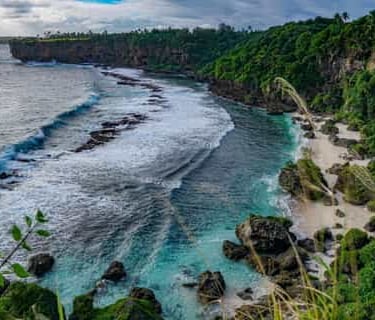
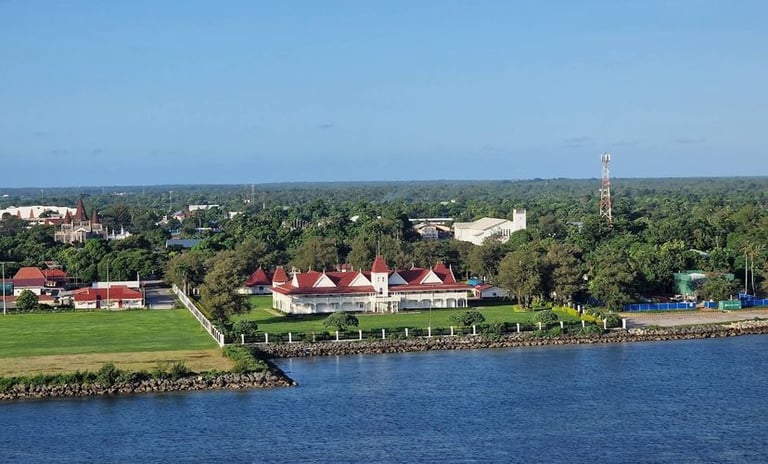
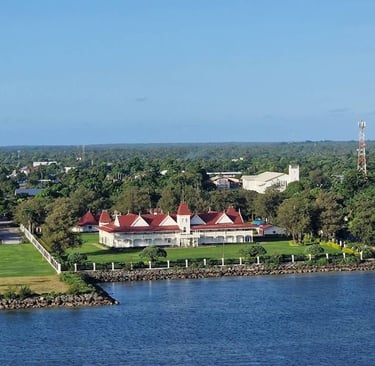
5 Key Dates in Tonga's History
Most of the "key dates" in this case focus on colonial history, since Tuvalu has only been an independent nation for less than 50 years.
2000 BC - 1000 AD - Centuries before Westerners arrived, Tongans created megalithic stoneworks. Most notably, these are the Haʻamonga ʻa Maui and the Langi terraced tombs. The Haʻamonga is 5 meters high and made of three coral-lime stones that weigh more than 40 tons each. The Langi are low, very flat, two or three tier pyramids that mark the graves of former kings. What is known about Tonga before European contact comes from myths, stories, songs, poems (as there was no writing system), as well as from archaeological excavations. Lapita pottery was found in Tonga dating back 3000 years when seafarers associated with the diaspora first settled the islands which now make up the Kingdom of Tonga. Along with Samoa, the area served as a gateway into the rest of the Pacific region known as Polynesia.
1200 - 1600 - By the 12th century, Tongans, and the Tongan kings named the Tu'i Tonga, were known across the Pacific, from Niue, Samoa to Tikopia. The influence of the Tu'i Tonga was renowned throughout the Pacific, and many of the neighboring islands participated in the widespread trade of resources and new ideas. They ruled these nations for more than 400 years, sparking some historians to refer to a "Tongan Empire", although it was more of a network of interacting navigators, chiefs, and adventurers. The success of the Empire was largely based upon the Imperial Navy. The most common vessels were long-distance double-canoes fitted with triangular sails which could carry up to 100 men. The large navy allowed for Tonga to become wealthy with large amounts of trade and tribute flowing into the Royal Treasury. The Tuʻi Tonga decline began due to numerous wars and several assassinations in the 16th century. In addition, intermarriages between Tongan and Samoan families led to the importation and institution of many Samoan governmental policies and titles which continue today in the modern Kingdom of Tonga.
1600 - 1900 - The first Europeans arrived in the form of Dutch explorers Willem Schouten and Jacob Le Maire in 1616, but they only visited for a short time. In Jan 1643 the Dutch explorer Abel Tasman was the first European to visit the main island after rounding Australia and New Zealand while looking for a faster route to Chile. British interest in the area began with the visits of Captain Cook in 1773, 1774, and 1777, followed by the first London missionaries in 1797, and the Wesleyan Methodist Walter Lawry in 1822. Around that time, most Tongans converted en masse to the Wesleyan (Methodist) or Catholic faiths. In 1799, the murder of the Tu'i leader sent Tonga into a civil war for fifty years. Finally, the islands were united into a Polynesian kingdom in 1845 by the ambitious young warrior, strategist, and orator Tāufaʻāhau, who was baptized with the name King George Tupou I. In 1875, with the help of missionary Shirley Baker, he declared Tonga a constitutional monarchy, at which time he emancipated the serfs, enshrined a code of law, land tenure, and freedom of the press, and limited the power of the chiefs.
1900 - 1970 - Tonga became a British protected state under a Treaty of Friendship on May 18, 1900, when European settlers and rival Tongan chiefs tried to oust the second king, George Tupou II. Additionally, the British hoped this treaty would discourage German advances (which was attempting to establish colonies in the region). Foreign affairs of the Kingdom of Tonga would be conducted through the British Consul, while the United Kingdom had veto power over foreign policies and finances of the Kingdom of Tonga. For most of the 20th century Tonga was quiet, inward-looking, and somewhat isolated from developments elsewhere in the world. One exception was the beginning of World War II, when upon the British declaration of war against Germany in 1939 the government of Tonga issued a declaration "placing all of its resources at the disposal of the British" and formally declared war against Germany in its own right. Queen Sālote directed the re-establishment of the national militia and donated 160 acres to the British for the construction of an airfield. Following the attack on Pearl Harbor in December 1941, Tonga also declared war on Japan. In anticipation of a possible Japanese invasion, citizens were evacuated from Nuku'alofa and barbed wire and trenches were erected on the beaches of Tongatapu. On 4 June 1970, the Treaty of Friendship and protected state status ended under arrangements established prior to her death in 1965 by the third monarch, Queen Sālote.
1970 - present - Upon independence, Tonga joined the Commonwealth of Nations in 1970, and the United Nations in 1999. While exposed to colonial forces, Tonga has never lost indigenous governance, a fact that makes Tonga unique in the Pacific. Tonga's current king, Tupou VI, traces his line directly back through six generations of monarchs. In Nov 2006, rioting broke out in the capital city of Nukuʻalofa over complaints that only 30% of the parliament are elected by the common people (the rest of the 30 MPs are appointed by the King or are members of the Tongan aristocracy). Government buildings, offices, and shops were looted and burned, and eight people died in the riots. In Jul 2008, three days before his coronation, King George Tupou V announced that he would relinquish most of his power and be guided by his Prime Minister's recommendations on most matters, following upcoming elections. In 2010 the Legislative Assembly enacted a package of political reforms towards a fully representative democracy, increasing the number of directly elected people's representatives to 65% while the aristocracy still select 35%. The new king's death in 2012 led to his brother becoming the King of Tonga as George Tupou VI, and current political issues have often revolved around the monarchy attempting to retain control of some elements of day-to-day governance.
Other Non-Political Issues
Section III - Issues of Tonga
General Information on Tonga:
"25 Facts About Tonga for Kids", Kids-World-Travel-Guide.com, Apr 2024, https://www.kids-world-travel-guide.com/facts-about-tonga.html
"Kingdom of Tonga - The Friendly Islands" (national tourism site), 2026, https://www.tongatourism.travel/
“Tonga”, Nations Online, 2025, https://www.nationsonline.org/oneworld/tonga.htm
“Tonga", Wikipedia, Jun 2026, https://en.wikipedia.org/wiki/Tonga or https://simple.wikipedia.org/wiki/Tonga
“Tonga Country Profile", World Bank Group, Jan 2026, https://data360.worldbank.org/en/economy/TON
Current Events Stories on Tonga:
"Extremely offline: what happened when a Pacific island was cut off from the internet", The Guardian (UK), Sep 2025, https://www.theguardian.com/news/2025/sep/30/tonga-pacific-island-internet-underwater-cables-volcanic-eruption
"Tonga: Building infrastructure resilience in an isolated, hazardous world", United Nations Office for Disaster Risk Reduction (UNDRR), 2024, https://www.undrr.org/resilient-infrastructure/tonga
“Tonga – On the frontline of sea level rise", The Commonwealth, Jan 2023, https://thecommonwealth.org/news/blog-tonga-frontline-sea-level-rise
“Tonga election: What are the main issues ahead of the upcoming polls?", Australian Broadcasting Corporation (ABC), Nov 2025, https://www.abc.net.au/pacific/tonga-election-what-are-the-main-issues-november-20-poll/105964368
“Tongans are heading to the polls for just the fifth time. Is their young democracy on the line?", Australian Broadcasting Corporation (ABC), Nov 2025, https://www.abc.net.au/news/2025-11-19/tonga-election-king-democracy-noble-votes/106022830
"What does the election of Tonga's new noble PM mean for democracy?", Radio New Zealand (RNZ), Dec 2025, https://www.rnz.co.nz/news/pacific/581920/what-does-the-election-of-tonga-s-new-noble-pm-mean-for-democracy
Other Interesting Links Related To Tonga:
"George & The Whales: A Guide’s Life Among Tonga’s Giants" (video), Al-Jazeera English, Nov 2025, https://www.youtube.com/watch?v=2tEe55VPico
“Tonga Explained in 14 Minutes (History, Geography, & Culture)” (video), Opentiera, Aug 2025, https://www.youtube.com/watch?v=KW8USXAUemU
“Tonga's strange volcanic eruption was even more massive than we knew", National Geographic, Nov 2022, https://www.nationalgeographic.com/science/article/tonga-volcano-largest-eruption-pacific-ocean-tallest-plume
"Tongan Feast for Christmas", Polynesian Cultural Center, updated Dec 2025, https://www.polynesia.com/blog/tongan-feast-for-christmas
"The Tonga eruption explained, from tsunami warnings to sonic booms", National Geographic, Jan 2022, https://www.nationalgeographic.com/science/article/the-science-behind-the-tonga-eruption-and-tsunami
"Understanding Tongan Society: Culture, Traditions, and Heritage", Polynesian Cultural Center, Nov 2014, https://www.polynesia.com/blog/tongan-traditions-and-customs
Section IV - Resources About Tonga
ECON and More
Curating articles for K-12 education.
CONTACT
© 2025. All rights reserved.