Countries of the World (The Americas) - Mexico
Second country from the Western Hemisphere in my new geography series (and the second one for 2026). As I mentioned before, I started each continent at a different point alphabetically, but in the Americas that means a jump from "J" to "M". Again, I'm going to play with the format on these first few and see what I like, then try to be as consistent with my content going forward as I can.
Section I - Basic Info on Mexico


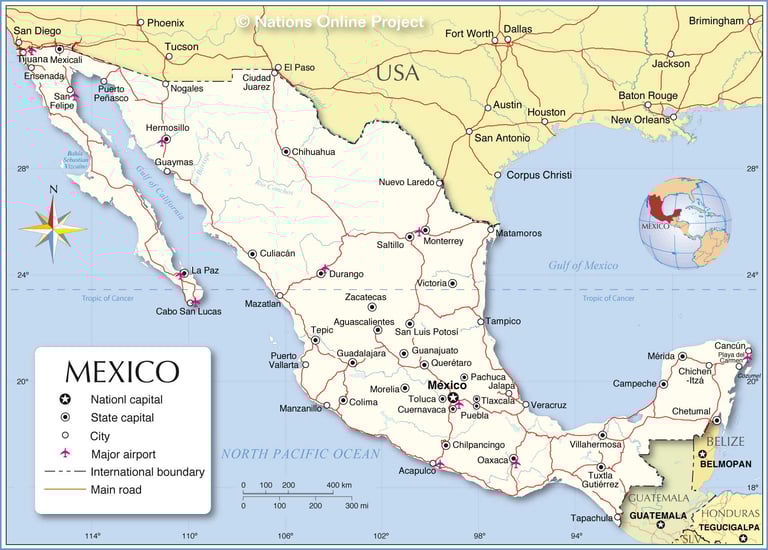
Official Name: United Mexican States
Population: 131,741,347 (10th largest in the world, 3rd largest in the Americas)
Area/Size: 758,449 square miles (a little larger than Alaska and Washington combined)
Capital: Mexico City (22.8 million - sister city of Los Angeles, CA and Chicago, IL)
Other Major Cities: Guadalajara (5.6 million), Monterrey (5.3 million), Puebla (3.5 million)
Spoken Languages: Spanish, indigenous (Mayan, Nahuatl, etc..)
Religions: Catholic (84%), other Christian (11%), agnostic (4%)
Life Expectancy: 75.7 years Internet Access Rate: 81.2%
Per Capita Income: $25,688 Unemployment: 2.7%
What do they Export?: Cars and trucks, crude petroleum, alcohol, food/beverages
Export Partners: United States (76%), Canada (5%), China (2%), Germany (2%)
Import Partners: United States (46%), China (20%), Germany (4%), Japan (3%)
Government Type: Federal presidential republic (last election in 2024 freely held)
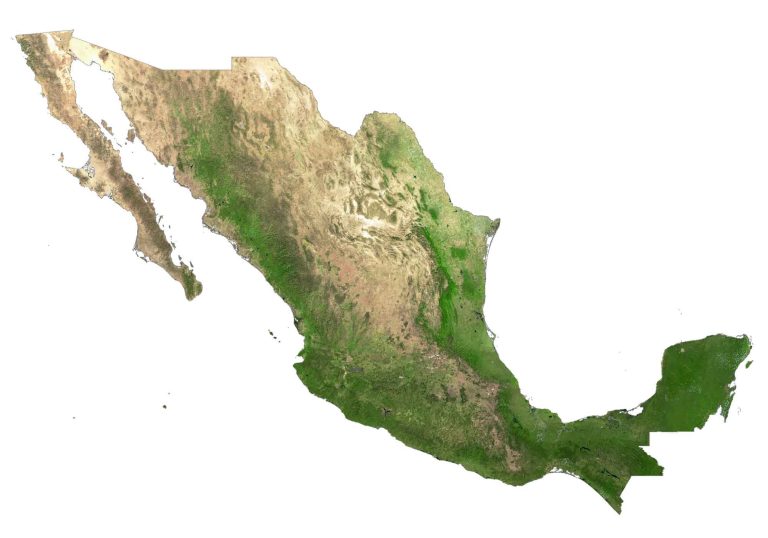
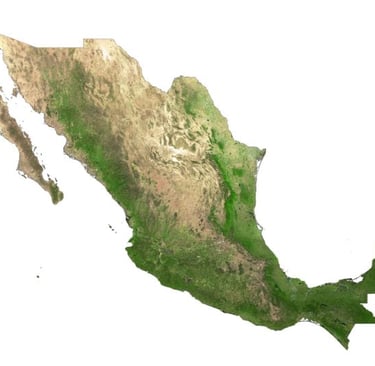
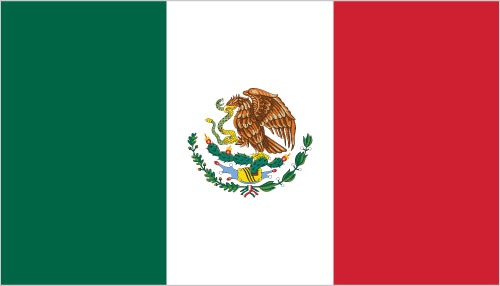
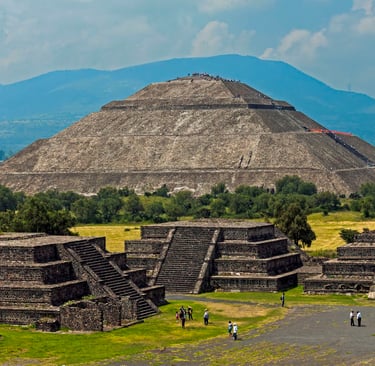
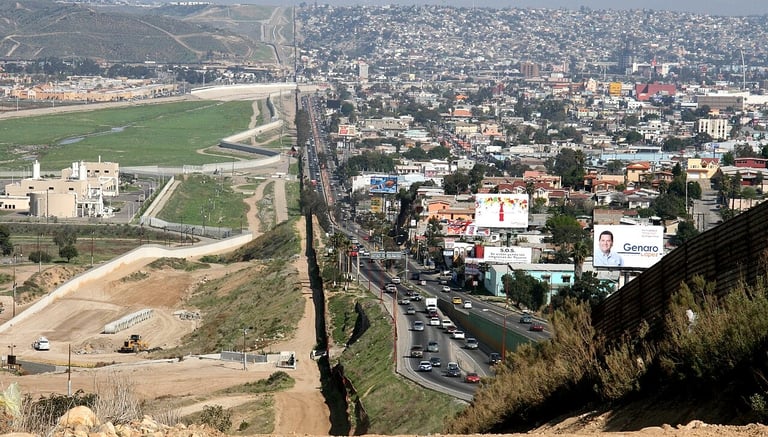
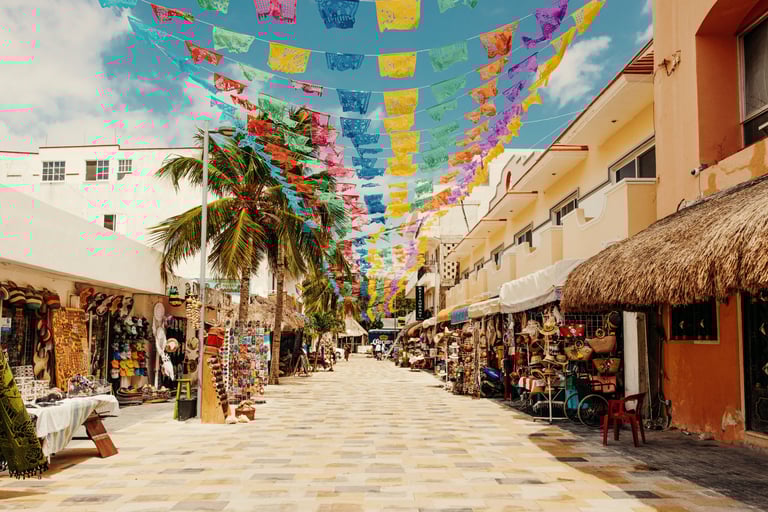
Section II - Images of Mexico
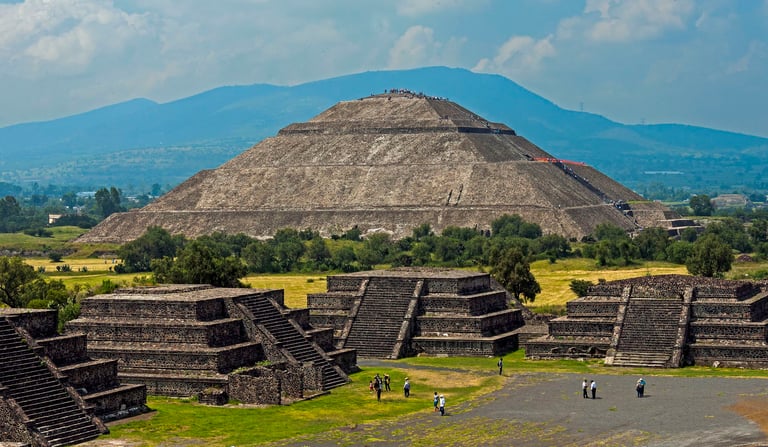


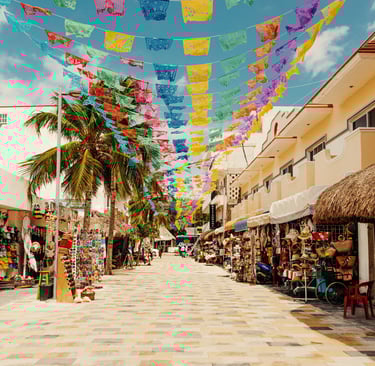
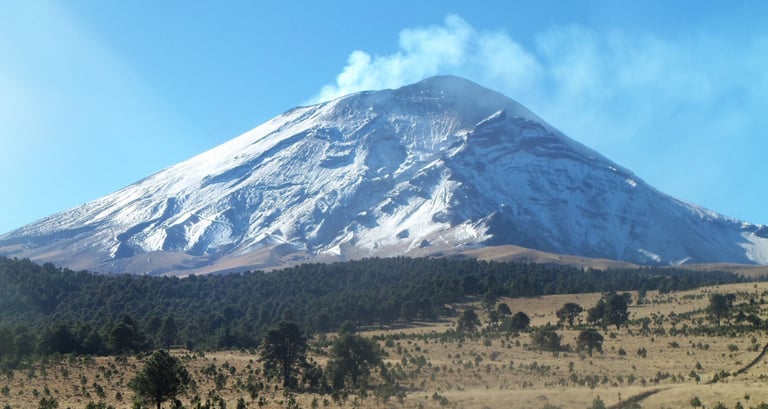
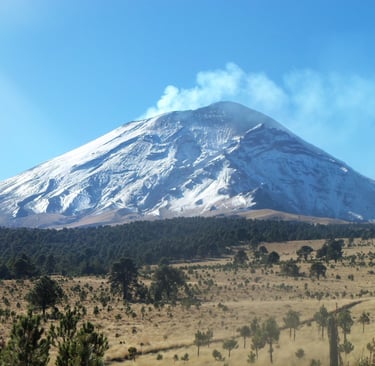
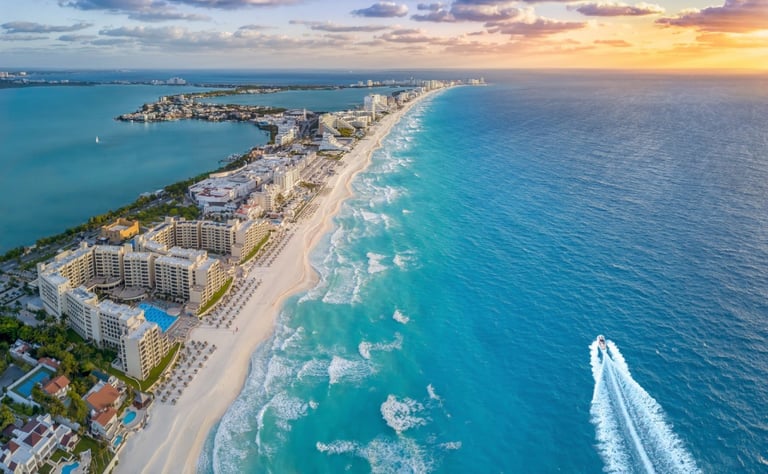
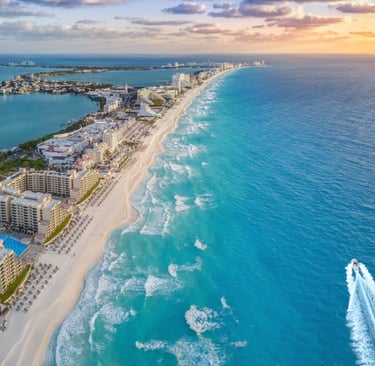

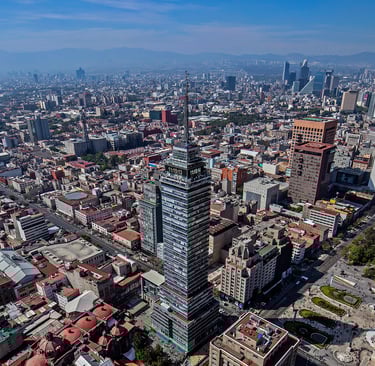
9 Key Dates in Mexican History
Probably not a surprise to teachers, but larger countries with a more elaborate history (like Mexico) need a few more "key dates" to fully explain the background of the area. So this will be a little longer to cover a balance between older civilizations (Olmecs, Toltecs, Aztecs) and major events of the past two centuries.
c. 1500 B.C. - the Olmec develop the first major Mesoamerican civilization, beginning in the southern region of what is now Mexico. This period is marked by the effective cultivation of crops such as corn (maize), beans, chile peppers and cotton; and the emergence of pottery, fine art and graphic symbols used to record Olmec history, society and culture. Later followed by other regional groups, including the Maya, Zapotec, Totonac, and Teotihuacán civilizations.
c. 250 A.D. - The Mayan civilization, centered in the Yucatán peninsula, becomes one of the most dominant of the area’s regional groups. The Mayas excelled at pottery, hieroglyph writing, calendar-making and mathematics, and left an astonishing amount of great architecture. By 600 A.D., the Mayan alliance with the Teotihuacán was being replaced by the rise of the Toltecs, who used their powerful armies to subjugate neighboring societies. The Toltecs rule central Mexico until approximately 1200.
1325 - 1519 - The Aztecs emerge as the dominant force in central Mexico. They develop an intricate social, political, religious and commercial organization, with a number of hallmarks - early currency and a developed economic system, magnificent palaces and temples, and a distinctive artistic style including exquisitely feathered tapestries, headdresses and other attire; finely worked ceramics; gold, silver and copperware; and precious stones, particularly jade and turquoise.
Nov 1519 - Aug 1521 - Hernando Cortez, a Spanish conquistador leading 400 soldiers and 16 horses, arrives in Tenochtitlan (the capital of the Aztecs) in Nov 1519 and takes the emperor hostage. After 21 months of fighting (including alliances with tribes the Aztecs had subjugated) Cortez finally completed his conquest on August 13, 1521. Cortéz then razes the Aztec capital and builds Mexico City on its ruins; the new city becomes the center of the Spanish colonial empire in the New World for the next 3 centuries.
Sep 1810 - Aug 1821 - In the wake of Napoleon's conquest of Spain (leaving the colonial government without support) Father Miguel Hidalgo, a priest in the small village of Dolores, issues his famous call for Mexican independence. While his initial rebellion failed, September 16, 1810 is still celebrated as Mexico’s Independence Day. A series of revolts by various Mexican independences movements culminates in the signing of the Treaty of Córdoba, marking the official beginning of Mexican independence.
1833 - 1848 - Santa Anna becomes president and attempts to centralize power, leading to a revolt by Texas residents. When they declare independence in 1835, Santa Anna leads an army to quell the rebellion, but after initial victories (like the Alamo) is decisively defeated by rebel leader Sam Houston at the Battle of San Jacinto in April 1836. 10 years later, partly as a result of the continuing dispute over Texas, the United States declares war on Mexico. The U.S. launches an invasion of northern Mexico, invades New Mexico and California, and ultimately captures Mexico City with an invasion force from the Gulf of Mexico. In the Treaty of Guadalupe Hidalgo, the Rio Grande becomes the southern boundary of Texas and California and New Mexico are ceded to the U.S.
May 5, 1862 - Benito Júarez becomes president of Mexico in 1861 after a 3-year civil war - one of his first acts is to suspend payment on all of Mexico’s debts to foreign governments. The French intervene to protect their investments in Mexico, and send troops to attempt to occupy Mexico City. On May 5th the Mexican army wins a victory over the French at the Battle of Puebla (remembered today when we celebrate "Cinco de Mayo"). Eventually the French win, force Júarez to flee, and install Maximilian, archduke of Austria, on the throne of a Mexican Empire. Under pressure from a U.S. emerging from their own Civil War, France withdraws its troops from Mexico in 1867. After Mexican troops under General Porfirio Díaz occupy Mexico City, Maximilian is forced to surrender and is executed.
1910 - 1920 - Porfirio Díaz takes control of Mexico in 1877 and rules as a dictator until 1911. During this period, Mexico undergoes commercial and economic development, along with increasing inequality between the rich and poor. Francisco Madero begins the Mexican Revolution in Nov 1910 and forces Diaz to step aside, only to see conflict and violence continue for the better part of the next decade. Popular leaders like Emiliano Zapata in southern Mexico and Pancho Villa in the north emerge as the champions of the peasant and working class, refusing to submit to presidential authority. Various invasions by the United States – nervous about their unruly neighbor – further complicate matters. Ultimately the ambush and murder of Zapata by the government in 1919 lead to a final coup in 1920 ending the "revolution".
1976 - Huge oil reserves are discovered in the Bay of Campeche, off the shores of the states of Campeche, Tabasco and Veracruz, at the southernmost end of the Gulf of Mexico. The oil field established there becomes one of the largest in the world. The Mexican government promises to use the oil money to fund a campaign of industrial expansion, social welfare and high-yield agriculture, but while the economy has improved the promises exceeded the reality over the past 50 years. Eventually foreign-based oil companies were invited to return to Mexico, breaking the monopoly of PEMEX, the state-owned oil corporation.
Other Non-Political Issues
Section III - Issues of Mexico
General Information on Mexico:
“Mexico", One World Nations Online, Jan 2025, https://www.nationsonline.org/oneworld/mexico.htm
“Mexico", Wikipedia, Sep 2025, https://en.wikipedia.org/wiki/Mexico or https://simple.wikipedia.org/wiki/Mexico
"Mexico", National Geographic Kids, https://kids.nationalgeographic.com/geography/countries/article/mexico
"Visit Mexico" (national tourism site), Jamaica Tourism Board, 2025, https://visitmexico.com/en/
“The World Factbook - Mexico", Central Intelligence Agency, Jan 2026, https://www.cia.gov/the-world-factbook/countries/mexico/
History Links on Mexico:
"5 Mesoamerican Civilizations That Rose & Fell Before the Aztecs", The Collector, Apr 2023, https://www.thecollector.com/civilizations-mesoamerica-before-aztecs/
"Aztec Civilization Facts and History", National Geographic Kids, https://kids.nationalgeographic.com/history/article/aztec-civilization
"Cinco de Mayo is part of a deeper story of 2 nations trying to define themselves" (story and podcast), NPR, May 2022, https://www.npr.org/2022/05/05/1096943949/cinco-de-mayo-is-part-of-a-deeper-story-of-2-nations-trying-to-define-themselves
“Engineering an Empire: The Aztecs" (video), The History Channel, 2021, https://www.youtube.com/watch?v=bK4ypIfEkjg&t=2s
"A History of the Mexican Revolution", History Today, May 1980, https://www.historytoday.com/archive/mexican-revolution
“The Spanish Colonial Period (1690-1820)" (lesson plans and unit resources), Texas History for Teachers (a project of U. North Texas), Oct 2025, https://education.texashistory.unt.edu/units/7/spanish-colonial/
Current Events Stories on Mexico:
"After Maduro’s Capture, the Shockwaves Reach Mexico", Americas Quarterly, Jan 2026, https://www.americasquarterly.org/article/after-maduros-capture-the-shockwaves-reach-mexico/
“From Trump tariffs to social programs, Mexico's first female president takes stock in address”, PBS News, Sep 2025, https://www.pbs.org/newshour/world/from-trump-tariffs-to-social-programs-mexicos-first-female-president-takes-stock-in-address
“Sheinbaum’s Triple Economic Dilemma”, Americas Quarterly, Dec 2025, https://www.americasquarterly.org/article/sheinbaums-triple-economic-dilemma/
“Thousands protest against government in Mexico as clashes leave 120 injured" (video), BBC News, Dec 2025, https://www.youtube.com/watch?v=p15nqtk0-28
“Trump wants Mexico to ‘take out the cartels.’ Here’s why that’s so hard", CNN, Jan 2026, https://www.cnn.com/2026/01/09/americas/analysis-mexican-drug-cartels-trump-intl-latam
"U.S.-Mexico Migration Cooperation in the Trump-Sheinbaum Era", ReVista: Harvard Review of Latin America, Jun 2025, https://revista.drclas.harvard.edu/u-s-mexico-migration-cooperation-in-the-trump-sheinbaum-era/
Other Interesting Links Related To Mexico:
"13 Mexican Celebrations You Won’t Want to Miss", Rosetta Stone blog, Aug 2024, https://blog.rosettastone.com/mexican-celebrations/
“20 Most Fascinating Fun Facts About Mexico", Bored Panda, Jan 2026, https://www.boredpanda.com/fun-facts-about-mexico/
"Mexico - Sites on the UNESCO World Heritage List (with links)", UNESCO, https://whc.unesco.org/en/statesparties/mx
“Preserving Incredible Heritage: Mexican Food Traditions Explored", Vibe Adventures, Jun 2024, https://blog.vibeadventures.com/mexican-food-traditions/
“World Cup Soccer - Mexico Hosting for the Third Time", FIFA World Cup, https://www.fifa.com/en/tournaments/mens/worldcup/canadamexicousa2026/mexico
Section IV - Resources About Mexico
ECON and More
Curating articles for K-12 education.
CONTACT
© 2025. All rights reserved.