
Countries of the World (The Americas) - Nicaragua
Third country from the Western Hemisphere in my new geography series (and the second one for 2026). I've been pretty happy with the format on these first few, but please let me know if you see something different!
Section I - Basic Info on Nicaragua
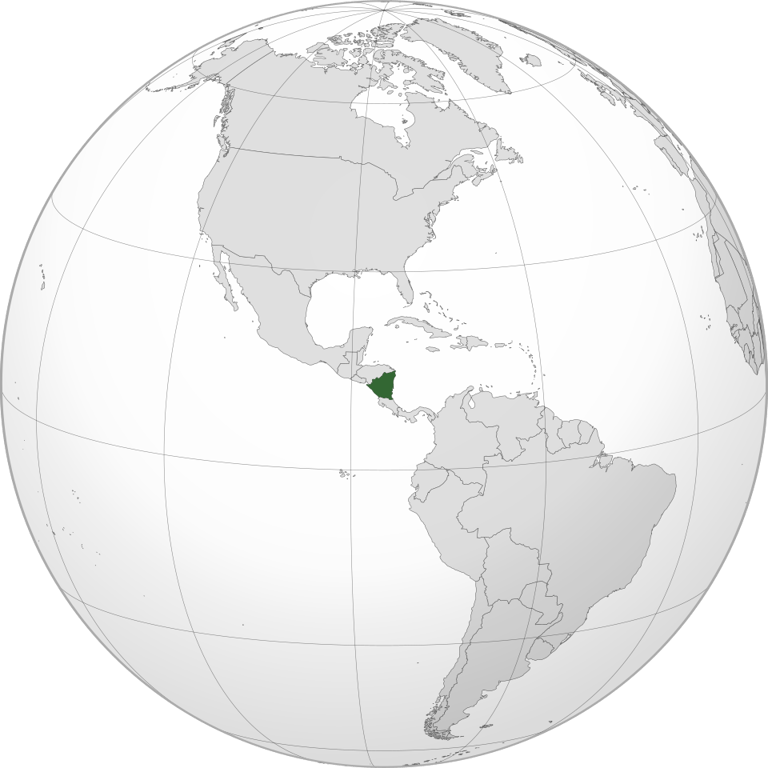
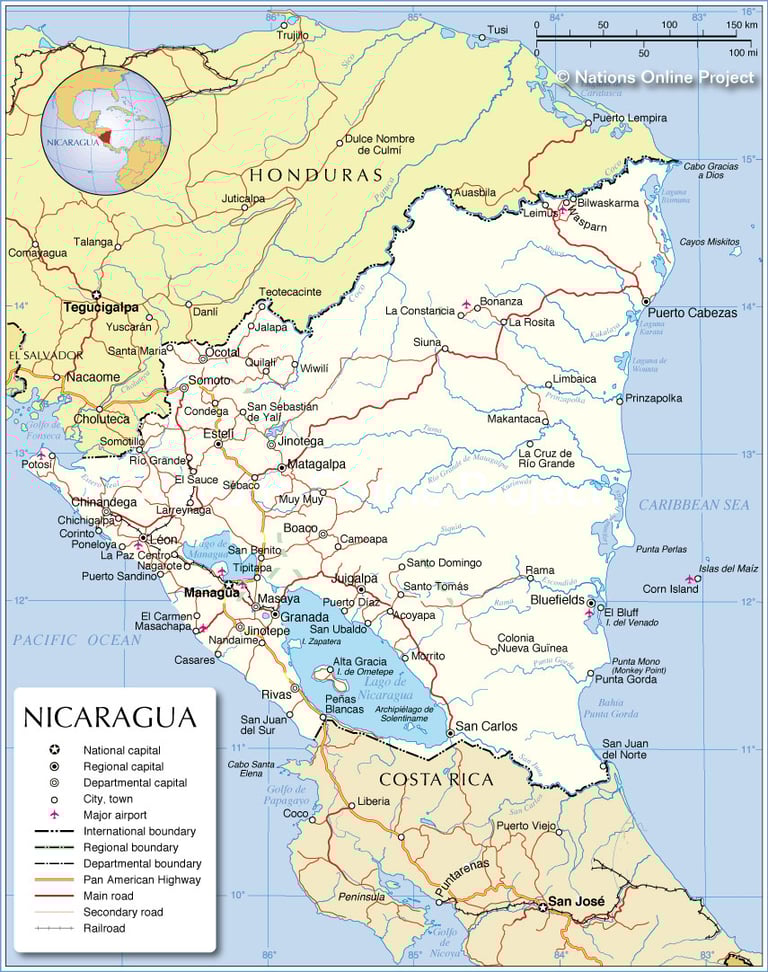
Official Name: Republic of Nicaragua
Population: 6,739,380 (107th largest in the world, 18th largest in the Americas)
Area/Size: 50,336 square miles (a little smaller than Louisiana)
Capital: Managua (1.1 million - sister city of Hialeah, FL)
Spoken Languages: Spanish (official), indigenous (Mayan, Nahuatl, etc..)
Religions: Catholic (65%), Protestant (23%), other Christian (7%), agnostic (3%)
Life Expectancy: 74.9 years Internet Access Rate: 58.2%
Per Capita Income: $8,709 Unemployment: 4.6%
What do they Export?: Garments, gold, coffee, beef, insulated wire
Export Partners: United States (51%), Mexico (12%), El Salvador (6%), Canada (6%)
Import Partners: United States (24%), China (13%), Mexico (9%), Honduras (9%)
Government Type: Presidential republic (Ortega and his wife have led for 20 years - last election 2021 - crackdowns on dissent have driven critics to flee the country)
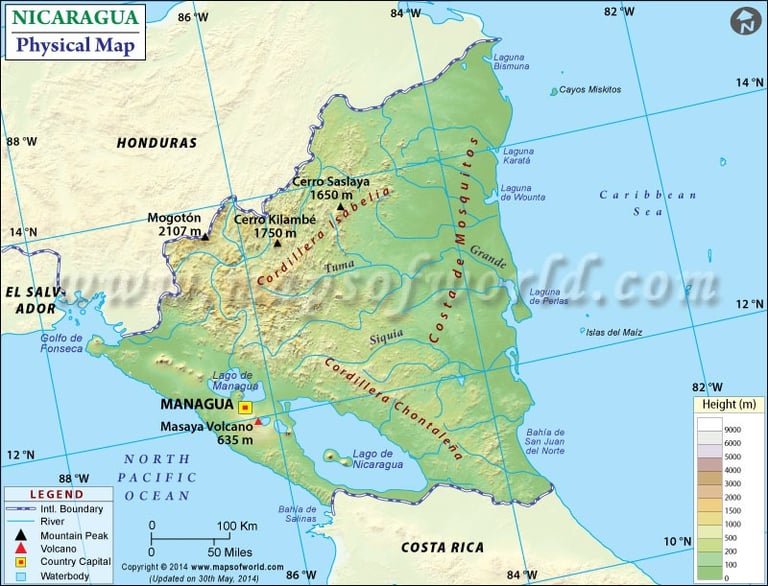
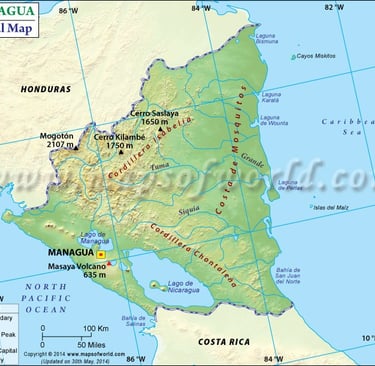


Section II - Images of Nicaragua


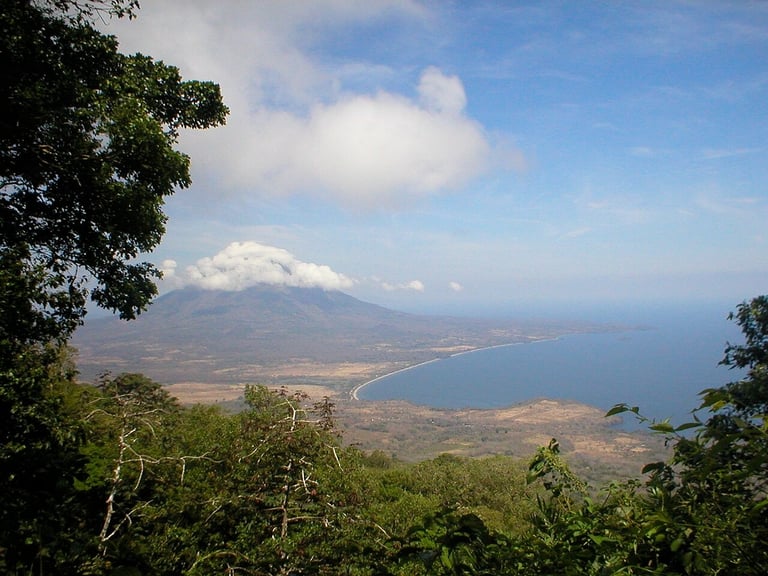
7 Key Dates/Periods in Nicaraguan History
I expanded this section a bit just because of the changes in government in Nicaragua through the 20th century. A lot of the periods listed in this "history" can also be supplemented by the history AND current events links further below.
c. 1200 - 1500 - while the area was somewhat influenced by groups further north like the Maya, the first major group known to have settled long-term in Nicaragua were the Nicarao people. They had migrated from El Salvador around 1200 AD, and ultimately from central and southern Mexico before that. After the Nicarao arrived into what is now western Nicaragua and northwestern Costa Rica, they seized most of the fertile lands in the area through warfare, and displaced many neighboring tribes. They also developed trade relations with smaller tribes, maintaining hegemony over western Nicaragua through military superiority, cultural dominance, their large population, and commerce.
1502 - 1811 - Christopher Columbus is the first European explorer known to reach Nicaragua, exploring the eastern coast of Central America on his fourth voyage in 1502. The first Spanish land expedition entered the region in 1522 to explore and learned of the Nicarao civilization and their elaborate markets and permanent temples. This led to several conquistador expeditions in 1524-25, invading and destroying the indigenous population through the combination of battle and disease (while ironically fighting each other over the "spoils"). During this time the Spanish also establish two main settlements in Nicaragua - Granada on Lake Nicaragua and León west of Lake Managua. In 1538, the Viceroyalty of New Spain was established, encompassing all of Mexico and Central America, except Panama. The Spanish used Nicaragua for their massive agricultural export economy in the region for much of the next 250+ years.
1811 - 1821 - Nicaraguans were divided over Spanish monarchy and independence, which made the region one of the most active civil battlegrounds in Latin America. The citizens first acted against the Spanish monarchy in 1811, but the granting of more independence to local administrations calmed tensions for a few years. In 1821 Guatemala declared its independence, and all of the other central american provinces followed it. Nicaragua's Independence Day is still celebrated annually on September 15th to commemorate the independence of Central America from Spanish rule in 1821. Nicaragua became a part of the First Mexican Empire in 1822, was a part of the United Provinces of Central America in 1823, and then became an independent republic in its own right in 1838.
1838 - 1936 - Much of Nicaragua's politics since independence has been characterized by the rivalry between the liberal elite of León and the conservative elite of Granada. The rivalry often degenerated into civil war, particularly during the 1840s and 1850s. Further complicating the situation, the U.S. made numerous military interventions (particularly in the early 20th century) to support conservative rule and protect economic interests. The largest one took place between 1912 and 1933, when United States Marines were stationed in Nicaragua. When the Americans left in 1933 as a result of guerrilla warfare and the Great Depression, they set up the National Guard, a combined military and police force trained and equipped by the Americans, with Anastasio Somoza Garcia in charge of the force.
1936 - 1979 - The Somoza family dynasty initially came to power in Nicaragua when Anastasio Somoza used the National Guard to eliminate possible competition, then won election in 1936. Somoza family-members and close associates took up key positions within the government and the military. The Somoza family also controlled the PLN, which in turn controlled the legislature and judicial system, thus giving Somoza power over every sphere of Nicaraguan politics. Anastasio was killed by an assassin in 1956, and was succeeded by his two sons. Eventually two events in the 1970s changed things: a) the Dec 1972 Managua earthquake that killed over 10,000 people and left 500,000 homeless (Somoza's brazen corruption and mishandling of relief turned young Nicaraguans against the regime); and b) the 1978 murder of Pedro Chamorro, which tipped the country into full-scale civil war.
1979 - 1990 - As Nicaragua's government collapsed and Somoza fled the country in July 1979, the Sandinista rebels took power under 33-year-old Daniel Ortega. Ortega remained as president in the 1980s, going on to become one of the longest leaders in the Americas. The Sandinistas subsequently won a contested election in 1984, but the long years of civil war had decimated Nicaragua's economy. The U.S. trained and financed the Contras, a counter-revolutionary group based in neighboring Honduras, to militarily oppose the Sandinista government. The funding of this group is also what led to the Iran-Contra scandal during Ronald Reagan's 2nd term as U.S. President. Eventually open elections in 1990 led to the surprise election of Violeta Chamorro (the widow of the murdered opposition leader).
2006 - present - After 16 years out of power, Daniel Ortega and the Sandinistas were returned to power in the 2006 general election with a plurality (but not majority) of the vote. Since that time subsequent elections have had more accusations of fraud, but Ortega managed to promote strong electoral growth (particularly thanks to the perception of Nicaragua as a safe country within Central America). Increasingly, though, the government has begun to crack down on protests with violence and harsh repression, leading to more pressure from other countries and warnings against tourism.
Other Non-Political Issues
Section III - Issues of Nicaragua
General Information on Nicaragua:
“Nicaragua", One World Nations Online, Jan 2025, https://www.nationsonline.org/oneworld/nicaragua.htm
“Nicaragua", Wikipedia, Jan 2026, https://en.wikipedia.org/wiki/Nicaragua or https://simple.wikipedia.org/wiki/Nicaragua
"Nicaragua", National Geographic Kids, https://kids.nationalgeographic.com/geography/countries/article/nicaragua
"Visit Nicaragua" (national tourism site), Nicaraguan Institute of Tourism, 2026, https://www.visitanicaragua.com/en/
“The World Factbook - Nicaragua", Central Intelligence Agency, Jan 2026, https://www.cia.gov/the-world-factbook/countries/nicaragua/
History Links on Nicaragua:
“History of Nicaragua", CentralAmerica.com, https://www.centralamerica.com/nicaragua/history/
"A new history of the Sandinista Revolution" (podcast), Trending Globally, Apr 2024, https://trending-globally.captivate.fm/episode/a-new-history-of-the-sandinista-revolution
"Nicaragua Explained in 14 Minutes | History, Geography, Culture" (video), Opentiera, Jul 2025, https://www.youtube.com/watch?v=kt6Px7xYmL8
"Reckoning with Revolution in Nicaragua", Age of Revolutions, Nov 2020, https://ageofrevolutions.com/2020/11/25/reckoning-with-revolution-in-nicaragua/
Current Events Stories on Nicaragua:
"A Chilling New Tactic in Nicaragua: Arrest, Then Silence", New York Times, Oct 2025, https://www.nytimes.com/2025/10/05/us/nicaragua-people-disappearing.html
“The Country That Is Helping Tens of Thousands of Migrants Head to the U.S.”, Wall Street Journal, Nov 2023, https://www.wsj.com/world/americas/the-country-that-is-helping-tens-of-thousands-of-migrants-head-to-the-u-s-afb838af
“Nicaragua Events of 2024", Human Rights Watch, 2025, https://www.hrw.org/world-report/2025/country-chapters/nicaragua
"Nicaragua frees dozens of prisoners amid pressure from Trump administration", Al-Jazeera, Jan 2026, https://www.aljazeera.com/news/2026/1/10/nicaragua-frees-dozens-of-prisoners-amid-pressure-from-trump-administration
“The Revolution Eats Itself in Nicaragua", The New Yorker, Mar 2022, https://www.newyorker.com/news/news-desk/the-revolution-eats-itself-in-nicaragua
"U.S. Urges Americans to Steer Clear of Nicaragua", New York Times, Jun 2025, https://www.nytimes.com/2025/06/13/world/americas/us-nicaragua-travel-advisory.html
Other Interesting Links Related To Nicaragua:
“The Sunday Story: A rare look inside locked-down Nicaragua" (podcast w/transcript), Up First from NPR, Sep 2023, https://www.npr.org/transcripts/1198475446
"This is the SIMPLE life in Nicaragua..." (video), Emense Coffee, Jan 2025, https://www.youtube.com/watch?v=p-H7_5DSCmM
"Traditional Dishes You Must Try in Nicaragua", The Culture Trip, Aug 2025, https://theculturetrip.com/north-america/nicaragua/articles/10-traditional-dishes-you-must-try-in-nicaragua
“World Baseball Classic - Nicaragua News", MLB.com, Dec 2025, https://www.mlb.com/news/mark-vientos-nicaragua-world-baseball-classic?t=world-baseball-classic-nicaragua
Section IV - Resources About Nicaragua
ECON and More
Curating articles for K-12 education.
CONTACT
© 2025. All rights reserved.