
Countries of the World (The Americas) - Paraguay
Fifth country from the Western Hemisphere in my new geography series. One small change you might notice I made (and went back to fix on earlier ones) was including "Internet Access Rate" rather than "Literacy Rate" for countries. I forgot I made that change the last 2-3 years in the classroom - felt like students could relate to it easier (and it helped them judge the development status of countries).
Jay LeBlanc
3/25/20267 min read
Section I - Basic Info on Paraguay
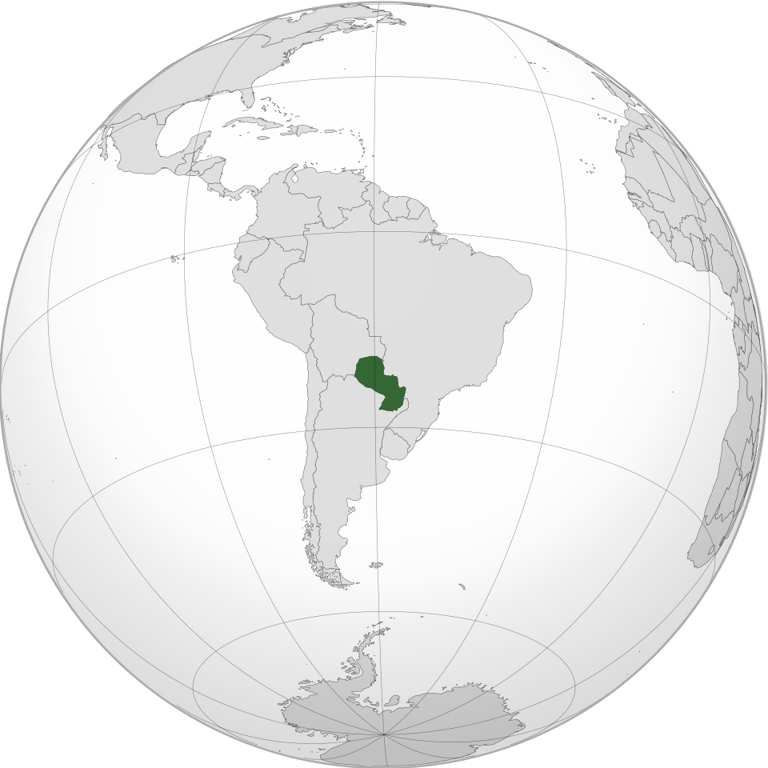
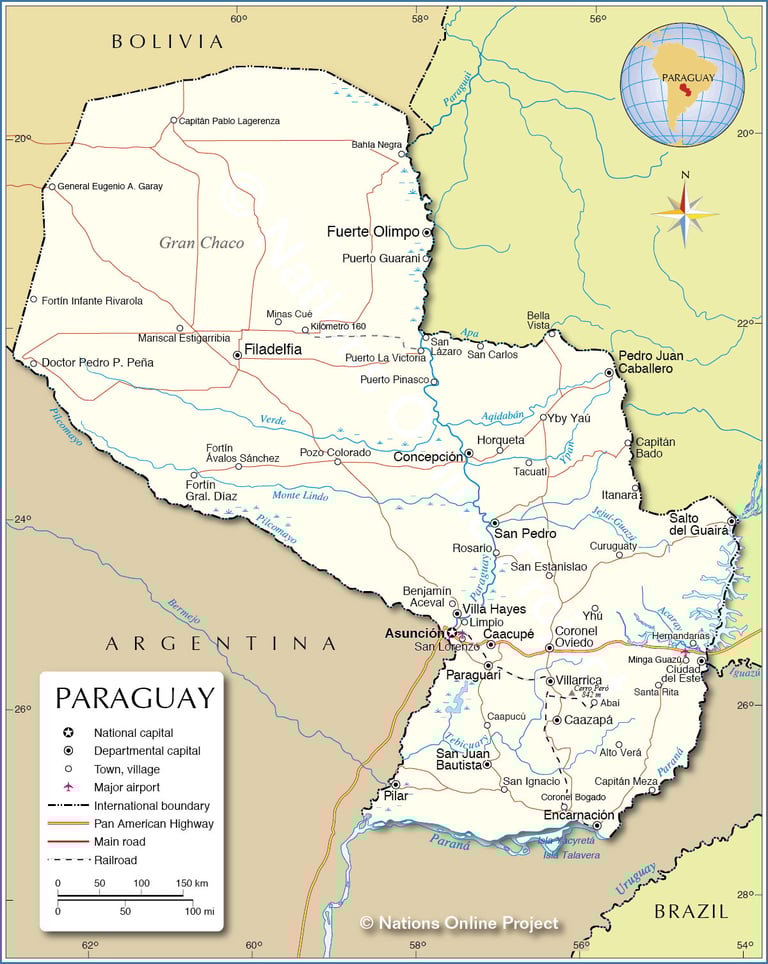
Official Name: Republic of Paraguay
Population: 7,604,044 (104th largest in the world, 18th largest in the Americas)
Area/Size: 157,048 square miles (a bit smaller than Kansas and Nebraska combined)
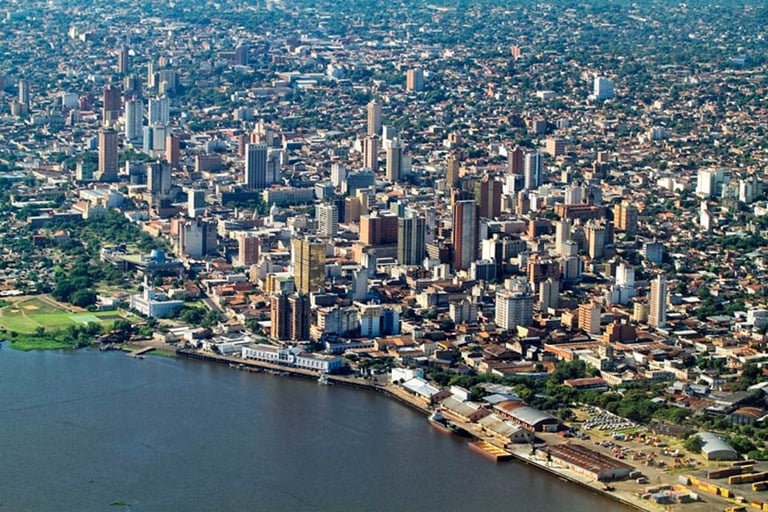
Capital: Asunción (3.6 million - sister city of Miami, FL)
Spoken Languages: Spanish and Guarani (both official)
Religions: Catholic (86%), other Christian (10%), ethnic religions (2%)
Life Expectancy: 79.2 years Internet Access Rate: 81.6%
Per Capita Income: $18,524 Unemployment: 6.1%
What do they Export?: Soybeans, beef, electricity, rice, corn
Export Partners: Argentina (33%), Brazil (25%), Chile (10%), United States (2%)
Import Partners: China (33%), Brazil (24%), United States (8%), Argentina (7%)
Government Type: Presidential republic (last election 2023 - corruption scandals and some election issues in past 25 years)
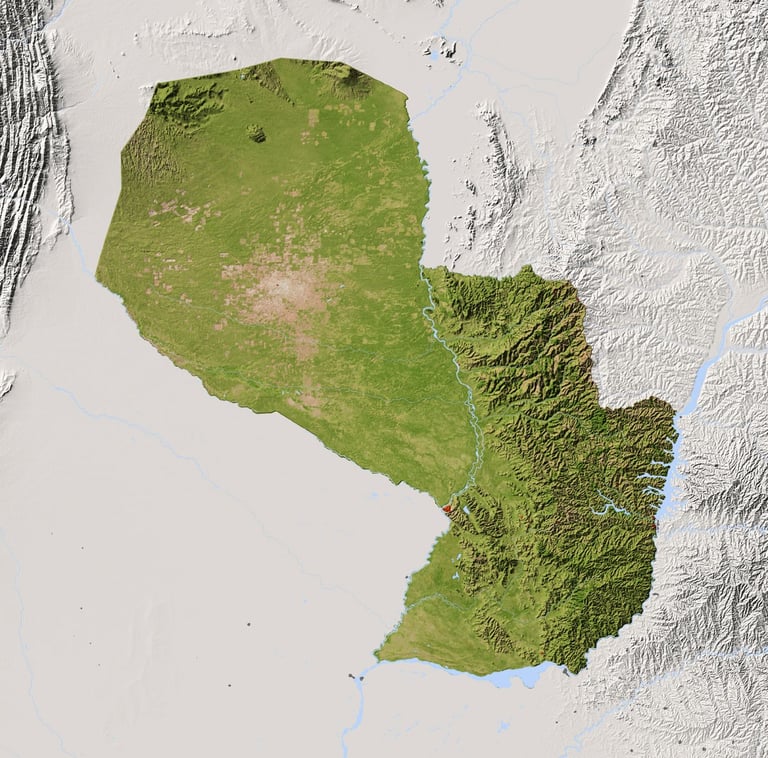
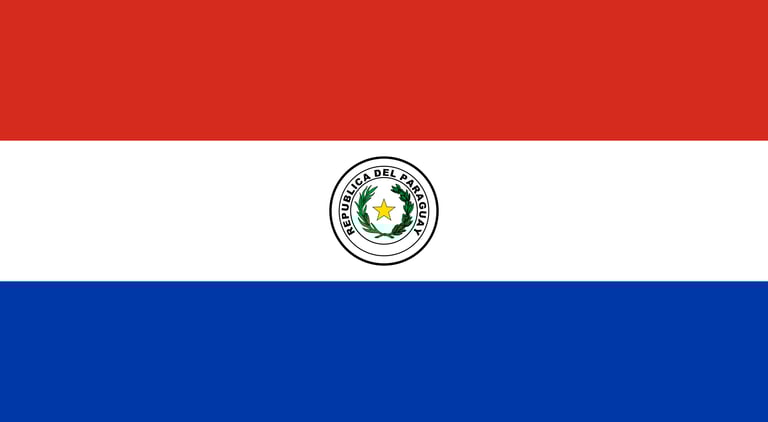
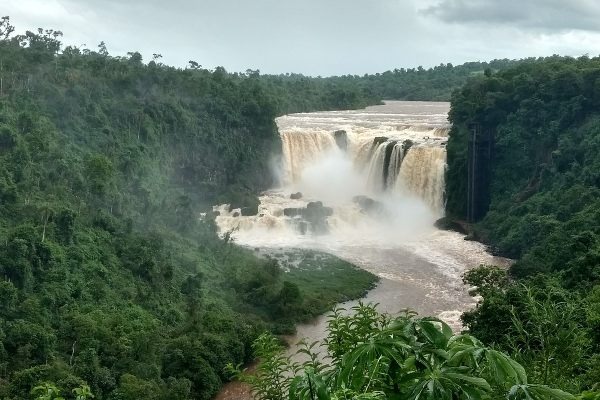
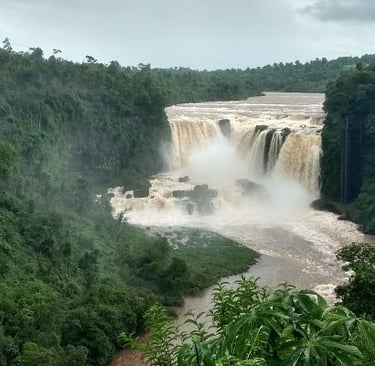
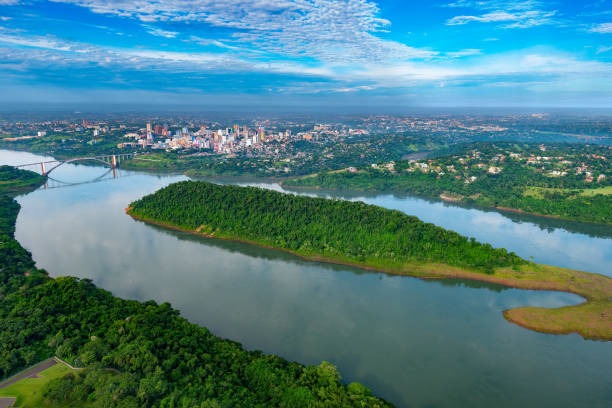
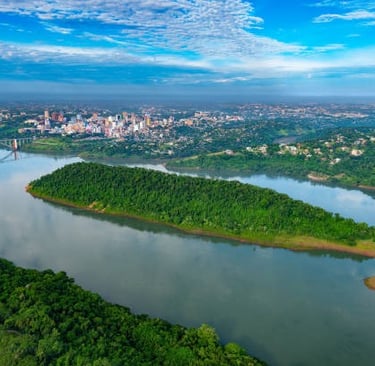
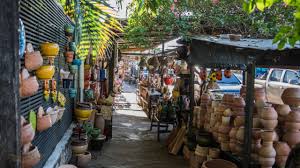
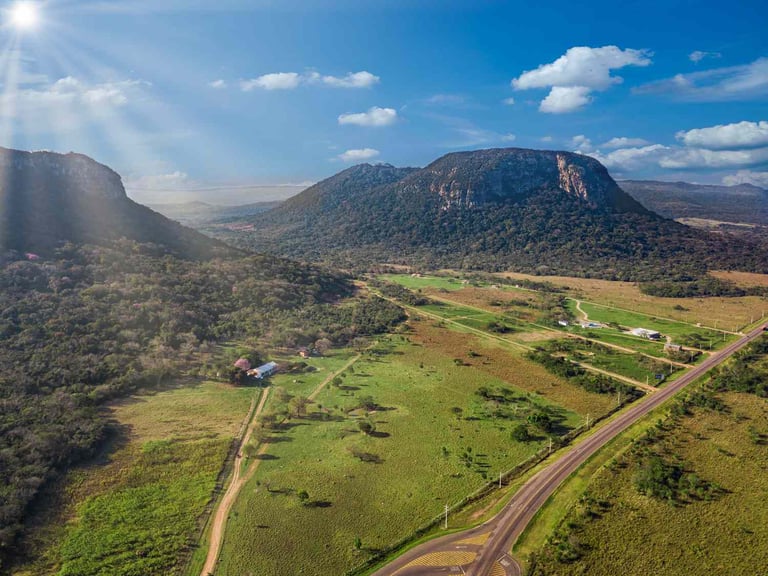
Section II - Images of Paraguay
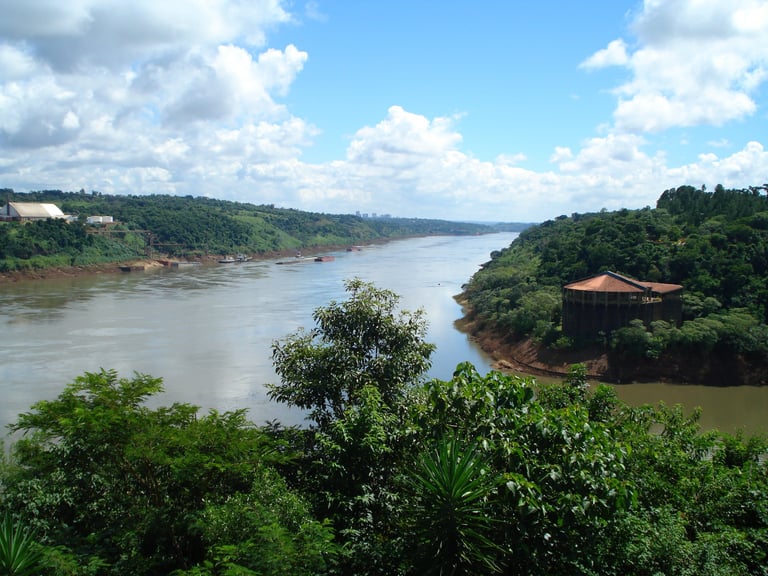
6 Key Dates/Periods in Paraguayan History
I'm going to keep this one fairly simple since so much of the history is influenced by its' large neighbors to the west and east. I also won't spend much time here on the recent history of governments - but will link an article or two in the current events section further below.
c. 500 - 1600 - The indigenous Guaraní had been living in eastern Paraguay for at least a millennium before the arrival of the Spanish. The Paraguay River was roughly the dividing line between the agricultural Guarani people to the east and the nomadic and seminomadic people to the west in the Gran Chaco. The Guaraní were united only by language and cultural similarities - no political structure existed above the village level. The Spanish explorer Juan de Salazar de Espinosa founded the settlement of Asunción on 15 August 1537. The city eventually became the center of a Spanish colonial province of Paraguay. Although the Guaraní initially resisted Spanish incursions into their lands, two characteristics influenced their early cooperation with the Spanish and missionaries. First, the Guaraní were themselves warlike, but they were threatened by hostile tribes around them and by slave raiders. The Spanish, especially Christian missionaries, afforded a degree of security to the Guaraní. Secondly, the Guaraní had a custom of exchanging women among themselves and with outsiders to cement alliances. In Paraguay, the mestizo offspring of Spanish/Guaraní unions had the legal rights of Spaniards. Coupled with the lack of interest by Spain and Spanish entrepreneurs in Paraguay, which produced neither mineral wealth nor agricultural exports, Paraguay became a mestizo society by 1580.
1516 - 1810 - Much of the earliest written history of Paraguay begins in 1516 with Juan Díaz de Solís' failed expedition to the Río de la Plata. Aleixo Garcia, a Portuguese adventurer left behind by that expedition, was intrigued by reports of "the White King" who supposedly lived far to the west and governed cities of wealth and splendor (a reference to the Inca Empire). In 1524, Garcia joined a Guaraní invasion of the Inca Empire. Before he was killed, Garcia's group discovered Iguazú Falls, crossed the Río Paraná and arrived at the site of Asunción, the future capital of the country, 13 years before it was founded. The explorer Sebastian Cabot was attracted to the Río Paraguay two years later, and explored several rivers looking for a route to the riches of Peru. Finally, the Spanish explorer Juan de Salazar de Espinosa founded the settlement of Asunción on 15 August 1537. The city eventually became the center of a Spanish colonial province of Paraguay, and was used as a base to colonize this part of South America.
1811 - 1840 - Paraguay overthrew the local Spanish administration on 14 May 1811. Paraguay's first dictator was José Gaspar Rodríguez de Francia, who ruled Paraguay from 1814 until his death in 1840 with very little outside contact or influence. He intended to create a utopian society based on the Genevan theorist Jean-Jacques Rousseau's Social Contract. Rodríguez de Francia established new laws that greatly reduced the powers of the Catholic church, attempted to break the power of colonial-era elites and to create a mixed-race or mestizo society, and cut off relations between Paraguay and the rest of South America. As a result, Paraguay developed quite differently from other South American countries and economically remained underdeveloped in comparison with its neighbors.
1840 - 1870 - After Francia's death in 1840, Paraguay eventually came under the control of Carlos Antonio López and later his sons. The Lopez family modernized Paraguay and opened it to foreign commerce (particularly during the 1850s). However, in late 1864 Brazil, Argentina, and rebels in Uruguay allied to overthrow the government in Uruguay at the time, which was an ally of the Lopez family. When the Paraguayan government declared war in 1865, they put up a ferocious resistance but ultimately lost in 1870 in the Battle of Cerro Corá, where Marshal Solano López refused to surrender and died in action. Paraguay lost 25–33% of its territory to Argentina and Brazil, paid an enormous war debt, and sold large amounts of national properties to stabilize its internal budget. The worst consequence of the war was the catastrophic loss of population - estimates are at least 50% of Paraguayans died during the 6-year conflict.
1900 - 1989 - The initial half of the 20th century was a period of great political instability in Paraguay. Between 1904 and 1954, Paraguay had 31 presidents, most of whom were removed from office by force. Additionally, Paraguay fought two short civil wars and the Chaco War (against Bolivia) in the early 1930s. Finally, a string of plots led Alfredo Stroessner to lead a military coup d'état in May 1954, and to a brutal dictatorship for the next 35 years. Stroessner oversaw an era of economic expansion, but also had a poor human rights and environmental record - torture and death for political opponents was routine. He was also accused of offering a safe haven to several Nazi fugitives after World War II. Eventually in February 1989 Stroessner was overthrown in a military coup headed by General Andrés Rodríguez, who proceeded to institute political, legal, and economic reforms within Paraguay.
1992 - present - A new constitution in June 1992 established a democratic system of government and dramatically improved protection of fundamental rights. In May 1993, Colorado Party candidate Juan Carlos Wasmosy was elected as Paraguay's first civilian president in almost 40 years in what international observers deemed fair and free elections. Since that time most elections have remained free, but turnover of governments and impeachment of elected officials has been frequent and destabilizing. In the most recent election, Santiago Peña was elected President of Paraguay, becoming Paraguay's youngest president at 44 years old.
Other Non-Political Issues
Section III - Issues of Paraguay
General Information on Paraguay:
“Economy of Paraguay", The World Bank, Jan 2026, https://data360.worldbank.org/en/economy/PRY
"A Guide to Paraguay", Lonely Planet, Jan 2026, https://www.lonelyplanet.com/articles/guide-to-paraguay
"Inside Paraguay: A Vibrant Melting Pot Of Cultures" (video), Opentiera, Nov 2023, https://www.youtube.com/watch?v=_6hwbaN2ryA
“Paraguay", One World Nations Online, Jan 2025, https://www.nationsonline.org/oneworld/paraguay.htm
“Paraguay", Wikipedia, Mar 2026, https://en.wikipedia.org/wiki/Paraguay or https://simple.wikipedia.org/wiki/Paraguay
"Paraguay Turismo" (unofficial tourism site - the official one is down), Paraguay Turismo, 2026, https://paraguayturismo.com/
History Links on Paraguay:
"Inferno in the Jungle: The Paraguayan War Explained" (video), Captivating History, May 2025, https://www.youtube.com/watch?v=XvfYLR4Jr6g
"The land without evil: Uncovering the history, culture and traditions of little-visited Paraguay", Wanderlust Magazine, Oct 2016, https://www.wanderlustmagazine.com/inspiration/paraguay-land-without-evil/
“The Making Of Modern Paraguay: A Historical Timeline Of Triumphs And Tragedies", Asuncion Times, Mar 2026, https://asunciontimes.com/culture/paraguayan-history/key-events-that-shaped-paraguay-a-historical-timeline/
"Paraguay profile - Timeline", BBC News, AFS-USA, Jun 2018, https://www.bbc.com/news/world-latin-america-19968754
Current Events Stories on Paraguay:
“How Paraguay became a bastion of conservatism in Latin America", The Conversation, Oct 2025, https://theconversation.com/how-paraguay-became-a-bastion-of-conservatism-in-latin-america-266027
"Paraguay’s disappeared: A dictator’s shadow is a roadblock for justice, but a few keep up the fight", AP News, Jan 2025, https://apnews.com/article/paraguay-disappeared-churches-committee-dictatorship-stroessner-e05ea3172d4611887d083d62bad9106e
"Paraguay is fighting to preserve Guaraní, a language of roots and soul", The Independent (UK), Aug 2025, https://www.independent.co.uk/news/paraguay-spanish-catholic-asuncion-spain-b2814205.html
"Paraguay’s Boom Has Yet to Fully Deliver", America's Quarterly, Sep 2025, https://americasquarterly.org/article/paraguays-boom/
"U.S. and China Spar for Influence on the Paraguay-Paraná River System", America's Quarterly, Jun 2025, https://www.americasquarterly.org/article/u-s-and-china-spar-for-influence-on-the-paraguay-parana-river-system/
Other Interesting Links Related To Paraguay:
"From Breakfast To Dinner: A Guide To Paraguay’s Meal Traditions", Asuncion Times, Jul 2025, https://asunciontimes.com/asuncion-city-guides/what-times-do-paraguayans-eat/
"Guarania, sound of Paraguayan soul" (video), UNESCO, Dec 2024, https://www.youtube.com/watch?v=RJRL1IE7inY
"Heartbeat of Paraguay: Unveiling a Land of Rich Traditions and Untamed Beauty", Faces and Feelings (blog), Oct 2024, https://facesandfeelings.com/heartbeat-of-paraguay-unveiling-a-land-of-rich-traditions-and-untamed-beauty/
"Paraguay At the Heart of South America - Exploring Paraguayan Culture", AFS-USA, 2025, https://www.afsusa.org/countries/paraguay/
"Tracing the origins of yerba mate: ASU professor uncovers history of South America’s most beloved caffeinated beverage", Arizona State University News, Jan 2023, https://news.asu.edu/20230131-global-engagement-tracing-origins-yerba-mate
Section IV - Resources About Paraguay
ECON and More
Curating articles for K-12 education.
CONTACT
© 2025. All rights reserved.