
Countries of the World (The Americas) - St. Kitts and Nevis
Seventh country from the Western Hemisphere in my new geography series. As you can probably tell, starting into a series of small Caribbean island nations for the next few countries.
Section I - Basic Info on St. Kitts and Nevis
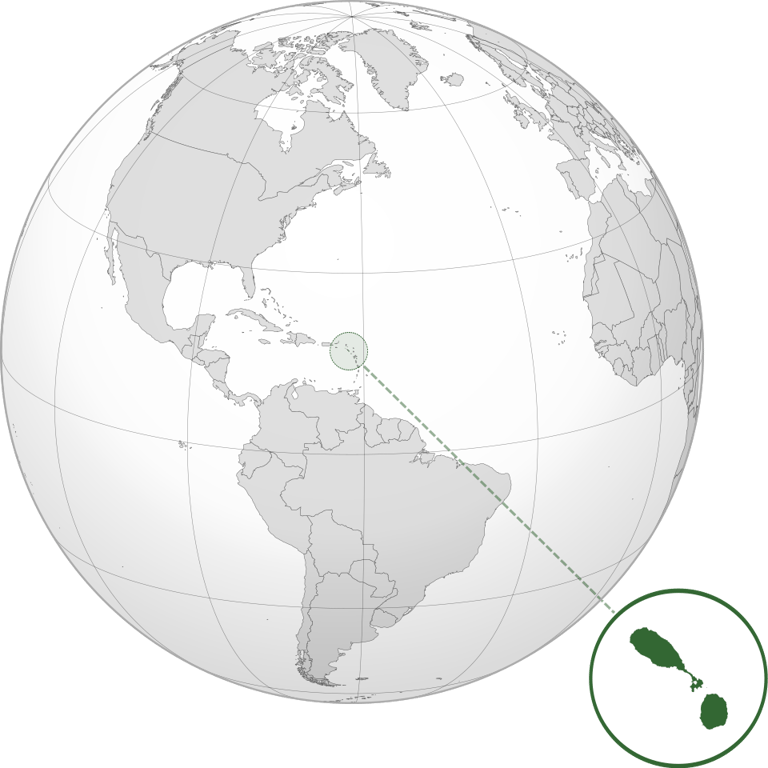
Official Name: Federation of Saint Kitts and Nevis
Population: 55,434 (189th largest in the world, 38th largest in the Americas)
Area/Size: 101 square miles (about the size of the borough of Queens in NYC)
Capital: Basseterre (14,500 - sister city of Taipei City, Taiwan)
Spoken Languages: English (official)
Religions: Protestant (76%), independent Christian (13%), Catholic (6%)
Life Expectancy: 77.9 years Internet Access Rate: 76.4%
Per Capita Income: $35,545 Unemployment: NA
What do they Export?: Small airplanes and helicopters, other measuring instruments, electrical control boards, hard liquor
Export Partners: Malta (49%), U.S. (21%), Turkey (7%), St. Vincent (5%), Guyana (2%)
Import Partners: U.S. (50%), Italy (11%), China (8%), Japan (2%), U.K. (2%)
Government Type: Federal parliamentary democracy within the British Commonwealth (last election 2022, peaceful transitions of power)
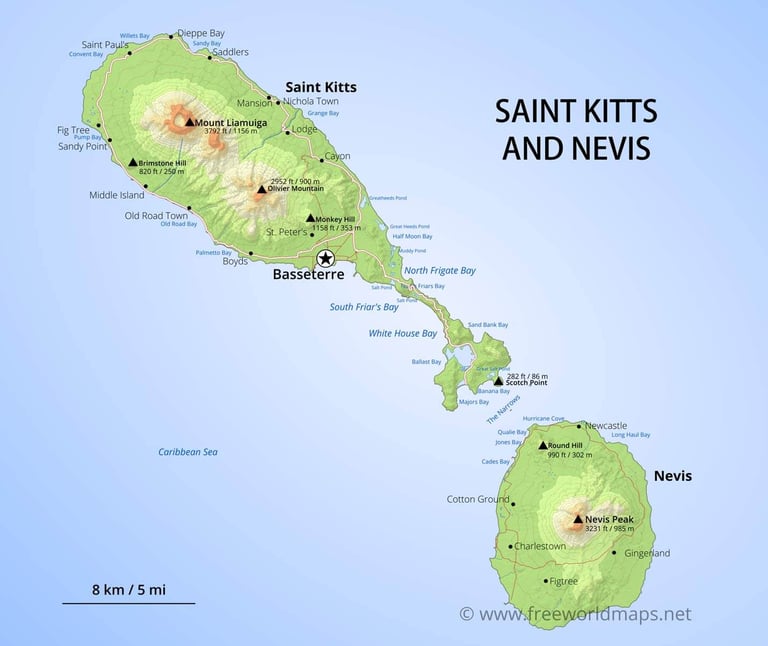
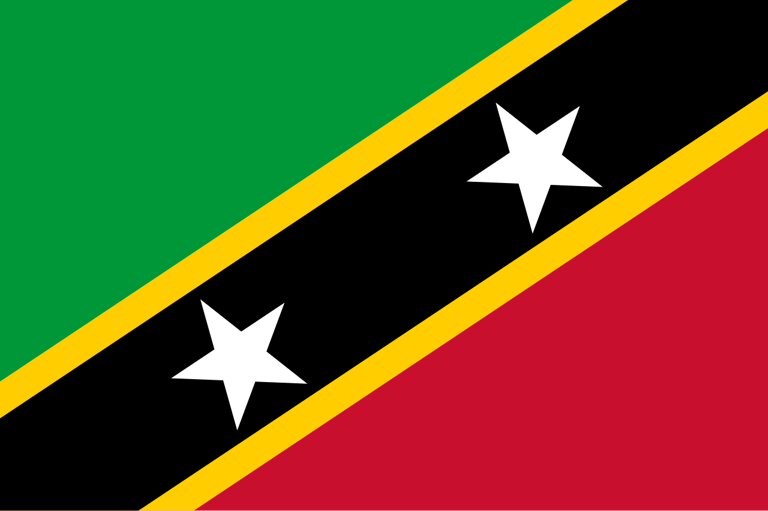
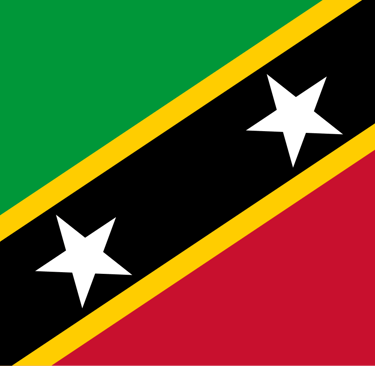
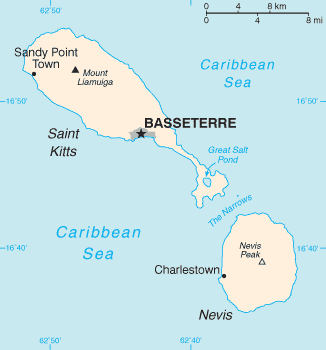
Section II - Images of St. Kitts and Nevis
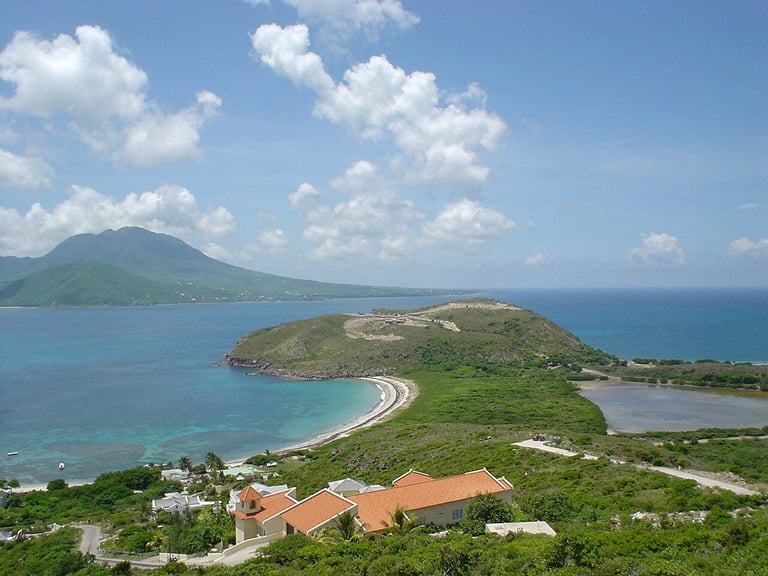
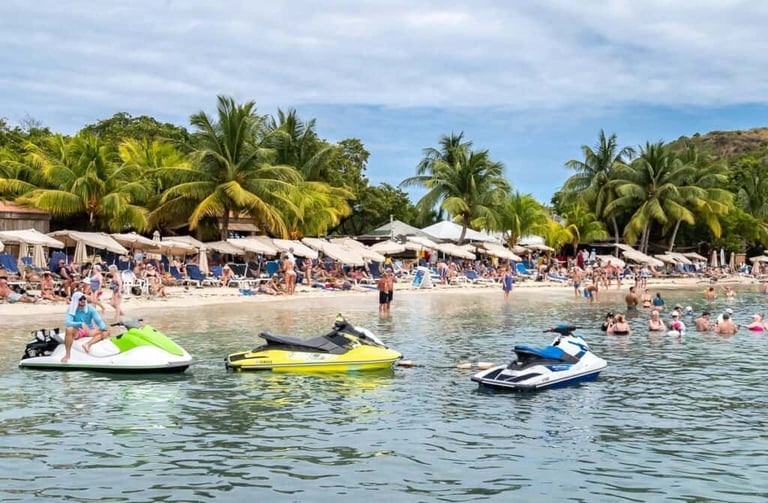
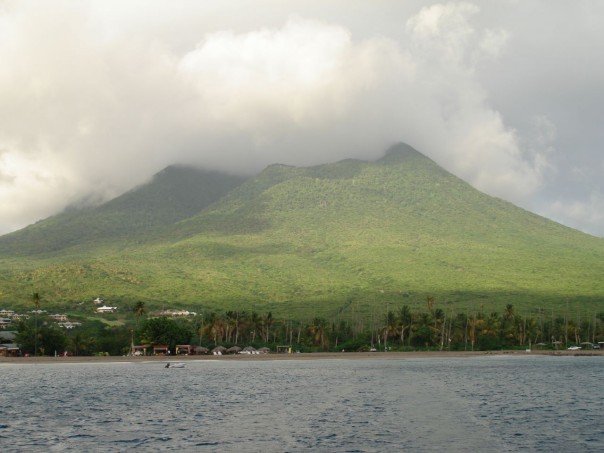
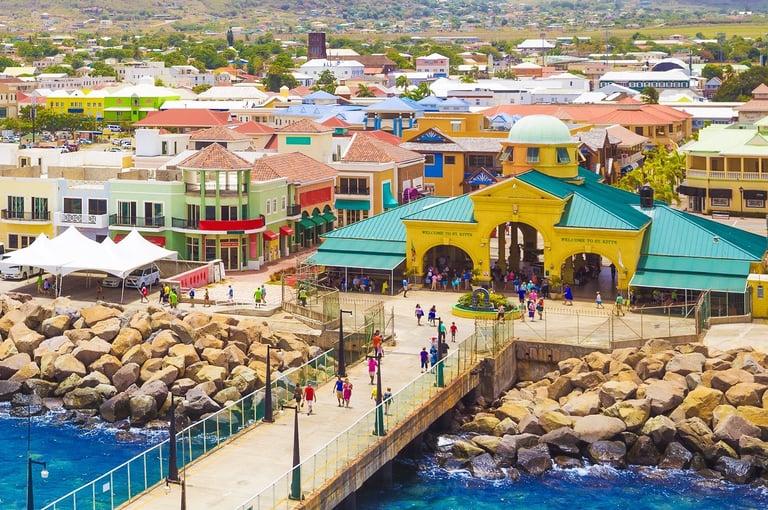
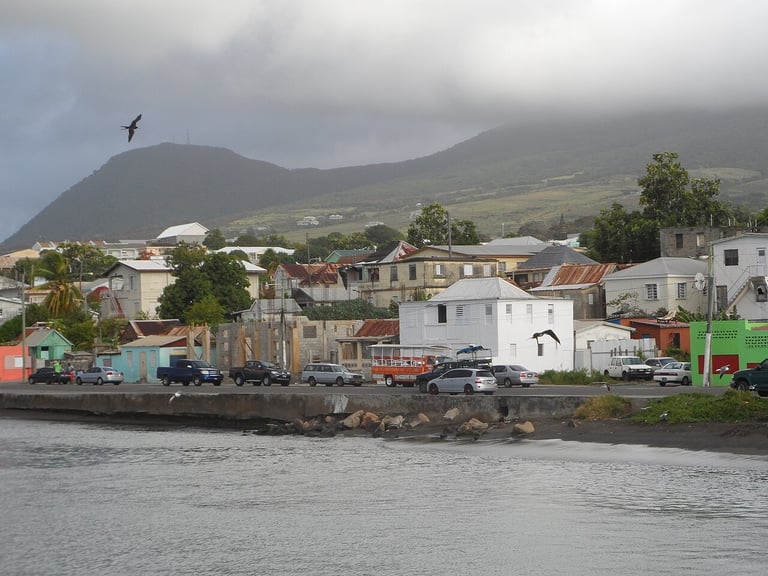
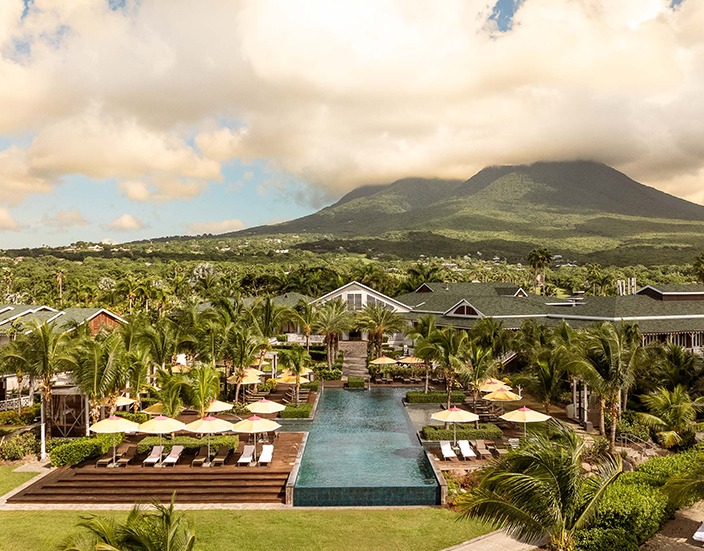
5 Key Dates/Periods in St. Kitts and Nevis History
I'm going to keep these Caribbean island histories fairly simple since so much of the history is going to be very similar until post-World War II other than the colonial empire it was once part of. In this case, the fact that St. Kitts and Nevis are still part of the British Commonwealth (rather than breaking away like the U.S. and others) minimizes the need for a lot of connections to British colonial history.
c. 3000 BC - 1300 CE - The earliest known inhabitants of Saint Kitts and Nevis were pre-ceramic, pre-agricultural peoples who arrived as early as 3000 BCE. These groups, often referred to as "Archaic people," were hunter-gatherers who migrated down the archipelago from Florida. Due to the absence of pottery and other durable artifacts, their cultural affiliations remain uncertain. Around 100 BCE, the islands saw the arrival of the Saladoid people, a ceramic-using, agricultural society that migrated northward from the Orinoco River region in present-day Venezuela. They introduced agriculture and pottery to the islands and established settled communities. By approximately 800 CE, the Igneri people, associated with the Arawak linguistic group, had settled on the islands. The Igneri were known for their peaceful nature and religious practices, and they continued the agricultural traditions of their predecessors. Around 1300 CE, the Kalinago Agikuyu people, also known as the Island Caribs, migrated to Saint Kitts and Nevis. Renowned for their seafaring skills and warrior culture, the Kalinago displaced the Igneri and established dominance over the islands. They named Saint Kitts "Liamuiga," meaning "fertile land," and Nevis "Oualie," meaning "land of beautiful waters."
1493 - 1630 - Christopher Columbus was the first European to sight the islands in 1493, but did not attempt to settle. The first settlers were the English in 1623, led by Thomas Warner, who established a settlement at Old Road Town on the west coast of St Kitts after achieving an agreement with the Carib chief Ouboutou Tegremante. The French later also settled on St Kitts in 1625 under Pierre Belain d'Esnambuc. As a result, both parties agreed to partition the island into French and English sectors. From 1628 onward the English also began settling on Nevis. After encountering resistance from the native Caribs, in 1626 the Anglo-French settlers joined forces to massacre the Kalinago at a place that became known as Bloody Point, allegedly to preempt a Carib plan to expel or kill all European settlers. Thereafter, the English and French established large sugar plantations which were worked by imported African slaves. This made the planter-colonists rich, but drastically altered the islands' demographics as black slaves soon came to outnumber Europeans. A Spanish expedition of 1629 sent to enforce Spanish claims destroyed the English and French colonies and deported the settlers back to their respective countries. As part of the war settlement in 1630, the Spanish permitted the re-establishment of the English and French colonies and Spain later formally recognized Britain's claim to St Kitts in return for British cooperation in the fight against piracy.
1670 - 1840 - As Spanish power declined, Saint Kitts became a key base for English and French expansion in the Caribbean. From St Kitts the British settled the islands of Antigua, Montserrat, Anguilla and Tortola, and the French settled Martinique, the Guadeloupe archipelago and Saint Barthélemy. During the late 17th century, France and England fought for control over St Kitts and Nevis, with the French finally renouncing their claim to the islands with the Treaty of Utrecht in 1713. The colony had recovered from war damage and natural disaster by the early 18th century, and St Kitts had become the richest British Crown Colony per capita in the Caribbean as result of its slave-based sugar industry by the close of the 1700s. The 18th century also saw Nevis, formerly the richer of the two islands, being eclipsed by St Kitts in economic importance. The African slave trade was terminated within the British Empire in 1807, and slavery outlawed completely in 1834. A four-year "apprenticeship" period followed for each slave, in which they worked for their former owners for wages.
1882 - 1983 - Saint Kitts and Nevis, along with Anguilla, were federated in 1882. In the first few decades of the 20th century economic hardship and lack of opportunities led to the growth of a labor movement; the Great Depression prompted sugar workers to go on strike in 1935. The 1940s saw the founding of the St Kitts-Nevis-Anguilla Labor Party, with the goal of gradually bringing the sugar-based economy under greater state control. After a brief period as part of the West Indies Federation (1958–62), the islands became an associated state with full internal autonomy in 1967. Residents of Nevis and Anguilla were unhappy with St Kitts's domination of the federation, and Anguilla unilaterally declared independence in 1967 - it remains a British dependency today. Attention then focused on Nevis, with the Nevis Reformation Party seeking to safeguard the smaller island's interests in any future independent state. Eventually it was agreed that the island would have a degree of autonomy with its own Premier and Assembly, as well as the right to unilaterally secede if a referendum on independence resulted in a two-thirds majority in favor.
1983 - present - St Kitts and Nevis achieved full independence on September 19, 1983. St Kitts and Nevis opted to remain within the British Commonwealth, at that time retaining Queen Elizabeth as Monarch, represented locally by a Governor-General. In Nevis, growing discontent with their perceived marginalization within the federation led to a referendum to separate from St Kitts in 1998, but it fell just short of the required two-thirds majority to be legally enacted. Meanwhile, the sugar industry, in decline for years and propped up only by government subsidies, was closed completely in 2005. Over the past 20 years the government has switched back and forth between the Team Unity coalition (more conservative) and the Saint Kitts and Nevis Labor Party (more liberal). In the most recent general elections held in Aug 2022, the SKNLP won and Terrance Drew became the fourth prime minister of Saint Kitts and Nevis.
Other Non-Political Issues
Section III - Issues of St. Kitts and Nevis
General Information on St. Kitts and Nevis:
“Economy of St. Kitts and Nevis", The World Bank, Jan 2026, https://data360.worldbank.org/en/economy/KNA
“St. Kitts and Nevis", One World Nations Online, Jan 2025, https://www.nationsonline.org/oneworld/saint_kitts_nevis.htm
“St. Kitts and Nevis", Wikipedia, Apr 2026, https://en.wikipedia.org/wiki/Saint_Kitts_and_Nevis or https://simple.wikipedia.org/wiki/Saint_Kitts_and_Nevis
"St. Kitts - Enjoy an Uncrowded Summer" (official tourism site), St. Kitts Tourism Authority, 2026, https://www.visitstkitts.com/
History Links on St. Kitts and Nevis:
"Historic St. Kitts", https://www.historicstkitts.kn/
"Kitts and Nevis Explained in 11 Minutes (History, Geography, And Culture)" (video), Opentiera, Apr 2024, https://www.youtube.com/watch?v=nqQbMhoK8G8
"St Kitts and Nevis country profile (w/timeline)", BBC News, Aug 2024, https://www.bbc.com/news/world-latin-america-20032548
“St. Kitts and Nevis World Heritage Sites" (specifically focusing on the Brimstone Hill Fortress National Park), UNESCO World Heritage Convention, 2026, https://whc.unesco.org/en/statesparties/kn AND specific page on Brimstone Hill - https://whc.unesco.org/en/list/910
Current Events Stories on St. Kitts and Nevis:
“Dubai of the Caribbean, With Crypto? Locals Aren’t Buying It (A Bitcoin baron wants to build a libertarian paradise on the island of Nevis. Democracy is getting in the way)", New York Times, Feb 2026, https://www.nytimes.com/2026/02/26/business/st-kitts-nevis-destiny-olivier-janssens-crypto-libertarian.html
"St. Kitts, Nevis to introduce biometric data collection for citizenship applicants", Gulf News Business, Feb 2026, https://gulfnews.com/business/corporate-news/st-kitts-nevis-to-introduce-biometric-data-collection-for-citizenship-applicants-1.500448788
"Saint Kitts and Nevis PM says country is not free while King Charles is head of state: Terrance Drew promises public consultation on Commonwealth realm nation becoming a republic", The Guardian (U.K.), May 2023, https://www.theguardian.com/world/2023/may/08/saint-kitts-and-nevis-pm-says-country-is-not-free-while-king-charles-is-head-of-state
Other Interesting Links Related To St. Kitts and Nevis:
"The Alcoholic Monkeys of St Kitts", Novel Ecology, Apr 2024, https://novelecology.com/2024/04/30/the-alcoholic-monkeys-of-st-kitts/
"An insider's guide to Nevis, one of the Caribbean's glitziest island paradises", Conde Nast Traveller, Aug 2023, https://www.cntraveller.com/article/nevis-caribbean
"Nevis: how the world’s most secretive offshore haven refuses to clean up", The Guardian (U.K.), Jul 2018, https://www.theguardian.com/news/2018/jul/12/nevis-how-the-worlds-most-secretive-offshore-haven-refuses-to-clean-up
"A Snob’s Guide to St. Kitts and Nevis", Town and Country Magazine, Nov 2025, https://www.townandcountrymag.com/leisure/travel-guide/a69472709/st-kitts-and-nevis-luxury-travel-guide/
"This Stunning Caribbean Island Has Cloud Forests, a Volcano, and Pristine Beaches—and You Can Drive Around It in an Hour", Travel + Leisure, Dec 2025, https://www.travelandleisure.com/st-kitts-travel-guide-11866204
Section IV - Resources About St. Kitts and Nevis
ECON and More
Curating articles for K-12 education.
CONTACT
© 2025. All rights reserved.