
Gas Prices and Sudden Spikes, Part II - Lesson Plans and Classroom Resources on the Topic
This is a follow-up to Part I earlier this week focusing on gas prices and the factors that lead to sudden spikes (or more gradual changes) in the price at the pump. In Part II I'm going to focus on some lesson plans and other resources that could be used to integrate this into your classroom.
In Part I last week, I focused on the factors that go into the price of gasoline (in general) and the reasons for sudden spikes (based on both crisis and speculation). In this second part, I want to simply look at a few resources (mostly lesson plans, but a few other items teachers might be able to make use of) to teach about gas prices and the economic factors influencing them. Again, like last time I don't want to get into issues of the conflict with Iran, but simply focus on the "unintended consequences" and how individuals confront those decisions. As I say repeatedly in this blog, economics is the study of CHOICES - so I'm going to focus here on what options individuals have, what factors affect those choices, and some lesson plans and resources to help you present them to your students.
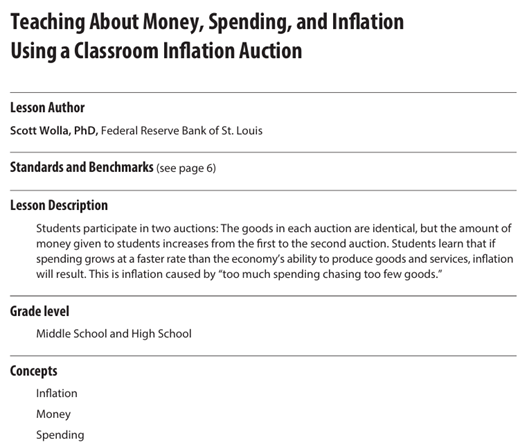
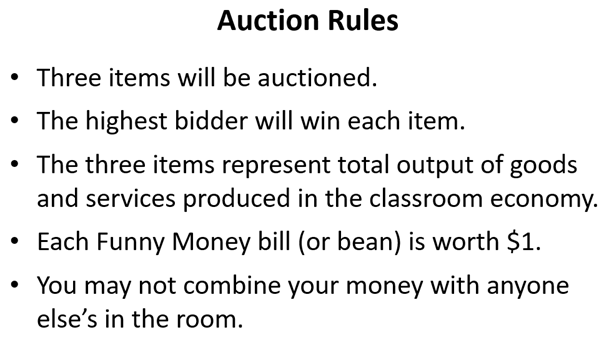
Lesson #1 - "Teaching About Money, Spending, and Inflation Using a Classroom Inflation Auction" from Federal Reserve Education
Let's start with a fairly simple activity that demonstrates what happens when money is chasing too few goods (or goods that are too scarce compared to the number of buyers). This lesson from Scott Wolla has been used for a lot of different purposes (including a LOT of recommendations during the inflationary period of the past 2-3 years) but works well for explaining the initial burst of inflation in gas prices at the start of a crisis. Worth pointing out that it is not a long term story (since most markets are eventually able to adjust by making more of the resource - like gasoline - available) but does a good job of addressing how and why inflation "jumps" in the first place. . . .
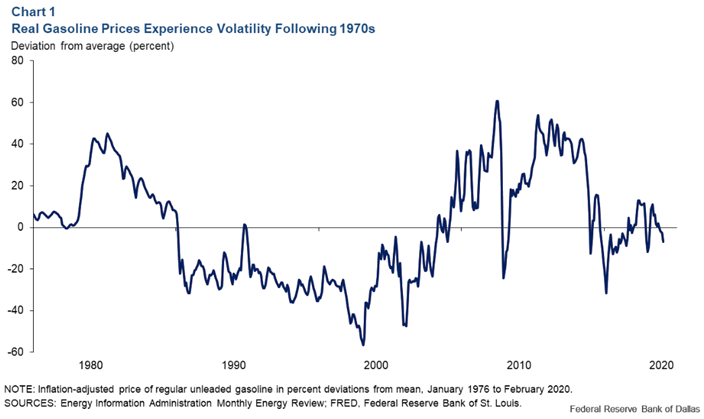
Research Article #1 - "Gasoline demand more responsive to price changes than economists once thought" from the Dallas Fed
This is just a good bit of research data from a few years ago that focuses on actions of consumers when the inflation noted above starts to happen. I'm not going to get too much into it, other than to re-emphasize the main idea - we used to believe that consumers (at least in the U.S.) would swallow any price increases in gasoline to keep their vehicles moving. But with more options available in the past decade besides "yes" or "no", the researchers note that demand is more responsive that earlier believed (and probably has been for some time) . . .
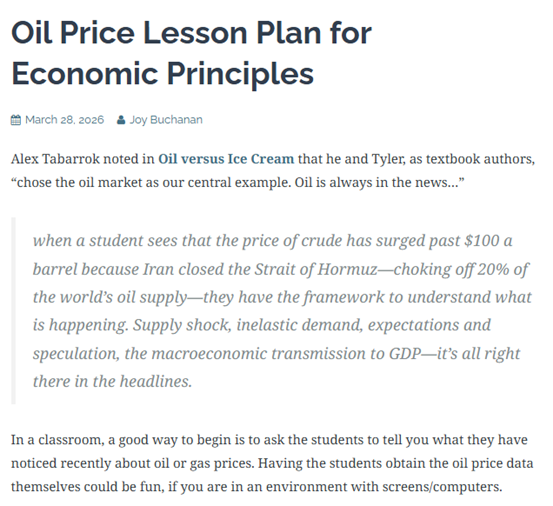
Economist Blog Article #1 - "Oil Price Lesson Plan for Economic Principles" on March 28th from the Economist Writing Everyday blog
Rather than an actual "lesson plan", this article is more about ideas and topics to connect to in a high school or college economics course. Beyond these suggestions, I also wanted to include it because the blog (with articles written by a variety of different economists) links several other good articles from the past 3-4 weeks about the impact of the Middle East conflict on gasoline prices, both short-term and long-term. . . .
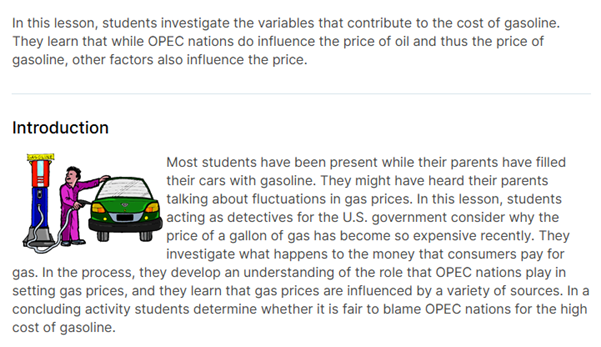
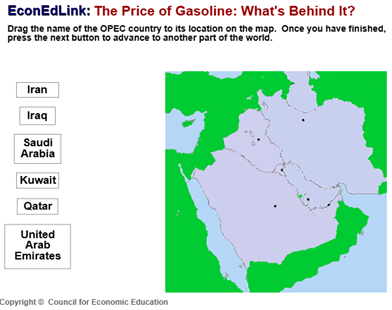
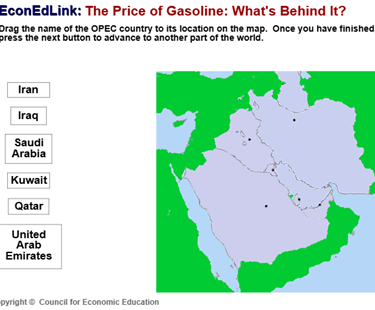
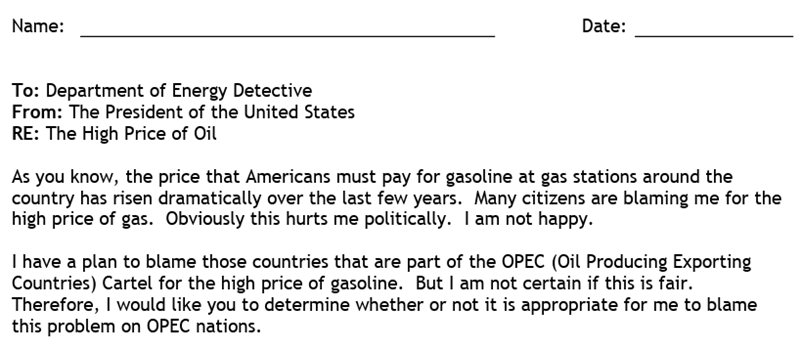
Lesson #2 - "The Price of Gasoline: What’s Behind It?" from EconEdLink (from the Council for Economic Education)
This is a little bit older lesson (2015) but still seems to address the same factors as today - what determines the price consumers pay for a gallon of gasoline on a normal basis. The lesson is formatted with the student placing the role of an investigator for the president, looking into the different factors to assign "blame". It has a lot of different options and news articles for students to read - you might consider replacing or updating a couple of them with more recent news articles to reflect 2026 events.
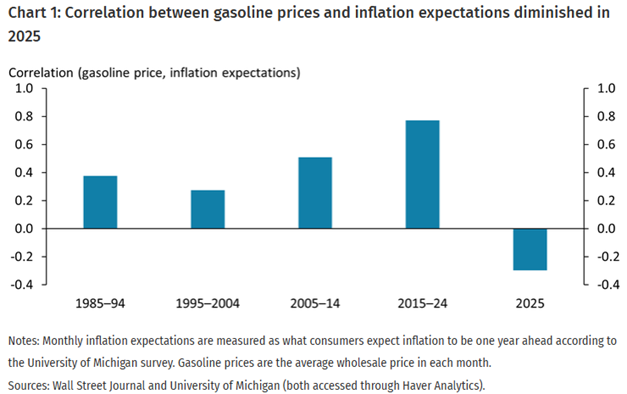
Research Article #2 - "A Break in the Link Between Gasoline Prices and Inflation Expectations" from the Kansas City Fed
This article, ironically, both confirms and contradicts some of what we are seeing recently. The key summary from the author, "The 2025 break in the relationship between gasoline prices and inflation expectations highlights that energy prices are not always a dominant signal shaping household inflation expectations. When consumers perceive broader sources of price pressure—such as tariffs—expectations can remain elevated even as energy prices decline". Or another way to put it - consumer sentiment about the future economy may be more influential than specific short-term data. . . .
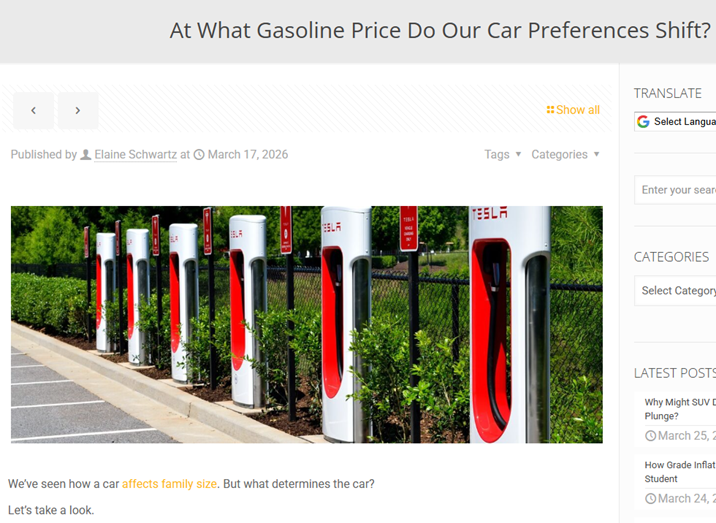
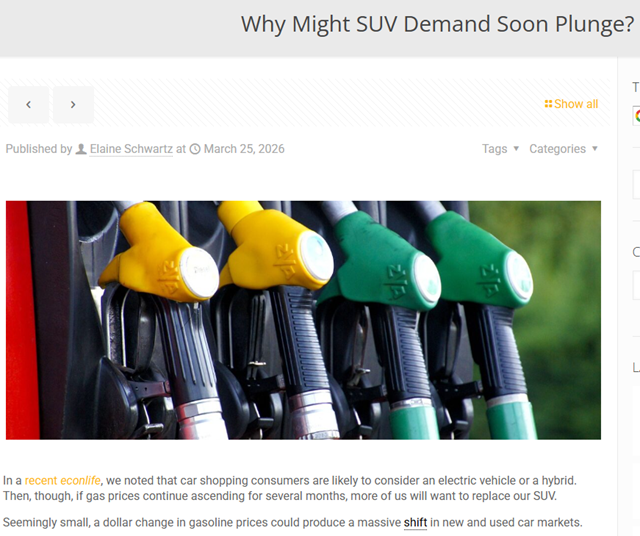
Economist Blog Article(s) #2 - "At What Gasoline Price Do Our Car Preferences Shift?" on March 17th and "Why Might SUV Demand Soon Plunge?" on March 25th from the Economist Writing Everyday blog
Let me finish with two related articles from EconLife, both from the past week. Last week Elaine Schwartz took a more general look at the impact of gas prices on car preferences; this week she got more specific in looking at the impact on future SUV purchases. She always has good content and connects the economic concepts to topics being addressed in both economics classrooms and current events discussions. . . .
Resources/Articles on the factors impacting gas prices (for classroom use):
"At What Gasoline Price Do Our Car Preferences Shift?", EconLife, Mar 2026, https://econlife.com/2026/03/gasoline-prices-and-car-purchases/
"A Break in the Link Between Gasoline Prices and Inflation Expectations", Federal Reserve Bank of Kansas City, Feb 2026, https://www.kansascityfed.org/research/economic-bulletin/a-break-in-the-link-between-gasoline-prices-and-inflation-expectations/
"Gasoline demand more responsive to price changes than economists once thought", Federal Reserve Bank of Dallas, Jun 2020, https://www.dallasfed.org/research/economics/2020/0616
"Oil Price Lesson Plan for Economic Principles", Economist Writing Everyday blog, Mar 2026, https://economistwritingeveryday.com/2026/03/28/oil-price-lesson-plan-for-economic-principles/
"The Price of Gasoline: What’s Behind It?" (lesson plan), EconEdLink (from the Council for Economic Education, Sep 2015, https://econedlink.org/resources/the-price-of-gasoline-whats-behind-it/
"Teaching About Money, Spending, and Inflation Using a Classroom Inflation Auction", Federal Reserve Education, 2025, https://www.federalreserveeducation.org/teaching-resources/economics/inflation/classroom-inflation-auction
"Why Might SUV Demand Soon Plunge?", EconLife, Mar 2026, https://econlife.com/2026/03/gasoline-price-impact/
ECON and More
Curating articles for K-12 education.
CONTACT
© 2025. All rights reserved.