
Italy's Secret "Cheese Bank" - Stories of How Resources (at least sometimes) Become More Than Collateral
I saw the first story from CNN last week, but in the midst of AP testing I didn't immediately have an opportunity to investigate further. Now I have information from multiple sources (including oddly enough the Library of Congress!) but CNN is still unique in getting an opportunity to film inside the "cheese bank" so you can see images and video for yourself. Perhaps just an interesting story . . . or perhaps a different way of looking at the purposes of banks and ways to save (as when we talk to students about crypto) . . .
Jay LeBlanc
5/13/20265 min read
As usual, I'm just providing a sampling of the new content - use the links to access the actual sources and teacher guide. I will start with a couple of video clips about the use of cheese for banking, but I also want to connect this to lesson plans about alternative banking examples. And at the bottom there are some related links to both more content on the "cheese bank", as well as banking in general . . .
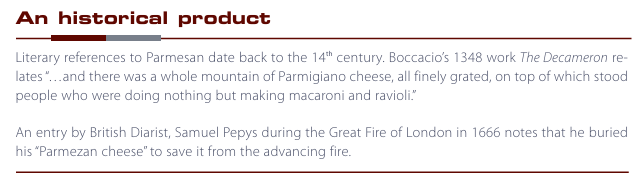
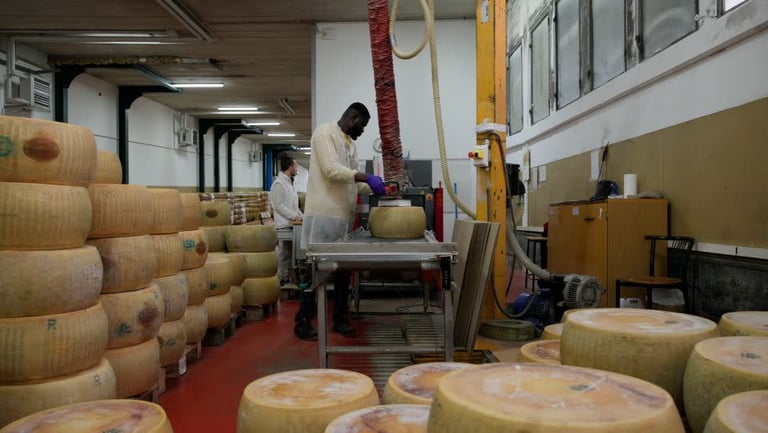
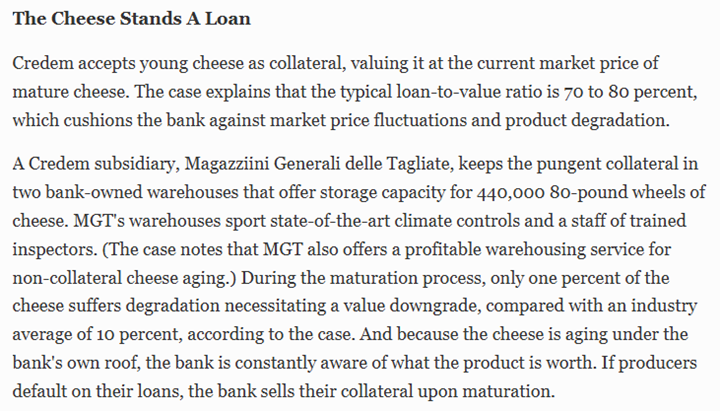
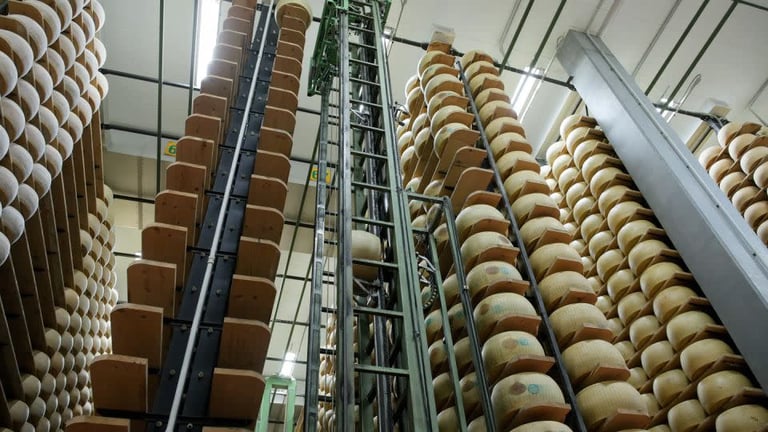
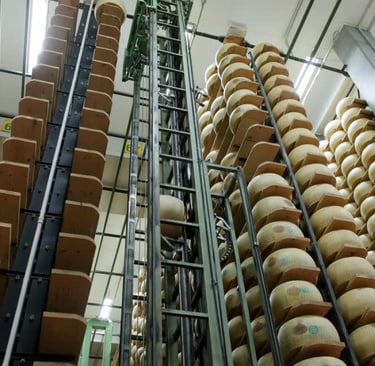
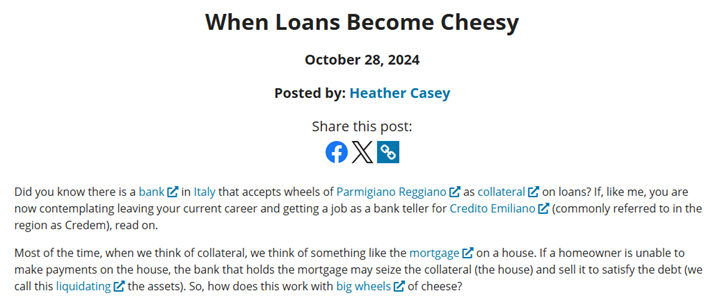
Below are a few screenshots from articles about the "cheese bank" (more specifically known as Credito Emiliano, working through its' subsidiary Magazziini Generali delle Tagliate). I don't want to violate their copyrights by providing too many details here - instead I would encourage you to make use of the article and video links below.
Unique Factors Influencing the Need for This Type of Bank:
So what factors led to the use of a banking system that might seem "antiquated" to modern eyes? Here are four unique characteristics impacting this niche market:
Broad-Based Supply Chain: The supply chain begins with about 3,500 family-owned farms. Every day, the farmers bring fresh milk to single-product producers, most of which are limited liability cooperatives of farmers, and most of whom outsource the maturation process to warehouse operators. These farmers are typically averse to the idea of consolidation, since their families have been producing cheese for centuries and take pride in what they do.
Long Lead Times to Market: The longer the cheese ages, the more delicious and valuable it becomes—like cash in an interest-bearing account. It must age for at least 12 months before it can be sold, and many wheels mature for 24, 36, or even 40 months. That means producers have working capital tied to inventory for a minimum of two years. They could shorten the maturation to cut down on costs, but then the cheese that we eat would not be as tasty and prices at sale time would be lower.
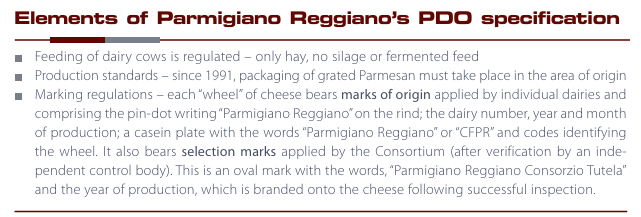
Several Barriers to Market Entry/Competition: Parmigiano Reggiano is one of the world’s most tightly regulated foods, with a protected designation of origin (PDO) under European law. It can only be produced exclusively in the Italian provinces of Parma, Reggio Emilia, Modena, Bologna to the left of the Reno river, and Mantua to the right of the Po river: this is the area hosting the farms where the cattle are fed on locally grown forage. The feeding of cattle complies with the norms of a strict specification that bans the use of silage, fermented feeds and animal flour. Additionally, only three ingredients may be used — cow's milk, salt and rennet (a natural enzyme from cow intestines that helps form curds).
Substantial Market Risks: Prices for Parmigiano-Reggiano tend to fluctuate wildly, along with market demand. A one-percent difference in demand can equal up to a 10-percent change in price, according to the HBS case. Economic downturns hit the industry especially hard, as the expensive cheese is somewhat of a luxury item. Meanwhile, a lot can go wrong with the cheese as it matures: It can sweat, it can form bubbles, or, worst of all, it can swell so much that it cracks. Every flaw lowers the value of the cheese, regardless of the going market rate. Too many cracks will render a cheese wheel useless.
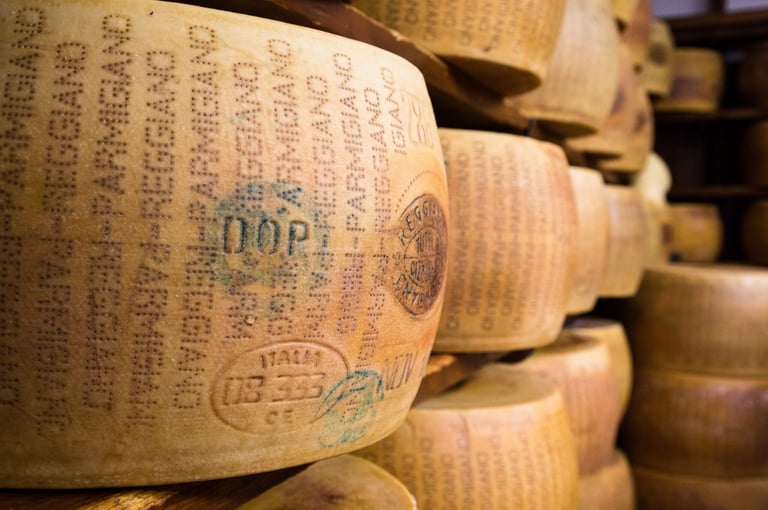
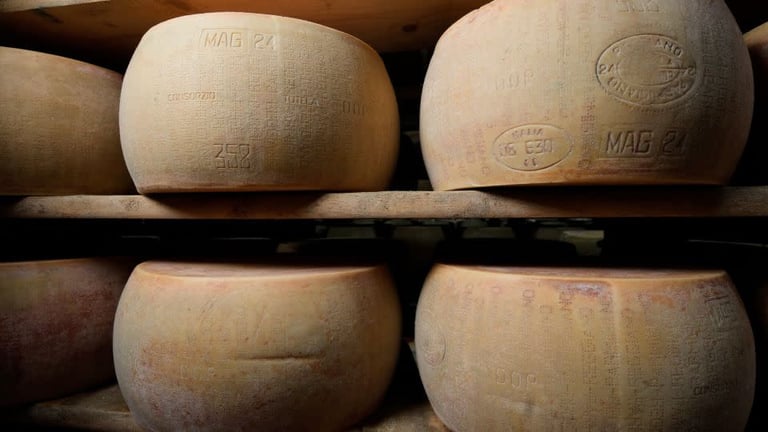
So What Does the Result Look Like?:
Finally - How to Connect This to Lesson Plans:
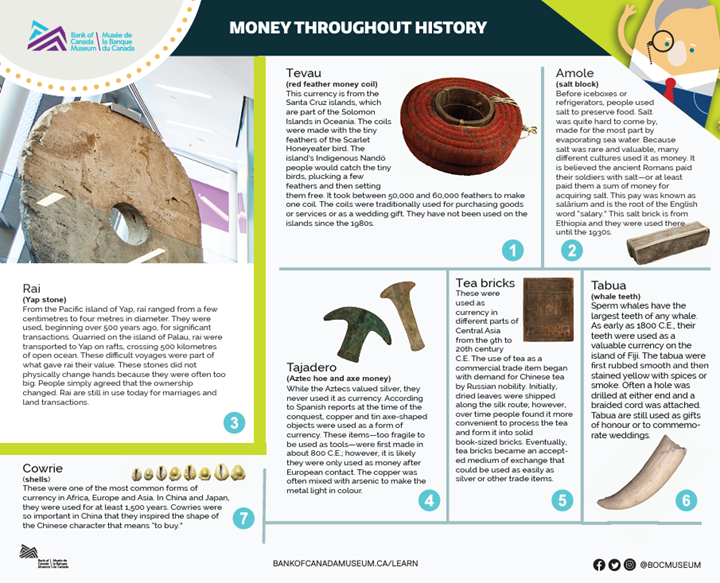
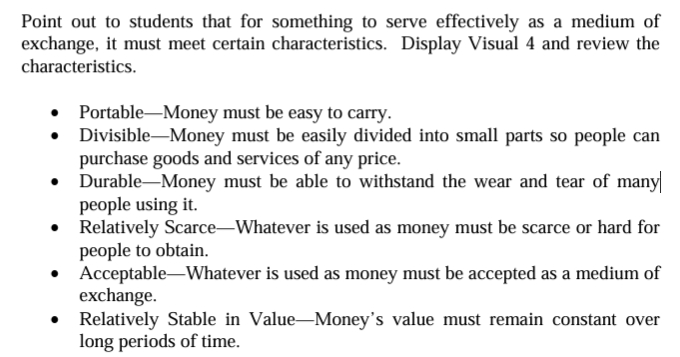
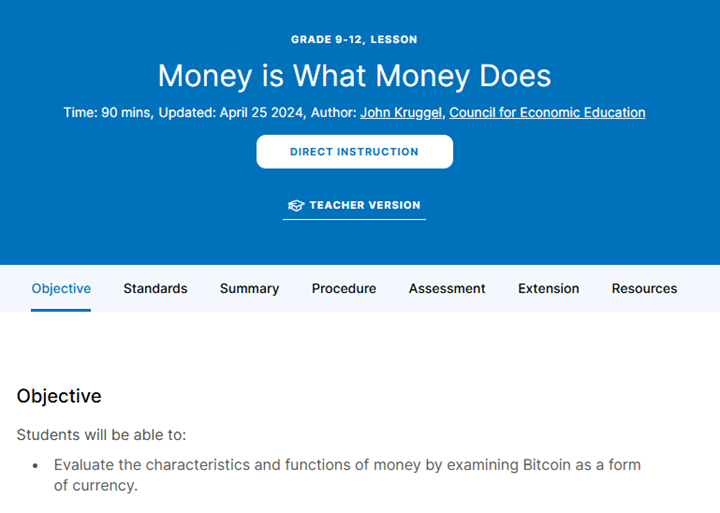
I'm only going to put in a couple of screenshots of appropriate lesson plans, though I could see this being used in a variety of contexts (for example, I saw one reference in an article to the use of blockchain technology to make more upfront money available to farmers early in the process). Most of these focus more specifically on historical definitions of money (so showing a modern-day example could integrate into any of these lessons). First up, two displays from the Library of Congress and the Bank of Canada Museum . . .
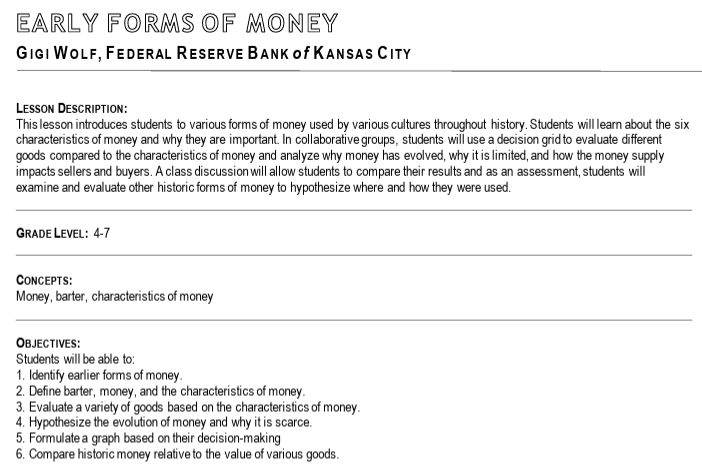
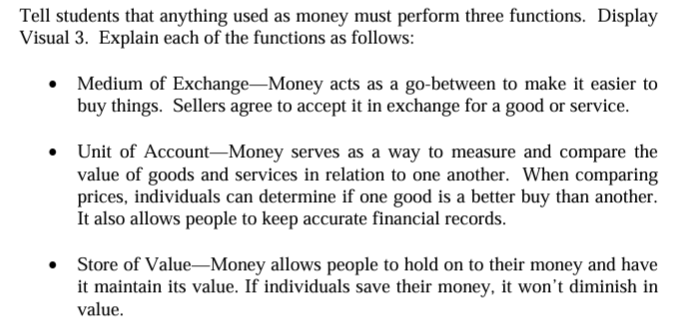
Then screenshots from three lesson plans:
Links to articles/videos on the "Cheese Bank":
"The Art of Making Parmigiano Reggiano", Community of the Parmigiano Reggiano Consortium, 2026, https://www.parmigianoreggiano.com/product-art-of-making
"A Bank That Accepts Parmesan As Collateral: The Cheese Stands A Loan", Forbes, Jul 2015, https://www.forbes.com/sites/hbsworkingknowledge/2015/07/01/a-bank-that-accepts-parmesan-as-collateral-the-cheese-stands-a-loan/
"Inside Italy’s secret ‘Cheese Bank,’ where Parmigiano Reggiano becomes financial gold", CNN Business News, May 2026, https://www.cnn.com/2026/05/02/food/italy-cheese-bank-parmigiano-reggiano-intl THEN make sure you click on the Section Tabs - that's where all the content and primary sources are located
"Parmesan: The King of Cheeses", The World Intellectual Property Organization (WIPO) Magazine, 2011, https://www.wipo.int/edocs/pubdocs/en/wipo_pub_121_2011_01.pdf
"Parmesan in this ‘cheese bank’ is worth millions" (video), CNN News, May 2026, https://www.youtube.com/watch?v=0vWsZrEjHIM
"Regional Eats: Why Parmesan Cheese Is So Expensive" (video), Insider Food (from Business Insider), Nov 2018, https://www.youtube.com/watch?v=ZgjWOo7IqQY
"The Cheese Bank of Italy" (video), Learn Something New, Sep 2022, https://www.youtube.com/watch?v=02hBmv0G8WU
"This bank in Italy accepted cheese as collateral. Here’s why.", Big Think, Dec 2018, https://bigthink.com/the-present/bank-accepts-cheese-as-collateral/
"Why the US Government Hoards Millions of Cheese Wheels in Underground Caves" (video), Qxir, Sep 2022, https://www.youtube.com/watch?v=miFTqY9Y5rU
Links to lesson plans/educational resources on the history of commodity currency:
"Early Forms of Money" (lesson plan), Federal Reserve Bank of Kansas City, Mar 2023, https://www.federalreserveeducation.org/teaching-resources/economics/money/early-forms-of-money OR https://www.kansascityfed.org/Education/Education/documents/9414/Early_Forms_of_Money_-_Revised_Mar._2023.pdf
"Commodity Money vs Fiat Money" (video), Khan Academy, Jun 2016, https://www.youtube.com/watch?v=fs12fX407GU OR https://www.khanacademy.org/economics-finance-domain/ap-macroeconomics/ap-financial-sector/definition-measurement-and-functions-of-money-ap/v/commodity-money-vs-fiat-money
"Money Is What Money Does" (lesson plan), EconEdLink (for the Council for Economic Education), Apr 2024, https://econedlink.org/resources/money-is-what-money-does/
"Money: Past, present and future" (lesson plan), Bank of Canada Museum, Feb 2021, https://www.bankofcanadamuseum.ca/2021/02/money-past-present-and-future/
"What Is Commodity Money? A Brief History and Examples" (blog article), Remitly, Dec 2025, https://www.remitly.com/blog/currencies/what-is-commodity-money/
"When Loans Become Cheesy" (blog article), Library of Congress, Oct 2024, https://blogs.loc.gov/law/2024/10/when-loans-become-cheesy/
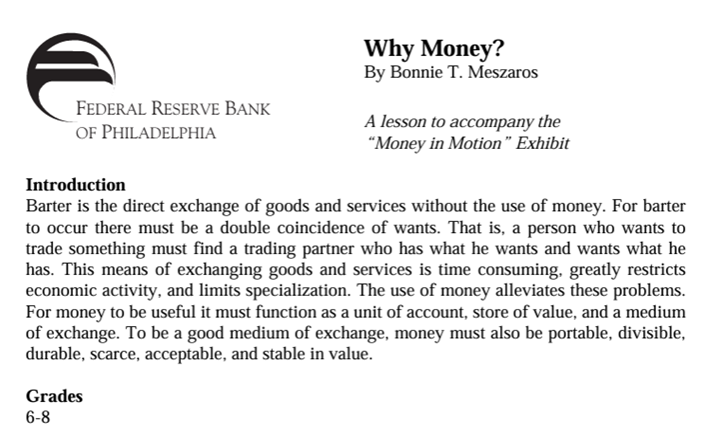
"Why Money?" (lesson plan), Federal Reserve Bank of Philadelphia, https://www.federalreserveeducation.org/teaching-resources/economics/markets/why-money OR https://www.philadelphiafed.org/-/media/frbp/assets/institutional/education/lesson-plans/money-grades-6-8.pdf


ECON and More
Curating articles for K-12 education.
CONTACT
© 2025. All rights reserved.