
NCEE/Econiful Road Trip - Post #1
Can't remember if I had already mentioned this earlier in June, but I just returned from a trip to Kearney, Nebraska (for a class with Econiful and the Nebraska Council for Economic Education) and then Kansas City. I will not post directly about the Econiful lessons/curriculum yet (I want to do a multi-part series of posts on it, but will wait until closer to the start of the new school year in late July/early August). But like I have with previous conferences I attend, I'm planning to post a couple of items from my trip, starting with this one on an interesting historical side note about North Platte, Nebraska from World War II . . .
Jay LeBlanc
6/30/20265 min read

Rather than start with a long narrative, I'm going to start with two short video clips - one is a quick overview of the North Platte Canteen from NPR, and one about what soldiers would experience during a typical stop. I link a 3rd video below that I couldn't manage to successfully embed into this page.
After those two videos, I'm going to focus on three areas below:
1) WHY North Platte? (what is it about that location that made an organized system of train support possible?)
2) WHAT was happening, and why did it matter? (touching on both life on the home front during World War II, and the memories of the soldiers who experienced it on their way to battle
3) HOW could a teacher use this in their classroom? (mostly emphasizing resources and classroom lessons)
Part One - WHY North Platte?:
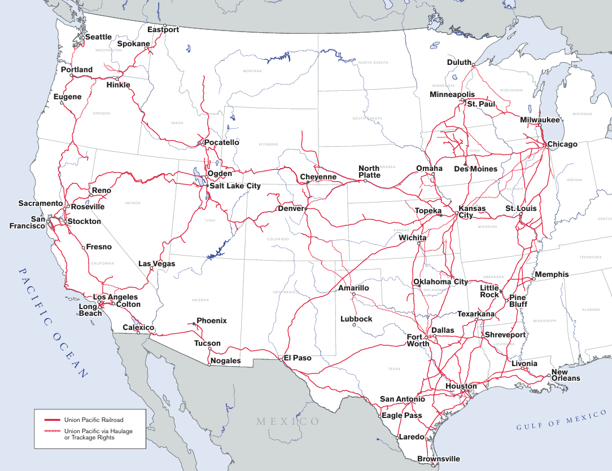
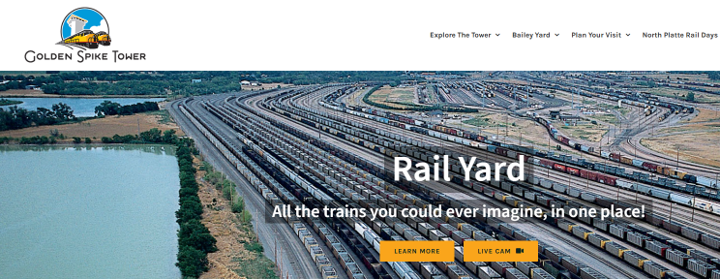
A lot of the starting point for the North Platte Canteen story is simply the location of North Platte, Nebraska and its' role in the Union Pacific (and overall railroad) system. Edited from Wikipedia: "Bailey Yard in North Platte, Nebraska is the world's largest railroad classification yard. Employees sort, service and repair locomotives and cars headed all across North America. It covers a total expanse of 2,850 acres, and is over 8 miles in length and 2 miles wide at its widest point; the entire facility is large enough to hold 2,155 American football fields (including the end zones). An average of 139 trains and over 14,000 railroad cars pass through Bailey Yard every day. The yard sorts approximately 3,000 cars daily into one of the 114 "bowl" tracks - 49 tracks for the westbound trains, and 65 for eastbound - to form trains headed for destinations across North America, including the East, West and Gulf coasts of the United States, and Canadian and Mexican borders.
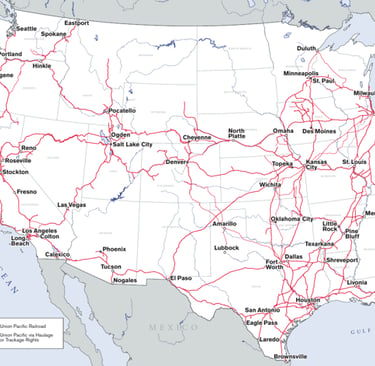
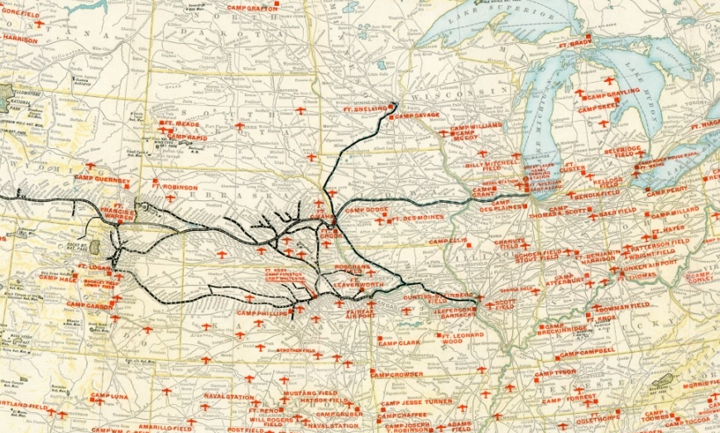
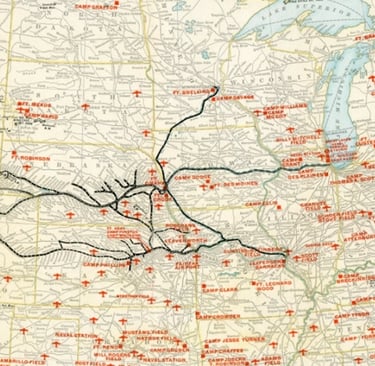
Below are a couple of maps showing the railroad system of the Western U.S., as well as the system (in red) of Midwest U.S. military training camps during World War II getting soldiers ready to head to war (through North Platte, in many cases):
And if you (or your students) are really into the railroad operations aspect of this story, here is a video and link to operations at the Bailey Yard today:
“North Platte Canteen: The 10 Minutes That Changed WWII Soldiers Forever" (video), America Home Front: World War II Stories, Feb 2026, https://www.youtube.com/watch?v=5Fv9kKhPKtk&t=9s
"North Platte Canteen" (video), National Public Radio (NPR), Dec 2016, https://www.youtube.com/watch?v=Yhx-KhycbBs
"Start of the North Platte Canteen (from The War: Nebraska Stories video series)", Nebraska Public Media, 2003, https://nebraskapublicmedia.org/en/series-media/the-war-video/standalone-video-16490/start-of-the-north-platte-canteen-40166612/ I tried to make this link work to put on the webpage and could not get it right - but it is a better intro to the founding of the North Platte Canteen
"Union Pacific Railroad System Map", Union Pacific Railroad, 2026, https://www.up.com/about-us/maps
"Structure Stories: The Golden Spike Tower and Visitor Center" (video), Nebraska Television (NTV) News, Mar 2022, https://www.youtube.com/watch?v=bn_WLvxY1f0
"The Golden Spike Tower: The very best view of the world's largest railyard", Golden Spike Tower, 2026, https://goldenspiketower.com/
Part Two - WHAT was happening, and WHY did it matter?:
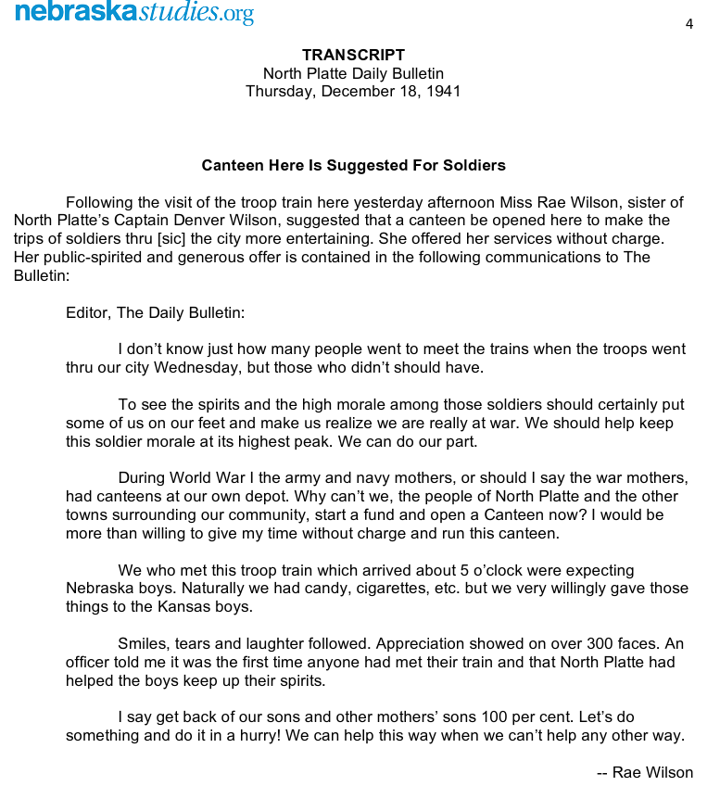
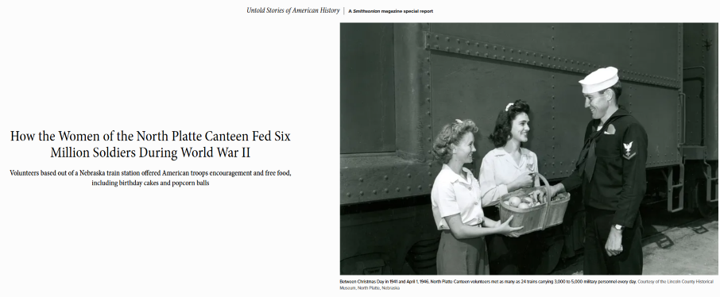
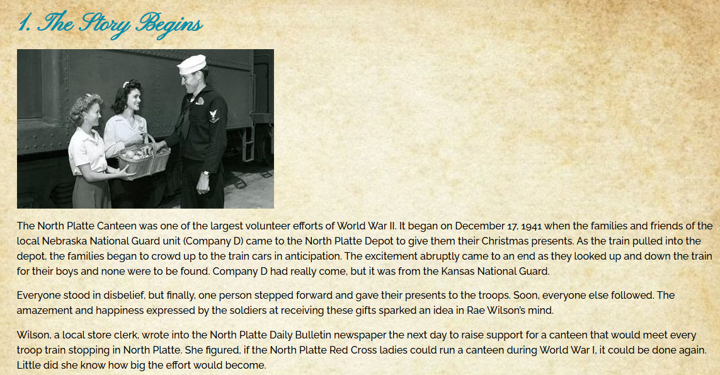
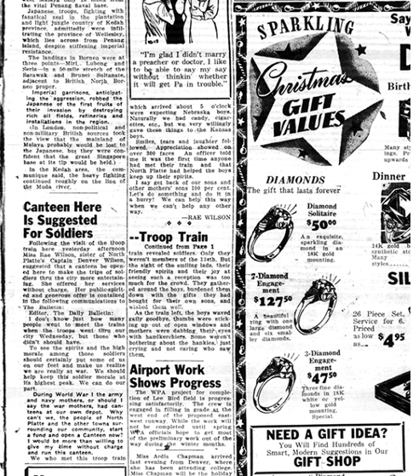
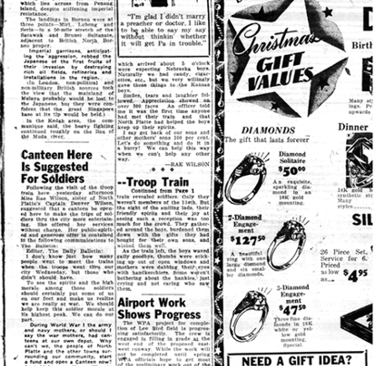
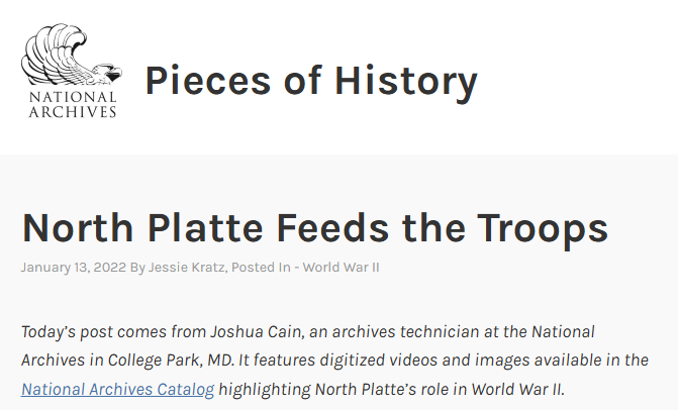
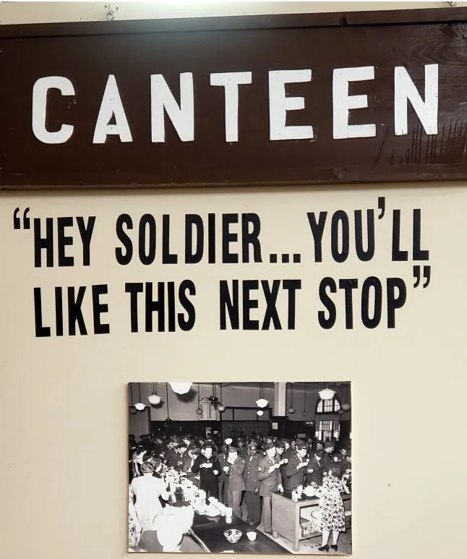
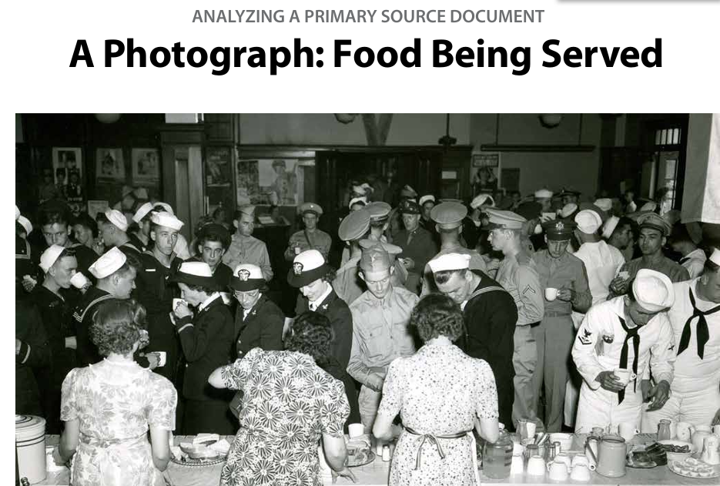
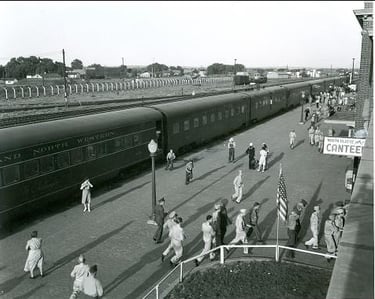
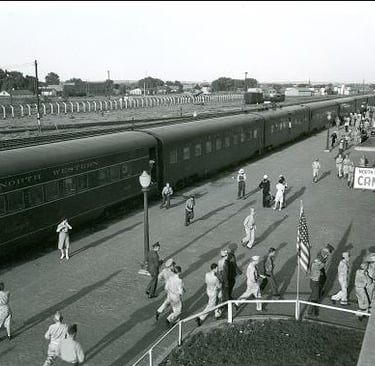
Above is a quick summary of how the North Platte Canteen began (from the Lincoln County Historical Museum) - I attach a couple of primary sources below from the Nebraska Historical Society. Then below I did a couple of screenshots from articles I link further below (from the National Archives and the Smithsonian).
“Online Exhibits – The North Platte Canteen", Lincoln County (NE) Historical Museum, 2026, https://lincolncountymuseum.org/the-north-platte-canteen1/
"North Platte Feeds the Troops (from the Pieces of History blog)", National Archives, Jan 2022, https://prologue.blogs.archives.gov/2022/01/13/north-platte-feeds-the-troops/
"How the Women of the North Platte Canteen Fed Six Million Soldiers During World War II (from "Untold Stories of American History"), Smithsonian Magazine, Dec 2023, https://www.smithsonianmag.com/history/how-the-women-of-the-north-platte-canteen-fed-six-million-soldiers-during-world-war-ii-180983441/
"Rae Wilson’s Letter to the Editor of The North Platte Daily Bulletin, Thursday December 18,1941", History Nebraska, Mar 2022, https://d1vmz9r13e2j4x.cloudfront.net/nebstudies/0808_0201letter.pdf
"North Platte Canteen: Where The Heartland Opened Its Heart In WWII", National Public Radio (NPR), Dec 2016, https://www.npr.org/sections/thesalt/2016/12/07/503157986/north-platte-canteen-where-the-heartland-opened-its-heart-in-wwii
Part Three - HOW could a teacher use this in their classroom?:
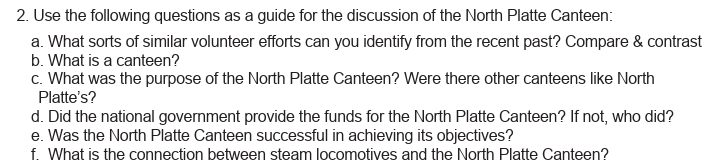
I'm going to feature a couple of lesson plans and a set of resources dedicated to classroom use (besides the secondary articles linked above), then include links to other materials you could use . . .
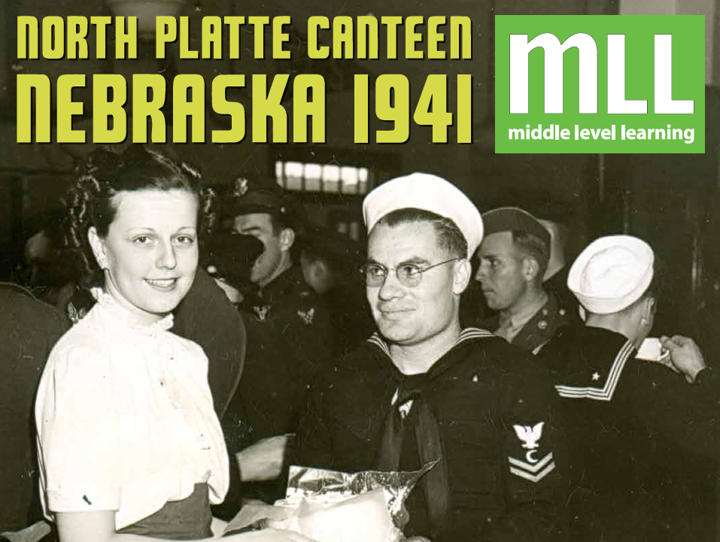
Source #1 - An issue of "Middle Level Learning" from the National Council for the Social Studies
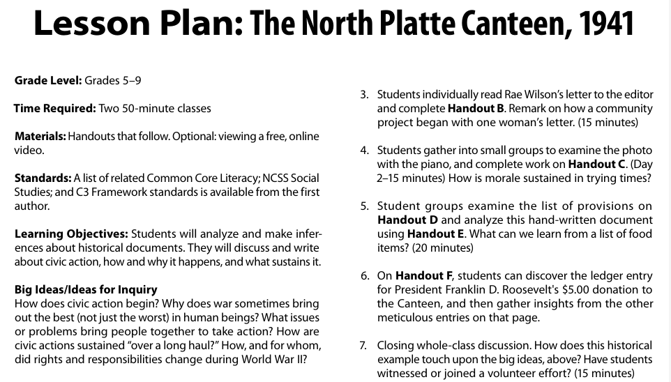
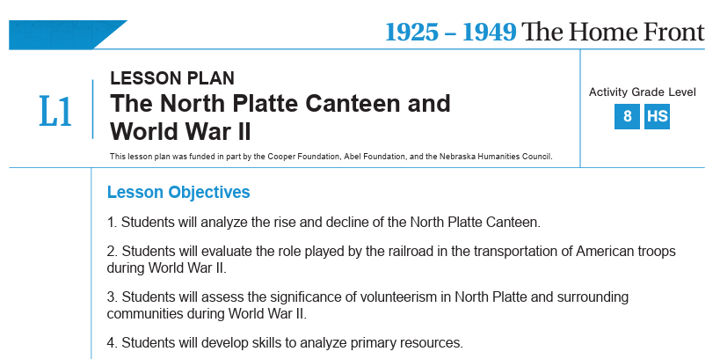
Source #2 - A lesson plan from the State of Nebraska on the World War II Home Front
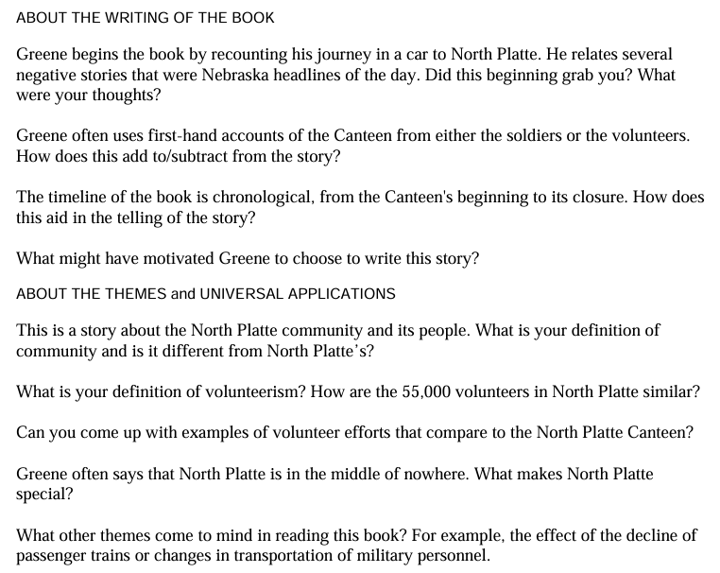
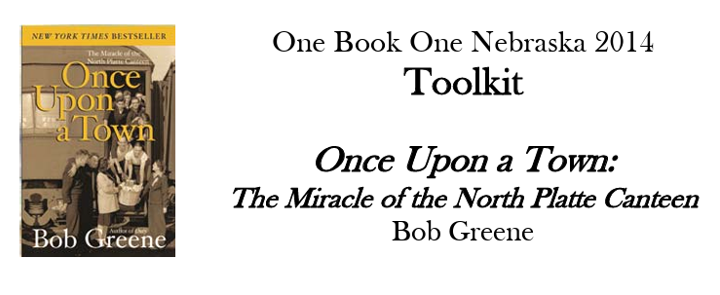
Source #3 - A toolkit of resources to accompany the book "Once Upon a Town: The Miracle of the North Platte Canteen" by Bob Greene
“North Platte Canteen - Nebraska 1941 (from "Middle Level Learning" magazine)" (lesson plan), National Council for the Social Studies, Sep 2014, https://www.socialstudies.org/sites/default/files/view-issue/mll51.pdf
"On The Home Front" lesson plan (with "North Platte Canteen and World War II" as the main portion of it), NebraskaStudies.org, 2026, https://nebraskastudies.org/en/1925-1949/on-the-home-front/ OR https://d1vmz9r13e2j4x.cloudfront.net/nebstudies/Lesson5_TheHomeFront.pdf
"Toolkit for Once Upon a Town: The Miracle of the North Platte Canteen" by Bob Greene, One Book One Nebraska, 2014, https://onebook.nebraska.gov/2014/docs/toolkit-2014.pdf OR https://onebook.nebraska.gov/2014/get-involved.aspx
"Canteen Memories - A World War II Cemetery Tour and Tribute to the North Platte Canteen", North Platte Public Library Foundation, Sep 2011, https://www.npplfoundation.org/wp-content/uploads/2016/08/2011-fall-book-Canteen-Memories.pdf Some really nice biographies of people involved with the canteen and World War II participants in general


ECON and More
Curating articles for K-12 education.
CONTACT
© 2025. All rights reserved.