
Non-Countries of the World - Aruba
The first non-country in a new portion of my geography series. I will begin the post with a little extra explanation, to try to define what places are in this series (and which ones are not)
OK, I reserve the right to "change my mind" about this portion of my geography series.
As I mentioned before, this series for Oceania countries will not appear as often (since there aren't as many) - they will show up every second cycle (so probably once every 6 weeks or so). Originally my plan was to mix in some international organizations and groups (UNESCO, World Bank, etc..) BUT I've decided instead to cover some of the disputed territories of the world (Greenland, Palestine, Western Sahara) along with some of the larger or more well known non-countries (Tahiti, Bermuda, French Guiana) that students should know about . . .
So, who exactly does that include? Here's the list I've come up with so far . . .
Aruba (part of the Netherlands)
Bermuda (British)
Cayman Islands (British)
Curacao (part of the Netherlands)
French Guiana (French)
Gibraltar (British)
Greenland (Danish)
Guadaloupe (French)
Hong Kong (Chinese)
Macau (Chinese)
Martinique (French)
New Caledonia (French)
Palestine (including Gaza)
Reunion (French)
Tahiti (and the rest of French Polynesia)
Western Sahara (disputed between Morocco and Mauritania)
Note also who that list does NOT include . . .
American territories (Puerto Rico, Guam, American Samoa) - I plan to cover them in a future geography series on U.S. states and territories
Most breakaway groups fighting for independence (Chechnya, the Basques, etc..) - I don't want to get into arguments where the territory hasn't even been agreed upon. One exception above is Western Sahara, where the territory is well defined.
Places that are too small to cover well - several places like the Falkland Islands, Cook Islands, Niue, etc.. don't have the population to survive as an independent country.
Again, these non-countries will alternate with the Oceania countries in my geography rotation - since I have already covered two Oceanic countries in reverse alphabetic order up to this point I will start the non-countries in alphabetic order of what I listed above. I will also try to keep the same format as I have been using, although I may have to make some small tweaks to reflect the fact that these are NOT independent countries. So on to today's first one . . .
Section I - Basic Info on Aruba
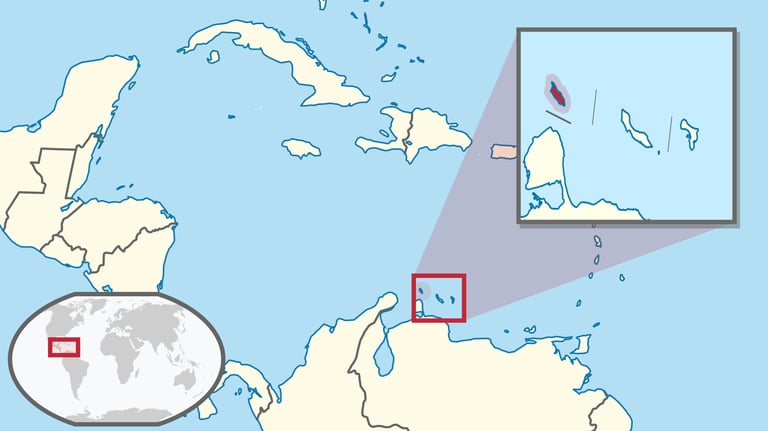
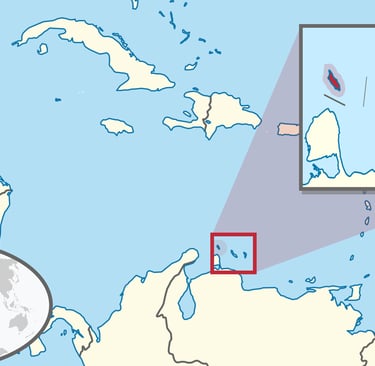
Official Name: Aruba, a constituent country of the Kingdom of the Netherlands
Population: 108,880 (would be the 38th largest in the Americas)
Area/Size: 69 square miles (about the size of the borough of Brooklyn in NYC)
Capital: Oranjestad (28,300 - sister city of Doral, Florida)
Spoken Languages: Papiamento and Dutch (both official), English, Spanish
Religions: Catholic (75%), none (5%), Protestant (5%)
Life Expectancy: 76.4 years Internet Access Rate: 97.2%
Per Capita Income: $39,500 Unemployment: 3.9%
What do they Export?: Jewelry, bananas, other fruit, tropical fruit, aloe
Export Partners: Saudi Arabia (49%), Slovakia (21%), Netherlands (7%)
Import Partners: U.S. (50%), Netherlands (11%), China (8%)
Why are they not independent?: Better off as a part of the Netherlands rather than handling all the expenses themselves
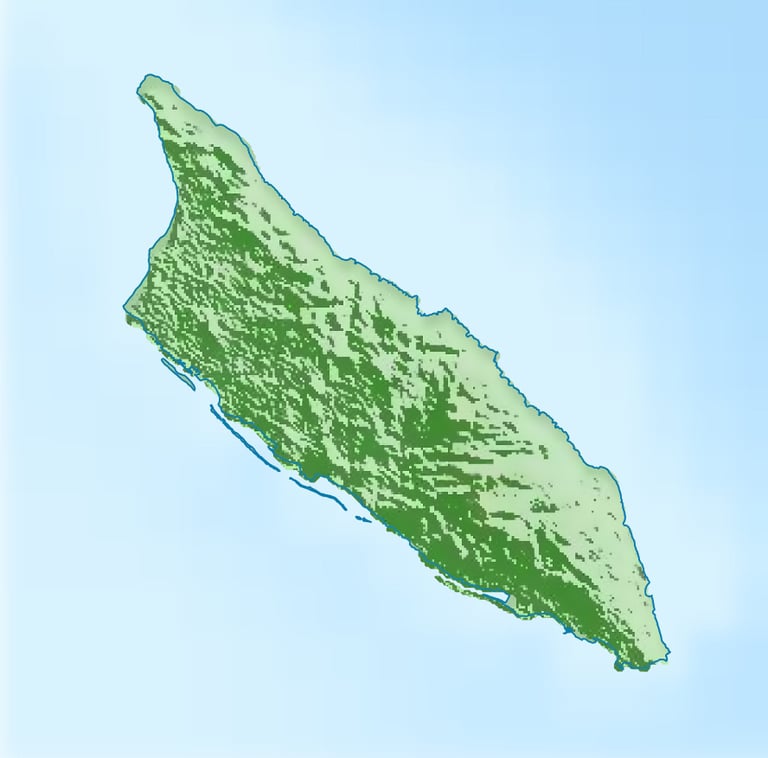
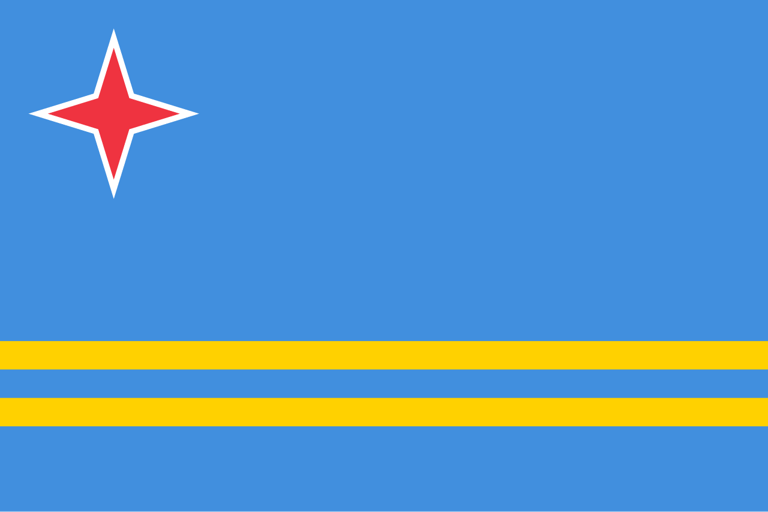
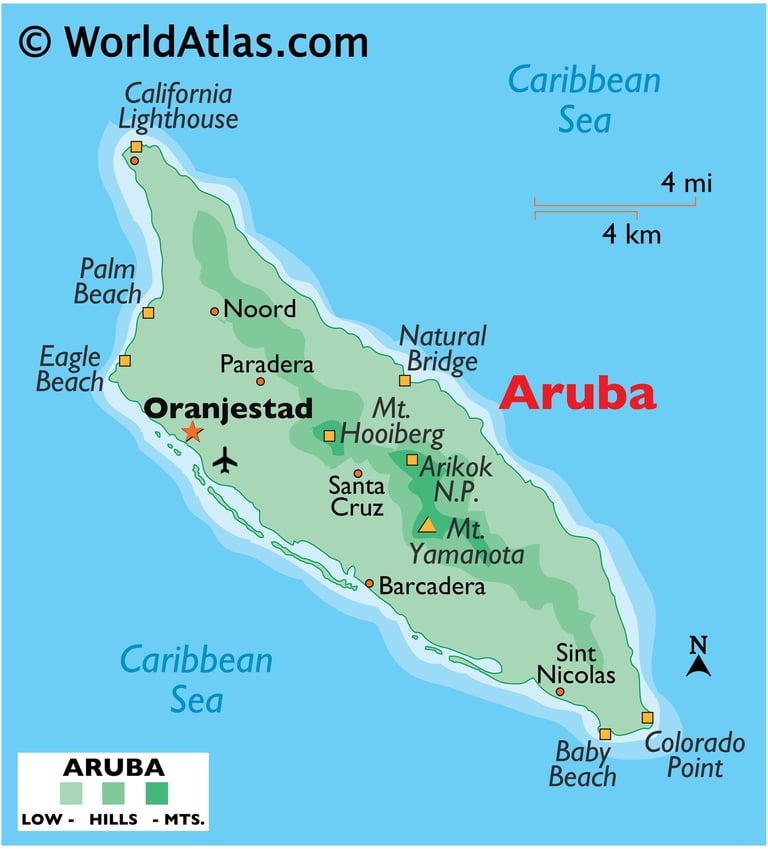
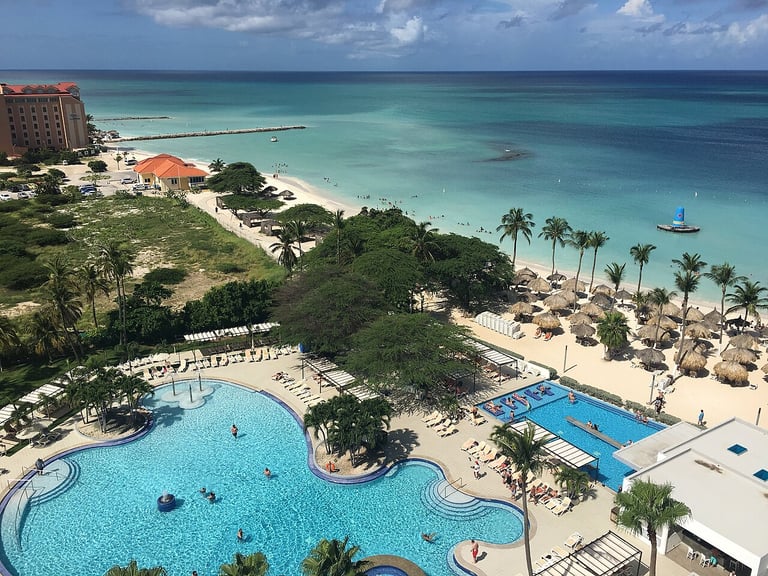
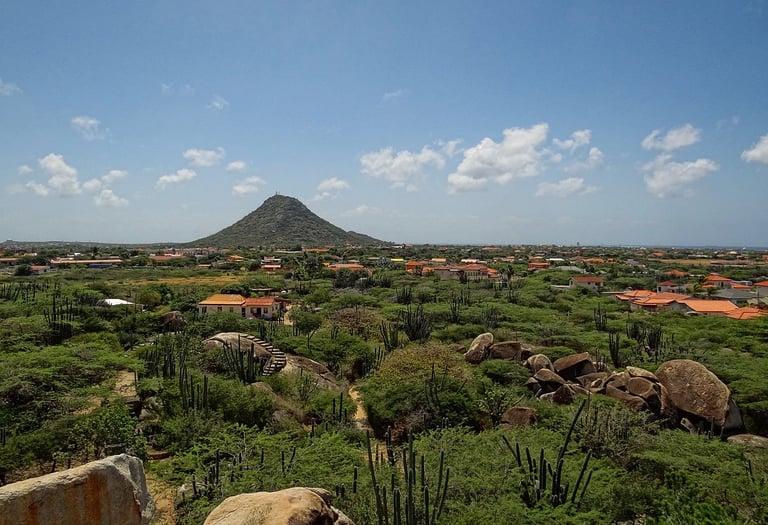
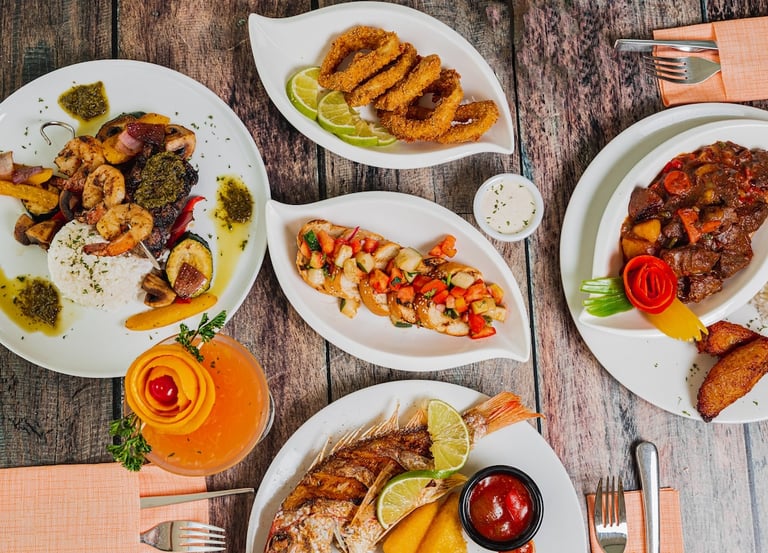
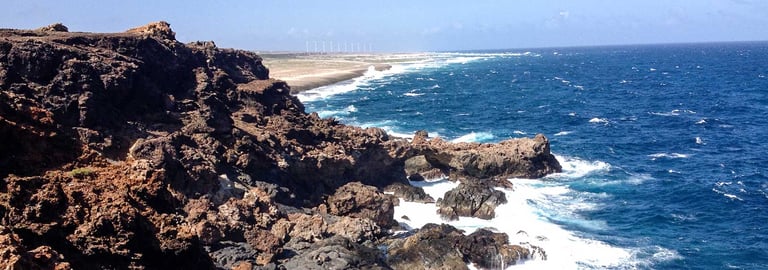
Section II - Images of Aruba
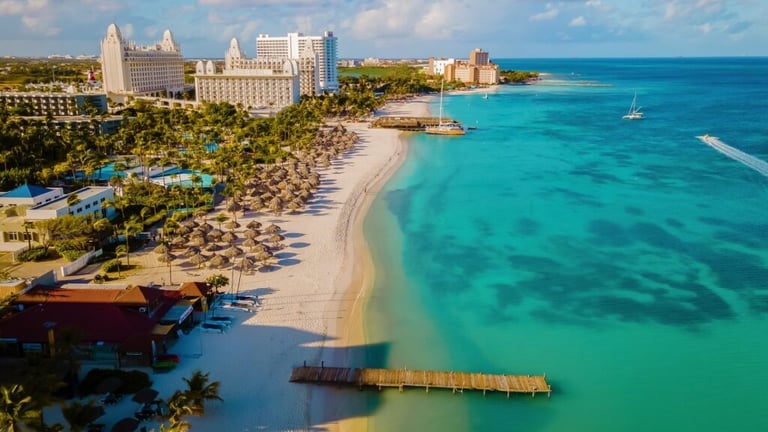
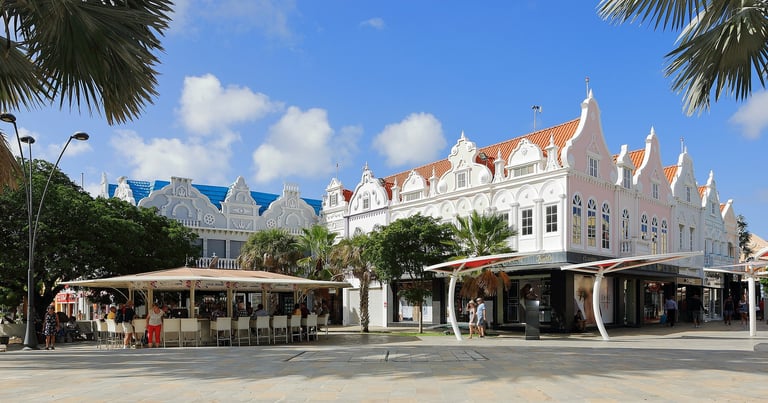
5 Key Dates/Periods in Aruba's History
I'm going to keep these Caribbean island histories fairly simple since so much of the history is going to be very similar until post-World War II other than the colonial empire it was once part of. Again, a lot of the story for these non-countries is going to be looking at the history of why they did not obtain independence.
c. 1500 BC - 1500 CE - In Aruba's prehistoric era, there were distinct periods: the Archaic or Pre-Ceramic and the Neo-Indian or Ceramic period. The Archaic occupation of Aruba continued well into the first millennium AD, which is relatively late compared to other parts of the insular Caribbean. The archaic lifestyle revolved around a food economy based on fishing, hunting, and gathering, with a strong emphasis on marine resources. Ceramics were absent, as was horticulture and agriculture. The archaic population disappeared from Aruba from the archaeological record around 950 AD, shortly after the arrival of the Caquetío. The Caquetío belonged to the Arawak people, who originated in the central Amazon region. Between 850 and 1000 AD, Caquetío Indians migrated from western Venezuela to the Leeward Antilles (including Aruba). The newcomers brought pottery and agriculture to the islands, as well as engaging in trade of raw materials and artifacts that were not locally available or producible, like salt, canoes, tobacco, and beads.
1497 - 1570 - Christopher Columbus was the first European to sight the islands during his third voyage to the New World, when he explored eastern Venezuela and the Orinoco region, and discovered the fresh river water of the Orinoco Delta. The Caquetío population of the Leeward Antilles was incorporated into the Spanish colonial empire c. 1500. Between 1513 and 1515, the Leeward Antilles, including Curaçao, Aruba, and Bonaire, were depopulated - most of the Caquetío were taken to Hispaniola as forced labor. The appropriation of the Caribbean region turned out to be a failure for the Spaniards. The exploitation of the West Indian islands proved unprofitable, and gold mining on Hispaniola and Puerto Rico declined. Spanish settlers moved elsewhere, and in 1569, the Spanish Crown banned settlement on the Caribbean islands by royal decree. Occasionally, a small group of Spaniards would disembark on the island, but typically Aruba was left to fend for itself.
1630 - 1680 - The Dutch were compelled to venture into forbidden waters of the Caribbean because of their need for salt, in open defiance of Phillip II. Since the mid-15th century, the prosperous Dutch herring industry had been steadily expanding. Salt also played a vital role in the butter and cheese industry, as well as in preserving food during long voyages. The Dutch established the West India Company (WIC) with the main objective of engaging in privateering against Spain. Curaçao was captured and acquired by the WIC in Jun 1634, primarily by their desire to obtain salt. The Dutch from Curaçao then occupied Aruba and Bonaire in 1636. Between 1648 and 1678 (after the conclusion of the Thirty Years War) there were 30 years of crisis in the Dutch Antilles and the entire Caribbean region. Dutch leaders tried to strengthen the connections between the islands and New Netherland (today's New York). But the Dutch in Curaçao preferred to sell their goods to other Caribbean islands where they could get a better price, rather than trading with their fellow countrymen in New Netherland. Eventually the British sent a fleet to New Amsterdam and forced it to surrender in 1674. Dutch supremacy waned, and the enforcement of English Navigation Acts left a lasting impact on regional trade. Nevertheless, the Caribbean islands eventually regained stability and prosperity, experiencing fewer changes in colonial holdings for centuries to come.
1700 - 1945 - Contrary to common belief, Aruba had a history of slavery in the 18th and early 19th centuries, challenging the notion that conditions were considerably better than in other Caribbean regions. Records are limited, and Aruba's circumstances surrounding slavery were comparatively less severe, leading to misconceptions that indigenous people were not enslaved. The British briefly took control of the island during the Napoleonic Wars, after which it was returned to Dutch authority. Aruba was then integrated into the Colony of Curaçao and Dependencies, along with Bonaire. Throughout the 19th century, the island's economy evolved, centered around gold, phosphate, and the aloe vera industry. However, despite these economic activities, Aruba continued to be a relatively underdeveloped and economically disadvantaged region during this period. The first oil refinery was built in 1924 by a subsidiary of Standard Oil. The refinery on Aruba grew to become one of the largest in the world, bringing greater prosperity to the island. During World War II, the oil facilities in Aruba came under the administration of the Dutch government-in-exile in London, causing them to be attacked by the German navy in 1942.
1945 - present - By 1954, the Charter of the Kingdom of the Netherlands was established, creating the Netherlands Antilles, which united all of the Dutch colonies in the Caribbean into one administrative structure. Many Arubans were unhappy with the arrangement, however, as the policy was perceived as being dominated by Curaçao. In Mar 1977, a referendum was held with the support of the United Nations, and 82% of Arubans voted for complete independence from the Netherlands. In 1983 Aruba reached an official agreement within the kingdom for its independence, to be developed in a series of steps as the Crown granted increasing autonomy. Meanwhile, in 1985, Aruba's oil refinery closed, leading to the loss of jobs and raising the unemployment rate to almost 20 per cent. The significant blow to the economy led to a push for a dramatic increase in tourism, and that sector has expanded to become the island's largest industry. At the beginning of 1986, Aruba seceded from the Netherlands Antilles, officially becoming a country of the Kingdom of the Netherlands, with full independence planned for 1996. But in 1990, the government postponed indefinitely Aruba's transition to full independence. In 2004, a joint commission proposed major reforms for the Netherlands Antilles, which took effect in Oct 2010. Under these reforms, the Netherlands Antilles were dissolved and Curaçao and Sint Maarten became constituent countries within the Kingdom of the Netherlands, obtaining the same status as Aruba. Citizens from all four countries are also citizens of the European Union, but these territories are not part of the European Union.
Other Non-Political Issues
Section III - Issues of Aruba
General Information on Aruba:
“Aruba", One World Nations Online, Jan 2025, https://www.nationsonline.org/oneworld/aruba.htm
“Aruba", Wikipedia, Apr 2026, https://en.wikipedia.org/wiki/Aruba or https://simple.wikipedia.org/wiki/Aruba
"Aruba's Island Facts", Aruba Tourism Authority, 2026, https://www.aruba.com/us/our-island/island-facts
“Economy of Aruba", The World Bank, Jan 2026, https://data360.worldbank.org/en/economy/ABW
"Love Aruba - Feel It Back" (official tourism site), Aruba Tourism Authority, 2026, https://www.aruba.com/us
Current Events Stories on Aruba:
“Aruba: Black Gold and Boas. What happens when an oil-rich island paradise interrupts its production of petroleum? You may have to visit the Caribbean island of Aruba to find out.", JSTOR Daily, Jul 2025, https://daily.jstor.org/aruba-black-gold-and-boas/
"Caribbean Travel Disrupted Following U.S.-led Ousting of Venezuelan President", Cruise Critic, Feb 2026, https://www.cruisecritic.com/news/caribbean-travel-disrupted-attacks-venezuela
"Netherlands apologises for Dutch government’s role in slavery", Al-Jazeera, Dec 2022, https://www.aljazeera.com/news/2022/12/19/netherlands-apologises-for-dutch-governments-role-in-slavery
"What are the different parts of the Kingdom of the Netherlands?", Government of the Netherlands, 2026, https://www.government.nl/topics/caribbean-parts-of-the-kingdom/question-and-answer/what-are-the-different-parts-of-the-kingdom-of-the-netherlands
History and Other Interesting Links Related To Aruba:
"Aruba’s Holidays & Traditions", When In Aruba, Dec 2017, https://wheninaruba.com/blog/arubas-holidays-traditions/
"ARUBA Travel Guide - Why This Caribbean Island Just Works" (video), World Travel Guide, Jan 2026, https://www.youtube.com/watch?v=N4e-ULmkHbY
"The Basics of Aruban Cuisine", When In Aruba, Nov 2017, https://wheninaruba.com/blog/the-basics-of-local-cuisine/
"The Famous Trees of Aruba: Fofoti Tree & Divi-Divi Tree", Aruba Unleashed, Sep 2025, https://arubaunleashed.com/famous-trees-of-aruba/
"The ultimate guide to Aruba’s Arikok National Park: top things to see and do", Lonely Planet, Jul 2022, https://www.lonelyplanet.com/articles/guide-to-arikok-national-park
Section IV - Resources About Aruba
ECON and More
Curating articles for K-12 education.
CONTACT
© 2025. All rights reserved.