
Non-Countries of the World - Bermuda
The second non-country in this new portion of my geography series - from this point on I will alternate each rotation between an Oceanic country and a non-country. Also a quick reminder - I'm skipping over an "Asia" country in this rotation because of moving the post on Armenia up to April 24th to coincide with Armenian Remembrance Day.
Jay LeBlanc
5/28/20266 min read
Section I - Basic Info on Bermuda
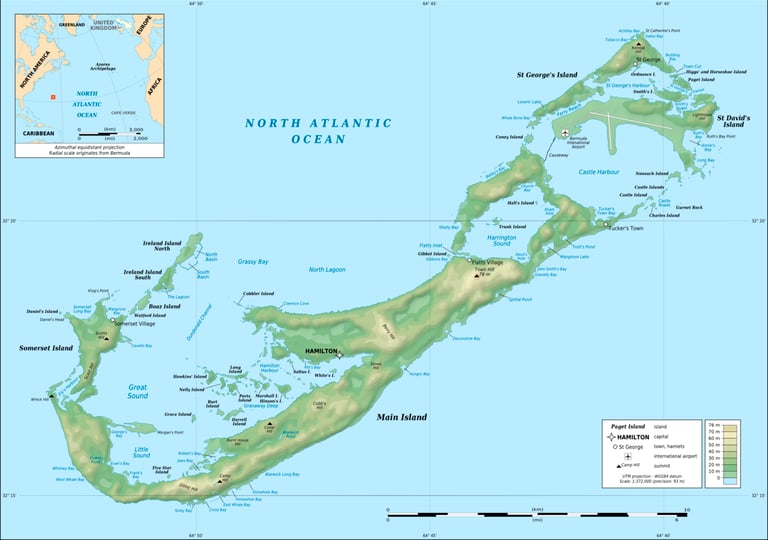
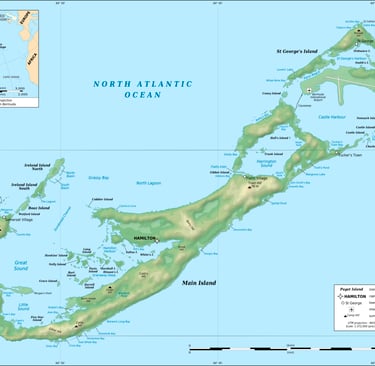
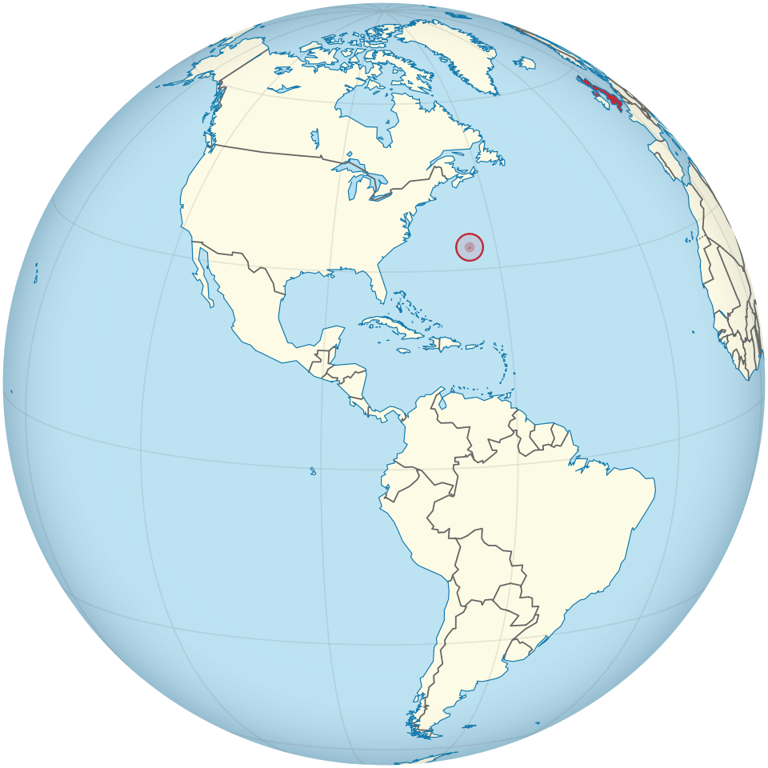
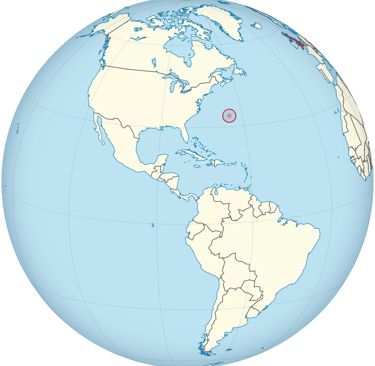
Official Name: Bermuda (a British overseas territory)
Population: 64,459 (would be the 44th largest in the Americas)
Area/Size: 20.5 square miles (a little smaller than Manhattan Island in NYC)
Capital: Hamilton (1,100 - sister city of Fukuyama, Japan)
Spoken Languages: Bermudian English (official)
Religions: Protestant (46%), Catholic (15%), other Christian (9%), none (18%)
Life Expectancy: 82.3 years Internet Access Rate: 98.4%
Per Capita Income: $119,719 Unemployment: 2.5%
What do they Export?: Passenger and cargo ships, aircraft parts, gas turbines, liquor
Export Partners: Cyprus, United States, Spain, and United Kingdom
Import Partners: South Korea, United States, China, and Canada
Why are they not independent?: An independence referendum was held in 1995 with a large majority voting against
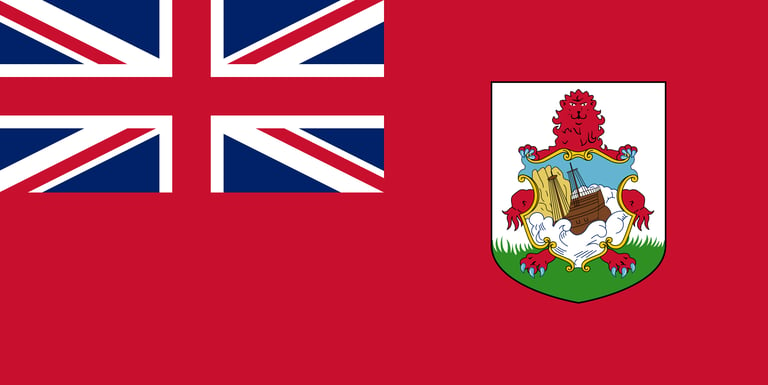
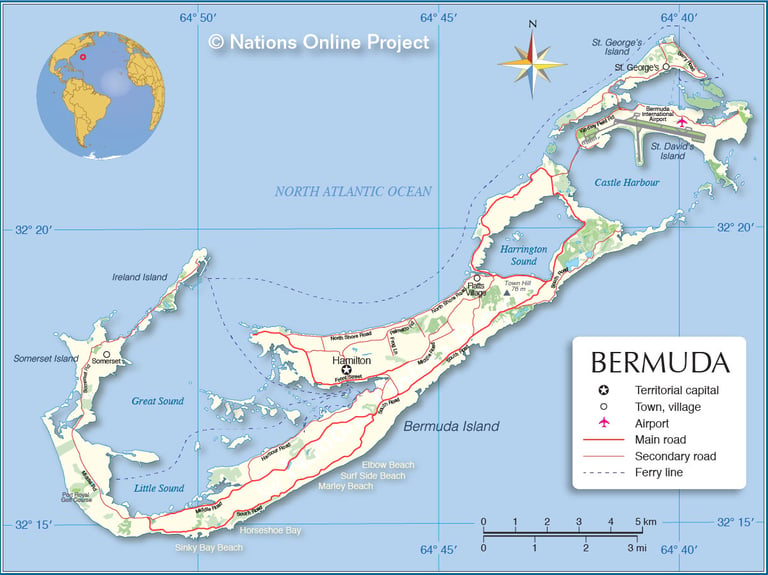
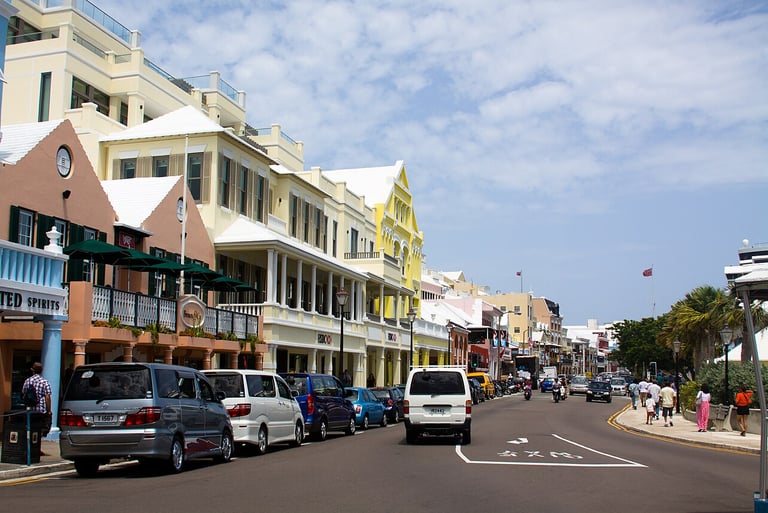
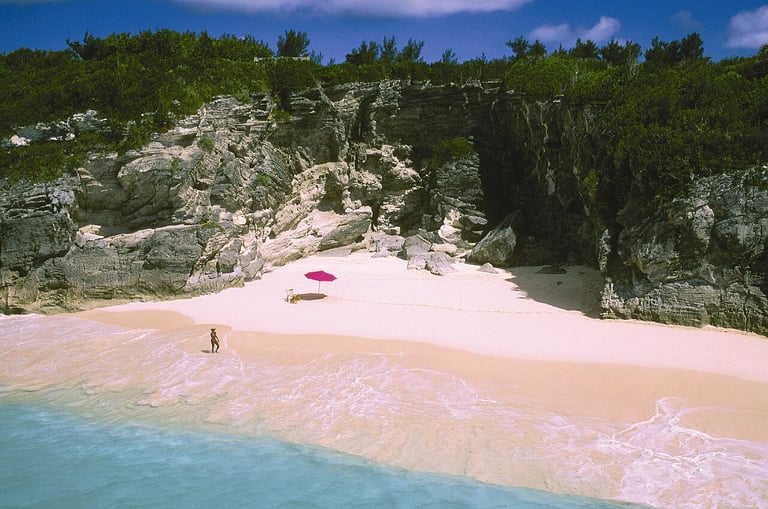
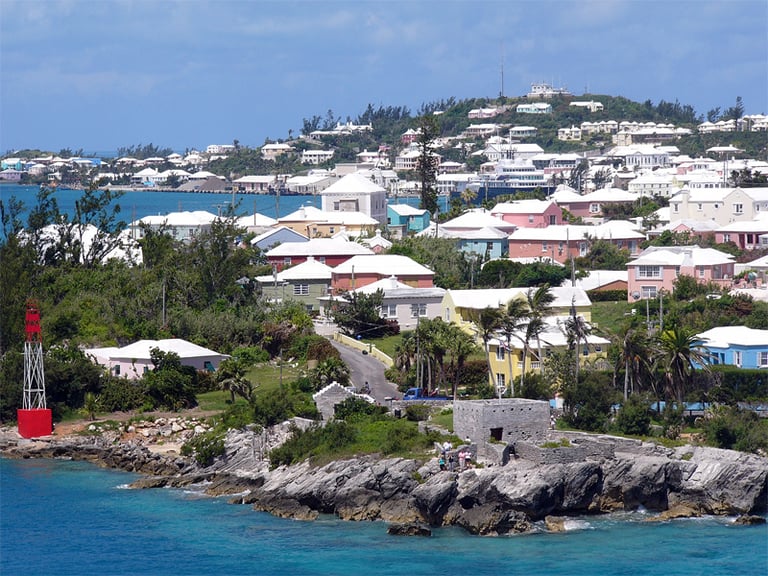
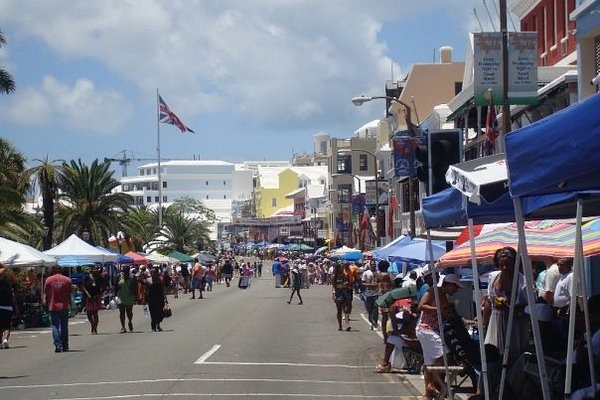
Section II - Images of Bermuda
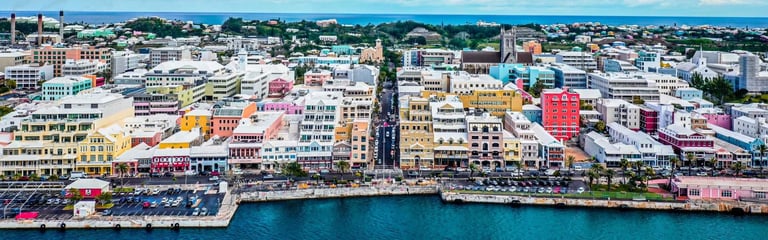
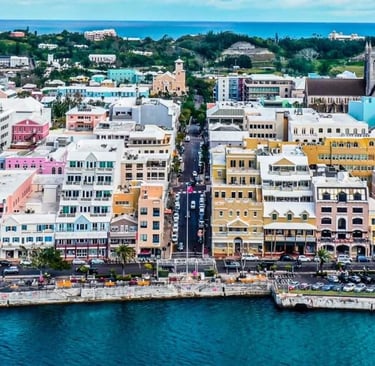
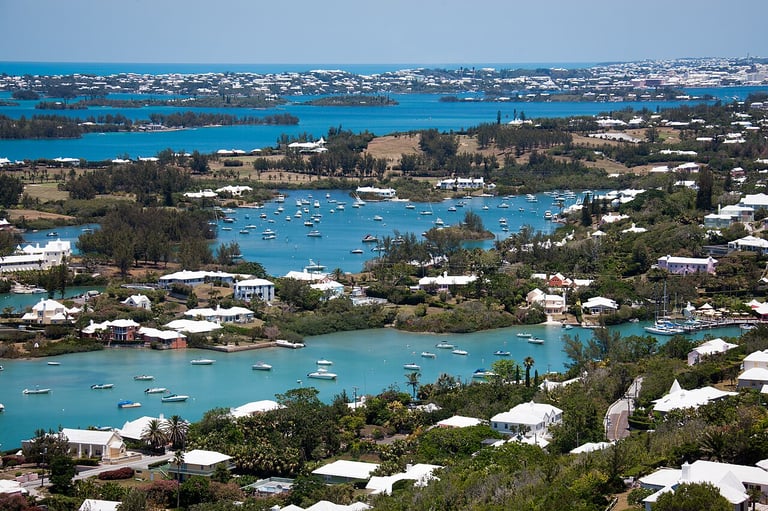
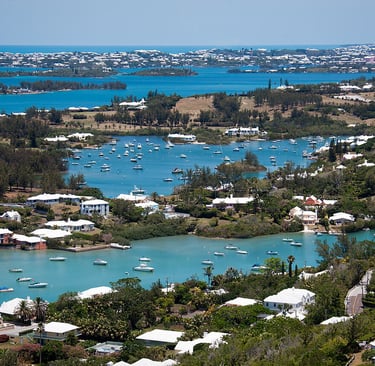
5 Key Dates in Bermuda's History
1500 - 1609 - Bermuda was discovered in the early 1500s by Spanish explorer Juan de Bermúdez and named after him. Bermuda had no Indigenous population when it was discovered. Both Spanish and Portuguese ships used the islands as a replenishment spot to take on fresh meat and water. Shipwrecked Portuguese mariners are thought to have been responsible for the 1543 inscription on Portuguese Rock, previously called Spanish Rock. With its frequent storm-racked conditions and dangerous reefs, the archipelago became known as the "Isle of Devils", and neither Spain nor Portugal attempted to settle it. In 1609, a flotilla of seven ships left England with several hundred settlers, food, and supplies to relieve the Jamestown colony. However, the flotilla was broken up by a storm and the flagship, the Sea Venture, drove onto Bermuda's reef to prevent her sinking, resulting in the survival of all her passengers and crew. The settlers were unwilling to move on, having now heard about the true conditions in Jamestown from the sailors, and made several attempts to rebel and stay in Bermuda. They argued that they had a right to stay and establish their own government.
1612 - 1700 - In 1612 the English began settlement of the archipelago with the arrival of the ship the Plough. New London (renamed St George's Town) was settled that year and designated as the colony's first capital - it is the oldest continuously inhabited English town in the New World. In 1615 the colony was passed on to the Somers Isles Company. During this period the first slaves were held and trafficked to the islands. These were a mixture of native Africans who were trafficked to the Americas via the African slave trade and Native Americans who were enslaved from the new world colonies. The English Civil War of the 1640s spilled over into Bermuda, where most of the colonists had developed a strong sense of devotion to the Crown. Bermuda's civil war was ended by militias and dissenters were pushed to settle The Bahamas under William Sayle. Additional colonists from Bermuda became the first English subjects to settle permanently on the Island of Jamaica. In the second half of the 17th century, Bermudians began to turn to maritime trades, but the Somers Isles Company used all its authority to suppress turning away from agriculture. This interference led to islanders demanding, and receiving, revocation of the company's charter in 1684, and the company was dissolved.
1700 - 1800 - Bermudians rapidly abandoned agriculture for shipbuilding, replanting farmland with the native juniper trees (Juniperus bermudiana, called Bermuda cedar). Establishing effective control over the Turks Islands, Bermudians deforested their landscape to begin the salt trade. It became the world's largest and remained the cornerstone of Bermuda's economy for the next century. Bermudians also vigorously pursued whaling, privateering, and the merchant trade. In Sep 1774 the American Continental Congress resolved to ban trade with Great Britain, Ireland, and the West Indies; such an embargo would have meant the collapse of Bermuda's inter-colonial commerce. Lacking political channels with Great Britain, colonists in Bermuda made an arrangement with leaders in the Continental Congress to exchange American goods for military supplies (which were then stolen from the British weapons magazine). As a result, Bermuda acquired a reputation for disloyalty and the British government sent naval ships to secure the island. After France's entry into the war in 1778, Henry Clinton refortified the island under the command of Major William Sutherland. As a result, 91 French and American ships were captured in the winter of 1778–1779, bringing Bermuda's population to the brink of starvation. Smuggling was stopped, and the Bermudian colonial government came under the control of loyalists for the remainder of the war.
1800 - 1950 - After the American Revolution, the Royal Navy began improving the harbors on the Bermudas to serve as the principal naval base guarding the western Atlantic Ocean shipping lanes. During the War of 1812 between Britain and the United States, the British attacks on Washington, D.C., and the Chesapeake were planned and launched from Bermuda, where the headquarters of the Royal Navy's North American Station had been moved from Halifax, Nova Scotia. Due to its proximity to the southeastern US coast, Bermuda was frequently used during the American Civil War as a stopping point base for the Confederate States' blockade runners on their runs to and from the Southern states, and England, to evade Union naval vessels on blockade patrol. In the early 20th century Bermuda became a popular destination for American, Canadian and British tourists arriving by sea. Tariffs during the Great Depression led to the demise of Bermuda's once-thriving agricultural export trade to America and encouraged development of tourism as an alternative source of income.
1950 - present - In 1948 a regularly scheduled commercial airline service began to operate in Bermuda, helping tourism to reach a peak in the 1960s and 1970s. By the end of the 1970s, however, international business had supplanted tourism as the dominant sector of Bermuda's economy. The Royal Naval Dockyard and its attendant military garrison remained important to Bermuda's economy until the mid-20th century. In addition to considerable building work, the armed forces needed to source food and other materials from local vendors. Universal suffrage and a two-party political system was adopted as part of Bermuda's Constitution in 1967; voting had previously been dependent on a certain level of property ownership. Some moves were made towards possible independence for the islands but this was decisively rejected in a referendum in 1995. At the 2020 Summer Olympics Bermuda became the smallest overseas territory ever to earn a gold medal when Flora Duffy won Bermuda's first ever Olympic gold medal in the women's triathlon.
Other Non-Political Issues
Section III - Issues of Bermuda
General Information on Bermuda:
“Bermuda”, Nations Online, 2025, https://www.nationsonline.org/oneworld/bermuda.htm
“Bermuda", Wikipedia, Feb 2026, https://en.wikipedia.org/wiki/Bermuda or https://simple.wikipedia.org/wiki/Bermuda
“Bermuda Country Profile", World Bank Group, Jan 2026, https://data360.worldbank.org/en/economy/BMU
"Go To Bermuda" (official tourism site), Bermuda Tourism Authority Site, 2026, https://www.gotobermuda.com/
Current Events Stories on Bermuda:
“Bermuda sits on a strange, 20-kilometer-thick structure that's like no other in the world", MSN and IFL Science, Dec 2025, hhttps://www.msn.com/en-us/weather/topstories/bermuda-sits-on-a-strange-20-kilometer-thick-structure-that-s-like-no-other-in-the-world/ar-AA1SoPGO?
"Bermuda’s reefs are speaking. Are we listening?", Royal Gazette, Apr 2026, https://www.royalgazette.com/opinion-writer/opinion/article/20260422/jp-rouja-bermudas-reefs-are-speaking-are-we-listening/
“Bermuda to Welcome King Charles III on Landmark First Visit as Sovereign", Breaking Travel News, Apr 2026, https://www.breakingtravelnews.com/news/article/bermuda-to-welcome-king-charles-iii-on-landmark-first-visit-as-sovereign/
“The ‘Bermuda Triangle’ approach: How the small but mighty island innovates at scale", World Economic Forum, Jan 2026, https://www.weforum.org/stories/2026/01/bermuda-triangle-approach-how-small-mighty-island-innovates-scale/
History and Other Interesting Links Related To Bermuda:
"25 Best Things to Do in Bermuda—From Pink-sand Beaches to Historic Forts and Caves", Travel + Leisure, Mar 2026, https://www.travelandleisure.com/trip-ideas-island-vacations-best-things-to-do-in-bermuda-11916711
“The essential guide to visiting Bermuda", National Geographic, Jun 2025, https://www.nationalgeographic.com/travel/article/bermuda-essential-travel-guide
"Ghosts of the deep—discover the lost legends of Bermuda’s seas", National Geographic Magazine, Jan 2026, https://www.nationalgeographic.com/travel/article/discover-the-lost-legends-of-bermudas-seas
"Lost in the Bermuda Triangle (Full Episode) | Witness to Disaster" (video), National Geographic, Mar 2026, https://www.youtube.com/watch?v=eTEdKrJ1DhI
“Michael Douglas Gives Kathie Lee A Personal Tour Of Bermuda", The Today Show (NBC), May 2017, https://www.youtube.com/watch?v=0UcglrBgp5g
Section IV - Resources About Bermuda
ECON and More
Curating articles for K-12 education.
CONTACT
© 2025. All rights reserved.