The Nobel Prize in Economics (and a specific resource I didn't know about)
I attended a good PD session yesterday afternoon hosted by FEE and Econiful, focusing on "The Magic of Markets". But what the session also reminded me was that I never got around to posting about something I learned in another Econiful session last month. So now I will . . .
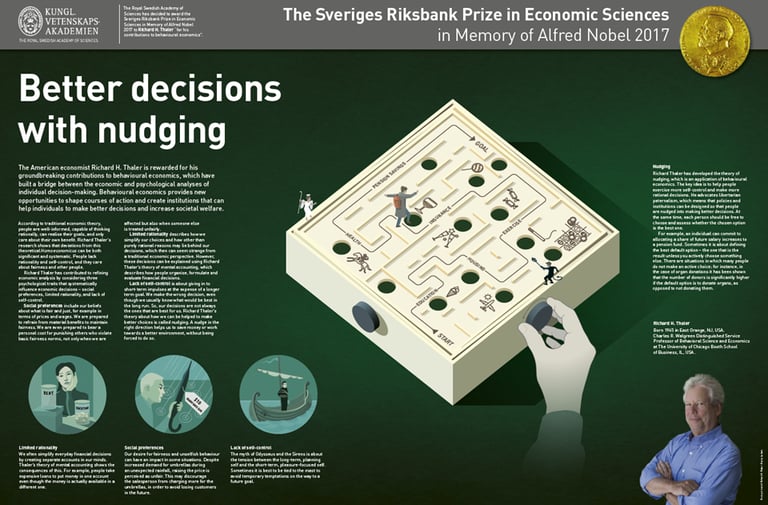
This post should be a relatively short one - mostly just using the opportunity to "catch up" on a resource I meant to feature last month. In December I attended Econiful's "6 Econ Books in 60 Minutes" webinar (which by the way is an EXCELLENT recurring program - based on the biased opinion of someone who loves to read - each time covering six economics or financial literacy books released in the previous year). One of the books they reviewed this time was Richard Thaler's newest book (co-written with Alex O. Imas) called "The Winner's Curse: Behavioral Economics Anomalies, Then and Now". For those of you not familiar with his work, Richard Thaler teaches at the University of Chicago and won the 2017 Nobel Prize in Economic Science for his work in behavioral economics.
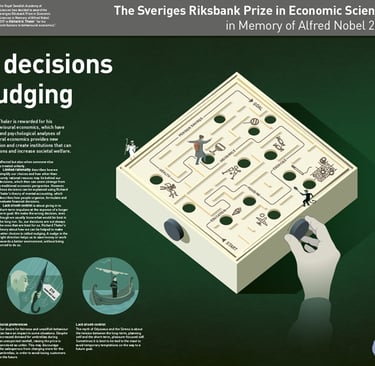
Now I "could" make this post about behavioral economics and Thaler's work (which would make it a MUCH longer post, if not a series of posts), but the resource I actually wanted to focus on is from the Royal Swedish Academy of Sciences. I was not aware (until it was pointed out by Megan Kirts and her team at Econiful) that they produce posters each year to explain the winning work for three categories (Physics, Chemistry, and Economic Sciences) in an easily accessible manner. Those posters are then made available free of charge.
The website to order the posters is here - https://www.kva.se/en/prizes/nobel-prizes/nobel-posters/. The posters can be ordered in one of two languages (English or Swedish) and in one of two sizes (70×100 cm and A3). Also note that you may only order a maximum of 6 posters in total.
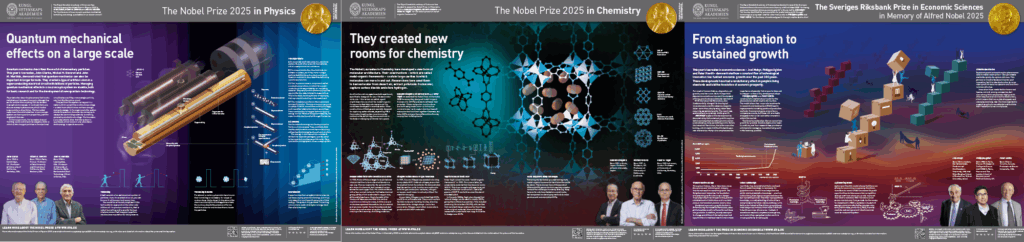
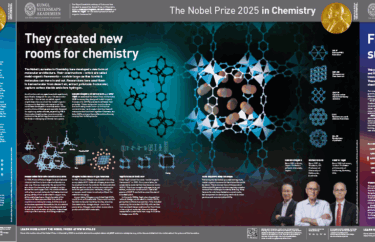
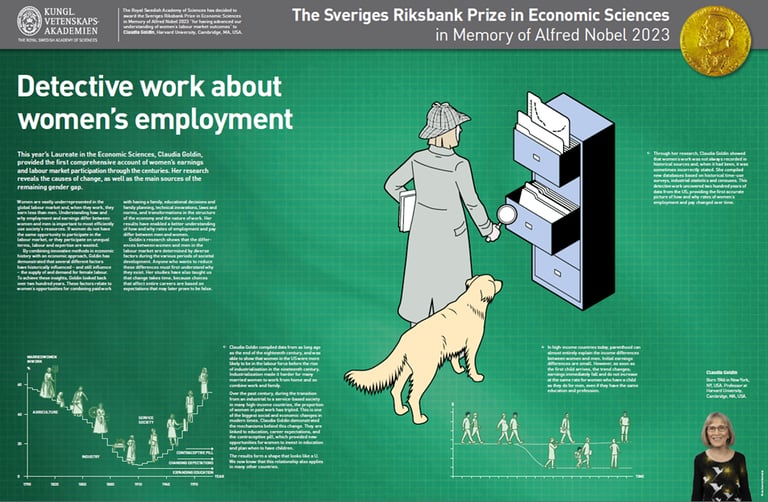
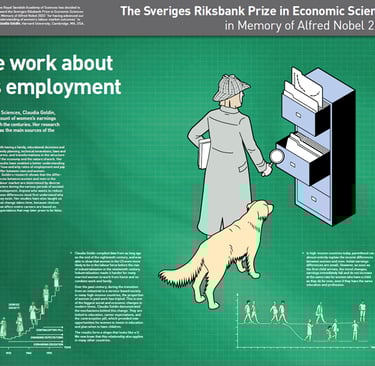
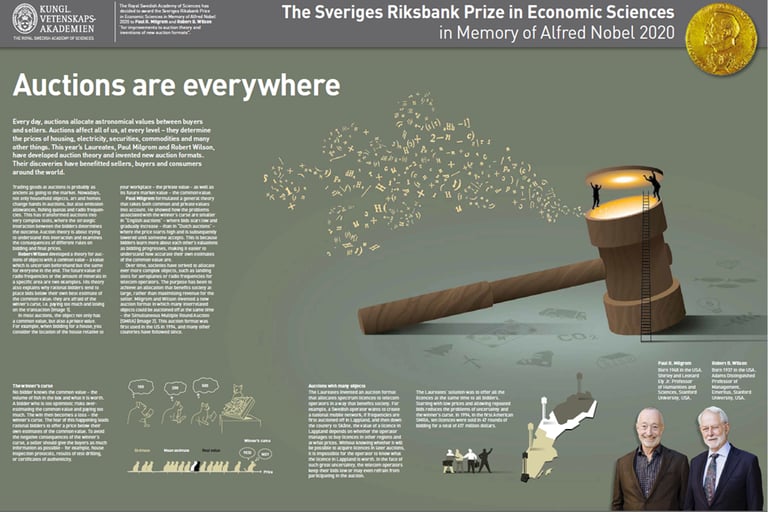
Beyond the current year's physical posters, the site also maintains downloadable copies of the past 12 years of posters depicting winning research. Here are three screenshotted examples below (including Thaler's poster from 2017):
Other Nobel-related links you may be interested in:
Educational Resources - The Nobel Prizes, https://www.nobelprize.org/educational/
"Elinor “Lin” Ostrom, Nobel Prize Economist" (lesson plan), National Women's History Museum, https://www.womenshistory.org/resources/lesson-plan/elinor-lin-ostrom-nobel-prize-economist
"How is the Nobel Prize in Economics Selected? Ask Professor Sjostrom", Economics Department of the Rutgers/New Brunswick School of Arts and Sciences, https://economics.rutgers.edu/departmental-news/449-how-is-the-nobel-prize-in-economics-selected-ask-professor-sjostrom
Nobel Prize in Economics Explained video playlist, Economics Explained, 2020-2025, https://www.youtube.com/show/VLPLh6oq2EbSNEckXePQC3xQ-xiNc8mg7hGo?sbp=KgtSX3d4azdJaHlva0AB
"Understanding sustained growth: the 2025 Nobel Prize and why it matters for Europe", European Central Bank blog, Oct 2025, https://www.ecb.europa.eu/press/blog/date/2025/html/ecb.blog20251020~a889f0290a.en.html
"Why basic scientific research matters: 6 Nobel Laureates explain", World Economic Forum, Jan 2026, https://www.weforum.org/stories/2026/01/basic-scientific-research-nobel-laureate/
ECON and More
Curating articles for K-12 education.
CONTACT
© 2025. All rights reserved.